Kirjojen hintavertailu. Mukana 11 244 527 kirjaa ja 12 kauppaa.

Kirjahaku

Etsi kirjoja tekijän nimen, kirjan nimen tai ISBN:n perusteella.

5 kirjaa tekijältä Robin Mayhead

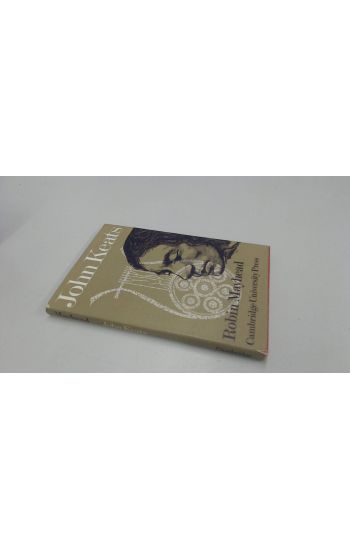
John Keats

John Keats

Robin Mayhead

Cambridge University Press
1967
sidottu
Keats is one of the most widely read and studied of the English poets, but there are few books about him for the student. Not surprisingly, most books give much space to the romantic life. Mr Mayhead resists the temptation: he writes only about the poems and the letters; and in this concise introduction he discusses them comprehensively and closely. The poems are discussed in broadly chronological order, with liberal quotation and much detailed analysis. This straightforward and businesslike study is also sensitive and sympathetic; it establishes more firmly in the reader's mind the nature of Keats's true achievement: the quality of the poetry.
Understanding Literature

Understanding Literature

Robin Mayhead

Cambridge University Press
1965
pokkari
In this book, originally published in 1965, Mr Mayhead provided a companion to Professor Ludowyk's Understanding Shakespeare. It is an introduction to the reading and study of English literature: not an historical summary, but an attempt to say why literature is important, how it works, and how it can be approached, in the hope that this would lead to understanding and enjoyment as well as examination success. The first chapter treats literature as the source and guardian of the vitality of the language, and as an important means of extending our own experience. The second chapter faces the great bugbear of 'background knowledge' - so daunting to the non-English reader, and even to the English. Then Mr Mayhead approaches the various literary minds, always working through detailed analyses. There are chapters on novels, how they work, what they do, and how to grasp the novelist's central purpose, and also two chapters on poetry.
Walter Scott

Walter Scott

Robin Mayhead

Cambridge University Press
1973
nidottu
A good deal of Scott's commercial writing is now of historical interest only. But there are important and valuable books, especially those where Scott is contemplating the detribalization of Scotland after the Jacobite rebellions, and the political and social stresses this brought about. This is a modern concern, since we live in the developed world with the long-term consequences, and, when this book was first published in 1973, similar processes were visible in developing countries. There is also a vein of shrewd moral wisdom in Scott, associated with the notions of justice and prudence. Mr Mayhead singles out Waverley, Heart of Midlothian, Guy Mannering and The Abbot as the works which embody these interests. He also looks at the poetry and criticism.
Walter Scott

Walter Scott

Robin Mayhead

Routledge
2016
sidottu
First published in 1968, this study is an exciting and challenging introduction to the writings of Sir Walter Scott. The author discusses the more striking features of Scott’s style — his use of language and characterisation — and also evaluates the contemporary moral and political attitudes portrayed in the novels. The use of literary conventions of the time is examined with reference to Scott’s work and extracts exemplify in particular the use of the Heroic. While admitting Scott’s faults as a writer, the author presents a general view of him as one whose works deserve deeper study than was the prevailing opinion at the time. This book will be of interest to students of literature.
Walter Scott

Walter Scott

Robin Mayhead

Routledge
2017
nidottu
First published in 1968, this study is an exciting and challenging introduction to the writings of Sir Walter Scott. The author discusses the more striking features of Scott’s style — his use of language and characterisation — and also evaluates the contemporary moral and political attitudes portrayed in the novels. The use of literary conventions of the time is examined with reference to Scott’s work and extracts exemplify in particular the use of the Heroic. While admitting Scott’s faults as a writer, the author presents a general view of him as one whose works deserve deeper study than was the prevailing opinion at the time. This book will be of interest to students of literature.