Kirjojen hintavertailu. Mukana 12 016 292 kirjaa ja 12 kauppaa.

Kirjahaku

Etsi kirjoja tekijän nimen, kirjan nimen tai ISBN:n perusteella.

15 kirjaa tekijältä Robin Small

Nietzsche and Rée

Nietzsche and Rée

Robin Small

Clarendon Press
2007
nidottu
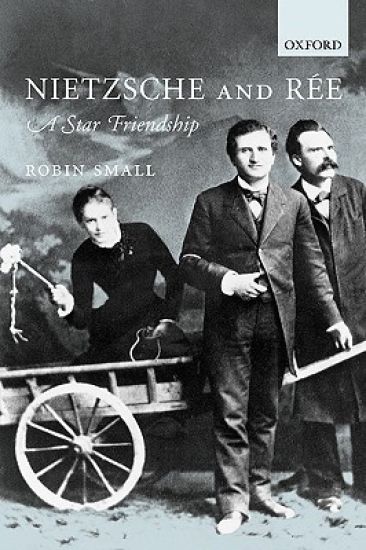
During years of close friendship, Friedrich Nietzsche (1844-1900) and Paul Rée (1849-1901) shared ideas and developed a new and original approach to philosophy and ethics. The course of their partnership, from its origins in shared hopes to its ending in a painful breakdown of personal relations, is the subject of this book. The full story has not been told before. Some of its biographical aspects - especially the three-sided relationship involving the young Lou Salomé which had severe emotional consequences for Nietzsche - have been known. Yet many personal details are presented here for the first time. The philosophical account is equally absorbing, showing how this collaboration was a crucial stage on Nietzsche's way toward his most original and radical contributions to philosophy. 'Réealism' was the label Nietzsche gave to Rée's naturalistic doctrine, which drew on the evolutionary theory of natural selection to explain the moral concepts of good, evil, conscience and justice. Just as importantly, Rée wrote in a cool, highly disciplined style, very different from most German writers of the time. Both aspects of his work made a strong impact on Nietzsche, who developed this project in his own way in a series of works starting with Human, All-Too-Human. Yet he eventually came to criticise and reject 'Réealism' as inadequate to the task of a revaluation of values, and replaced the 'historical approach' with his own genealogy of morality. In a strikingly poetic passage in The Gay Science, Nietzsche describes a 'star friendship': the brief meeting of two stars whose paths cross and then diverge forever, perhaps as part of some pattern beyond their knowledge. This book gives the 'star friendship' of Nietzsche and Rée the treatment it has always needed. In doing so, it brings to light fresh aspects of one of the most important of modern thinkers.
Nietzsche and Rée

Nietzsche and Rée

Robin Small

Clarendon Press
2005
sidottu
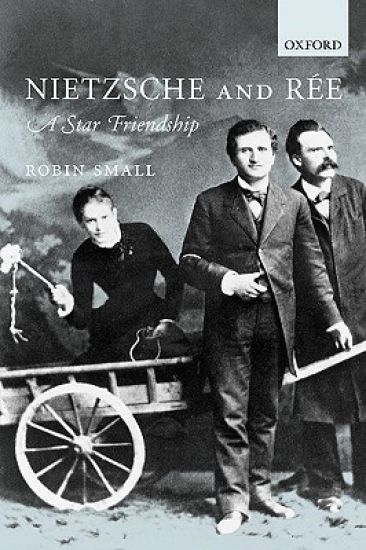
During years of close friendship, Friedrich Nietzsche (1844-1900) and Paul Rée (1849-1901) shared ideas and developed a new and original approach to philosophy and ethics. The course of their partnership, from its origins in shared hopes to its ending in a painful breakdown of personal relations, is the subject of this book. The full story has not been told before. Some of its biographical aspects - especially the three-sided relationship involving the young Lou Salomé which had severe emotional consequences for Nietzsche - have been known. Yet many personal details are presented here for the first time. The philosophical account is equally absorbing, showing how this collaboration was a crucial stage on Nietzsche's way toward his most original and radical contributions to philosophy. 'Réealism' was the label Nietzsche gave to Rée's naturalistic doctrine, which drew on the evolutionary theory of natural selection to explain the moral concepts of good, evil, conscience and justice. Just as importantly, Rée wrote in a cool, highly disciplined style, very different from most German writers of the time. Both aspects of his work made a strong impact on Nietzsche, who developed this project in his own way in a series of works starting with Human, All-Too-Human. Yet he eventually came to criticise and reject 'Réealism' as inadequate to the task of a revaluation of values, and replaced the 'historical approach' with his own genealogy of morality. In a strikingly poetic passage in The Gay Science, Nietzsche describes a 'star friendship': the brief meeting of two stars whose paths cross and then diverge forever, perhaps as part of some pattern beyond their knowledge. This book gives the 'star friendship' of Nietzsche and Rée the treatment it has always needed. In doing so, it brings to light fresh aspects of one of the most important of modern thinkers.
Production Safety for Film, Television and Video
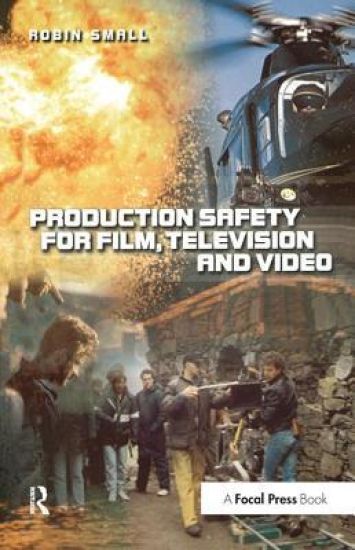
Covering all aspects of production safety, this is an invaluable reference guide for the independent programme maker, freelancer, manager, producer, tutor and student filmmaker. Robin Small identifies all the major risks and gives advice on how to control and/or eliminate them. Each hazard section includes useful references to the relevant legislation, documents and licences, as well as addresses of organisations for essential advice and recommended further reading. Important information about hazard identification, risk assessment and safety policy is provided in the chapters covering legislation, health and safety management, personal protective equipment and insurance. Particular hazards are then split into individual sections for ease of reference. These hazards include: Asbestos Cranes Explosives and pyrotechnics Food and catering Manual handing and lifting Visual display screens Working at heights The appendices provide comprehensive contact information for UK and European Heath and Safety sources. They also include sample forms to draw up your own safety system. Robin Small is Senior Lecturer in Television, Media Department at the University of Huddersfield.
Nietzsche in Context

Nietzsche in Context

Robin Small

Routledge
2021
nidottu
This title was first published in 2001. Friedrich Nietzsche has always been recognized as an original thinker, one who stands apart from and outside the philosophical schools and tendencies of his time. This is the way he continually presented himself. Many readers have accepted this self-interpretation at face value. Yet there is another side to Nietzsche's thinking which shows not only an awareness of contemporary writers, but an engagement with their ideas which is often both intense and sustained. The intention of this study is to explore this side in detail, by surveying various themes in his philosophical thinking with such links in mind. It is important to avoid one misunderstanding though: this book is not designed to show that Nietzsche derived his ideas from various other thinkers. In that sense, it is not necessarily about "sources" or even about "influences". Rather, it shows that his independence and originality developed in dialogue with other thinkers.
Nietzsche in Context

Nietzsche in Context

Robin Small

Ashgate Publishing Limited
2001
nidottu
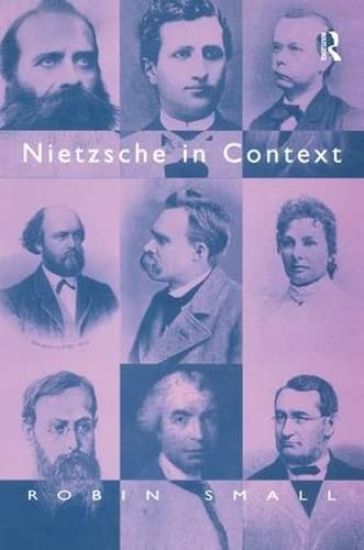
Nietzsche in Context presents a comprehensive reinterpretation of Nietzsche’s thought, placing Nietzsche in the context of the philosophers of his own time. Offering a survey of important philosophical themes, Robin Small identifies the writer or writers with whom Nietzsche most felt himself to be engaging in dialogue. This historical dimension is complemented by original analysis and interpretation of the ideas under discussion. Nietzsche in Context takes Nietzsche scholarship into new and fruitful directions. By locating his ideas within a broader context, this book provides a comprehensive reinterpretation of Nietzsche’s thought adding to the continuing interest of his contributions to philosophy.
Marx and Education

Marx and Education

Robin Small

Ashgate Publishing Limited
2005
sidottu
Marx and Education is the first assessment of the educational thought of Karl Marx (1818-1883) and its later influence, in the light of developments at the close of the twentieth century. It provides a new perspective, in which many aspects of Marx's ideas are seen clearly for the first time, freed from misleading associations and outdated prejudices. Marx's thinking on education touches on many still current issues: about personal development, the nature of learning, and the ultimate aims of education, as well as the relations between the school and society. Robin Small explores Marx's approach to each of these issues and in relating them to later developments brings the story up to the present day.
Production Safety for Film, Television and Video
Covering all aspects of production safety, this is an invaluable reference guide for the independent programme maker, freelancer, manager, producer, tutor and student filmmaker. Robin Small identifies all the major risks and gives advice on how to control and/or eliminate them. Each hazard section includes useful references to the relevant legislation, documents and licences, as well as addresses of organisations for essential advice and recommended further reading. Important information about hazard identification, risk assessment and safety policy is provided in the chapters covering legislation, health and safety management, personal protective equipment and insurance. Particular hazards are then split into individual sections for ease of reference. These hazards include: Asbestos Cranes Explosives and pyrotechnics Food and catering Manual handing and lifting Visual display screens Working at heights The appendices provide comprehensive contact information for UK and European Heath and Safety sources. They also include sample forms to draw up your own safety system. Robin Small is Senior Lecturer in Television, Media Department at the University of Huddersfield.
Marx and Education

Marx and Education

Robin Small

Routledge
2017
nidottu
Marx and Education is the first assessment of the educational thought of Karl Marx (1818-1883) and its later influence, in the light of developments at the close of the twentieth century. It provides a new perspective, in which many aspects of Marx's ideas are seen clearly for the first time, freed from misleading associations and outdated prejudices. Marx's thinking on education touches on many still current issues: about personal development, the nature of learning, and the ultimate aims of education, as well as the relations between the school and society. Robin Small explores Marx's approach to each of these issues and in relating them to later developments brings the story up to the present day.
Nietzsche in Context

Nietzsche in Context

Robin Small

Routledge
2017
sidottu
This title was first published in 2001. Friedrich Nietzsche has always been recognized as an original thinker, one who stands apart from and outside the philosophical schools and tendencies of his time. This is the way he continually presented himself. Many readers have accepted this self-interpretation at face value. Yet there is another side to Nietzsche's thinking which shows not only an awareness of contemporary writers, but an engagement with their ideas which is often both intense and sustained. The intention of this study is to explore this side in detail, by surveying various themes in his philosophical thinking with such links in mind. It is important to avoid one misunderstanding though: this book is not designed to show that Nietzsche derived his ideas from various other thinkers. In that sense, it is not necessarily about "sources" or even about "influences". Rather, it shows that his independence and originality developed in dialogue with other thinkers.
Time and Becoming in Nietzsche's Thought

Time and Becoming in Nietzsche's Thought

Robin Small

Continuum Publishing Corporation
2012
nidottu
Puzzles about time - about past, present and future, and the nature of becoming - have concerned philosophers from the ancient Greeks to the present day. Yet few have been as radical in their thinking as Friedrich Nietzsche. Time and Becoming in Nietzsche's Thought explores Nietzsche's approach to temporality, showing that his metaphorical and literary presentations lend themselves, in surprising detail, to the debates that have engaged other thinkers. Like Heraclitus, Nietzsche is a philosopher of becoming who sees reality as a continual flow of change. Time is an interpretation of becoming, designed to enable its tensions and fluctuations to be grasped conceptually by our minds. From this starting point, Robin Small explores the emergence of sharply contrasting models of temporality which express differing forms of life. The book concludes with a return to Nietzsche's Dionysian vision of playful participation in becoming as a never-ending creation and destruction. Time and Becoming in Nietzsche's Thought reveals Nietzsche as a major contributor to our thinking about temporality and its significance for human life.
Time and Becoming in Nietzsche's Thought

Time and Becoming in Nietzsche's Thought

Robin Small

CONTINUUM PUBLISHING CORPORATION
2010
sidottu
Puzzles about time - about past, present and future, and the nature of becoming - have concerned philosophers from the ancient Greeks to the present day. Yet few have been as radical in their thinking as Friedrich Nietzsche. Time and Becoming in Nietzsche's Thought explores Nietzsche's approach to temporality, showing that his metaphorical and literary presentations lend themselves, in surprising detail, to the debates that have engaged other thinkers. Like Heraclitus, Nietzsche is a philosopher of becoming who sees reality as a continual flow of change. Time is an interpretation of becoming, designed to enable its tensions and fluctuations to be grasped conceptually by our minds. From this starting point, Robin Small explores the emergence of sharply contrasting models of temporality which express differing forms of life. The book concludes with a return to Nietzsche's Dionysian vision of playful participation in becoming as a never-ending creation and destruction. Time and Becoming in Nietzsche's Thought reveals Nietzsche as a major contributor to our thinking about temporality and its significance for human life.
Friedrich Nietzsche

Friedrich Nietzsche

Robin Small

Springer International Publishing AG
2016
nidottu
This book offers a succinct guide to Friedrich Nietzsche’s contributions to educational thought, placing them within the context of his overall philosophy and adding biographical background information that sheds light on his thinking. Topics discussed in detail include theories of knowledge and life, concepts of teaching and learning, and practice and policy issues in modern education. Friedrich Nietzsche (1844–1900) was a major Western thinker with much to say about education, both directly and indirectly. A fierce critic of the schools and universities of his time, he affirms the centrality of ‘culture’ and the exceptional individual as the true aim of education. For Nietzsche, the human predicament is characterised by the tension between knowledge and life. The task of education is to reconcile these demands, but that requires a radical rethinking of knowledge and a re-evaluation of morality. Nietzsche’s new conception of truth replaces facts with interpretations, and certaintywith bold experiment. His new virtues arise out of the ‘sublimation’ of drives that are condemned by traditional morality. An education of the future promotes these aspects of individual development. Even so, Nietzsche seems to think that, in the end, it is up to each of us to engage in a broader task of self-realisation, for which he has a cryptic formula:“Become what you are.”
Karl Marx

Karl Marx

Robin Small

Springer
2013
nidottu
This book is an introduction to Karl Marx (1818–1883) as a radical educational thinker. Marx’s own schooling and education are examined and we see how his interest in educational issues was informed by his own experience. Educational themes in Marx’s thinking are identified: the role of education within capitalist society, the contribution of education to human development and the character of education in a future society. These are placed in a historical setting by the author and related to public debates over educational policy.Throughout his career, Marx identified education as key to the prospects of the working class. The story of this engagement adds a new dimension to the picture of his work as a philosopher, political economist and socialist revolutionary. The aspects of education that concerned Marx matched prominent features of his theoretical and political activity, and educational themes provided him with a critical application for many of his most important ideas.The author explores Marx’s work on the British factory school system, his use of evidence from the reports of school inspectors, and the contemporary movement that led to the establishment of modern systems of public schooling. The final chapter relates Marx’s thinking to questions about the place of education in today’s society, showing how relevant it is for the twenty-first century.These discussions contain new scholarship, draw on original sources and are written in a clear and readable style. Students in education courses at universities and colleges, educational researchers and teachers will find this examination of Karl Marx’s ideas concerning education both engaging and enlightening.
Nietzsche on Fate

Nietzsche on Fate

Robin Small

Cambridge University Press
2026
sidottu
This Element explores Nietzsche's thinking about fate. As a doctrine, fatalism asserts that whatever happens does so necessarily. 'Fate', however, implies an overall pattern for every individual life which imposes its own necessity on the events of that life, although with some contribution from chance. Nietzsche's ideas on fate were influenced by other thinkers, notably Emerson and the ancient Stoics, whom he treats with both sympathy and exasperation. After discussing this context, the Element turns to two of Nietzsche's key themes: amor fati and 'becoming what you are'. In a striking way, each of these 'formulae' presents two contrasted elements standing in a close but tense relationship. Behind them is a conflict between the givenness of fate and our capacity to live our lives in our own way. At the same time, each promises an answer to the question: how are we to live with fate?
Nietzsche on Fate

Nietzsche on Fate

Robin Small

Cambridge University Press
2026
pokkari
This Element explores Nietzsche's thinking about fate. As a doctrine, fatalism asserts that whatever happens does so necessarily. 'Fate', however, implies an overall pattern for every individual life which imposes its own necessity on the events of that life, although with some contribution from chance. Nietzsche's ideas on fate were influenced by other thinkers, notably Emerson and the ancient Stoics, whom he treats with both sympathy and exasperation. After discussing this context, the Element turns to two of Nietzsche's key themes: amor fati and 'becoming what you are'. In a striking way, each of these 'formulae' presents two contrasted elements standing in a close but tense relationship. Behind them is a conflict between the givenness of fate and our capacity to live our lives in our own way. At the same time, each promises an answer to the question: how are we to live with fate?