Kirjojen hintavertailu. Mukana 11 244 527 kirjaa ja 12 kauppaa.

Kirjahaku

Etsi kirjoja tekijän nimen, kirjan nimen tai ISBN:n perusteella.

21 kirjaa tekijältä Robin Wilson

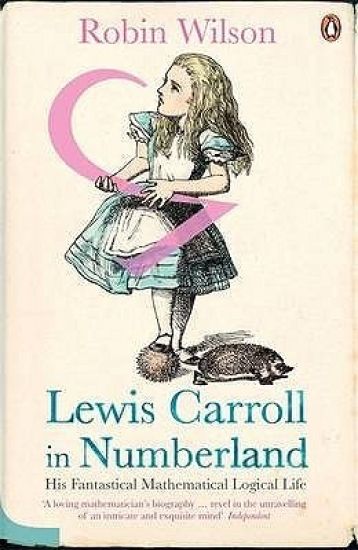
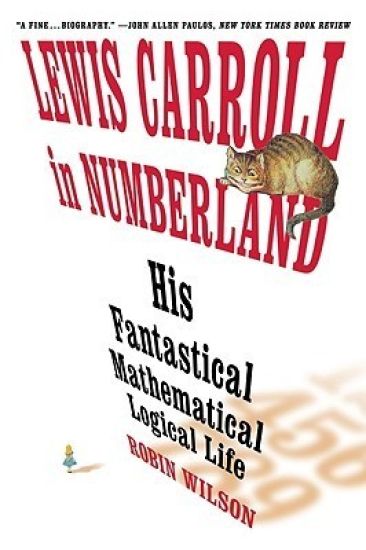
Lewis Carroll in Numberland

Lewis Carroll in Numberland

Robin Wilson

Penguin Books Ltd
2009
pokkari
Lewis Carroll's books have delighted children and adults for generations, but behind their exuberant fantasy and delightful nonsense was the mind of a brilliant mathematician. Now his forgotten achievements in the world of numbers are brought to light by acclaimed author and mathematician Robin Wilson. Here he explores the curious imagination of a man whose pioneering work at Oxford University included investigations into voting patterns and tennis seeding, who dreamt up numerical conundrums in bed at night and who filled his writings with problems, paradoxes, puzzles and teasing games of logic. Taking us into a world of mock turtles and maps, gryphons and gravity, Lewis Carroll in Numberland reveals the singular mind of a genius.
Combinatorics

Combinatorics

Robin Wilson

Oxford University Press
2016
nidottu
How many possible sudoku puzzles are there? In the lottery, what is the chance that two winning balls have consecutive numbers? Who invented Pascal's triangle? (it was not Pascal) Combinatorics, the branch of mathematics concerned with selecting, arranging, and listing or counting collections of objects, works to answer all these questions. Dating back some 3000 years, and initially consisting mainly of the study of permutations and combinations, its scope has broadened to include topics such as graph theory, partitions of numbers, block designs, design of codes, and latin squares. In this Very Short Introduction Robin Wilson gives an overview of the field and its applications in mathematics and computer theory, considering problems from the shortest routes covering certain stops to the minimum number of colours needed to colour a map with different colours for neighbouring countries. ABOUT THE SERIES: The Very Short Introductions series from Oxford University Press contains hundreds of titles in almost every subject area. These pocket-sized books are the perfect way to get ahead in a new subject quickly. Our expert authors combine facts, analysis, perspective, new ideas, and enthusiasm to make interesting and challenging topics highly readable.
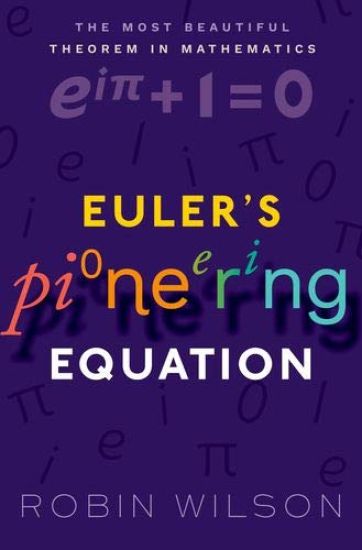
Euler's Pioneering Equation

Euler's Pioneering Equation

Robin Wilson

Oxford University Press
2019
nidottu
In 1988 The Mathematical Intelligencer, a quarterly mathematics journal, carried out a poll to find the most beautiful theorem in mathematics. Twenty-four theorems were listed and readers were invited to award each a 'score for beauty'. While there were many worthy competitors, the winner was 'Euler's equation'. In 2004 Physics World carried out a similar poll of 'greatest equations', and found that among physicists Euler's mathematical result came second only to Maxwell's equations. The Stanford mathematician Keith Devlin reflected the feelings of many in describing it as "like a Shakespearian sonnet that captures the very essence of love, or a painting which brings out the beauty of the human form that is far more than just skin deep, Euler's equation reaches down into the very depths of existence". What is it that makes Euler's identity, eip + 1 = 0, so special? In Euler's Pioneering Equation Robin Wilson shows how this simple, elegant, and profound formula links together perhaps the five most important numbers in mathematics, each associated with a story in themselves: the number 1, the basis of our counting system; the concept of zero, which was a major development in mathematics, and opened up the idea of negative numbers; p an irrational number, the basis for the measurement of circles; the exponential e, associated with exponential growth and logarithms; and the imaginary number i, the square root of -1, the basis of complex numbers. Following a chapter on each of the elements, Robin Wilson discusses how the startling relationship between them was established, including the several near misses to the discovery of the formula.
Number Theory

Number Theory

Robin Wilson

Oxford University Press
2020
nidottu
Number theory is the branch of mathematics that is primarily concerned with the counting numbers. Of particular importance are the prime numbers, the 'building blocks' of our number system. The subject is an old one, dating back over two millennia to the ancient Greeks, and for many years has been studied for its intrinsic beauty and elegance, not least because several of its challenges are so easy to state that everyone can understand them, and yet no-one has ever been able to resolve them. But number theory has also recently become of great practical importance - in the area of cryptography, where the security of your credit card, and indeed of the nation's defence, depends on a result concerning prime numbers that dates back to the 18th century. Recent years have witnessed other spectacular developments, such as Andrew Wiles's proof of 'Fermat's last theorem' (unproved for over 250 years) and some exciting work on prime numbers. In this Very Short Introduction Robin Wilson introduces the main areas of classical number theory, both ancient and modern. Drawing on the work of many of the greatest mathematicians of the past, such as Euclid, Fermat, Euler, and Gauss, he situates some of the most interesting and creative problems in the area in their historical context. ABOUT THE SERIES: The Very Short Introductions series from Oxford University Press contains hundreds of titles in almost every subject area. These pocket-sized books are the perfect way to get ahead in a new subject quickly. Our expert authors combine facts, analysis, perspective, new ideas, and enthusiasm to make interesting and challenging topics highly readable.
Sum Stories

Sum Stories

Robin Wilson

Oxford University Press
2025
sidottu
Can one prove that 1 + 1 = 2? How long is the coastline of Britain? Which US president proved Pythagoras' theorem on right-angled triangles? Who originated the quadratic equation we learned at school? In how many ways can you tile your bathroom? Is there a formula for prime numbers? How often are two winning lottery numbers consecutive? Who was the witch of Agnesi? What is 'the most important theorem in mathematics'? Who scratched mathematical equations on a Dublin bridge? What is a 'space-filling curve'? Must all infinities be the same size? These and many other questions are answered in this book which presents eighteen 'Stories' featuring famous mathematical equations and their historical development. The equations arise from geometry, arithmetic, algebra, calculus, combinatorics, number theory, and mathematical logic, and range over 4,000 years from early counting and circle measurement via Renaissance algebra to fractal geometry, and from the geometry of the ancient Greeks via the development of calculus to Boolean algebra and computing. The Stories are well illustrated with historical artefacts and explanatory diagrams. Presented in a straightforward, intelligible, and entertaining manner, Sum Stories is written for general readers of all ages with an interest in mathematics and its historical development.
The Northern Ireland Experience of Conflict and Agreement

The Northern Ireland Experience of Conflict and Agreement

Robin Wilson

Manchester University Press
2010
sidottu
The Northern Ireland Experience of Conflict and Agreement presents a salutary warning to the international community against the fashionable view that there is an ‘Irish model’ which can be exported to cauterise ethnic troubles around the globe.The book draws on extensive archive research in London and Dublin on the 1970s power-sharing experiment, and on interviews with senior officials and political figures from the two capitals—as well as reconciliation practitioners—about the negotiation and chequered implementation of the Belfast agreement. It shows how stereotyped conceptions of the problem as a product of ‘ancient hatreds’, allied to solutions based on Realpolitik, have failed to transform Northern Ireland from a fragile peace, following the exhaustion of protracted paramilitary campaigns, to genuine reconciliation. The book concludes with practical proposals for constitutional reforms which would favour genuine power-sharing—rather than merely sharing power out—and set Northern Ireland on the road to the ‘normal’, civic society its long-suffering residents desire. It will be essential reading not only for academics and postgraduates interested in ethnic conflict but also for policy-makers who confront it in practice.
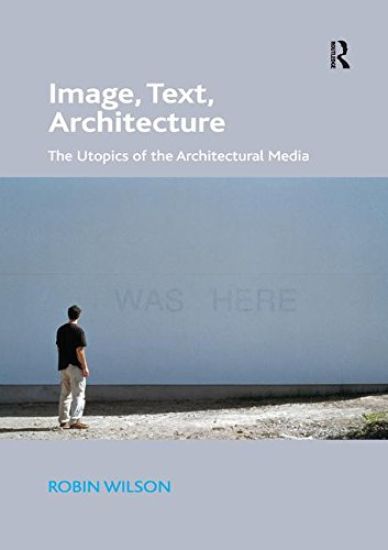
Image, Text, Architecture

Image, Text, Architecture

Robin Wilson

Routledge
2017
nidottu
Image, Text, Architecture brings a radical and detailed analysis of the modern and contemporary architectural media, addressing issues of architectural criticism, architectural photography and the role of journal editors. It covers examples as diverse as an article by British artist Paul Nash in The Architectural Review, 1940, an early project by French architects Lacaton & Vassal published in the journal 2G, 2001, and recent photography by Hisao Suzuki for the Spanish journal El Croquis. At the intersection of image and text the book also reveals the role of the utopian impulse within the architectural media, drawing on theories of utopian discourse from the work of the French semiotician and art theorist Louis Marin, and the American Marxist critic Fredric Jameson. Through this it builds a fresh theoretical approach to journal studies, revealing a hitherto unexplored dimension of "latent" or "unconscious" discourse within the media portrait of architecture. The purpose of this enquiry is to highlight moments where a different type of critical voice emerges on the architectural journal page, indicating the possibility of a more progressive engagement with the media as a platform for critical and speculative thinking about architecture, and to rethink the journals’ role within architectural history.
Image, Text, Architecture

Image, Text, Architecture

Robin Wilson

Routledge
2015
sidottu
Image, Text, Architecture brings a radical and detailed analysis of the modern and contemporary architectural media, addressing issues of architectural criticism, architectural photography and the role of journal editors. It covers examples as diverse as an article by British artist Paul Nash in The Architectural Review, 1940, an early project by French architects Lacaton & Vassal published in the journal 2G, 2001, and recent photography by Hisao Suzuki for the Spanish journal El Croquis. At the intersection of image and text the book also reveals the role of the utopian impulse within the architectural media, drawing on theories of utopian discourse from the work of the French semiotician and art theorist Louis Marin, and the American Marxist critic Fredric Jameson. Through this it builds a fresh theoretical approach to journal studies, revealing a hitherto unexplored dimension of "latent" or "unconscious" discourse within the media portrait of architecture. The purpose of this enquiry is to highlight moments where a different type of critical voice emerges on the architectural journal page, indicating the possibility of a more progressive engagement with the media as a platform for critical and speculative thinking about architecture, and to rethink the journals’ role within architectural history.
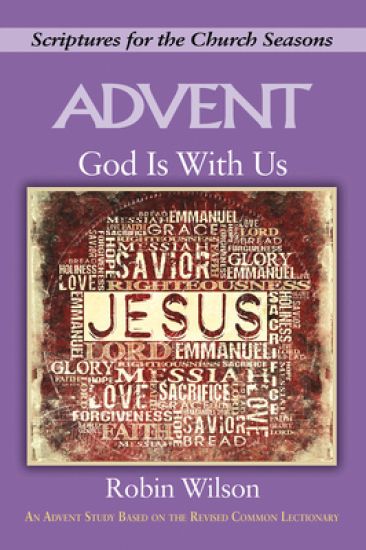
God Is With Us

God Is With Us

Robin Wilson

Abingdon Press
2019
nidottu
God Is With Us, originally published in 2016, invites you to explore your longing for God's presence through a study of the lectionary Bible readings for Advent and Christmas. The hope of Advent is the fulfillment of that longing; we await the coming of Jesus as Immanuel, God With Us. Each week's Scriptures call us to praise God as we actively await the coming of Christ and prepare our hearts and lives for his arrival. Through the readings, we hear the invitation to claim and celebrate the new hope we have in Jesus Christ.The season of Advent offers opportunities to prepare for God's coming in human form in the infant Jesus and for the fulfillment of God's kingdom with the second coming of Christ. Hope is the focus of Advent worship, study, and prayer. We will discover the light that began in the manger, which continues as we look forward with hope to Christ's return.God Is With Us is based on the Revised Common Lectionary Scriptures for church year A, the first of a three-year cycle of Bible readings. The study includes commentary and reflection on readings from the Old Testament, the Gospels, and the Epistles. It offers the opportunity to explore these Bible readings in a five-session study. It will help participants understand, appreciate, and engage in meaningful and joyous celebrations of Advent and Christmas and to live each day in God's hope through Jesus Christ.
God Is With Us - [Large Print]

God Is With Us - [Large Print]

Robin Wilson

Abingdon Press
2019
nidottu
God Is With Us, originally published in 2016, invites you to explore your longing for God's presence through a study of the lectionary Bible readings for Advent and Christmas. The hope of Advent is the fulfillment of that longing; we await the coming of Jesus as Immanuel, God With Us. Each week's Scriptures call us to praise God as we actively await the coming of Christ and prepare our hearts and lives for his arrival. Through the readings, we hear the invitation to claim and celebrate the new hope we have in Jesus Christ. The season of Advent offers opportunities to prepare for God's coming in human form in the infant Jesus and for the fulfillment of God's kingdom with the second coming of Christ. Hope is the focus of Advent worship, study, and prayer. We will discover the light that began in the manger, which continues as we look forward with hope to Christ's return. God Is With Us is based on the Revised Common Lectionary Scriptures for church year A, the first of a three-year cycle of Bible readings. The study includes commentary and reflection on readings from the Old Testament, the Gospels, and the Epistles. It offers the opportunity to explore these Bible readings in a five-session study. It will help participants understand, appreciate, and engage in meaningful and joyous celebrations of Advent and Christmas and to live each day in God's hope through Jesus Christ.
The Northern Ireland Experience of Conflict and Agreement

The Northern Ireland Experience of Conflict and Agreement

Robin Wilson

Manchester University Press
2016
nidottu
The Northern Ireland experience of conflict and agreement presents a salutary warning to the international community against the fashionable view that there is an 'Irish model' which can be exported to cauterise ethnic troubles around the globe.The book draws on extensive archive research in London and Dublin on the 1970s power-sharing experiment, and on interviews with senior officials and political figures from the two capitals-as well as reconciliation practitioners-about the negotiation and chequered implementation of the Belfast agreement. It shows how stereotyped conceptions of the problem as a product of 'ancient hatreds', allied to solutions based on Realpolitik, have failed to transform Northern Ireland from a fragile peace, following the exhaustion of protracted paramilitary campaigns, to genuine reconciliation. The book concludes with practical proposals for constitutional reforms which would favour genuine power-sharing-rather than merely sharing power out-and set Northern Ireland on the road to the 'normal', civic society its long-suffering residents desire. It will be essential reading not only for academics and postgraduates interested in ethnic conflict but also for policy-makers who confront it in practice.
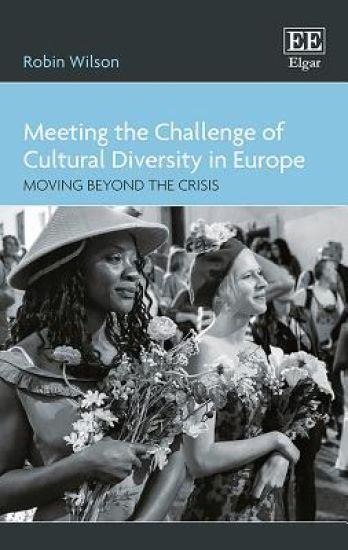
Meeting the Challenge of Cultural Diversity in Europe

Meeting the Challenge of Cultural Diversity in Europe

Robin Wilson

Edward Elgar Publishing Ltd
2018
sidottu
Europe has talked itself into a refugee and security crisis. There is, however, a misrecognition of the real challenge facing Europe: the challenge of managing the relationship between Europeans and the currently stigmatized 'others' which it has attracted. Making the case against a 'Europe of walls', Robin Wilson instead proposes a refounding of Europe built on the power of diversity and an ethos of hospitality rather than an institutional thicket serving the market. Providing a robust critique of the moral panic surrounding migrants and security dominating the European public sphere, this book explains why old models for managing cultural diversity in Europe no longer work, and why their obsolescence has led to morbid symptoms. Incorporating discussion of the eurozone crisis and the associated insecurity and the rise of xenophobic populists, Wilson provides an insider account of how the Council of Europe has, over a decade and a half, developed a new paradigm of intercultural integration. He builds theory into this model, drawing on work on cosmopolitanism in the social sciences, also emphasizing the empirical validity of the approach. With its handling of critical issues currently facing Europe, this book is of interest not only to academics across the social sciences, undergraduate students of politics and sociology and postgraduate students of cultural and European studies, but also to policy-makers and NGO practitioners.