Kirjojen hintavertailu. Mukana 11 717 486 kirjaa ja 12 kauppaa.

Kirjahaku

Etsi kirjoja tekijän nimen, kirjan nimen tai ISBN:n perusteella.

4 kirjaa tekijältä Robyn E. Cutright

The Story of Food in the Human Past

The Story of Food in the Human Past

Robyn E. Cutright

The University of Alabama Press
2021
sidottu
A sweeping overview of how and what humans have eaten in their long history as a speciesThe Story of Food in the Human Past: How What We Ate Made Us Who We Are uses case studies from recent archaeological research to tell the story of food in human prehistory. Beginning with the earliest members of our genus, Robyn E. Cutright investigates the role of food in shaping who we are as humans during the emergence of modern Homo sapiens and through major transitions in human prehistory such as the development of agriculture and the emergence of complex societies. Cutright begins her fascinating study with a discussion of how food shaped humans in evolutionary terms by examining what makes human eating unique, the use of fire to cook, and the origins of cuisine as culture and adaptation through the example of Neanderthals. The second part of the book describes how cuisine was reshaped when humans domesticated plants and animals and examines how food expressed ancient social structures and identities such as gender, class, and ethnicity. Cutright shows how food took on special meaning in feasts and religious rituals and also pays attention to the daily preparation and consumption of food as central to human society. Cutright synthesizes recent paleoanthropological and archaeological research on ancient diet and cuisine and complements her research on daily diet, culinary practice, and special-purpose mortuary and celebratory meals in the Andes with comparative case studies from around the world to offer readers a holistic view of what humans ate in the past and what that reveals about who we are.
The Story of Food in the Human Past

The Story of Food in the Human Past

Robyn E. Cutright

The University of Alabama Press
2021
nidottu
A sweeping overview of how and what humans have eaten in their long history as a speciesThe Story of Food in the Human Past: How What We Ate Made Us Who We Are uses case studies from recent archaeological research to tell the story of food in human prehistory. Beginning with the earliest members of our genus, Robyn E. Cutright investigates the role of food in shaping who we are as humans during the emergence of modern Homo sapiens and through major transitions in human prehistory such as the development of agriculture and the emergence of complex societies. Cutright begins her fascinating study with a discussion of how food shaped humans in evolutionary terms by examining what makes human eating unique, the use of fire to cook, and the origins of cuisine as culture and adaptation through the example of Neanderthals. The second part of the book describes how cuisine was reshaped when humans domesticated plants and animals and examines how food expressed ancient social structures and identities such as gender, class, and ethnicity. Cutright shows how food took on special meaning in feasts and religious rituals and also pays attention to the daily preparation and consumption of food as central to human society. Cutright synthesizes recent paleoanthropological and archaeological research on ancient diet and cuisine and complements her research on daily diet, culinary practice, and special-purpose mortuary and celebratory meals in the Andes with comparative case studies from around the world to offer readers a holistic view of what humans ate in the past and what that reveals about who we are.
Excavating Pedregal

Excavating Pedregal

Robyn E. Cutright

TAYLOR FRANCIS LTD
2025
nidottu
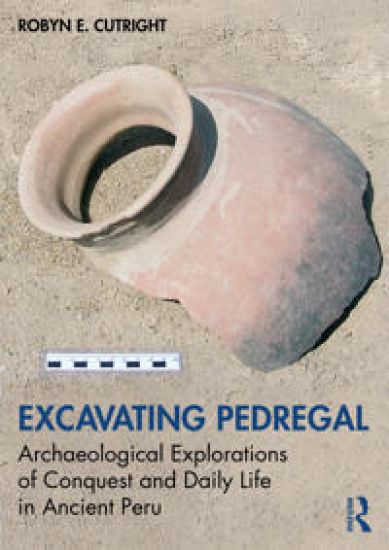
Excavating Pedregal offers a new synthesis of household-level experiences of imperial conquest on the north coast of Perú, using excavations at the Late Intermediate Period farming community of Pedregal as an engaging case study of archaeological research in action. Alongside this central case study, short essays by other archaeological stakeholders highlight diverse experiences and perspectives within archaeology.This book draws on the author’s fifteen years of experience teaching undergraduates and over twenty years as an archaeologist in Peru to offer an accessible account of how archaeological research happens. Chapters introduce key concepts from anthropological archaeology and link research questions to methods, data analysis, and findings. The book balances a discussion of the scientific processes and anthropological theories that ground archaeological research with a tangible account of the lived experiences and practical considerations of doing archaeology. Excavating Pedregal’s multivocal approach complements the central case study with vignettes by North American and Latin American archaeologists, students, and community members. These short essays enrich the main themes of the book and introduce readers to different perspectives and voices within the field, highlighting the way collaboration and conversation with multiple stakeholders enhances the study of the past.Excavating Pedregal is an approachable introduction to how archaeology works for undergraduate students and general readers. It supplements a traditional introductory text by contextualizing research questions, methods, and data in a concrete, contemporary case study, while also offering a sense of the diversity of questions, experiences, and methods that exist in archaeology today and satisfying the curiosity of those who wonder what it’s like to dig up the past.
Excavating Pedregal

Excavating Pedregal

Robyn E. Cutright

TAYLOR FRANCIS LTD
2025
sidottu
Excavating Pedregal offers a new synthesis of household-level experiences of imperial conquest on the north coast of Perú, using excavations at the Late Intermediate Period farming community of Pedregal as an engaging case study of archaeological research in action. Alongside this central case study, short essays by other archaeological stakeholders highlight diverse experiences and perspectives within archaeology.This book draws on the author’s fifteen years of experience teaching undergraduates and over twenty years as an archaeologist in Peru to offer an accessible account of how archaeological research happens. Chapters introduce key concepts from anthropological archaeology and link research questions to methods, data analysis, and findings. The book balances a discussion of the scientific processes and anthropological theories that ground archaeological research with a tangible account of the lived experiences and practical considerations of doing archaeology. Excavating Pedregal’s multivocal approach complements the central case study with vignettes by North American and Latin American archaeologists, students, and community members. These short essays enrich the main themes of the book and introduce readers to different perspectives and voices within the field, highlighting the way collaboration and conversation with multiple stakeholders enhances the study of the past.Excavating Pedregal is an approachable introduction to how archaeology works for undergraduate students and general readers. It supplements a traditional introductory text by contextualizing research questions, methods, and data in a concrete, contemporary case study, while also offering a sense of the diversity of questions, experiences, and methods that exist in archaeology today and satisfying the curiosity of those who wonder what it’s like to dig up the past.