Kirjojen hintavertailu. Mukana 11 367 268 kirjaa ja 12 kauppaa.

Kirjahaku

Etsi kirjoja tekijän nimen, kirjan nimen tai ISBN:n perusteella.

7 kirjaa tekijältä Rod Phillips

French Wine

French Wine

Rod Phillips

University of California Press
2016
sidottu
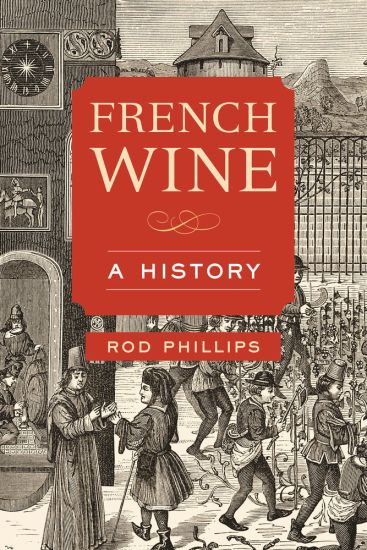
For centuries, wine has been associated with France more than with any other country. France remains one of the world's leading wine producers by volume and enjoys unrivalled cultural recognition for its wine. If any wine regions are global household names, they are French regions such as Champagne, Bordeaux, and Burgundy. Within the wine world, products from French regions are still benchmarks for many wines. French Wine is the first synthetic history of wine in France: from Etruscan, Greek, and Roman imports and the adoption of wine by beer-drinking Gauls to its present status within the global marketplace. Rod Phillips places the history of grape growing and winemaking in each of the country's major regions within broad historical and cultural contexts. Examining a range of influences on the wine industry, wine trade, and wine itself, the book explores religion, economics, politics, revolution, and war, as well as climate and vine diseases. French Wine is the essential reference on French wine for collectors, consumers, sommeliers, and industry professionals.
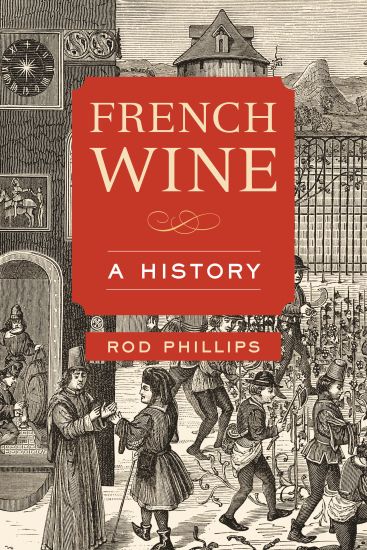
French Wine

French Wine

Rod Phillips

University of California Press
2020
pokkari
"A fascinating book that belongs on every wine lover’s bookshelf."—The Wine Economist"It’s a book to read for its unstoppable torrent of fascinating and often surprising details."—Andrew Jefford, Decanter For centuries, wine has been associated with France more than with any other country. France remains one of the world’s leading wine producers by volume and enjoys unrivaled cultural recognition for its wine. If any wine regions are global household names, they are French regions such as Champagne, Bordeaux, and Burgundy. Within the wine world, products from French regions are still benchmarks for many wines. French Wine is the first synthetic history of wine in France: from Etruscan, Greek, and Roman imports and the adoption of wine by beer-drinking Gauls to its present status within the global marketplace. Rod Phillips places the history of grape growing and winemaking in each of the country’s major regions within broad historical and cultural contexts. Examining a range of influences on the wine industry, wine trade, and wine itself, the book explores religion, economics, politics, revolution, and war, as well as climate and vine diseases. French Wine is the essential reference on French wine for collectors, consumers, sommeliers, and industry professionals.

"Forest Beatniks" and "Urban Thoreaus"

"Forest Beatniks" and "Urban Thoreaus"

Rod Phillips

Peter Lang Publishing Inc
2000
sidottu
The Beat Movement, which first rose to attention in 1955, has often been viewed by critics as an urban phenomenon - the product of a postwar-youth culture with roots in the cities of New York and San Francisco. This study examines another side of the Beat Movement: its strong desire for a reconnection with nature. Although each took a different path in attaining this goal, the writers considered here - Gary Snyder, Jack Kerouac, Lew Welch, and Michael McClure - sought a new and closer connection to the natural world. These four writers, along with many of their counterparts in the Beat era, provided a crucial spark that helped to ignite the environmental movement of the 1970s and provided the foundation for the development of the current -Deep Ecology- worldview."
Wine

Wine

Rod Phillips

ACADEMIE DU VIN LIBRARY LIMITED
2024
nidottu
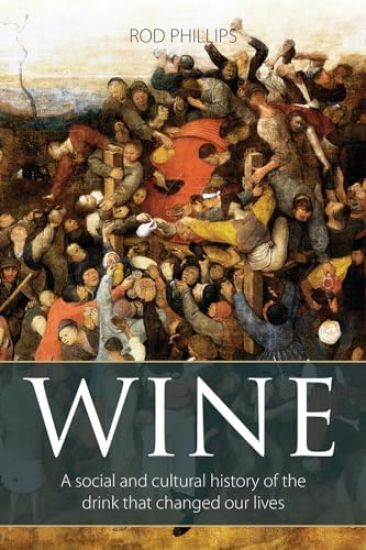
Wine: A Social and Cultural History of the Drink that Changed our Lives is a wine history with a difference. Most histories of wine (like Hugh Johnson’s The Story of Wine, Paul Lukacs’s Inventing Wine, and Rod Phillips’s own A Short History of Wine) are chronological narratives that begin with wine in the ancient world and run through to modern times. Wine has been seen typically as the subject of broader historical trends and events – how, for example, economic and diplomatic conditions favoured or interrupted the wine trade, and how changes in taste affected wine styles. Wine departs from these approaches by organising chapters by theme and by focusing much more on how wine has been positively and actively implicated in broad historical changes. It looks at the way wine has been used to demarcate social groups and genders, how wine has shaped facets of social life as diverse as medicine, religion, and military activity, how vineyards and wine cultures have transformed landscapes, and how successive innovations in wine packaging – from amphoras to barrels to bottles – have affected and been affected by commerce and consumption. Wine neither sees the history of wine as the passive result of historical forces nor sees wine as a prime agent of historical change. Rather, it views wine as a critical actor in key trends in the histories of society, culture, and the environment. Each chapter takes a single theme and the material within each is organised chronologically. The book is formed of chapters that together provide a compact and theme-specific history of wine in its own right, enabling readers to consume chapters as self-contained units, rather than as parts of a longer narrative whole. This is a fascinating reference resource for wine enthusiasts and historians alike.
The Wines of Canada

The Wines of Canada

Rod Phillips

ACADEMIE DU VIN LIBRARY LIMITED
2024
nidottu
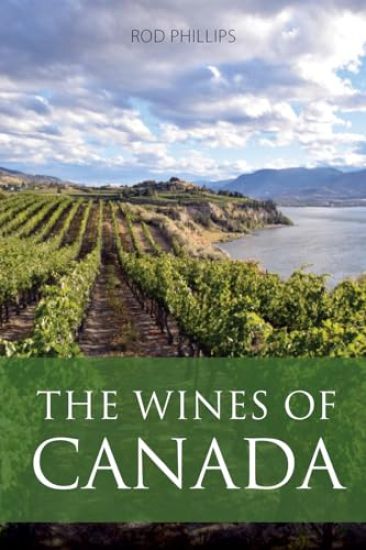
Wine has been made commercially in Canada since the mid-1800s but Canadian wine has only really begun to register with professionals and consumers outside the country in the last few decades, as quality has dramatically improved. Canadian wine is now being exported in meaningful volumes to the USA, Asia and Europe and since the beginning of this century the number of wineries has increased more than 250 per cent. In recent years wine regions have been demarcated (with some divided into sub-appellations), provincial wine laws have been adopted and indigenous and hybrid vines have largely been replaced by Vitis vinifera varieties in the main wine regions. After taking readers through the history of winemaking in Canada, The Wines of Canada provides an overview of the country’s wine regions, their climate, soil and other geographic conditions, and explains noteworthy viticultural and winemaking techniques, such as the practice in some regions of burying vines to protect them from extreme winter temperatures. Phillips details key producers of the main wine-producing provinces (British Columbia, Ontario, Quebec and Nova Scotia), assessing their wines and providing relevant details for those planning winery visits. The book concludes with appendices covering vintage reports, Canadian wine festivals and provincial wine-selling laws. As the first comprehensive guide to one of the wine world’s rising stars, The Wines of Canada is an eye-opening book for scholars, students and wine aficionados alike.
The Wines of South-West France

The Wines of South-West France

Rod Phillips

ACADEMIE DU VIN LIBRARY LIMITED
2026
nidottu
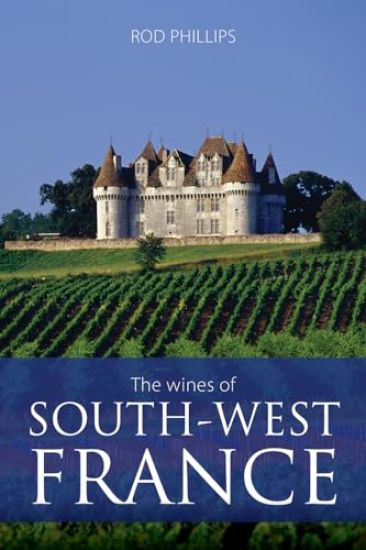
Wine production in south-west France goes back a long way. The region includes some of the first districts in France (notably Gaillac) to be planted with vines, by the Romans more than two thousand years ago. It is also the earliest-known location of scores of grape varieties, some of them precursors of international varieties such as Malbec and Cabernet Franc. Although today south-west France is the fourth region of France in terms of wine production very few wine consumers are familiar with more than two or three of its appellations. Cahors and Madiran are well-known appellations but we don’t hear (or read) much about less fashionable appellations such as Rosette and Béarn. As a result the wines generally command relatively low prices. This book covers all the important aspects of south-west France in an accessible way. Although it includes the mass-produced wines of the region it focuses on quality wines made in more limited volumes. Although a number of the appellations of south-west France share similar climatic conditions (such as the influence of the Atlantic), the many small AOPs vary significantly in soils and topography, grape varieties, and the styles of wines they produce. They range from the botrytized sweet whites of Monbazillac to the teeth-staining reds of Cahors, from the distinctive dry whites of Jurançon to the tannic reds of Madiran. Phillips begins with a brief history of the region and provides an overview of the region today before considering the wines of the various sub-regions in turn, including land and climate, grape varieties, wine styles, and wine law, together with entries on their most notable producers. All colours of wine are made in south-west France, as are dry and sweet wines and sparkling and still wines. The rich diversity of the world of wine is represented in south-west France, and it is this very diversity of grape varieties and wine styles that makes the region so compelling.
Cats

Cats

Rod Phillips

Johns Hopkins University Press
2026
sidottu
A sweeping and fascinating history of cat-human relationships. For more than 10,000 years, cats have prowled at the edges of human life. But, starting only a few decades ago, hundreds of millions of them became pets. In Cats: A History, historian Rod Phillips shares a sweeping cultural and social history of cats, tracing the shifting place of felines across societies and centuries,from ancient Egypt's revered hunters to Europe's suspected familiars of witches and from shipboard rodent controllers to cherished internet icons. Phillips illustrates how cats have always occupied spaces both familiar and mysterious and how their perceived independence and disruptive nature—and their associations with women, the supernatural, and outsiders—have shaped humans' attitudes toward these fascinating creatures. Cats have been lauded as companions and vermin-killers, reviled as threats to moral and ecological order, and cherished for the very qualities that make them hard to control. This richly textured portrait of cats explores their significance in religion, politics, gender, literature, warfare, and pop culture. It also provides fascinating insights into our relationships with other animals, especially dogs and rodents. The many roles that cats have played throughout history illuminate a variety of fascinating contradictions in humans' perceptions of them: as affectionate yet aloof, adorable and evil, ordinary and exceptional. Cats: A History is the definitive story of the feline presence in human history—an elegant study of how we live with animals whom we see as living by their own rules.