Kirjojen hintavertailu. Mukana 11 244 527 kirjaa ja 12 kauppaa.

Kirjahaku

Etsi kirjoja tekijän nimen, kirjan nimen tai ISBN:n perusteella.

14 kirjaa tekijältä Roderic Ai Camp

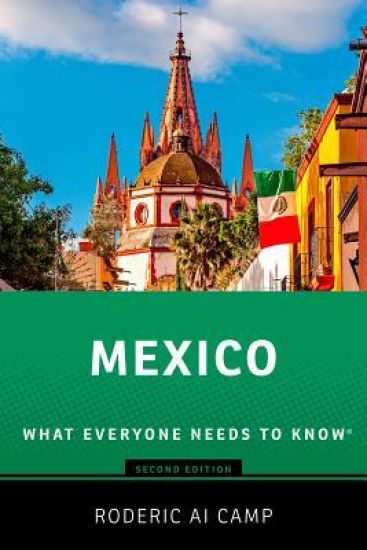
Mexico

Mexico

Roderic Ai Camp

Oxford University Press Inc
2017
sidottu
Today all would agree that Mexico and the United States have never been closer--that the fates of the two republics are inextricably intertwined. It has become an intimate part of life in almost every community in the United States, through immigration, imported produce, business ties, or illegal drugs. It is less a neighbor than a sibling; no matter what our differences, it is intricately a part of our existence. In the fully updated second edition of Mexico: What Everyone Needs to Know®, Roderic Ai Camp gives readers the most essential information about our sister republic to the south. Camp organizes chapters around major themes--security and violence, economic development, foreign relations, the colonial heritage, and more. He asks questions that take us beyond the headlines: Why does Mexico have so much drug violence? What was the impact of the North American Free Trade Agreement? How democratic is Mexico? Who were Benito Juárez and Pancho Villa? What is the PRI (the Institutional Revolutionary Party)? The answers are sometimes surprising. Despite ratification of NAFTA, for example, Mexico has fallen behind Brazil and Chile in economic growth and rates of poverty. Camp explains that lack of labor flexibility, along with low levels of transparency and high levels of corruption, make Mexico less competitive than some other Latin American countries. The drug trade, of course, enhances corruption and feeds on poverty; approximately 450,000 Mexicans now work in this sector. Brisk, clear, and informed, Mexico: What Everyone Needs To Know® offers a valuable primer for anyone interested in the past, present, and future of our neighbor to the South.
Mexico

Mexico

Roderic Ai Camp

Oxford University Press Inc
2017
nidottu
Today all would agree that Mexico and the United States have never been closer--that the fates of the two republics are inextricably intertwined. It has become an intimate part of life in almost every community in the United States, through immigration, imported produce, business ties, or illegal drugs. It is less a neighbor than a sibling; no matter what our differences, it is intricately a part of our existence. In the fully updated second edition of Mexico: What Everyone Needs to Know®, Roderic Ai Camp gives readers the most essential information about our sister republic to the south. Camp organizes chapters around major themes--security and violence, economic development, foreign relations, the colonial heritage, and more. He asks questions that take us beyond the headlines: Why does Mexico have so much drug violence? What was the impact of the North American Free Trade Agreement? How democratic is Mexico? Who were Benito Juárez and Pancho Villa? What is the PRI (the Institutional Revolutionary Party)? The answers are sometimes surprising. Despite ratification of NAFTA, for example, Mexico has fallen behind Brazil and Chile in economic growth and rates of poverty. Camp explains that lack of labor flexibility, along with low levels of transparency and high levels of corruption, make Mexico less competitive than some other Latin American countries. The drug trade, of course, enhances corruption and feeds on poverty; approximately 450,000 Mexicans now work in this sector. Brisk, clear, and informed, Mexico: What Everyone Needs To Know® offers a valuable primer for anyone interested in the past, present, and future of our neighbor to the South.
Crossing Swords

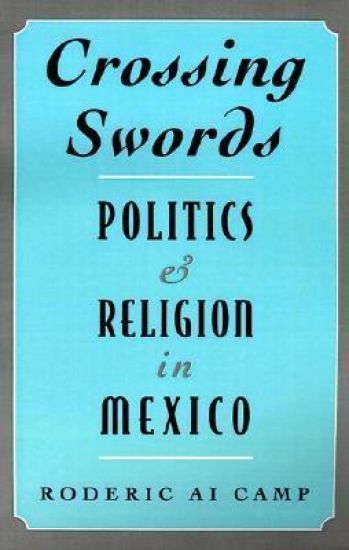
Crossing Swords

Roderic Ai Camp

Oxford University Press Inc
1997
sidottu
Based on a decade of field research, this work is the first book-length, scholarly examination in English of the role of Catholicism in Mexican society since the 1970s through 1995, and the increasing political activism of the Catholic church and clergy. It is also the first analysis of church-state relations in Latin America that incorporates detailed interviews of numerous bishops and clergy and leading politicians about how they see each other and how religion influences their values. It is also the first analysis of the Mexican Catholic Church which uses national survey research to examine Mexican attitudes toward religion, Christianity, and Catholicism, and provides the first inside look at the decision-making process of bishops at the diocesan level.
The Oxford Handbook of Mexican Politics

The Oxford Handbook of Mexican Politics

Roderic Ai Camp

Oxford University Press Inc
2012
sidottu
Since achieving independence from Spain and establishing its first constitution in 1824, Mexico has experienced numerous political upheavals. The country's long and turbulent journey toward democratic, representative government has been marked by a tension between centralized, autocratic governments (historically depicted as a legacy of colonial institutions) and federalist structures. The years since Mexico's independence have seen a major violent social revolution, years of authoritarian rule, and, finally, in the past two decades, the introduction of a fair and democratic electoral process. Over the course of the thirty-one essays in The Oxford Handbook of Mexican Politics some of the world's leading scholars of Mexico will provide a comprehensive view of the remarkable transformation of the nation's political system to a democratic model. In turn they will assess the most influential institutions, actors, policies and issues in its current evolution toward democratic consolidation. Following an introduction by Roderic Ai Camp, sections will explore the current state of Mexico's political development; transformative political institutions; the changing roles of the military, big business, organized labor, and the national political elite; new political actors including the news media, indigenous movements, women, and drug traffickers; electoral politics; demographics and political attitudes; and policy issues.
The Metamorphosis of Leadership in a Democratic Mexico

The Metamorphosis of Leadership in a Democratic Mexico

Roderic Ai Camp

Oxford University Press Inc
2010
sidottu
The Metamorphosis of Leadership in a Democratic Mexico is a broad analysis of Mexico's changing leadership over the past eight decades, stretching from its pre-democratic era (1935-1988), to its democratic transition (1988-2000) to its democratic period (2000-the present). In it, Roderic Camp, one of the most distinguished scholars of Mexican politics, seeks to answer two questions: 1) how has Mexican political leadership evolved since the 1930s and in what ways, beyond ideology, has the shift from a semi-authoritarian, one-party system to a democratic, electoral system altered the country's leadership? and 2) which aspects of Mexican leadership have been most affected by this shift in political models and when and why did the changes in leadership occur? Rather than viewing Mexico's current government as a true democracy, Camp sees it as undergoing a process of consolidation, under which the competitive electoral process has resulted in a system of governing institutions supported by the majority of citizens and significant strides toward plurality. Accordingly, he looks at the relationship between the decentralization of political power and the changing characteristics, experiences and paths to power of national leaders. The book, which represents four decades of Camp's work, is based upon a detailed study of 3000 politicians from the 1930s through the present, incorporating regional media accounts and Camp's own interviews with Mexican presidents, cabinet members, assistant secretaries, senators, governors and party presidents.
Mexico

Mexico

Roderic Ai Camp

Oxford University Press Inc
2011
nidottu
Today most would agree that Mexico and the United States have never been closer—that the fates of the two republics are inextricably intertwined. It has become an intimate part of life in almost every community in the United States, through immigration, imported produce, business ties, or illegal drugs. They are less neighbors than siblings; no matter the differences, they are intricately a part of each others' existence. In this outstanding contribution to Oxford's acclaimed series, What Everyone Needs to Know®, Roderic Ai Camp gives readers the most essential information about America's sister republic to the south. Camp organizes chapters around major themes—security and violence, economic development, foreign relations, the colonial heritage, and more. He asks questions that take us beyond the headlines: Why does Mexico have so much drug violence? What was the impact of the North American Free Trade Agreement? How democratic is Mexico? Who were Benito Juárez and Pancho Villa? What is the PRI (the Institutional Revolutionary Party)? The answers are sometimes surprising. Despite ratification of NAFTA, for example, Mexico has fallen behind Brazil and Chile in economic growth and rates of poverty. Camp explains that lack of labor flexibility, along with low levels of transparency and high levels of corruption, make Mexico less competitive than some other Latin American countries. The drug trade, of course, enhances corruption and feeds on poverty; approximately 450,000 Mexicans now work in this sector. But Camp reveals that President Calderón's recent assault on narcotics smugglers—and the violence resulting from it—may have actually lessened the government's control of parts of the country and national institutions. Brisk, clear, and informed, Mexico: What Everyone Needs To Know® offers a valuable primer for anyone interested in the past, present, and future of America's neighbor to the South.
Mexico

Mexico

Roderic Ai Camp

Oxford University Press Inc
2011
sidottu
Today all would agree that Mexico and the United States have never been closer--that the fates of the two republics are inextricably intertwined. It has become an intimate part of life in almost every community in the United States, through immigration, imported produce, business ties, or illegal drugs. It is less a neighbor than a sibling; no matter what our differences, it is intricately a part of our existence. In this outstanding contribution to Oxford's acclaimed series, What Everyone Needs to Know, Roderic Ai Camp gives readers the most essential information about our sister republic to the south. Camp organizes chapters around major themes--security and violence, economic development, foreign relations, the colonial heritage, and more. He asks questions that take us beyond the headlines: Why does Mexico have so much drug violence? What was the impact of the North American Free Trade Agreement? How democratic is Mexico? Who were Benito Juárez and Pancho Villa? What is the PRI (the Institutional Revolutionary Party)? The answers are sometimes surprising. Despite ratification of NAFTA, for example, Mexico has fallen behind Brazil and Chile in economic growth and rates of poverty. Camp explains that lack of labor flexibility, along with low levels of transparency and high levels of corruption, make Mexico less competitive than some other Latin American countries. The drug trade, of course, enhances corruption and feeds on poverty; approximately 450,000 Mexicans now work in this sector. But Camp reveals that President Calderón's recent assault on narcotics smugglers--and the violence resulting from it--may have actually lessened the government's control of parts of the country and national institutions. Brisk, clear, and informed, Mexico: What Everyone Needs To Know offers a valuable primer for anyone interested in the past, present, and future of our neighbor to the South.
Political Recruitment across Two Centuries

Political Recruitment across Two Centuries

Roderic Ai Camp

University of Texas Press
1995
pokkari
During more than twenty years of field research, Roderic Ai Camp built a monumental database of biographical information on more than 3,000 leading national figures in Mexico. In this major contribution to Mexican political history, he draws on that database to present a definitive account of the paths to power Mexican political leaders pursued during the period 1884 to 1992.Camp’s research clarifies the patterns of political recruitment in Mexico, showing the consequences of choosing one group over another. It calls into question numerous traditional assumptions, including that upward political mobility was a cause of the Mexican Revolution of 1910.Comparing Mexican practices with those in several East Asian countries also allows Camp to question many of the tenets of political recruitment theory. His book will be of interest to students not only of Mexican politics but also of history, comparative politics, political leadership, and Third World development.
Mexican Political Biographies, 1935-2009

Mexican Political Biographies, 1935-2009

Roderic Ai Camp

University of Texas Press
2011
sidottu
This fourth edition of Roderic Camp's highly respected Mexican Political Biographies is an updated comprehensive biographical directory of leading state and national politicians in Mexico, covering the years 1935–2009. The original edition, published in 1976, was the first and only comprehensive biographical work on contemporary political figures in any language and served as the prototype for the Mexican government's brief foray into its own official biographical directory. The Mexican Supreme Court has cited every biography of justices in the third edition as the basis of its biographies in the late 1980s.With updates of the existing biographies and appendices, plus almost 1,000 additional biographies, this fourth edition now features close to 3,000 entries and serves as a unique resource list of the chronological occupants of all leading national political posts. The need for such information has become even more pronounced since Mexico's political transformation from a semi-authoritarian to a democratic model.This latest edition allows readers access to information about Mexican politicians into the new century, and like its earlier versions, will be a valuable tool for government officials, journalists, historians, social scientists, the business community, and students.Finally, it includes a detailed bibliographic essay that identifies and explains the significance of biographical sources and has been enhanced by numerous up-to-date Internet sources. An added convenience is an accompanying CD that allows readers to search the biographies and appendices, enhancing the longevity, usefulness, and uniqueness of this edition.
Intellectuals and the State in Twentieth-Century Mexico

Intellectuals and the State in Twentieth-Century Mexico

Roderic Ai Camp

University of Texas Press
1986
pokkari
In developing countries, the extent to which intellectuals disengage themselves in state activities has widespread consequences for the social, political, and economic development of those societies. Roderic Camps’ examination of intellectuals in Mexico is the first study of a Latin American country to detail the structure of intellectual life, rather than merely considering intellectual ideas. Camp has used original sources, including extensive interviews, to provide new data about the evolution of leading Mexican intellectuals and their relationship to politics and politicians since 1920.
Mexican Political Biographies, 1884–1934

Mexican Political Biographies, 1884–1934

Roderic Ai Camp

University of Texas Press
1991
nidottu
Here is an authoritative reference work that makes biographies of prominent Mexican national politicians from the period 1884–1934 available in English. Like the author's biographical directory for the years 1935–2009, it draws on many years of research in Mexico and the United States and seeks not only to provide accurate biographical information about each entry but also, where possible and appropriate, to connect these politicians to more recent leadership generations. Thus, Mexican Political Biographies, 1884-1934 not only is a useful historical source but also provides additional information on the family backgrounds of many contemporary figures.The work includes those figures who have held specific posts at the national level or who have served as state governors. Each biographical entry contains the following information: date of birth, birthplace, education, elective political office, political party positions, appointive governmental posts at all levels, group activities, nongovernmental positions and professions, relatives, mentors and important friends, military experience, unusual career activities, and published biographical sources.Another unique feature of the directory is appendixes with complete lists of the names and dates of cabinet members, supreme court justices, senators, deputies, selected ambassadors, and party leaders.
Mexico’s Mandarins

Mexico’s Mandarins

Roderic Ai Camp

University of California Press
2002
pokkari
This groundbreaking study marks the culmination of over twenty years of research by one of this country's most prominent Mexico scholars. Roderic Ai Camp provides a detailed, comprehensive examination of Mexico's power elite - their political power, societal influence, and the crucial yet often overlooked role mentoring plays in their rise to the top. In the course of this book, he traces the careers of approximately four hundred of the country's most notable politicians, military officers, clergy, intellectuals, and capitalists. Thoroughly researched and drawn from in-depth interviews with some of Mexico's most powerful players, "Mexico's Mandarins" provides insight into the machinations of Mexican leadership and an important glimpse into the country's future as it steps onto the global stage.