Kirjojen hintavertailu. Mukana 11 228 534 kirjaa ja 12 kauppaa.

Kirjahaku

Etsi kirjoja tekijän nimen, kirjan nimen tai ISBN:n perusteella.

3 kirjaa tekijältä Roderick J. Barman

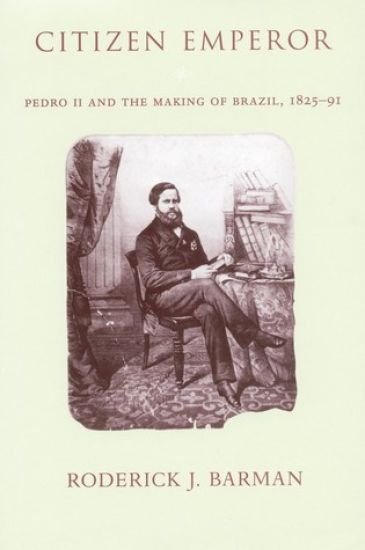
Citizen Emperor

Citizen Emperor

Roderick J. Barman

Stanford University Press
1999
sidottu
In the history of post-colonial Latin America no person has held power so firmly and for so long as did Pedro II as emperor of Brazil. Called to the throne in 1840 at the age of 14, Pedro II devoted himself for the next half century to transforming Brazil into a functioning nation-state, applying "all my forces and all my devotion to assuring the progress and prosperity of my people." This is the first full-length biography in 60 years, and the first in any language to make close use of Pedro II's diaries and family papers. Resourceful, patient, cautious, and above all persevering, Pedro II acquired undisputed control of public affairs and was indispensable in establishing Brazil's viability as a nation. By his personal character, behavior, and interests, he created a model of citizenship that commanded acceptance at home and respect abroad. A friend of Longfellow, Emerson, and Oliver Wendell Holmes, he was the first foreign head of state to visit the United States. By the 1880s, the rising generation had so internalized the model of Pedro II that it greatly resembled him in outlook and culture. Ironically, his success was such that the ruling circles took Brazil's existence as a nation for granted and viewed him as old-fashioned and irrelevant to the nation's needs. In effect, he had made himself redundant. Unable to change his ways of ruling, weakened by illness, and increasingly marginal to public affairs, he was overthrown by a military coup in 1889. Exiled to Europe, he died in Paris two years later. This volume reveals how the political and the personal intertwined to make Pedro II the person he was. Many facets of his character appear innate—his great energy and his love of books and learning, for example—but his personality was also shaped by a privileged background, painful childhood experiences, and convoluted relationships with his parents, siblings, wife, and children. He was remarkably self-centered, with a distrust of intimacy that left him emotionally deprived. He worked alone, and his principal advisors were never human beings but books. A man of monumental restraint and iron self-discipline, Pedro II took great care in speech and writing to reveal little of his inner self. These defenses once penetrated, as in this book, we encounter a complex personality who simultaneously compels sympathy, exasperation, and respect.
Citizen Emperor

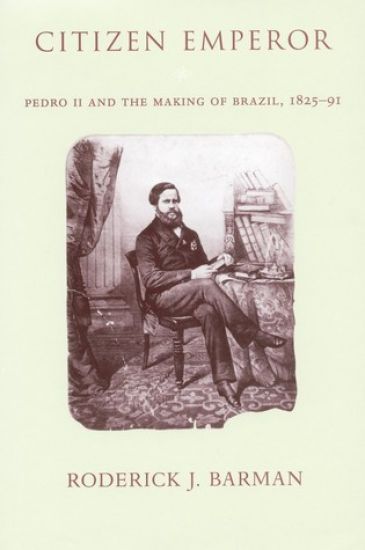
Citizen Emperor

Roderick J. Barman

Stanford University Press
2002
pokkari
In the history of post-colonial Latin America no person has held power so firmly and for so long as did Pedro II as emperor of Brazil. Called to the throne in 1840 at the age of 14, Pedro II devoted himself for the next half century to transforming Brazil into a functioning nation-state, applying "all my forces and all my devotion to assuring the progress and prosperity of my people." This is the first full-length biography in 60 years, and the first in any language to make close use of Pedro II's diaries and family papers. Resourceful, patient, cautious, and above all persevering, Pedro II acquired undisputed control of public affairs and was indispensable in establishing Brazil's viability as a nation. By his personal character, behavior, and interests, he created a model of citizenship that commanded acceptance at home and respect abroad. A friend of Longfellow, Emerson, and Oliver Wendell Holmes, he was the first foreign head of state to visit the United States. By the 1880s, the rising generation had so internalized the model of Pedro II that it greatly resembled him in outlook and culture. Ironically, his success was such that the ruling circles took Brazil's existence as a nation for granted and viewed him as old-fashioned and irrelevant to the nation's needs. In effect, he had made himself redundant. Unable to change his ways of ruling, weakened by illness, and increasingly marginal to public affairs, he was overthrown by a military coup in 1889. Exiled to Europe, he died in Paris two years later. This volume reveals how the political and the personal intertwined to make Pedro II the person he was. Many facets of his character appear innate—his great energy and his love of books and learning, for example—but his personality was also shaped by a privileged background, painful childhood experiences, and convoluted relationships with his parents, siblings, wife, and children. He was remarkably self-centered, with a distrust of intimacy that left him emotionally deprived. He worked alone, and his principal advisors were never human beings but books. A man of monumental restraint and iron self-discipline, Pedro II took great care in speech and writing to reveal little of his inner self. These defenses once penetrated, as in this book, we encounter a complex personality who simultaneously compels sympathy, exasperation, and respect.
Princess Isabel of Brazil

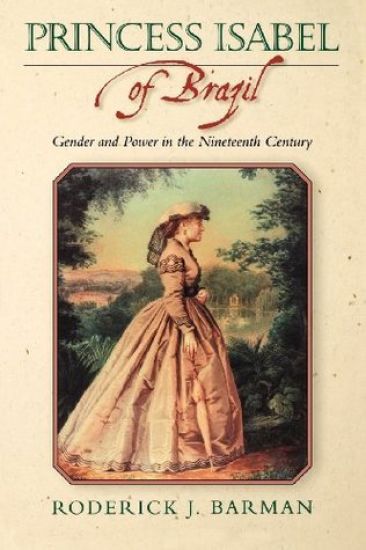
Princess Isabel of Brazil

Roderick J. Barman

Rowman Littlefield
2002
nidottu
As the elder daughter of an emperor whose wife had presented him with no sons, Isabel stood to inherit the monarchy of Brazil with the passing of Dom Pedro II. On three separate occasions, Isabel was named regent, or head of state, when her father was required to leave the country for extended periods. On each occasion, she served as the dutiful daughter, following her father's instructions to the letter and resisting any attempts at personal aggrandizement. During her third regency, as her father recuperated in Europe, rather than accumulate personal power and oppose the forces of republicanism and abolition, Isabel personally led the struggle to pass the Gold Law of 1888 abolishing slavery throughout Brazil, thus ridding the country of one of the institutions upon which traditional monarchical Brazil was based and speeding the downfall of the monarchy, the monarchy she would inherit, in 1889. Princess Isabel of Brazil examines Isabel's role as an extraordinary woman who had access to material wealth and education and power, in patriarchal nineteenth-century Brazil. Professor Barman looks at how her life was constrained by her subordinate roles as daughter, wife, mother, and even as empress-in-waiting, using the fascinating career of Isabel to examine the interplay of gender and power in the nineteenth century. This new book is an excellent resource for courses biography, women's studies, and Latin American history courses.