Kirjojen hintavertailu. Mukana 11 244 527 kirjaa ja 12 kauppaa.

Kirjahaku

Etsi kirjoja tekijän nimen, kirjan nimen tai ISBN:n perusteella.

5 kirjaa tekijältä Rodney Bolt

History Play

History Play

Rodney Bolt

HarperPerennial
2005
nidottu
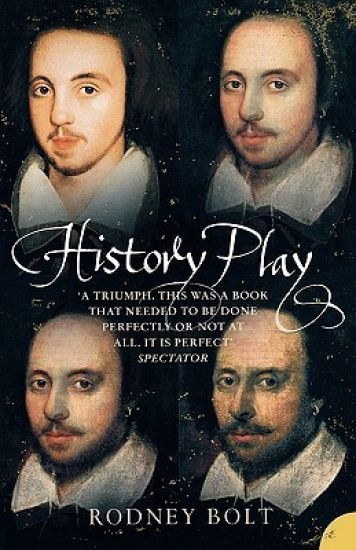
What if Christopher Marlowe staged his own death, fled to the Continent and went on to write the works we now attribute to Shakespeare? 'About anyone so great as Shakespeare, it is probable that we can never be right; and if we can never be right, it is better that we should from time to time change our way of being wrong.' T. S. Eliot Mark Twain likened writing the biography of Shakespeare to reconstructing the skeleton of a brontosaurus – using 'nine bones and six hundred barrels of plaster of Paris'. We work with a handful of facts and a pile of conjecture. All biographies of Shakespeare, from the wayward to the academic, use the same few-score hard facts kneaded together with legend, then leavened by a dash of zeitgeist and a large dollop of author's imagination. Poems and plays are plundered for booty, even by those who profess scepticism as to the inferences that can be drawn about the life from the work. Like statistics, quotations can be turned to very different facts. This book is not, of course, an attempt to prove that Christopher Marlowe staged his own death, fled to the continent, and went on to write the work attributed to Shakespeare. It, however, playfully assumes that as its starting point, and swings the old bones around, viewing them from a different angle to build a different brontosaurus. It does so in a spirit of fun, and with the intention of a little saucy iconoclasm. Shakespeare's works are unassailable, and will survive any amount of subversion, but by playing with our commonplace history, Rodney Bolt argues that the quasi-religious idol the man has become is perhaps in need of the efforts of a wicked woodworm. Where other writers have looked at the evidence and deduced a story, Bolt has imagined a story, then supported it with the same sparse evidence. At this distance, the difference between deduction and speculation is paper thin. The point of the take is not only to question our view of history and the validity of biography, but to show how people travelled, how cultures crossed, and how art gets made.
Lorenzo Da Ponte

Lorenzo Da Ponte

Rodney Bolt

Bloomsbury Publishing PLC
2007
nidottu
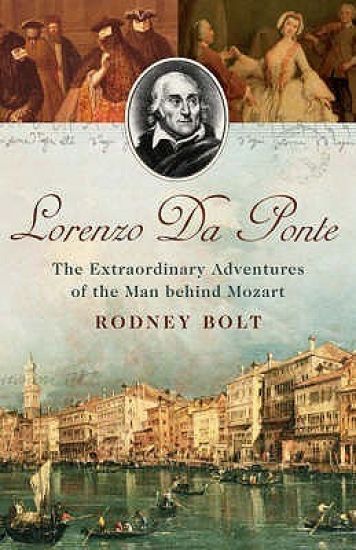
By the time he was forty, Lorenzo Da Ponte had been a poet, priest, lover and libertine, a friend of Casanova, collaborator then enemy of Salieri, and ultimately the librettist for three of Mozart's most sublime operas - "The Marriage of Figaro", "Cosi fan tutte" and "Don Giovanni". After losing all his money and the woman he loved he started afresh in New York, and by the end of his life he had founded its first opera house and become a university professor. "Lorenzo Da Ponte" is a fascinating and entertaining biography of a larger-than-life character, and a vibrant portrait of four cities and four changing eras of history.
As Good as God, As Clever as the Devil

As Good as God, As Clever as the Devil

Rodney Bolt

Atlantic Books
2011
sidottu
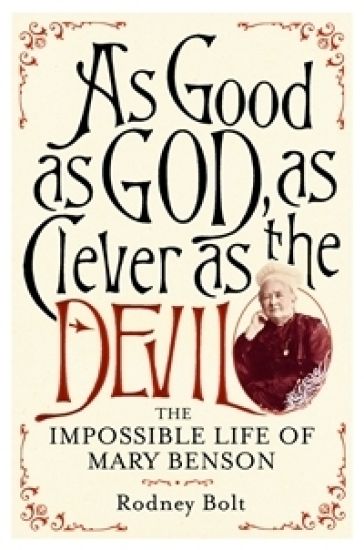
Young Minnie Sidgwick was just twelve years old when her cousin, twenty-three-year old Edward Benson, proposed to her in 1853. Edward went on to become Archbishop of Canterbury and little Minnie - as Mary Benson - to preside over Lambeth Palace, and a social world that ranged from Tennyson and Browning to foreign royalty and Queen Victoria herself. Prime Minister William Gladstone called her 'the cleverest woman in Europe'. Yet Mrs Benson's most intense relationships were not with her husband and his associates, but with other women. When the Archbishop died, Mary - 'Ben' to her intimates - turned down an offer from the Queen to live at Windsor, and set up home in a Jacobean manor house with her friend Lucy Tait. She remained at the heart of her family of fiercely eccentric and 'unpermissably gifted' children, each as individual as herself. They knew Henry James, Oscar Wilde and Gertrude Bell. Arthur wrote the words for 'Land of Hope and Glory'; Fred became a hugely successful author (his Mapp and Lucia novels still have a cult following); and Maggie a renowned Egyptologist. But none of them was 'the marrying sort' and such a rackety family seemed destined for disruption: Maggie tried to kill her mother and was institutionalized, Arthur suffered numerous breakdowns and young Hugh became a Catholic priest, embroiled in scandal.Drawing on the diaries and novels of the Bensons themselves, as well as writings of contemporaries ranging from George Eliot to Charles Dickens, Rodney Bolt creates a rich and intimate family history of Victorian and Edwardian England. But, most of all, he tells the sometimes touching, sometimes hilarious, story of one lovable, brilliant woman and her trajectory through the often surprising opportunities and the remarkable limitations of a Victorian woman's life.
The Impossible Life of Mary Benson

The Impossible Life of Mary Benson

Rodney Bolt

Atlantic Books
2012
nidottu
Young Minnie Sidgwick was just twelve years old when her cousin, twenty-three-year old Edward Benson, proposed to her in 1853. Edward went on to become Archbishop of Canterbury and little Minnie - as Mary Benson - to preside a social world that ranged from Tennyson, Henry James and Oscar Wilde to foreign royalty and Queen Victoria herself. Yet Mrs Benson's most intense relationships were not with her husband and his associates, but with other women. When the Archbishop died, Mary - 'Ben' to her intimates - turned down an offer from the Queen to live at Windsor, and set up home in a Jacobean manor house with her friend Lucy Tait. As Good as God, as Clever as the Devil, is the sometimes touching, sometimes hilarious, story of one lovable, brilliant woman and her trajectory through the often surprising opportunities and the remarkable limitations of a Victorian woman's life.