

Kirjahaku
Etsi kirjoja tekijän nimen, kirjan nimen tai ISBN:n perusteella.
18 kirjaa tekijältä Rodney Jones

Health and Risk Communication provides a critical and comprehensive overview of the core issues surrounding health and risk communication from the perspective of applied linguistics. It outlines the ways applied linguistics differs from other methods of understanding health and risk communication, assesses the benefits and limitations of the approaches used by different scholars in the field, and offers an innovative framework for consolidating past research and charting new directions.Utilizing data from clinical interactions and everyday life, this book addresses a number of crucial questions including: How are the everyday actions we take around health constructed and constrained through discourse? What is the role of texts in influencing health behaviour, and how are these texts put together and interpreted by readers? How are actions and identities around health and risk negotiated in situated social interactions, and what are the factors that influence these negotiations? How will new technologies like genetic screening influence the way we communicate about health? How does communication about health and risk help create communities and institutions and reflect and reproduce broader ideologies and patterns of power and inequality within societies?Health and Risk Communication: An Applied Linguistic Perspective is essential reading for advanced students and researchers studying and working in this area.

Health and Risk Communication provides a critical and comprehensive overview of the core issues surrounding health and risk communication from the perspective of applied linguistics. It outlines the ways applied linguistics differs from other methods of understanding health and risk communication, assesses the benefits and limitations of the approaches used by different scholars in the field, and offers an innovative framework for consolidating past research and charting new directions.Utilizing data from clinical interactions and everyday life, this book addresses a number of crucial questions including: How are the everyday actions we take around health constructed and constrained through discourse? What is the role of texts in influencing health behaviour, and how are these texts put together and interpreted by readers? How are actions and identities around health and risk negotiated in situated social interactions, and what are the factors that influence these negotiations? How will new technologies like genetic screening influence the way we communicate about health? How does communication about health and risk help create communities and institutions and reflect and reproduce broader ideologies and patterns of power and inequality within societies?Health and Risk Communication: An Applied Linguistic Perspective is essential reading for advanced students and researchers studying and working in this area.
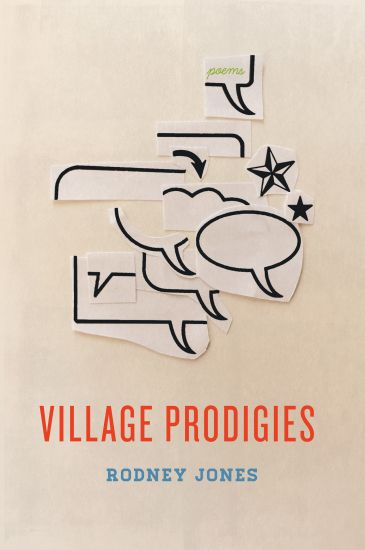
"A novel in language as dense and lush and beautiful as poetry . . . or] a book of poetry with the vivid characters and the narrative force of a novel? Whatever you care to call it, it's a remarkable achievement." -- Richard Russo, Pulitzer Prize-winning author of Empire FallsVillage Prodigies imagines the town of Cold Springs, Alabama, from 1950 to 2015 and unfurls its narrative reach as six boys--prodigies and swains--grow up and leave the familiarity of home and the rural South.Yet all prodigies, all memories, all stories inevitably loop back. Through a multiplicity of points of view and innovative forms, Rodney Jones plays with the contradictions in our experience of time, creating portals through which we travel between moments and characters, from the interior mind to the most exterior speech, from delusions to rational thought. We experience Alzheimer's and its effect on family, listen to family lore and read family Facebook posts, relive war, and revive half-forgotten folktales and video games. In this deep examination of personal and communal memory, Jones blurs the lines between analog and digital, poetry and prose.
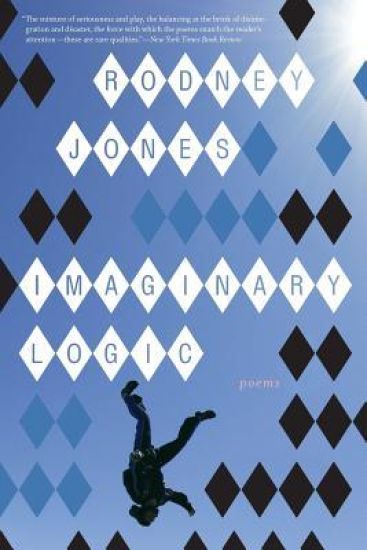
"It's Jones's age-defying distinction to have mobilized a moral intelligence that's sufficiently vast to contain multitudes."--Washington Post Book World Imaginary Logic is a brilliantly expansive, deeply meditative, and at times wildly imaginative collection of poems that combines Rodney Jones's distinctive storytelling ability, sharp social intelligence, and keen powers of observation in a book that is wistful, satiric, audacious, and remorseless. "The Art of Heaven" opens with a parody of Dante and a down-home, twisted humor that Jones's readers have come to rely on: "In the middle of my life I came to a dark wood, / the smell of barbecue, kids running in the yards. / Not deep depression. This nice hell of suburbs. / Speed bumps. The way things aren't quite paradise." Jones, winner of the National Book Critics Circle Award, is one of America's "best, most generous, and most brilliantly readable poets" (Poetry). Imaginary Logic is the most eloquent expression yet of his rigorous mind, scrupulous eye, and capacious heart. " Jones'] poems are a work of hands, and hands-on. His rich lyric sentences register experience at the full and thus at its high moment of complexity. Like most of the important poets, he's a lapsed pastoralist attempting to restore--no, save--the fallen."--Stanley Plumly

Exulting in the speech of his native Alabama, Rodney Jones's new poems combine satire and ode, formal lament and ribald joke. Now, in his sixth book, Jones extends the emotional and stylistic range that has brought him such honors as the National Book Critics Circle Award and the Jean Stein Award of the American Academy of Arts and Letters. He writes of football and feminism, of DDT and family, of crows and sex, of ink and raccoons and perpetual motion machines. In many of these poems the southern drawl lives forever, riding on the tide of regional language, poking fun yet delighting in it.

With Kingdom of the Instant, Rodney Jones delivers a collection of poems that address both transcendent and profane aspects of the American South, art and politics, poverty and privilege. Always engaging, Jones "shows the intensity of his loving regard for every aspect of life, from the grit of the earth to the silk of the skin and all that churns in the mind" (Donna Seaman, Booklist).
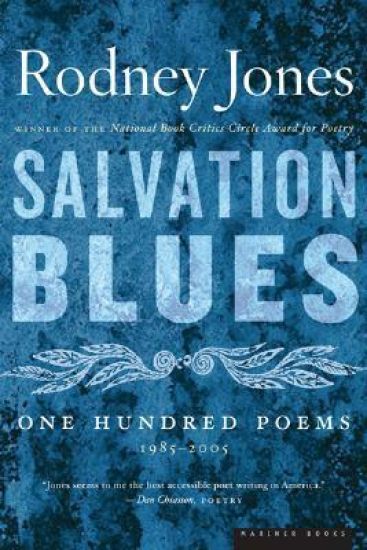
Spanning two decades of the author's literary work, a collection of one hundred poems includes twenty-four all-new poems and offers a poetic vision of the tension between history and modernity and a vision of his own Alabama childhood. Reprint.

Alabama focuses on a boy from a rural, fundamentalist community who becomes a pacifist, feminist, and existentialist poet. Labyrinth, meditation, fable, and peasant poem, formed from interleaved strands of prose vignettes and lineated poetry, this collection is at once a tale of cultural exile and familial loyalty, and an unflinching look at regional shame that doubles as a love story, all expressed with the intimate voice and vision of Rodney Jones.
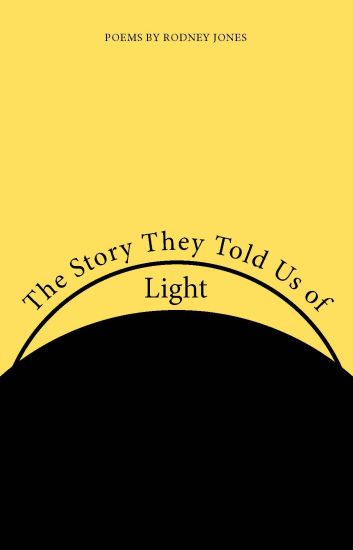
Jones has a lyrical mind and meanders through memory and imagination in his poems, fusing them and making them work to surprise the reader with intriguing and challenging images. The collection builds beautifully, each section nurturing the others, and all of it displays Jones’s fine talent—keenly intelligent, human, and compassionate. His quick, splendid sense of humour surprises the reader, playing one image off another that is seemingly unrelated to the first, yet achieving a sense of rightness in poem after poem.
Discourse and Creativity examines the way different approaches to discourse analysis conceptualize the notion of creativity and address it analytically. It includes examples of studies of creativity from a variety of traditions and examines the following key areas, how people interpret and use discourse, the processes and practices of discourse production, discourse in modes other than written and spoken language, and the relationship between discourse and the technologies used to produce it.Discourse and Creativity combines a forward-thinking and interdisciplinary approach to the topic of creativity; this collection will be of great value to students and scholars in applied linguistics, stylistics, and communication studies.

In "A Letter to a friend of Robert Burns", Wordsworth wrote "And, of poets more especially, it is true - that, if their works be good, they contain within themselves all that is necessary to their being comprehended and relished". While it is improbable that this assertion was true when he wrote it in 1816, it is certainly not the case for readers of his poetry today. The historical context in which his poetry was written - and which is often reflected in the poems themselves - is, in many respects, little known to today's students of the romantic period, nor to those who simply enjoy reading Wordsworth's poetry. This set of books seeks to remedy that deficiency by providing much needed contextual information. This first volume is set against the background of Wordsworth's life from his birth at Cockermouth in 1770 until his return from Germany in the Spring of 1799. Two subsequent volumes will cover his life in Grasmere and at Rydal Mount respectively.

In this modest volume the author reflects on the Sequence of Sonnets concerning the River Duddon which William Wordsworth published in April 1820. In the same volume Wordsworth included his poem "Vaudracour and Julia" and his prose travel guide "A Topographical Description of the Country of the Lakes". Although William Wordsworth had now reached his 50th year, this publication was his first real commercial success as a poet. The 'Duddon' Sonnets are somewhat neglected today and his modern popularity rests largely with the "Lyrical Ballads" - partly a collaboration with Coleridge - and his autobiographical poem "The Prelude". The sequence provides an enchanting description of the River and its environs as it falls from its source among the Central Fells of Cumbria to the Irish Sea, as well as providing a master-class in the art of the Sonneteer.

Discourse and Creativity examines the way different approaches to discourse analysis conceptualize the notion of creativity and address it analytically. It includes examples of studies of creativity from a variety of traditions and examines the following key areas, how people interpret and use discourse, the processes and practices of discourse production, discourse in modes other than written and spoken language, and the relationship between discourse and the technologies used to produce it.Discourse and Creativity combines a forward-thinking and interdisciplinary approach to the topic of creativity; this collection will be of great value to students and scholars in applied linguistics, stylistics, and communication studies.
This book provides an overview of current theories of and methods for analysing spoken discourse. It includes discussions of both the more traditional approaches of pragmatics, conversation analysis, interactional sociolinguistics, linguistic anthropology and critical discourse analysis, and more recently developed approaches such as multimodal discourse analysis and critical sociolinguistics. Rather than treating these perspectives as mutually exclusive, the book introduces a framework based on principles from mediated discourse analysis in which different approaches to spoken discourse are seen as complementing and informing one another. In this framework, spoken discourse is seen as mediated through a complex collection of technological, semiotic and cultural tools which enable and constrain people’s ability to engage in different kinds of social actions, enact different kinds of social identities and form different kinds of social relationships. A major focus of the volume is on the way technological tools like telephones, broadcast media, digital technologies are changing the way people communicate with spoken language. The book is suitable for use as a textbook in advanced courses in discourse analysis and language in social interaction, and will also be of interest to scholars in a variety of fields including linguistics, sociology, media studies and anthropology.
This book provides an overview of current theories of and methods for analysing spoken discourse. It includes discussions of both the more traditional approaches of pragmatics, conversation analysis, interactional sociolinguistics, linguistic anthropology and critical discourse analysis, and more recently developed approaches such as multimodal discourse analysis and critical sociolinguistics. Rather than treating these perspectives as mutually exclusive, the book introduces a framework based on principles from mediated discourse analysis in which different approaches to spoken discourse are seen as complementing and informing one another. In this framework, spoken discourse is seen as mediated through a complex collection of technological, semiotic and cultural tools which enable and constrain people’s ability to engage in different kinds of social actions, enact different kinds of social identities and form different kinds of social relationships. A major focus of the volume is on the way technological tools like telephones, broadcast media, digital technologies are changing the way people communicate with spoken language. The book is suitable for use as a textbook in advanced courses in discourse analysis and language in social interaction, and will also be of interest to scholars in a variety of fields including linguistics, sociology, media studies and anthropology.

