Kirjojen hintavertailu. Mukana 11 244 527 kirjaa ja 12 kauppaa.

Kirjahaku

Etsi kirjoja tekijän nimen, kirjan nimen tai ISBN:n perusteella.

8 kirjaa tekijältä Rodolfo F. Acuña

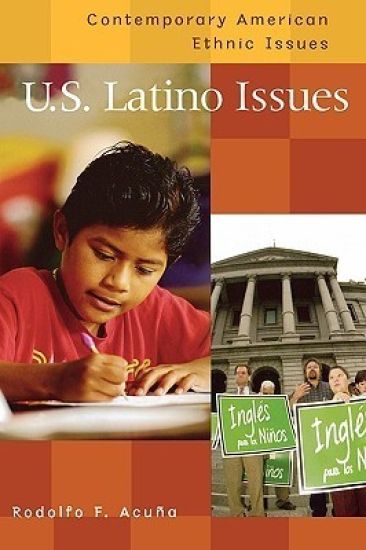
U.S. Latino Issues

U.S. Latino Issues

Rodolfo F. Acuña

Greenwood Press
2003
sidottu
Discusses a variety of issues relevant to the Latino community in the United States, including race classification, bilingual education, border politics, and healthcare for undocumented aliens.
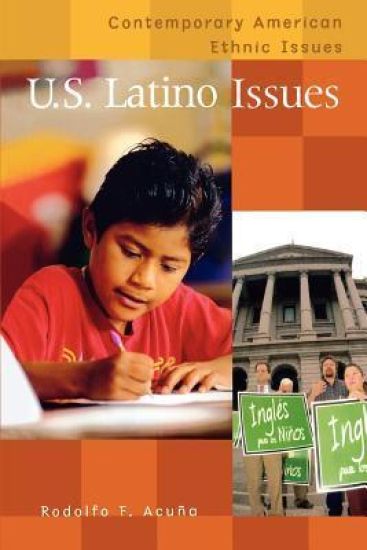
U.S. Latino Issues

U.S. Latino Issues

Rodolfo F. Acuña

Greenwood Press
2003
nidottu
Does the term Latino—a construct of the U.S. government—successfully encompass the wide variety of Spanish-speaking people in this country? This introductory topic begins an overview of 10 major controversies that have embroiled U.S. Latinos, including Puerto Ricans, in recent years. Latinos have one of the fastest-growing populations in the United States today, making these issues front-page news across the country.Issues include:• Race Classification• Assimilation• Bilingual Education• Open Borders• Affirmative Action• Interracial Dating and Marriage• Funding Education and Health Care for Undocumented Immigrant• Amnesty Program• U.S. Military and Political Presence in Cuba• U.S. Military Bases in Puerto RicoEach topic is presented with a background, pro and con positions, and questions for the purpose of student debate and papers.
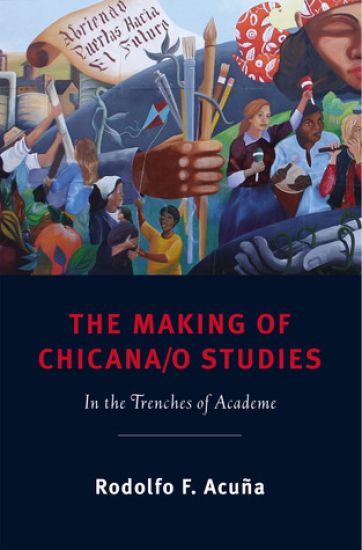
The Making of Chicana/o Studies

The Making of Chicana/o Studies

Rodolfo F. Acuña

Rutgers University Press
2011
nidottu
The Making of Chicana/o Studies traces the philosophy and historical development of the field of Chicana/o studies from precursor movements to the Civil Rights era to today, focusing its lens on the political machinations in higher education that sought to destroy the discipline. As a renowned leader, activist, scholar, and founding member of the movement to establish this curriculum in the California State University system, which serves as a model for the rest of the country, Rodolfo F. Acuña has, for more than forty years, battled the trend in academia to deprive this group of its academic presence.The book assesses the development of Chicana/o studies (an area of studies that has even more value today than at its inception)--myths about its epistemological foundations have remained uncontested. Acuña sets the record straight, challenging those in the academy who would fold the discipline into Latino studies, shadow it under the dubious umbrella of ethnic studies, or eliminate it altogether.Building the largest Chicana/o studies program in the nation was no easy feat, especially in an atmosphere of academic contention. In this remarkable account, Acuña reveals how California State University, Northridge, was instrumental in developing an area of study that offers more than 166 sections per semester, taught by 26 tenured and 45 part-time instructors. He provides vignettes of successful programs across the country and offers contemporary educators and students a game plan--the mechanics for creating a successful Chicana/o studies discipline--and a comprehensive index of current Chicana/o studies programs nationwide.Latinas/os, of which Mexican Americans are nearly seventy percent, comprise a complex sector of society projected to be just shy of thirty percent of the nation's population by 2050. The Making of Chicana/o Studies identifies what went wrong in the history of Chicana/o studies and offers tangible solutions for the future.
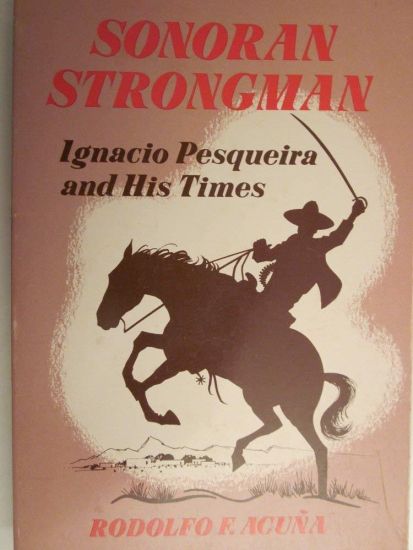
Sonoran Strongman

Sonoran Strongman

Rodolfo F. Acuña

University of Arizona Press
2016
nidottu
Sonoran Strongman provides an in-depth look at a turbulent period in Mexico's history. During this era, Sonora was plagued with domestic unrest and threatened by foreign invasion. The state's citizens, hoping Ignacio Pesqueira would be the "man of action" capable of restoring order, elected him governor by an overwhelming vote. He became a virtual dictator and ruled Sonora from 1856–1876. Pesqueira was the product of troubled times, and the times shaped his destiny. Author Acuña presents an authoritative account of the "Strongman's" rise to power and vividly portrays the suffering of northern Mexico's people.
U.S. Latino Issues

U.S. Latino Issues

Rodolfo F. Acuña

Greenwood Publishing Group Inc
2017
sidottu
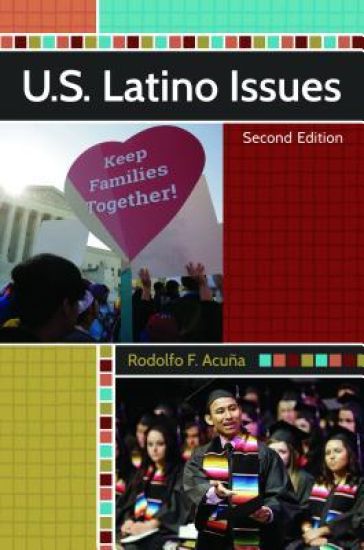
A revision of the popular previous edition published more than a decade earlier, this work examines today's U.S. Latino population—now arguably the most important "minority group" in the country, with numbers well over 50 million strong in an increasingly diverse and integrated America.Latinos are the largest minority in the United States, and as such, Latino Americans have a tremendous influence on the culture, workforce, economy, and politics of this country. This second edition of U.S. Latino Issues provides updated content, stats, and data for each topic, and it frames critical questions and multiple viewpoints on Latinos in the United States that will be useful to student researchers. The responses to the critical questions come from Latino experts and scholars and other well-known subject experts, providing readers with insights from various informed points of view—all in a single volume.The book covers hundreds of topics regarding Latino Americans, such as gender, sexuality, indigenous culture, race and cultural identity, health and wellness, education, and interracial dating and marriage, and it offers in-depth comparisons of the Latino groups and shows how events in their native countries affect them. Readers will have access to concise and up-to-date information on controversial topics such as affirmative action, immigration reform, open borders policy versus border enforcement, changing relations between the United States and Cuba, and Puerto Rico's contested status as a commonwealth versus a state.
Assault on Mexican American Collective Memory, 2010–2015
This book uses a micro-narrative structure to explore the assault on the collective memory of Mexican Americans in the Southwest United States from 2010–2016. These communities’ survival depends on their histories and identities, which are being quickly erased by gentrification and dispersal, neoliberalism and privatization. This issue is most apparent in the education system, where Mexican American students receive inferior educations and lack access to higher education. Avoiding the overly-theoretical macro-narrative, this book uses case studies and micro-narratives to suggest possible changes and actions to address this issue. It also explores how the erasure of Mexican Americans’ history and identity mirrors society as a whole.
Assault on Mexican American Collective Memory, 2010–2015
This book uses a micro-narrative structure to explore the assault on the collective memory of Mexican Americans in the Southwest United States from 2010–2016. These communities’ survival depends on their histories and identities, which are being quickly erased by gentrification and dispersal, neoliberalism and privatization. This issue is most apparent in the education system, where Mexican American students receive inferior educations and lack access to higher education. Avoiding the overly-theoretical macro-narrative, this book uses case studies and micro-narratives to suggest possible changes and actions to address this issue. It also explores how the erasure of Mexican Americans’ history and identity mirrors society as a whole.