Kirjojen hintavertailu. Mukana 11 342 296 kirjaa ja 12 kauppaa.

Kirjahaku

Etsi kirjoja tekijän nimen, kirjan nimen tai ISBN:n perusteella.

4 kirjaa tekijältä Rodolfo Giometti

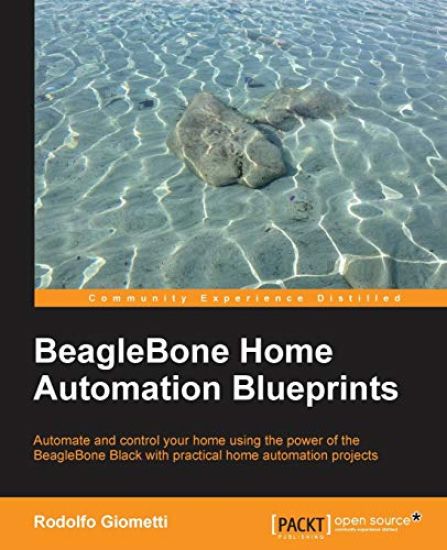
BeagleBone Home Automation Blueprints

BeagleBone Home Automation Blueprints

Rodolfo Giometti

Packt Publishing Limited
2016
nidottu
Automate and control your home using the power of the BeagleBone Black with practical home automation projects About This Book • Build, set up, and develop your circuits via step-by-step tutorial of practical examples, from initial board setup to device driver management • Get access to several kinds of computer peripherals to monitor and control your domestic environment using this guide • This book is spread across 10 chapters all focused on one practical home automation project Who This Book Is For This book is for developers who know how to use BeagleBone and are just above the “beginner” level. If you want to learn to use embedded machine learning capabilities, you should have some experience of creating simple home automation projects. What You Will Learn • Build a CO (and other gas) sensor with a buzzer/LED alarm to signal high concentrations • Log environment data and plot it in a fancy manner • Develop a simple web interface with a LAMP platform • Prepare complex web interfaces in JavaScript and get to know how to stream video data from a webcam • Use APIs to get access to a Google Docs account or a WhatsApp/Facebook account to manage a home automation system • Add custom device drivers to manage an LED with different blinking frequencies • Discover how to work with electronic components to build small circuits • Use an NFS, temperature sensor, relays, and other peripherals to monitor and control your surroundings In Detail BeagleBone is a microboard PC that runs Linux. It can connect to the Internet and can run OSes such as Android and Ubuntu. BeagleBone is used for a variety of different purposes and projects, from simple projects such as building a thermostat to more advanced ones such as home security systems. Packed with real-world examples, this book will provide you with examples of how to connect several sensors and an actuator to the BeagleBone Black. You'll learn how to give access to them, in order to realize simple-to-complex monitoring and controlling systems that will help you take control of the house. You will also find software examples of implementing web interfaces using the classical PHP/HTML pair with JavaScript, using complex APIs to interact with a Google Docs account, WhatsApp, or Facebook. This guide is an invaluable tutorial if you are planning to use a BeagleBone Black in a home automation project. Style and approach This step-by-step guide contains several home automation examples that can be used as base projects for tons of other home automation and control systems. Through clear, concise examples based on real-life situations, you will quickly get to grips with the core concepts needed to develop home automation applications with the BeagleBone Black using both the C language and high-level scripting languages such as PHP, Python, and JavaScript.

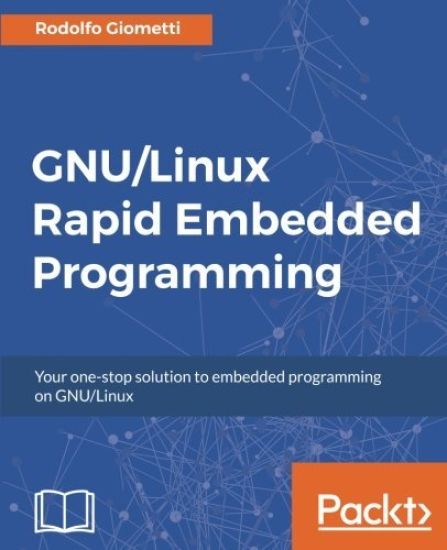
GNU/Linux Rapid Embedded Programming

GNU/Linux Rapid Embedded Programming

Rodolfo Giometti

Packt Publishing Limited
2017
nidottu
An annotated guide to program and develop GNU/Linux Embedded systems quickly About This Book • Rapidly design and build powerful prototypes for GNU/Linux Embedded systems • Become familiar with the workings of GNU/Linux Embedded systems and how to manage its peripherals • Write, monitor, and configure applications quickly and effectively, manage an external micro-controller, and use it as co-processor for real-time tasks Who This Book Is For This book targets Embedded System developers and GNU/Linux programmers who would like to program Embedded Systems and perform Embedded development. The book focuses on quick and efficient prototype building. Some experience with hardware and Embedded Systems is assumed, as is having done some previous work on GNU/Linux systems. Knowledge of scripting on GNU/Linux is expected as well. What You Will Learn • Use embedded systems to implement your projects • Access and manage peripherals for embedded systems • Program embedded systems using languages such as C, Python, Bash, and PHP • Use a complete distribution, such as Debian or Ubuntu, or an embedded one, such as OpenWrt or Yocto • Harness device driver capabilities to optimize device communications • Access data through several kinds of devices such as GPIO's, serial ports, PWM, ADC, Ethernet, WiFi, audio, video, I2C, SPI, One Wire, USB and CAN • Practical example usage of several devices such as RFID readers, Smart card readers, barcode readers, z-Wave devices, GSM/GPRS modems • Usage of several sensors such as light, pressure, moisture, temperature, infrared, power, motion In Detail Embedded computers have become very complex in the last few years and developers need to easily manage them by focusing on how to solve a problem without wasting time in finding supported peripherals or learning how to manage them. The main challenge with experienced embedded programmers and engineers is really how long it takes to turn an idea into reality, and we show you exactly how to do it. This book shows how to interact with external environments through specific peripherals used in the industry. We will use the latest Linux kernel release 4.4.x and Debian/Ubuntu distributions (with embedded distributions like OpenWrt and Yocto). The book will present popular boards in the industry that are user-friendly to base the rest of the projects on - BeagleBone Black, SAMA5D3 Xplained, Wandboard and system-on-chip manufacturers. Readers will be able to take their first steps in programming the embedded platforms, using C, Bash, and Python/PHP languages in order to get access to the external peripherals. More about using and programming device driver and accessing the peripherals will be covered to lay a strong foundation. The readers will learn how to read/write data from/to the external environment by using both C programs or a scripting language (Bash/PHP/Python) and how to configure a device driver for a specific hardware. After finishing this book, the readers will be able to gain a good knowledge level and understanding of writing, configuring, and managing drivers, controlling and monitoring applications with the help of efficient/quick programming and will be able to apply these skills into real-world projects. Style and approach This practical tutorial will get you quickly prototyping embedded systems on GNU/Linux. This book uses a variety of hardware to program the peripherals and build simple prototypes.
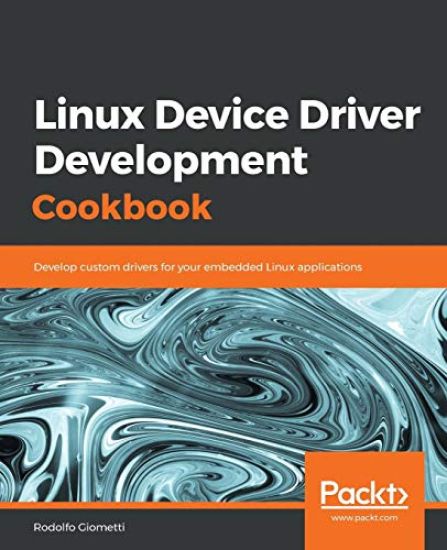
Linux Device Driver Development Cookbook

Linux Device Driver Development Cookbook

Rodolfo Giometti

Packt Publishing Limited
2019
nidottu
Over 30 recipes to develop custom drivers for your embedded Linux applications Key Features Use kernel facilities to develop powerful drivers Learn core concepts for developing device drivers using a practical approach Program a custom character device to get access to kernel internals Book DescriptionLinux is a unified kernel that is widely used to develop embedded systems. As Linux has turned out to be one of the most popular operating systems worldwide, the interest in developing proprietary device drivers has also increased. Device drivers play a critical role in how the system performs and ensure that the device works in the manner intended. By exploring several examples on the development of character devices, the technique of managing a device tree, and how to use other kernel internals, such as interrupts, kernel timers, and wait queue, you’ll be able to add proper management for custom peripherals to your embedded system. You’ll begin by installing the Linux kernel and then configuring it. Once you have installed the system, you will learn to use different kernel features and character drivers. You will also cover interrupts in-depth and understand how you can manage them. Later, you will explore the kernel internals required for developing applications. As you approach the concluding chapters, you will learn to implement advanced character drivers and also discover how to write important Linux device drivers. By the end of this book, you will be equipped with the skills you need to write a custom character driver and kernel code according to your requirements.What you will learn Become familiar with the latest kernel releases (4.19/5.x) running on the ESPRESSOBin devkit, an ARM 64-bit machine Download, configure, modify, and build kernel sources Add and remove a device driver or a module from the kernel Understand how to implement character drivers to manage different kinds of computer peripherals Get well-versed with kernel helper functions and objects that can be used to build kernel applications Gain comprehensive insights into managing custom hardware with Linux from both the kernel and user space Who this book is forThis book is for anyone who wants to develop their own Linux device drivers for embedded systems. Basic hands-on experience with the Linux operating system and embedded concepts is necessary.