Kirjojen hintavertailu. Mukana 11 453 178 kirjaa ja 12 kauppaa.

Kirjahaku

Etsi kirjoja tekijän nimen, kirjan nimen tai ISBN:n perusteella.

11 kirjaa tekijältä Roger Bruns

Jesse Jackson

Jesse Jackson

Roger Bruns

Greenwood Press
2005
sidottu
Jesse Jackson, a powerful orator and indefatigable organizer, has been one of the most dynamic forces for social and political action in both the national and international arenas, campaigning for human rights and social justice. Through such social action projects as Operation Breadbasket, Operation PUSH, and the Rainbow Coalition, as well as his own candidacy for the Democratic nomination for president in 1984 and 1988, Jackson became a worldwide spokesman for the minorities, marginalized, and poor. This biography traces his rise from his single-parent upbringing in Greenville, South Carolina, through his civil rights work with Martin Luther King Jr., to social and political leadership, audacious international diplomacy, and continued efforts to "keep hope alive." It also covers his personal struggles and family life and includes commentary from those who have known him over the years.
Cesar Chavez

Cesar Chavez

Roger Bruns

Greenwood Press
2005
sidottu
Cesar Chavez, the labor organizer and founder of the United Farm Workers of America, was, perhaps, an unlikely hero. In this biography, his early life is shown to be fairly typical for a boy in a close-knit family of Mexican Americans who worked the land in Arizona and California and endured hardship and discrimination. His story reveals the underside of the American Dream, and his later successes in helping farm workers and building a union to represent them are a testament to something extraordinary in a seemingly ordinary man. As a young man, Chavez looked for a way out of the fields in the Navy but only found similar ethnic hatred. He married and started a family soon after his discharge and returned to the fields. Chavez hated the injustices meted out to his family and other migrant workers. They were on American labor's last rung, thousands of individuals making a pittance for their back-breaking work, living in desperate and inhumane conditions, poisoned by the pesticides, with few rights or leaders on whom to lean. The migrant workers found a champion in Chavez, who started to see the possibilities of making a difference for those in need. He began to work for a social service agency in California and met a priest who inspired him to read and learn about figures such as Mohandas Gandhi. From that point on, his labor activism is legendary. In the context of the times, with the Civil Rights Movement, Vietnam, and race riots raging, Chavez is shown to slowly build the farm workers labor movement, along with colleagues such as Dolores Huerta. Using the nonviolent examples of Gandhi and Martin Luther King, Jr., from the 1960s until his death in 1993, Chavez launched strikes, boycotts, marches, and his famous hunger strikes to force concessions from the big growers for better conditions and pay for the workers. His union lobbied Congress on behalf of the farm workers. Chavez and his supporters faced police and grower brutality, government surveillance, and death threats, and he was jailed several times. Like Gandhi, his example is for the ages.
Martin Luther King, Jr.

Martin Luther King, Jr.

Roger Bruns

Greenwood Press
2006
sidottu
There has been recent controversy in the African American community about youth and their lack of appreciation for the gains of the civil rights movement of the 1950s and 1960s. This stellar biography is a superb introduction to the foremost leader of the civil rights movement. The story and historical context will be eye-opening for students and a good refresher for others who are too young to have remembered the events. In a gripping narrative style, the biography traces the young Martin, the son and grandson of formidable preachers, to his calling as a minister too, but one who would take on the entrenched racism of the South, and North, through a nonviolent movement that changed the course of American history. There has been recent controversy in the African American community about youth and their lack of appreciation for the gains of the civil rights movement of the 1950s and 1960s. This stellar biography is a superb introduction to the foremost leader of the civil rights movement. The story and historical context will be eye-opening for students and a good refresher for others who are too young to have remembered the events. In a gripping narrative style, the biography traces the young Martin, the son and grandson of formidable preachers, to his calling as a minister too, but one who would take on the entrenched racism of the South, and North, through a nonviolent movement that changed the course of American history. King's story is compelling, starting from his early nurtured family life in an insular community of blacks in Atlanta. His education at Morehouse College, Crozer Theological Seminary, and Boston University and courtship of Coretta Scott lead into the early days of the civil rights movement and King's leadership role in the major marches, demonstrations, boycotts, and sit-ins that took place, mainly in the South. Critical insight into the Kennedy and Johnson Administrations is given as King negotiates with the presidents for equal rights for blacks. The violent reactions against and hatred of many whites for those seeking racial justice are still shocking today. Against the backdrop of beatings, killings, bombings, threats, and imprisoning, King is portrayed as driven to lift up all Americans, even if it meant martyrdom.
Negro Leagues Baseball

Negro Leagues Baseball

Roger Bruns

Greenwood Press
2012
sidottu
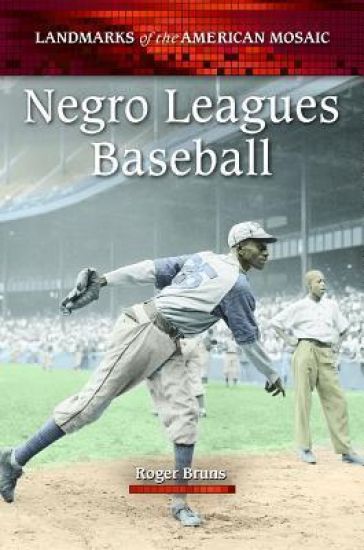
This book traces the entire story of black baseball, documenting the growth of the Negro Leagues at a time when segregation dictated that the major leagues were strictly white, and explaining how the drive to integrate the sport was a pivotal part of the American civil rights movement.Part of Greenwood's Landmarks of the American Mosaic series, this work is a one-stop introduction to the subject of Negro League baseball that spotlights the achievements and experiences of black ball players during the time of segregation—ones that must not be allowed to fade into obscurity. Telling far more than a story about sports that includes engaging tales of star athletes like "Satchel" Paige and "Cool Papa" Bell, Negro Leagues Baseball documents an essential chapter of American history rooted in the fight for civil rights and human dignity and the battle against racism and bigotry.The book comprises an introduction, chronology, and narrative chapters, as well as biographical profiles, primary documents, a glossary, a bibliography, and an index. The recounting of individual stories and historical events will fascinate general readers, while rarely used documentary material places the subject of Negro League baseball in relation to civil rights issues, making the book invaluable to students of American social history and culture.
Cesar Chavez and the United Farm Workers Movement
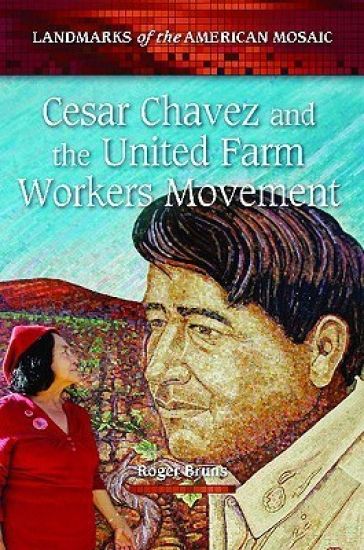
This book offers an illuminating story of how social and political change can sometimes result from the vision, leadership, and commitment of a few dedicated individuals determined not to fail.Cesar Chavez and the United Farm Workers Movement chronicles the drive for a union of one of American society's most exploited groups. It is a story of courage and determination, set against the backdrop of the 1960s, a time of assassinations, war protests, civil rights battles, and reform efforts for poor and minority citizens.American farm workers were men and women on labor's last rung, living in desperate and inhumane conditions, poisoned by pesticides, and making a pittance for back-breaking work. The book shows how these migrant workers found a champion in Chavez and the United Farm Workers Union. With the help of quotes from documentary material only recently made available, it tells the story of the boycotts, marches, and strikes—including hunger strikes—used to force concessions for better conditions and pay. It also shows how the farm workers movement helped set the stage for growing Latino cultural awareness and political power.
Zoot suit riots

Zoot suit riots

Roger Bruns

Greenwood Press
2014
sidottu
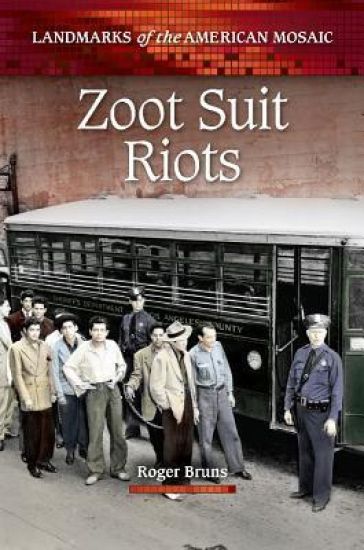
The Zoot Suit Riots in 1943 and the infamous Sleepy Lagoon murder trial of the preceding year represent a turning point in the cultural identity and historical experience of Mexican Americans in the United States. This engaging study of these regrettable events provides context for understanding the continuing battles in the 21st century over immigration policy and race relations.Although the "zoot suit" had earlier been a black youth fashion trend identified with jazz culture, by the 1940s, the zoot suit was adopted by Mexican American teenagers in wartime Los Angeles, who wore it as their unofficial "uniform" as an act of rebellion and to establish their cultural identity. For a week in June of 1943, the Zoot Suit Riots, instigated by Anglo-American servicemen and condoned by the Los Angeles police, terrorized the Mexican American community. The events were an ugly testament to the climate of racial tension and resentment in Los Angeles—and after similar riots began across the nation, it became apparent how endemic the problem was. This book traces these important historic events and their subsequent cultural and political influences on the Mexican American experience, especially the activist and reform efforts designed to prevent similar future injustices.General readers will gain an understanding of the challenges facing the Mexican American community in wartime Los Angeles, grasp the racial and cultural resistance of the larger Anglo-American society of the time, and see how the blatant injustices of the Sleepy Lagoon trial and the Zoot Suit Riots served to galvanize Latinos and others to fight back. Those conducting in-depth research will appreciate having access to original materials sourced from Federal and state archives as well as newspapers and other repositories of information provided in the book.
Encyclopedia of Cesar Chavez

Encyclopedia of Cesar Chavez

Roger Bruns

Greenwood Publishing Group Inc
2013
sidottu
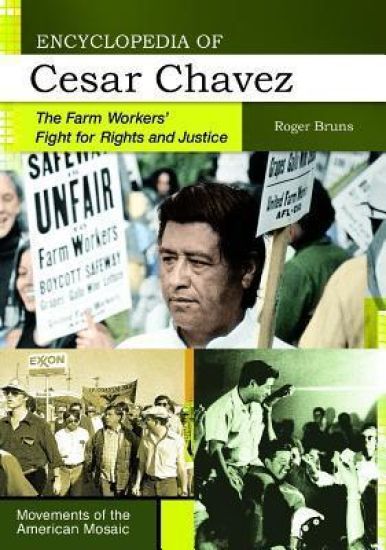
This book is a unique, single-volume treatment offering original source material on the life, accomplishments, disappointments, and lasting legacy of one of American history's most celebrated social reformers—Cesar Chavez.Two decades after Cesar Chavez's death, this timely book chronicles the drive for a union of one of American society's most exploited groups—farm workers. Encyclopedia of Cesar Chavez is a valuable one-volume source based on the most recent research and available documentation. Historian Roger Bruns documents how Chavez and his United Farm Workers (UFW), against formidable odds, organized farm laborers into a force that for the first time successfully took on the might of California's agribusiness interests to achieve greater wages and better working conditions.Set against the backdrop of the 1960s, a time of assassinations, war protests, civil rights battles, and reform efforts for poor and minority citizens, the approximately 100 entries in this encyclopedia provide a glimpse into the events, organizations, men and women, and recurring themes that impacted the life of Cesar Chavez. It also contains a section of primary documentation—useful not only to enhance the understanding of this social and political movement, but also as source material for students.
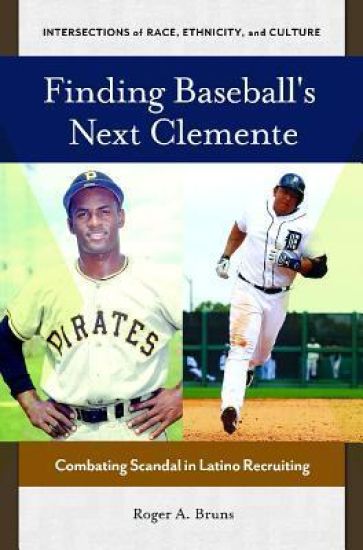
Finding Baseball's Next Clemente

Finding Baseball's Next Clemente

Roger Bruns

Praeger Publishers Inc
2015
sidottu
This book examines what it takes for Latino youngsters to beat the odds, overcoming cultural and racial barriers—and a corrupt recruitment system—to play professional baseball in the United States.Latin Americans now comprise nearly 30 percent of the players in Major League Baseball (MLB). This provocative work looks at how young Latinos are recruited—and often exploited—and at the cultural, linguistic, and racial challenges faced by those who do make it. There are exposés of baseball camps where teens are encouraged to sacrifice education in favor of hitting and fielding drills and descriptions of fraud cases in which youngsters claim to be older than they are in order to sign contracts. The book also documents the increasing use of steroids and other performance-enhancing drugs by kids desperately trying to gain an edge.In addition to discussing the hard road many Latinos follow to MLB, the work also traces the fascinating history of baseball's introduction in Latin American countries—in some cases, more than a century ago. Finally, there are the stories of great Latino players, of men like Roberto Clemente and Carlos Beltran who made it to the majors, but also of men who were not so lucky. Through their tales, readers can share the dreams and expectations of young men who, for better or worse, believe in "America's pastime" as their gateway out of poverty.
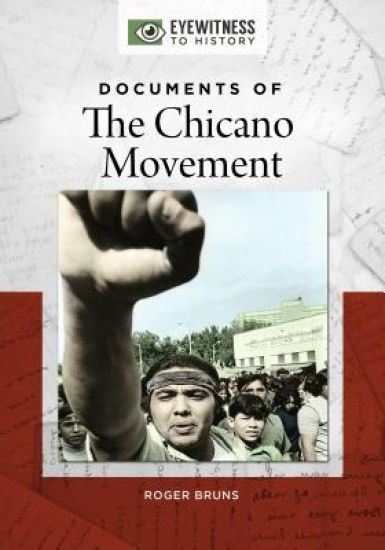
Documents of the Chicano Movement

Documents of the Chicano Movement

Roger Bruns

Greenwood Press
2018
sidottu
This book provides original source documents—from firsthand accounts to media responses to legislation—regarding the Chicano movement of the 1960s through 1970s. Readers will understand the key events, individuals, and developments of La Causa: Chicanos uniting to free themselves from exploitation.The 1960s was a time of the burgeoning black Civil Rights movement, when society and politics were divided over the war in Vietnam and public violence became "normal" in the form of police response to protests and assassinations of leaders. It was also a time that witnessed the beginning of a movement to secure justice and rights on behalf of Mexican-Americans and other Latinos. It was the Chicano movement. Documents of the Chicano Movement: Eyewitness to History presents some 50 primary historical documents, each prefaced by a succinct introductory essay. Because the Chicano movement comprised disparate groups and leaders from across the nation, the book will be divided into several sections that acknowledge these separate but connected efforts, each headed by its own introduction. Through its detailed coverage of approximately two decades, the book highlights key topics that include the fight of farm workers to establish a union; the so-called "Land-Grant Struggle" to reclaim areas of the Southwest ceded in the Treaty of Guadalupe Hildago; the establishment in New Mexico of the Crusade for Justice, an organization that promoted a nationalistic agenda; the growth of the urban Chicano student movement and its drive for educational reform; the Chicano Antiwar Moratorium protests; and the eventual rise of Chicano political power with the birth of the La Raza Unida Party. The breadth of primary documents include materials from archives, manuscript repositories, newspapers, government documents, public speeches and addresses, first-person accounts from individuals who participated directly in the Chicano movement, legal decisions, pamphlets, and essays. The documents not only tell a vivid, engaging story but also provide students and researchers with valuable resources for use in other works.
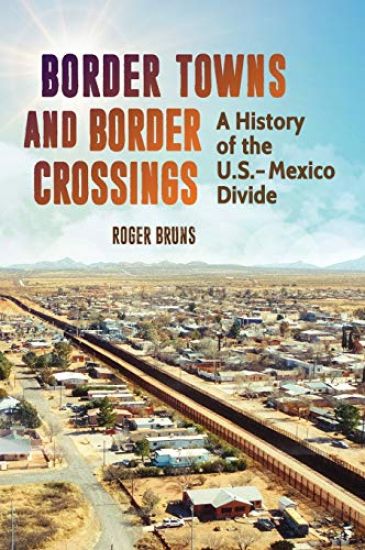
Border Towns and Border Crossings

Border Towns and Border Crossings

Roger Bruns

Greenwood Publishing Group Inc
2019
sidottu
This is a compelling and revealing look at the history of the U.S.-Mexico border as a place, a symbol of cross-cultural melding, and a source of growing anxiety over immigration and national security.The U.S.-Mexico border is far more than a line that separates two countries. A winding path of nearly 2,000 miles from the Pacific Ocean to the Gulf of Mexico, it is history, commerce, and culture. In recent years, however, attitudes about border crossings and border issues have hardened as has immigration policy. A source of growing anxiety over illegal immigration, national security, and safety, the border has become a symbol of political cataclysm over immigration law and enforcement, the future of DACA, the increasingly harsh treatment of refugees and others who attempt to cross without authorization, and the future of U.S. policy. This book traces the history of the border and its people, from the creation of the border line to explosive issues surrounding immigration and the future of the United States as a nation of diverse cultures and races.