

Kirjahaku
Etsi kirjoja tekijän nimen, kirjan nimen tai ISBN:n perusteella.
5 kirjaa tekijältä Roger C. Hartley
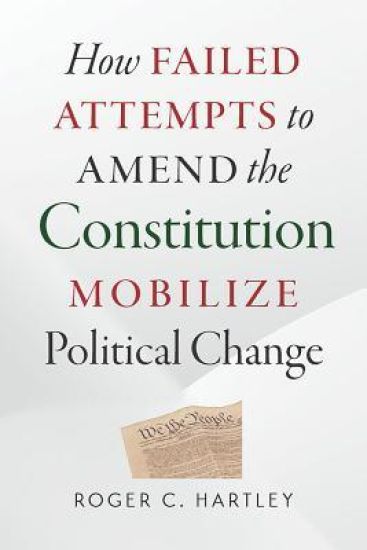
How Failed Attempts to Amend the Constitution Mobilize Political Change
Roger C. Hartley
Vanderbilt University Press
2017
sidottu
Since the Constitution's ratification, members of Congress, following Article V, have proposed approximately twelve thousand amendments, and states have filed several hundred petitions with Congress for the convening of a constitutional convention. Only twenty-seven amendments have been approved in 225 years. Why do members of Congress continue to introduce amendments at a pace of almost two hundred a year?This book is a demonstration of how social reformers and politicians have used the amendment process to achieve favorable political results even as their proposed amendments have failed to be adopted. For example, the ERA ""failed"" in the sense that it was never ratified, but the mobilization to ratify the ERA helped build the feminist movement (and also sparked a countermobilization). Similarly, the Supreme Court's ban on compulsory school prayer led to a barrage of proposed amendments to reverse the Court. They failed to achieve the requisite two-thirds support from Congress, but nevertheless had an impact on the political landscape. The definition of the relationship between Congress and the President in the conduct of foreign policy can also be traced directly to failed efforts to amend the Constitution during the Cold War.Roger Hartley examines familiar examples like the ERA, balanced budget amendment proposals, and pro-life attempts to overturn Roe v. Wade, but also takes the reader on a three-century tour of lesser-known amendments. He explains how often the mere threat of calling a constitutional convention (at which anything could happen) effected political change.
How Failed Attempts to Amend the Constitution Mobilize Political Change
Roger C. Hartley
Vanderbilt University Press
2017
nidottu
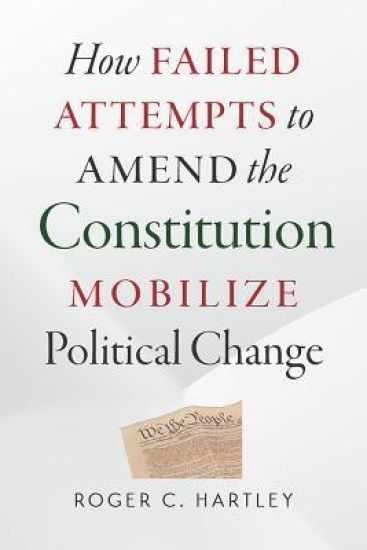
Since the Constitution's ratification, members of Congress, following Article V, have proposed approximately twelve thousand amendments, and states have filed several hundred petitions with Congress for the convening of a constitutional convention. Only twenty-seven amendments have been approved in 225 years. Why do members of Congress continue to introduce amendments at a pace of almost two hundred a year?This book is a demonstration of how social reformers and politicians have used the amendment process to achieve favorable political results even as their proposed amendments have failed to be adopted. For example, the ERA ""failed"" in the sense that it was never ratified, but the mobilization to ratify the ERA helped build the feminist movement (and also sparked a countermobilization). Similarly, the Supreme Court's ban on compulsory school prayer led to a barrage of proposed amendments to reverse the Court. They failed to achieve the requisite two-thirds support from Congress, but nevertheless had an impact on the political landscape. The definition of the relationship between Congress and the President in the conduct of foreign policy can also be traced directly to failed efforts to amend the Constitution during the Cold War.Roger Hartley examines familiar examples like the ERA, balanced budget amendment proposals, and pro-life attempts to overturn Roe v. Wade, but also takes the reader on a three-century tour of lesser-known amendments. He explains how often the mere threat of calling a constitutional convention (at which anything could happen) effected political change.
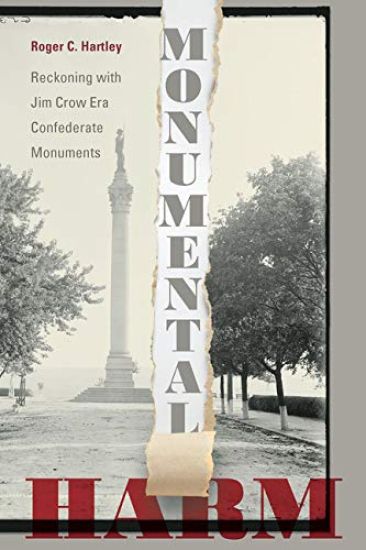
In recent years, the debate over the future of Confederate monuments has taken center stage and caused bitter clashes in communities throughout the American South. At the heart of the debate is the question of what these monuments represent. The arguments and counterarguments are formulated around sets of assumptions grounded in Southern history, politics, culture, and race relations. Comprehending and evaluating accurately the associated claims and counterclaims calls for a careful examination of facts and legal considerations relevant to each side's assertations. In Monumental Harm, Roger C. Hartley offers a road map to addressing and resolving this acrimonious debate.Although history and popular memory play a vital role in the discussion, there have been distortions of both parts. Monumental Harm reviews the fact-based history of the initial raising of these monuments and distinguishes it from the popular memory held by many Confederate-monument supporters. Hartley also addresses concerns regarding the potential erasure of history and the harm these monuments have caused the African American community over the years, as well as the role they continue to play in politics and power.The recent rise in White nationalism and the video-recorded murders of Black citizens at the hands of White police officers have led to nationwide demonstrations and increased scrutiny of Confederate monuments on public land. As injustice is laid bare and tempers flare, the need for a peaceful resolution becomes ever-more necessary. Monumental Harm offers a way to break the rhetorical deadlock, urging that we evaluate the issue through the lens of the U.S. Constitution while employing the overarching democratic principle that no right is absolute. Through constructive discourse and good-faith compromise, a more perfect union is within reach.
In recent years, the debate over the future of Confederate monuments has taken center stage and caused bitter clashes in communities throughout the American South. At the heart of the debate is the question of what these monuments represent. The arguments and counterarguments are formulated around sets of assumptions grounded in Southern history, politics, culture, and race relations. Comprehending and evaluating accurately the associated claims and counterclaims calls for a careful examination of facts and legal considerations relevant to each side's assertations. In Monumental Harm, Roger C. Hartley offers a road map to addressing and resolving this acrimonious debate.Although history and popular memory play a vital role in the discussion, there have been distortions of both parts. Monumental Harm reviews the fact-based history of the initial raising of these monuments and distinguishes it from the popular memory held by many Confederate-monument supporters. Hartley also addresses concerns regarding the potential erasure of history and the harm these monuments have caused the African American community over the years, as well as the role they continue to play in politics and power.The recent rise in White nationalism and the video-recorded murders of Black citizens at the hands of White police officers have led to nationwide demonstrations and increased scrutiny of Confederate monuments on public land. As injustice is laid bare and tempers flare, the need for a peaceful resolution becomes ever-more necessary. Monumental Harm offers a way to break the rhetorical deadlock, urging that we evaluate the issue through the lens of the U.S. Constitution while employing the overarching democratic principle that no right is absolute. Through constructive discourse and good-faith compromise, a more perfect union is within reach.