Kirjojen hintavertailu. Mukana 11 244 527 kirjaa ja 12 kauppaa.

Kirjahaku

Etsi kirjoja tekijän nimen, kirjan nimen tai ISBN:n perusteella.

17 kirjaa tekijältä Roger Collins

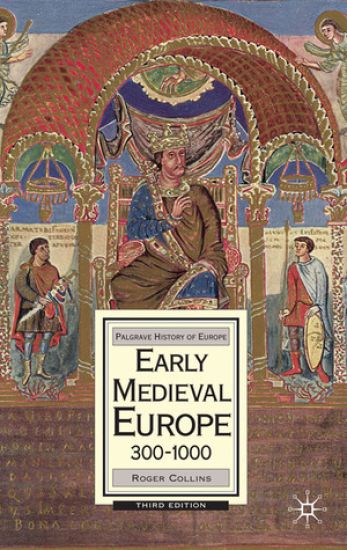
Early Medieval Europe, 300-1000

Early Medieval Europe, 300-1000

Roger Collins

Red Globe Press
2010
sidottu
In this classic textbook history of early medieval Europe, Roger Collins provides a succinct account of the centuries during which Europe changed from being an abstract geographical expression to a new culturally coherent, if politically divided, entity. This comprehensive new edition explores key topics such as the fall of the Roman Empire, the rise of both Christianity and Islam, the Vikings, and the expansion of Latin Christian culture into eastern Europe. Clear and insightful, this is an invaluable guide to an important era in the history of both Europe and the wider world.This is an ideal companion for students of History or European Studies taking modules on Early Medieval Europe or Europe in Late Antiquity. In addition, this is a useful reference work for postgraduate students, scholars and teachers of early medieval Europe.
Early Medieval Europe, 300-1000

Early Medieval Europe, 300-1000

Roger Collins

Red Globe Press
2010
nidottu
In this classic textbook history of early medieval Europe, Roger Collins provides a succinct account of the centuries during which Europe changed from being an abstract geographical expression to a new culturally coherent, if politically divided, entity. This comprehensive new edition explores key topics such as the fall of the Roman Empire, the rise of both Christianity and Islam, the Vikings, and the expansion of Latin Christian culture into eastern Europe. Clear and insightful, this is an invaluable guide to an important era in the history of both Europe and the wider world.This is an ideal companion for students of History or European Studies taking modules on Early Medieval Europe or Europe in Late Antiquity. In addition, this is a useful reference work for postgraduate students, scholars and teachers of early medieval Europe.
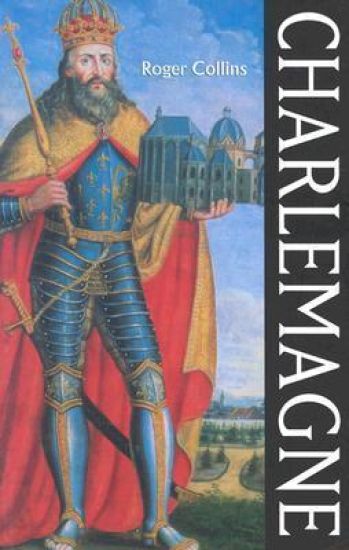
Charlemagne

Charlemagne

Roger Collins

Red Globe Press
1998
nidottu
Charlemagne remains one of the most compelling figures in European history. In this lively, vivid portrait of an extraordinary monarch and his achievements, Roger Collins profiles the most powerful and significant ruler in Western Europe between the end of the Roman Empire and the Italian Renaissance. While his achievements were in some ways ephemeral (after all, his great Empire soon broke up), he can still clearly be seen as the figure who transformed the nature of Europe and ushered in a period which has an explicit and comprehensible connection with our own.The reign of Charlemagne (768-814) saw the unification under his rule of many areas of France, Italy, Germany, Spain and central Europe as part of his attempt to create a single European-wide state. He revived the office of emperor in the West and his achievements inspired a succession of both military conquerors and would-be unifiers of Europe up to the present day, earning him the name, `Father of Europe'.
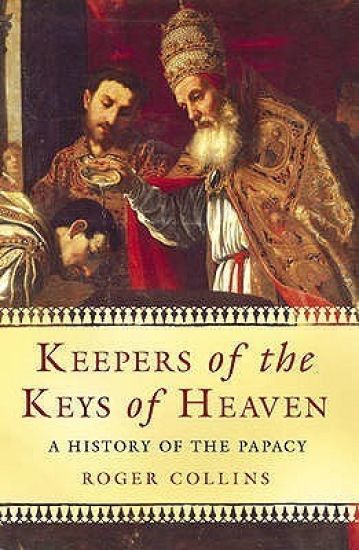
Keepers of the Keys of Heaven: A History of the Papacy
One of the most enduring and influential of all human institutions, the papacy has also been amongst the most controversial. No one who seeks to make sense of modern issues within Christendom -- or, indeed, world history -- can neglect the vital shaping role of the popes. In Keepers of the Keys of Heaven, eminent religion scholar Roger Collins offers a masterful account of the entire arc of papal history -- from the separation of the Greek and Latin churches to the contemporary controversies that threaten the unity of the one billion-strong worldwide Catholic community. A definitive and accessible guide to what is arguably the world's most vaunted office, Keepers of the Keys of Heaven is essential reading for anyone interested in the role of faith in the shaping of our world.
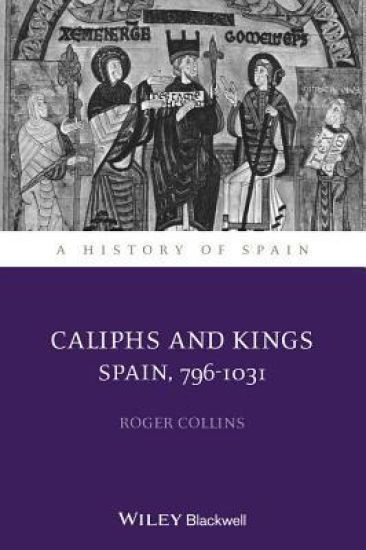
Caliphs and Kings

Caliphs and Kings

Roger Collins

Wiley-Blackwell (an imprint of John Wiley Sons Ltd)
2012
sidottu
CALIPHS AND KINGS: SPAIN, 796-1031 The last twenty-five years have seen a renaissance of research and writing on Spanish history. Caliphs and Kings offers a formidable synthesis of existing knowledge as well as an investigation into new historical thinking, perspectives, and methods. The nearly three-hundred-year rule of the Umayyad dynasty in Spain (756-1031) has been hailed by many as an era of unprecedented harmony and mutual tolerance between the three great religious faiths in the Iberian Peninsula – Christianity, Judaism, and Islam – the like of which has never been seen since. And yet, as this book demonstrates, historical reality defies the myth. Though the middle of the tenth century saw a flowering of artistic culture and sophistication in the Umayyad court and in the city of Córdoba, this period was all too shortlived and localized. Eventually, twenty years of civil war caused the implosion of the Umayyad regime. It is through the forces that divided – not united – the disparate elements in Spanish society that we may best glean its nature and its lessons. Caliphs and Kings is devoted to better understanding those circumstances, as historian Roger Collins takes a fresh look at certainties, both old and new, to strip ninth- and tenth-century Spain of its mythic narrative, revealing the more complex truth beneath.
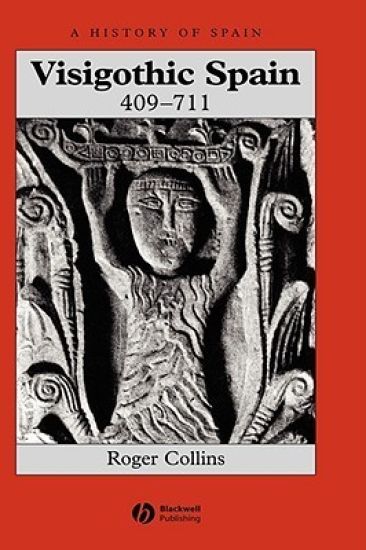
Visigothic Spain 409 - 711

Visigothic Spain 409 - 711

Roger Collins

Blackwell Publishers
2004
sidottu
This history of Spain in the period between the end of Roman rule and the time of the Arab conquest challenges many traditional assumptions about the history of this period. Presents original theories about how the Visigothic kingdom was governed, about law in the kingdom, about the Arab conquest, and about the rise of Spain as an intellectual force. Takes account of new documentary evidence, the latest archaeological findings, and the controversies that these have generated. Combines chronological and thematic approaches to the period. A historiographical introduction looks at the current state of research on the history and archaeology of the Visigothic kingdom.
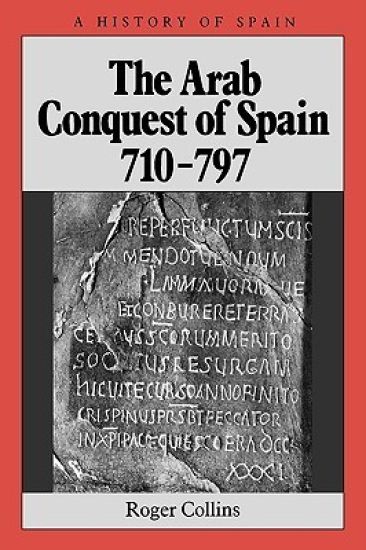
The Arab Conquest of Spain

The Arab Conquest of Spain

Roger Collins

Blackwell Publishers
1994
nidottu
This book, now available in paperback, is a challenging and controversial account of the history of Spain in the eighth century. In it Roger Collins assesses the political and cultural impact on Spain of the first hundred years of Arab rule, focusing upon aspects of continuity and discontinuity with Visigoth Spain.
Keepers of the Keys of Heaven

Keepers of the Keys of Heaven

Roger Collins

Weidenfeld Nicolson
2010
nidottu
'This is a wonderful, magnificent account of an institution that has touched the lives of millions and still does.' Alexander McCall SmithA complete history of the Papacy - one of the most enduring and influential of all human institutions.Few human institutions have survived so long and played a continuously important role in world history and affairs than the Papacy. From the time of St Peter to the present day, this establishment has sought to make sense of contemporary issues. Its story is a long and complicated one, full of incident, ideas and the interplay of personalities.In this masterful single volume, eminent scholar Roger Collins offers an account of the entire arc of papal history, describing how its authority was acquired and exercised, and in turn, challenged and threatened; how it faced and overcame crises - both from within and without; its relationship with Rome; the tradition of artistic patronage; and the character and policies of individual popes.KEEPERS OF THE KEYS OF HEAVEN is a vivid and revealing portrait of an enduring body, chronicling two thousand years of ambition, scandal, persecution, faith and glory.
Charlemagne

Charlemagne

Roger Collins

University of Toronto Press
1998
pokkari
This is a new account of the most important period in the history of Europe between the end of the Roman Empire and the Italian Renaissance. The reign of Charlemagne (768-814) saw the unification of many areas of France, Italy and Germany, Spain and central Europe, as well as the revival of the title 'Emperor in the West.' At the same time, the cultural and artistic revival that took place in western Europe under Charlemagne's rule both led to the preservation of much of the intellectual heritage of Antiquity and inspired succeeding generations of scholars and artists up to the time of the Renaissance. While the empire that Charlemagne created proved short-lived, the title 'Holy Roman Emperor' remained in continuous use until 1806, and his achievements have inspired a succession of both military conquerors and would-be unifiers of Europe up to the present day. Numerous ideas and institutions were revived or created in this period which would serve to shape the future development of western Europe throughout the Middle Ages and beyond.
Law, Culture and Regionalism in Early Medieval Spain
Roger Collins deals here with the history of Spain, specifically Christian Spain, in the period from the 6th to the 10th century - from the Visigoths, through the time of the Arab conquests, up to the end of the era of Carolingian dominance across the Pyrenees. Particular emphasis, indeed, is placed upon the importance of this Pyrenean region, in the lands now known as France as well as those in Spain, with the author also calling into question the received notion of an Aquitanian identity in the 5th-9th centuries. Of the themes running through this volume, that of regionalism is most evident here and in the articles on the Basques, but appears equally, for instance, in the study on the relations between Merida and the Visigothic government. Similarly, legal and cultural themes provide the focus for the articles on the workings of Visigothic law in the 9th-10th centuries, or on the intellectual culture of Navarre, but recur in other parts of the collection. Two of these articles appear for the first time in English, while a third has been re-written for this volume and others supplied with additional notes or illustrations. Roger Collins traite ici de l’histoire d’Espagne et, plus particulièrement, de celle de l’Espagne chrétienne entre le 6e et le 10e siècle: des Visigoths jusqu’à la fin de l’hégémonie carolingienne au nord du pays, en passant par les conquêtes arabes. L’importance de la région pyrénéenne, recouvrant des terres qui font de nos jours partie de la France ainsi que de l’Espagne, est soulignée par l’auteur, qui remet par ailleurs en question l’idée reçue d’identité aquitaine qui prévalait entre le 5e et le 9e siècle. Certains thèmes légaux et culturels forment la base d’articles sur le fonctionnement du droit visigoth aux 9e et 10e siècles, ou encore sur la culture intellectuelle de la Navarre et ressurgissent à d’autres endroits de la collection. Le régionalisme reste cependant le plus prédominant
From Clovis to Charlemagne: Frankish History and Historians
This book is a collection of papers on Frankish historiography in the Merovingian and early Carolingian periods, from the late sixth to early ninth centuries, and studies numerous individual texts, evaluating their witness to the events they describe. It also includes hitherto unpublished items on the so-called Chronicle of Fredegar, in both its original and eighth century versions, and also an entirely new article on the Merovingian dynastic crisis of 613, along with a general introduction and a bibliography of its author’s writing.Particular attention is focused on the element of deception, deliberate or otherwise, in the narrative accounts of some of the Frankish histories and chronicles and on the way they were written in order to promote specific interpretations of certain individuals and events, or in some cases to conceal their very existence. Certain central episodes such as the imperial coronation of Charlemagne are examined to detect the ways in which they were interpreted and presented in contemporary texts.From Clovis to Charlemagne: Frankish History and Historians will appeal to academics and students interested in the history of early medieval France; the processes of historical composition in that period; the study of manuscripts relating to it; and the wider questions about historical understanding and the interpretation of evidence.
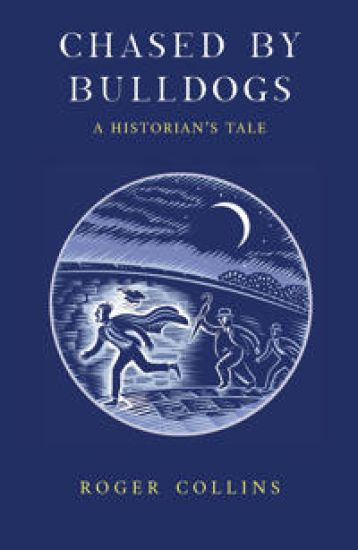
Chased by Bulldogs

Chased by Bulldogs

Roger Collins

MACLEAN DUBOIS
2025
sidottu
This memoir of the author’s early years details the advantages of a weirdly dysfunctional family, a mysterious Irish ancestry, a violent and expensive prep school (where he failed to blow up the headmaster with gunpowder), some good teaching – and some very bad – and life as a teenage carer. Other topics include the dangers of sport and upper-crust drinking dens in Hove, along with a wide range of sometimes bizarre travels: from Sarajevo to East Berlin and Leningrad, and from Erzurum to Ouarzazate, not to mention encounters with pink gin and false teeth in Eastbourne. It concludes with an account of the author’s four years of university - lived in a style that can no longer be enjoyed, and including the episode that gives this book its title. All these experiences, and many more, have contributed to the formation and direction of his life as a historian.
Caliphs and Kings

Caliphs and Kings

Roger Collins

John Wiley Sons Inc
2013
nidottu
CALIPHS AND KINGS: SPAIN, 796-1031 The last twenty-five years have seen a renaissance of research and writing on Spanish history. Caliphs and Kings offers a formidable synthesis of existing knowledge as well as an investigation into new historical thinking, perspectives, and methods. The nearly three-hundred-year rule of the Umayyad dynasty in Spain (756-1031) has been hailed by many as an era of unprecedented harmony and mutual tolerance between the three great religious faiths in the Iberian Peninsula – Christianity, Judaism, and Islam – the like of which has never been seen since. And yet, as this book demonstrates, historical reality defies the myth. Though the middle of the tenth century saw a flowering of artistic culture and sophistication in the Umayyad court and in the city of Córdoba, this period was all too shortlived and localized. Eventually, twenty years of civil war caused the implosion of the Umayyad regime. It is through the forces that divided – not united – the disparate elements in Spanish society that we may best glean its nature and its lessons. Caliphs and Kings is devoted to better understanding those circumstances, as historian Roger Collins takes a fresh look at certainties, both old and new, to strip ninth- and tenth-century Spain of its mythic narrative, revealing the more complex truth beneath.
Visigothic Spain 409 - 711

Visigothic Spain 409 - 711

Roger Collins

Wiley-Blackwell (an imprint of John Wiley Sons Ltd)
2006
nidottu
This history of Spain in the period between the end of Roman rule and the time of the Arab conquest challenges many traditional assumptions about the history of this period. Presents original theories about how the Visigothic kingdom was governed, about law in the kingdom, about the Arab conquest, and about the rise of Spain as an intellectual force. Takes account of new documentary evidence, the latest archaeological findings, and the controversies that these have generated. Combines chronological and thematic approaches to the period. A historiographical introduction looks at the current state of research on the history and archaeology of the Visigothic kingdom.
Melting Point

Melting Point

Roger Collins

Lulu.com
2008
pokkari
The Holocaust was perpetrated by fanatical Nazis. Or was it? Were they all insane and evil? The truth is scarier: many people involved in the Holocaust were ordinary people in extraordinary circumstances. We like to believe we would never do such things. Given the same circumstances, though, would we? Would you? Albert Stohl is an old man with a hidden past. He was at Auschwitz, but not as an inmate. Now he has to tell his story to his daughter and grandchildren. What will they think? How will he explain what he did and why? Will they ever see him the same way again? Well researched and technically detailed, Melting Point is a classic historical fiction tale of an ordinary person in extraordinary circumstances. About The Author Roger Collins is a software engineer living near Bodega Bay, California. An avid reader of history, Melting Point is his first published work.
The Christian Culture of Islamic Spain

The Christian Culture of Islamic Spain

Roger Collins

ANTHEM PRESS
2026
sidottu
Why did Christianity, which was entrenched in the Iberian Peninsula as the religion of the majority of the population at the time of the Arab conquest of 711, fail to survive under Islamic rule, while other Christian communities of similar antiquity still exist today in most parts of the Near East? It has been argued that the hold of Christianity was weaker than claimed, not only in Spain but also in North Africa, where its history follows a similar path, leading to complete disappearance in the twelfth century. The Christian Culture of Islamic Spain will suggest, from the textual and archaeological evidence, that the Christianity of the Iberian Peninsula at the time of the conquest was indeed deeply rooted, and also distinctive in its character and practices. Its hold remained strong in both town and country, despite claims to the contrary, for several centuries more, and the Christians may still have constituted the largest religious grouping of the population of al-Andalus (Muslim-ruled Spain) at least as late as the eleventh century. What happened next, and how knowledge of their distinctive culture was revived are covered as well.
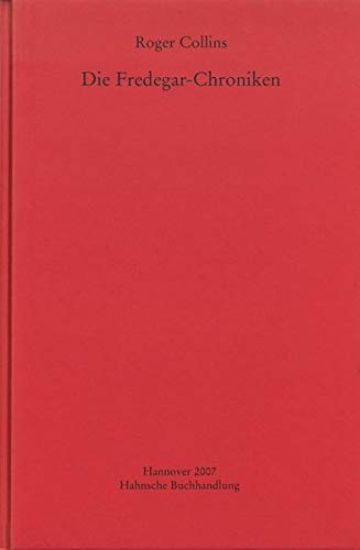
Die Fredegar-Chroniken

Die Fredegar-Chroniken

Roger Collins

Harrassowitz
2007
sidottu
Die auf die 1819 vom Reichsfreiherrn Karl vom Stein gegrundete "Gesellschaft fur altere deutsche Geschichtskunde" zuruckgehenden Monumenta Germaniae Historica haben die Aufgabe, durch kritische Quellen-Ausgaben und -Studien der wissenschaftlichen Erforschung der mittelalterlichen Geschichte Deutschlands und Europas zu dienen. Dieses Ziel verfolgen sie dadurch, dass sie in ihren Editionsreihen mittelalterliche Textquellen der Forschung zuganglich machen und durch kritische Studien zur wissenschaftlichen Erforschung der deutschen und europaischen Geschichte beitragen. Die Aufgaben der Monumenta Germaniae Historica haben sich in den letzten Jahrzehnten durch die Einbeziehung neuer Quellengruppen und durch die Vermehrung der Forschungsbereiche stetig erweitert. Neben Werken der Geschichtsschreibung, Urkunden, Gesetzen und Rechtsbuchern werden auch Briefsammlungen, Dichtungen, Memorialbucher und Necrologe, politische Traktate und Schriften zur Geistesgeschichte herausgegeben.