Kirjojen hintavertailu. Mukana 11 244 527 kirjaa ja 12 kauppaa.

Kirjahaku

Etsi kirjoja tekijän nimen, kirjan nimen tai ISBN:n perusteella.

9 kirjaa tekijältä Roger D. Launius

Joseph Smith III

Joseph Smith III

Roger D. Launius

University of Illinois Press
1995
nidottu
This masterful study charts the extensive common ground and telling differences between two widely separated coal-mining communities: Lanarkshire, in the Clyde Valley of southwest Scotland, and the northern Illinois coalfield that became a prime destination for skilled Scottish migrant miners in the mid-nineteenth century. Challenging the prevailing exceptionalist paradigm of labor history, John Laslett examines the social, economic, and political context of each of these communities in generous detail. He traces the progressive heightening of class consciousness as the coal industry evolved from skilled hand labor to an increasingly mechanized extraction process and the escalating hostility between miners and mineowners as their interests split along class lines. Examining the rise of militant industrial unionism in both areas, Laslett provides a sophisticated explanation of the American and Scottish miners' divergent approaches to collectivist solutions. Based on a profound knowledge of both communities, Colliers across the Sea tells a compelling story of industrial transformation's human costs, of conflict and greed, and of democratic aspirations and community.
The History of Space Exploration

The History of Space Exploration

Roger D. Launius

Thames Hudson Ltd
2018
sidottu
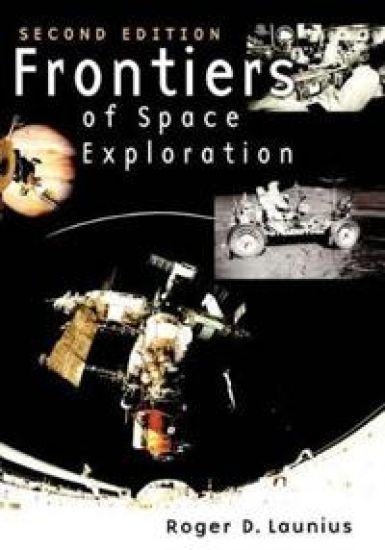
For centuries humanity has engaged in a virtual exploration of space through astronomical observation, aided by astounding scientific and technological advances. In more than sixty years since the launch of Sputnik 1 in 1957, more than 6,000 functioning satellites have been launched into Earth’s orbit and beyond – some to the farthest reaches of the Solar System – and more than 540 people have travelled into space. Unprecedented in its chronological and geographical scope, this book charts the history of space exploration from the first gunpowder rockets through the Moon landings, and into a future of space tourism. Numerous sidebars focus on the key individuals and inventions that brought us closer to the farthest reaches of the universe. Filled with astonishing images from the Smithsonian, NASA archives and other international collections, this is the first in-depth, fully illustrated survey of this universal human journey.
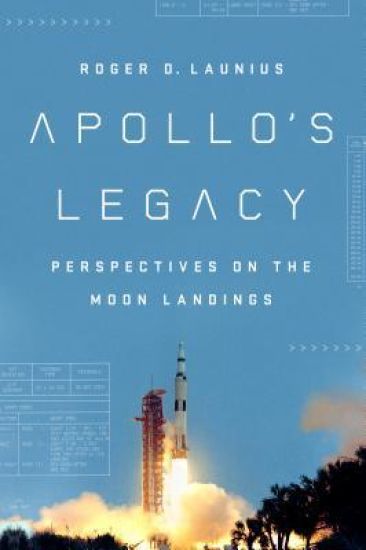
Apollo'S Legacy

Apollo'S Legacy

Roger D. Launius

Smithsonian Books
2019
sidottu
An all-encompassing look at the history and enduring impact of the Apollo space program In Apollo's Legacy, space historian Roger D. Launius explores the many-faceted stories told about the meaning of the Apollo program and how it forever altered American society. The Apollo missions marked the first time human beings left Earth's orbit and visited another world, and thus they loom large in our collective memory. Many have detailed the exciting events of the Apollo program, but Launius offers unique insight into its legacy as seen through multiple perspectives. He surveys a wide range of viewpoints and narratives, both positive and negative, surrounding the program. These include the argument that Apollo epitomizes American technological--and political--progress; technological and scientific advances garnered from the program; critiques from both sides of the political spectrum about the program's expenses; and even conspiracy theories and denials of the program's very existence. Throughout the book, Launius weaves in stories from important moments in Apollo's history to draw readers into his analysis. Apollo's Legacy is a must-read for space buffs interested in new angles on a beloved cultural moment and those seeking a historic perspective on the Apollo program.
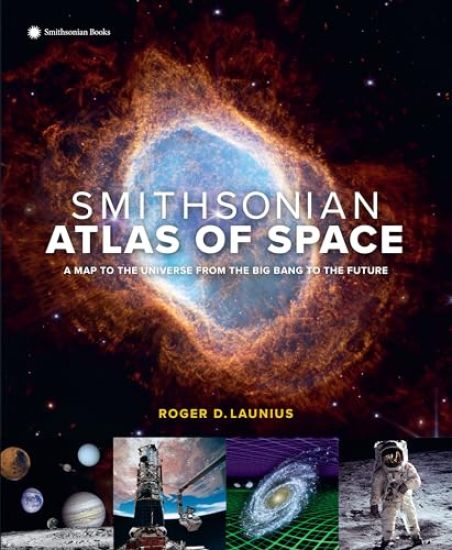
Smithsonian Atlas of Space

Smithsonian Atlas of Space

Roger D. Launius

Smithsonian Books
2024
sidottu
Journey to the farthest corners of the universe in this visually stunning coffee-table atlas by the former chief historian of NASA 300 maps and illustrations tell the incredible story of the past, present, and future of the universe and space exploration Navigate the Solar System, the Milky Way, and beyond with 300 magnificent charts, illustrations, and photographs. This large-format atlas makes the immense universe feel more intimate, with striking full-page spreads and engaging text. Former chief historian of NASA Roger D. Launius offers important perspective on the trajectory of space exploration and its achievements, covering topics like ancient ideas of the cosmos; the evolution of galaxies; the search for extraterrestrial intelligence; investigating the inner and outer solar system; and human migration to the Moon and to Mars. The book includes: Full-page and full-spread historical, scientific, cosmology, and specially commissioned maps. Amazing photos from NASA's archives and stunning new artworkBiographical sidebars highlighting important people involved in the search for knowledge about the universe, from Galileo to Nancy Grace Roman to Subrahmanyan Chandrasekhar.With the growing market for space tourism, space exploration verges on a new era, and this book looks toward the future to include conceptions of futuristic space activities. The marvelous collection of maps provide visual reference to better understand science and humanity's place in the universe. Absorbing and exquisitely detailed, Smithsonian Atlas of Space is a showstopping journey through the cosmos.
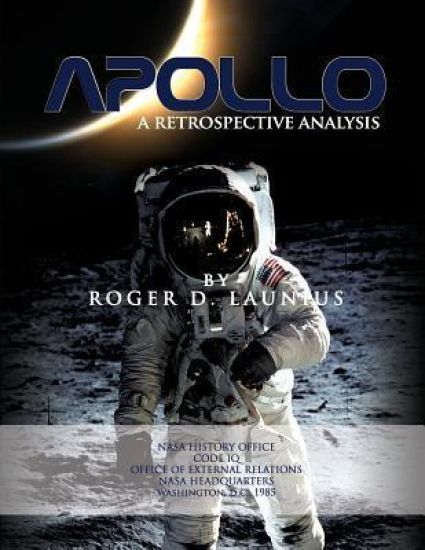
Apollo

Apollo

Roger D. Launius

Books Express Publishing
2011
pokkari
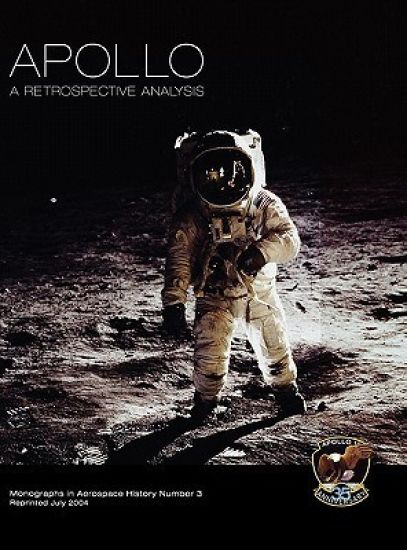
First published in 1994 in the NASA Monograph in Aerospace History series. From the introduction: "On 25 May 1961 President John F. Kennedy announced to the nation a goal of sending an American safely to the Moon before the end of the decade. This decision involved much study and review prior to making it public, and tremendous expenditure and effort to make it a reality by 1969. Only the building of the Panama Canal rivaled the Apollo program's size as the largest non- military technological endeavor ever undertaken by the United States; only the Manhattan Project was comparable in a wartime setting. The human spaceflight imperative was a direct outgrowth of it; Projects Mercury (at least in its latter stages), Gemini, and Apollo were each designed to execute it. It was finally successfully accomplished on 20 July 1969, when Apollo 11's astronaut Neil Armstrong left the Lunar Module and set foot on the surface of the Moon." Illustrated.
Apollo

Apollo

Roger D. Launius

BOOKS EXPRESS PUBLISHING
2011
sidottu
First published in 1994 in the NASA Monograph in Aerospace History series. From the introduction: "On 25 May 1961 President John F. Kennedy announced to the nation a goal of sending an American safely to the Moon before the end of the decade. This decision involved much study and review prior to making it public, and tremendous expenditure and effort to make it a reality by 1969. Only the building of the Panama Canal rivaled the Apollo program's size as the largest non- military technological endeavor ever undertaken by the United States; only the Manhattan Project was comparable in a wartime setting. The human spaceflight imperative was a direct outgrowth of it; Projects Mercury (at least in its latter stages), Gemini, and Apollo were each designed to execute it. It was finally successfully accomplished on 20 July 1969, when Apollo 11's astronaut Neil Armstrong left the Lunar Module and set foot on the surface of the Moon." Illustrated.