Kirjojen hintavertailu. Mukana 12 512 096 kirjaa ja 12 kauppaa.

Kirjahaku

Etsi kirjoja tekijän nimen, kirjan nimen tai ISBN:n perusteella.

5 kirjaa tekijältä Roger G Newton

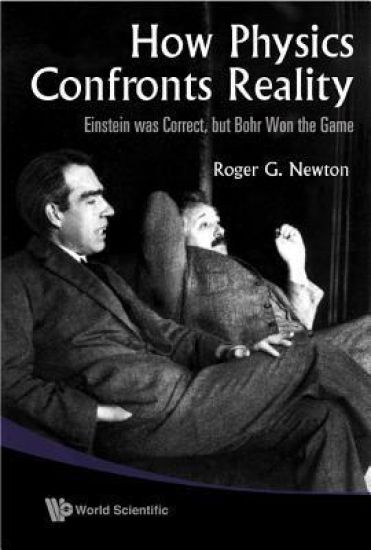
How Physics Confronts Reality: Einstein Was Correct, But Bohr Won The Game

How Physics Confronts Reality: Einstein Was Correct, But Bohr Won The Game

Roger G Newton

World Scientific Publishing Co Pte Ltd
2009
sidottu
This book recalls, for nonscientific readers, the history of quantum mechanics, the main points of its interpretation, and Einstein's objections to it, together with the responses engendered by his arguments. Most popular discussions on the strange aspects of quantum mechanics ignore the fundamental fact that Einstein was correct in his insistence that the theory does not directly describe reality. While that fact does not remove the theory's counterintuitive features, it casts them in a different light.Context is provided by following the history of two central aspects of physics: the elucidation of the basic structure of the world made up of particles, and the explanation, as well as the prediction, of how objects move. This history, prior to quantum mechanics, reveals that whereas theories and discoveries concerning the structure of nature became increasingly realistic, the laws of motion, even as they became more powerful, became more and more abstract and remote from intuitive notions of reality. Newton's laws of motion gained their abstract power by sacrificing direct and intuitive contact with real experience. Arriving 250 years after Newton, the break with a direct description of reality embodied in quantum mechanics was nevertheless profound.
How Physics Confronts Reality: Einstein Was Correct, But Bohr Won The Game

How Physics Confronts Reality: Einstein Was Correct, But Bohr Won The Game

Roger G Newton

World Scientific Publishing Co Pte Ltd
2009
nidottu
This book recalls, for nonscientific readers, the history of quantum mechanics, the main points of its interpretation, and Einstein's objections to it, together with the responses engendered by his arguments. Most popular discussions on the strange aspects of quantum mechanics ignore the fundamental fact that Einstein was correct in his insistence that the theory does not directly describe reality. While that fact does not remove the theory's counterintuitive features, it casts them in a different light.Context is provided by following the history of two central aspects of physics: the elucidation of the basic structure of the world made up of particles, and the explanation, as well as the prediction, of how objects move. This history, prior to quantum mechanics, reveals that whereas theories and discoveries concerning the structure of nature became increasingly realistic, the laws of motion, even as they became more powerful, became more and more abstract and remote from intuitive notions of reality. Newton's laws of motion gained their abstract power by sacrificing direct and intuitive contact with real experience. Arriving 250 years after Newton, the break with a direct description of reality embodied in quantum mechanics was nevertheless profound.
Why Science?: To Know, To Understand, And To Rely On Results

Why Science?: To Know, To Understand, And To Rely On Results

Roger G Newton

World Scientific Publishing Co Pte Ltd
2012
nidottu
This book aims to describe, for readers uneducated in science, the development of humanity's desire to know and understand the world around us through the various stages of its development to the present, when science is almost universally recognized — at least in the Western world — as the most reliable way of knowing. The book describes the history of the large-scale exploration of the surface of the earth by sea, beginning with the Vikings and the Chinese, and of the unknown interiors of the American and African continents by foot and horseback. After the invention of the telescope, visual exploration of the surfaces of the Moon and Mars were made possible, and finally a visit to the Moon. The book then turns to our legacy from the ancient Greeks of wanting to understand rather than just know, and why the scientific way of understanding is valued. For concreteness, it relates the lives and accomplishments of six great scientists, four from the nineteenth century and two from the twentieth. Finally, the book explains how chemistry came to be seen as the most basic of the sciences, and then how physics became the most fundamental.
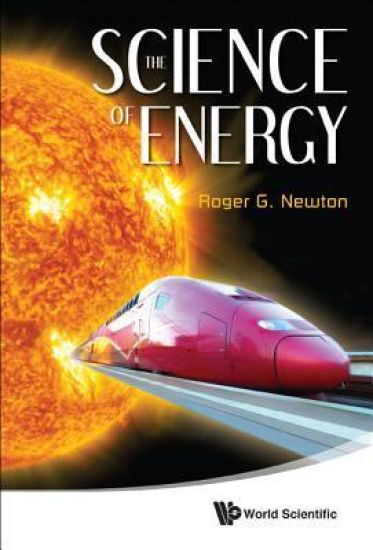
Science Of Energy, The

Science Of Energy, The

Roger G Newton

World Scientific Publishing Co Pte Ltd
2012
nidottu
This book aims to describe the scientific concepts of energy. Accessible to readers with no scientific education beyond high-school chemistry, it starts with the basic notion of energy and the fundamental laws that govern it, such as conservation, and explains the various forms of energy, such as electrical, chemical, and nuclear. It then proceeds to describe ways in which energy is stored for very long times in the various fossil fuels (petroleum, gas, coal) as well as for short times (flywheels, pumped storage, batteries, fuel cells, liquid hydrogen). The book also discusses the modes of transport of energy, especially those of electrical energy via lasers and transmission lines, as well as why the latter uses alternating current at high voltages. The altered view of energy introduced by quantum mechanics is also discussed, as well as how almost all the Earth's energy originates from the Sun. Finally, the history of the forms of energy in the course of development of the universe is described, and how this form changed from pure radiation in the aftermath of the Big Bang to the creation of all the chemical elements in the world.
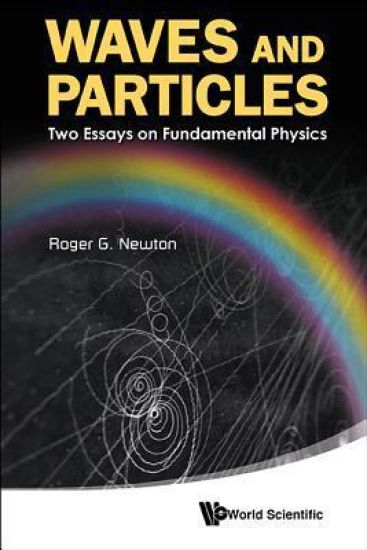
Waves And Particles: Two Essays On Fundamental Physics

Waves And Particles: Two Essays On Fundamental Physics

Roger G Newton

World Scientific Publishing Co Pte Ltd
2014
nidottu
The book consists of two separate parts, the first part is on waves and the second part on particles. In part 1, after describing the awesome power of tsunami and the history of their occurrences, the book turns to the history of explaining phenomena by means of mathematical equations. Then it describes other wave phenomena and the laws governing them: the vibration of strings and drums in musical instruments, the sound waves making them audible, ultrasound and its uses, sonar, and shock waves; electromagnetic waves: light waves, refraction, diffraction, why the sky is blue, the rainbow, and the glory; microwaves and radio waves: radar, radio astronomy, the discovery of the cosmic microwave background radiation, microwave ovens and how a radio works, lasers and masers; waves in modern physics: the Schrödinger wave function and gravitational waves in general relativity; water waves in the ocean, tides and tidal waves, and the quite different solitary waves, solitons discovered in canals. Finally we return to tsunami and the question of what laws govern them. We conclude that the answer to that question is not quite known yet, but there is ongoing research to solve the riddle.In part 2, the history of the idea of atoms is reviewed, and then the scientific evidence for their existence, with Rutherford's discovery of the atomic nucleus. The investigation of what the nucleus is like follows, including the discovery of the neutron, followed by that of the neutrino — of which there are several different kinds — and the muon as well as the pion. The important work of Paul Dirac is described, as well as the discovery of the positron and other antiparticles. The ways by which particles are discovered, by cloud chambers, bubble chambers, etc. are all explained, followed by the invention of the various machines to accelerate particles to high speeds: the cyclotron, the synchrotron, and the bigger and bigger machines, in the US as well as in Switzerland, including their storage rings. The new terminology of fermions and bosons are explained, followed by the remarkable use of group theory and group representations by matrices, whose unfamiliar algebra is carefully explained.