Kirjojen hintavertailu. Mukana 11 717 486 kirjaa ja 12 kauppaa.

Kirjahaku

Etsi kirjoja tekijän nimen, kirjan nimen tai ISBN:n perusteella.

4 kirjaa tekijältä Roger G. Kennedy

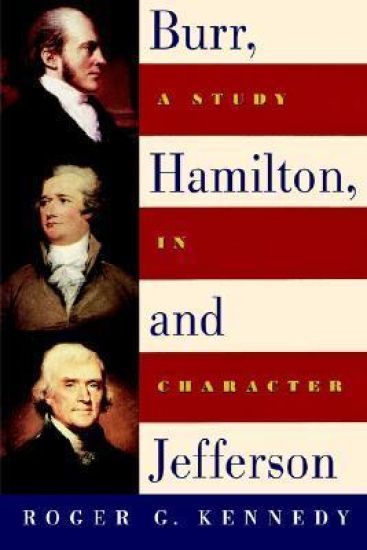
Burr, Hamilton, and Jefferson

Burr, Hamilton, and Jefferson

Roger G. Kennedy

Oxford University Press Inc
2002
nidottu
This book restores Aaron Burr to his place as a central figure in the founding of the American Republic. Abolitionist, proto-feminist, friend to such Indian leaders as Joseph Brant, Burr was personally acquainted with a wider range of Americans, and of the American continent, than any other Founder except George Washington. He contested for power with Hamilton and then with Jefferson on a continental scale. The book does not sentimentalize any of its three protagonists, neither does it derogate their extraordinary qualities. They were all great men, all flawed, and all three failed to achieve their full aspirations. But their struggles make for an epic tale. Written from the perspective of a historian and administrator who, over nearly fifty years in public life, has served six presidents, this book penetrates into the personal qualities of its three central figures. In telling the tale of their shifting power relationships and their antipathies, it reassesses their policies and the consequences of their successes and failures. Fresh information about the careers of Hamilton and Burr is derived from newly-discovered sources, and a supporting cast of secondary figures emerges to give depth and irony to the principal narrative. This is a book for people who know how political life is lived, and who refuse to be confined within preconceptions and prejudices until they have weighed all the evidence, to reach their own conclusions both as to events and character. This is a controversial book, but not a confrontational one, for it is written with sympathy for men of high aspirations, who were disappointed in much, but who succeeded, in all three cases, to a degree not hitherto fully understood.
Public Benefits of Archaeology

Public Benefits of Archaeology

Roger G. Kennedy

University Press of Florida
2002
sidottu
Little brings together an unprecedented mix of authors from all aspects of the profession, as well as several non-archaeologists, who address the broad range of contributions that archaeology makes beyond research. Their discussion confronts the issue of exactly who the public is and why it should care about archaeology at all. These authors prove, in exploring diverse cross-sections of the public, that archaeology plays a crucial role in providing an authentic past, opportunities for critical thinking, and multicultural education. The electic nature of the collection allows for a thorough exploration of major issues central to the conduct of archaeological scholarship: museum and site interpretation, site preservation, education, media relations, descendant communities, and politics and public policy.
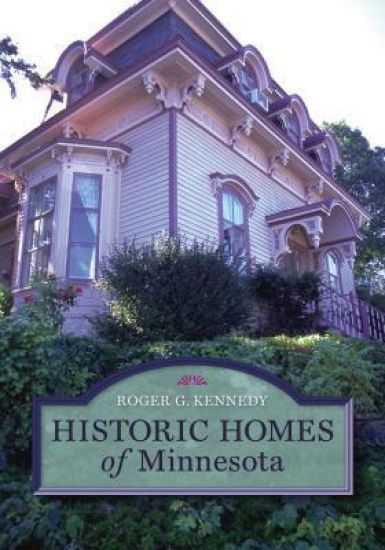
Historic Homes of Minnesota

Historic Homes of Minnesota

Roger G. Kennedy

Minnesota Historical Society Press,U.S.
2006
nidottu
Historic Homes of Minnesota is the engaging story of the evolution of architectural styles in Minnesota from 1830 to 1914 -- from the influence of the early French traders along the Mississippi and St Croix to the emergence of the school of Frank Lloyd Wright. Through photographs and colourfully informative text, internationally known historian Roger Kennedy helps readers understand the unique styles of Minnesota's first homes, including the Mower House in Arcola, the first large house on the St. Croix; Alexander Ramsey's 'Mansion House' in St Paul, influenced by Pennsylvania Dutch virtues; the whimsical Charles C. Clement house in Fergus Falls, clearly Norse in spirit; and the Purcell House in Minneapolis, a fine example of the Prairie School design. On a broad plane these architectural eras reflected social customs, politics, commerce, religion, and literature. On a personal level they often revealed the national origin and character of the families that made the house a home. In short, this is in large measure a history of the people.Kennedy has considered their heritage and traditions as carefully as he has examined the architecture they created, and he offers a fresh, holistic approach to the study of our state's great houses.
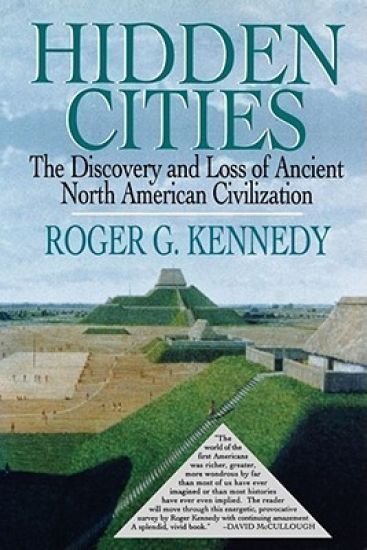
Hidden Cities

Hidden Cities

Roger G. Kennedy

The Free Press
2011
pokkari
Robert Kennedy, director of the National Park Service, analyzes the discovery of North America and the loss of ancient civilization, from the cities, roads, and commerce of the past as the nation evolved into present day. In Hidden Cities, Robert Kennedy sets out on the bold quest of recovering the rich heritage of the North American peoples through a reimagination of the true relations of their modern-day successors and neighbors. From the Spanish and French explorers that discovered the land that would one day make up the United States to present day in the country, very few Euro-Americans have paid attention to the evidence and meaning of the nation’s heritage. As Kennedy shows the magnificence of the mound-building cultures through the sometimes prejudiced eyes of the founding generation, he reveals the astounding history of the North American continent in a way that sheds important light on the credit Native American predecessors deserve but many refuse to give.