Kirjojen hintavertailu. Mukana 12 390 323 kirjaa ja 12 kauppaa.

Kirjahaku

Etsi kirjoja tekijän nimen, kirjan nimen tai ISBN:n perusteella.

9 kirjaa tekijältä Roger G. Newton

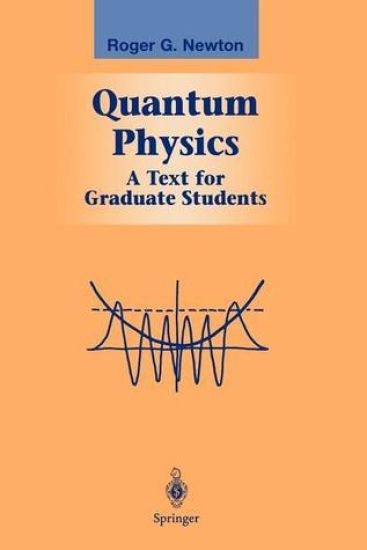
Quantum Physics

Quantum Physics

Roger G. Newton

Springer-Verlag New York Inc.
2002
sidottu
The combination of quantum mechanics and quantum ?eld theory cons- tutesthemostrevolutionaryandin?uentialphysicaltheoryofthetwentieth century. Itsimpactisfeltnotonlyinalmostallothersciences,butthefruits of its application are ubiquitous in everyday life. This textbook is designed to teach graduate students the underlying quantum-physical ideas, their mathematical formulations, and the basic problem-solving techniques of the discipline. It assumes they have taken at least one introductory course in quantum mechanics as undergraduates and are familiar with the history of the subject and the basic experimental evidence that led to its adoption, as well as with many of its fundamental notions. In contrast to most other authors, I am therefore not introducing the quantum theory via an hist- ical survey of its early successes. Instead, following the models of books on classsical mechanics or electromagnetism, I develop the theory from its basic assumptions, beginning with statics, followed by the dynamics and details of its speci?c areas of use as well as the needed mathematical te- niques. Although this book, inevitably, deals largely with the behavior of point particles under various conditions, I do not regard particles as the fun- mental entities of the universe: the most basic object is the quantum ?eld, with theobserved particlesarising from the?eld asitsquanta. For thisr- son I introduce quantum ?elds right from the beginning and demonstrate, in the ?rst chapter, how particles originate.
The Truth of Science

The Truth of Science

Roger G. Newton

Harvard University Press
2000
nidottu
It's not a scientific truth that has come into question lately but the truth--the very notion of scientific truth. Bringing a reasonable voice to the culture wars that have sprung up around this notion, this book offers a clear and constructive response to those who contend, in parodies, polemics and op-ed pieces, that there really is no such thing as verifiable objective truth--without which there could be no such thing as scientific authority.A distinguished physicist with a rare gift for making the most complicated scientific ideas comprehensible, Roger Newton gives us a guided tour of the intellectual structure of physical science. From there he conducts us through the understanding of reality engendered by modern physics, the most theoretically advanced of the sciences. With its firsthand look at models, facts, and theories, intuition and imagination, the use of analogies and metaphors, the importance of mathematics (and now, computers), and the "virtual" reality of the physics of micro-particles, The Truth of Science truly is a practicing scientist's account of the foundations, processes, and value of science.To claims that science is a social construction, Newton answers with the working scientist's credo: "A body of assertions is true if it forms a coherent whole and works both in the external world and in our minds." The truth of science, for Newton, is nothing more or less than a relentless questioning of authority combined with a relentless striving for objectivity in the full awareness that the process never ends. With its lucid exposition of the ideals, methods, and goals of science, his book performs a great feat in service of this truth.
Galileo’s Pendulum

Galileo’s Pendulum

Roger G. Newton

Harvard University Press
2005
nidottu
Bored during Mass at the cathedral in Pisa, the seventeen-year-old Galileo regarded the chandelier swinging overhead—and remarked, to his great surprise, that the lamp took as many beats to complete an arc when hardly moving as when it was swinging widely. Galileo’s Pendulum tells the story of what this observation meant, and of its profound consequences for science and technology.The principle of the pendulum’s swing—a property called isochronism—marks a simple yet fundamental system in nature, one that ties the rhythm of time to the very existence of matter in the universe. Roger Newton sets the stage for Galileo’s discovery with a look at biorhythms in living organisms and at early calendars and clocks—contrivances of nature and culture that, however adequate in their time, did not meet the precise requirements of seventeenth-century science and navigation. Galileo’s Pendulum recounts the history of the newly evolving time pieces—from marine chronometers to atomic clocks—based on the pendulum as well as other mechanisms employing the same physical principles, and explains the Newtonian science underlying their function.The book ranges nimbly from the sciences of sound and light to the astonishing intersection of the pendulum’s oscillations and quantum theory, resulting in new insight into the make-up of the material universe. Covering topics from the invention of time zones to Isaac Newton’s equations of motion, from Pythagoras’s theory of musical harmony to Michael Faraday’s field theory and the development of quantum electrodynamics, Galileo’s Pendulum is an authoritative and engaging tour through time of the most basic all-pervading system in the world.
From Clockwork to Crapshoot

From Clockwork to Crapshoot

Roger G. Newton

The Belknap Press
2009
nidottu
Science is about 6000 years old while physics emerged as a distinct branch some 2500 years ago. As scientists discovered virtually countless facts about the world during this great span of time, the manner in which they explained the underlying structure of that world underwent a philosophical evolution. From Clockwork to Crapshoot provides the perspective needed to understand contemporary developments in physics in relation to philosophical traditions as far back as ancient Greece.Roger Newton, whose previous works have been widely praised for erudition and accessibility, presents a history of physics from the early beginning to our day--with the associated mathematics, astronomy, and chemistry. Along the way, he gives brief explanations of the scientific concepts at issue, biographical thumbnail sketches of the protagonists, and descriptions of the changing instruments that enabled scientists to make their discoveries. He traces a profound change from a deterministic explanation of the world--accepted at least since the time of the ancient Greek and Taoist Chinese civilizations--to the notion of probability, enshrined as the very basis of science with the quantum revolution at the beginning of the twentieth century. With this change, Newton finds another fundamental shift in the focus of physicists--from the cause of dynamics or motion to the basic structure of the world. His work identifies what may well be the defining characteristic of physics in the twenty-first century.
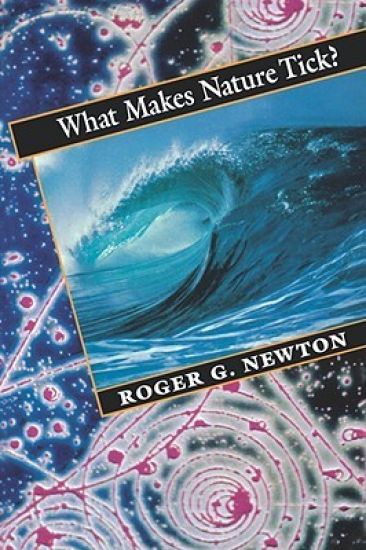
What Makes Nature Tick?

What Makes Nature Tick?

Roger G. Newton

Harvard University Press
1998
nidottu
For many of us, the physical sciences are as obscure as the phenomena they explain. We see the wonders of nature but miss the symmetry beneath, framed as it is in ever stranger symbols and concepts. Roger Newton's accessible account of how physicists understand the world allows the expert and novice alike to explore both the mysteries of the universe and the beauty of the science that gives shape to the unseeable.In What Makes Nature Tick? we find engaging discussions of solitons and superconductors, quarks and strings, phase space, tachyons, time, chaos, and indeterminacy, as well as the investigations that have led to their elucidation. But Roger Newton does not limit this volume to late-breaking discoveries and startling facts. He presents physics as an expanding intellectual structure, a network of very human ideas that stretches back three hundred years from our present frontier of knowledge. Where does our unidirectional sense of time come from? What makes a particle elementary? How can forces be transmitted through empty space? In addition to providing these answers, and a host of others at the very heart of physics, Newton shows us how physicists formulate the questions--a process in which intuition, imagination, and aesthetics have a powerful influence.
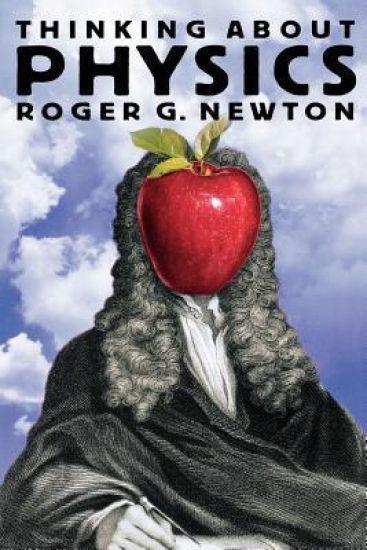
Thinking about Physics

Thinking about Physics

Roger G. Newton

Princeton University Press
2002
pokkari
Physical scientists are problem solvers. They are comfortable "doing" science: they find problems, solve them, and explain their solutions. Roger Newton believes that his fellow physicists might be too comfortable with their roles as solvers of problems. He argues that physicists should spend more time thinking about physics. If they did, he believes, they would become even more skilled at solving problems and "doing" science. As Newton points out in this thought-provoking book, problem solving is always influenced by the theoretical assumptions of the problem solver. Too often, though, he believes, physicists haven't subjected their assumptions to thorough scrutiny. Newton's goal is to provide a framework within which the fundamental theories of modern physics can be explored, interpreted, and understood. "Surely physics is more than a collection of experimental results, assembled to satisfy the curiosity of appreciative experts," Newton writes. Physics, according to Newton, has moved beyond the describing and naming of curious phenomena, which is the goal of some other branches of science. Physicists have spent a great part of the twentieth century searching for explanations of experimental findings. Newton agrees that experimental facts are vital to the study of physics, but only because they lead to the development of a theory that can explain them. Facts, he argues, should undergird theory. Newton's explanatory sweep is both broad and deep. He covers such topics as quantum mechanics, classical mechanics, field theory, thermodynamics, the role of mathematics in physics, and the concepts of probability and causality. For Newton the fundamental entity in quantum theory is the field, from which physicists can explain the particle-like and wave-like properties that are observed in experiments. He grounds his explanations in the quantum field. Although this is not designed as a stand-alone textbook, it is essential reading for advanced undergraduate students, graduate students, professors, and researchers. This is a clear, concise, up-to-date book about the concepts and theories that underlie the study of contemporary physics. Readers will find that they will become better-informed physicists and, therefore, better thinkers and problem solvers too.
Quantum Physics

Quantum Physics

Roger G. Newton

Springer-Verlag New York Inc.
2011
nidottu
The combination of quantum mechanics and quantum ?eld theory cons- tutesthemostrevolutionaryandin?uentialphysicaltheoryofthetwentieth century. Itsimpactisfeltnotonlyinalmostallothersciences,butthefruits of its application are ubiquitous in everyday life. This textbook is designed to teach graduate students the underlying quantum-physical ideas, their mathematical formulations, and the basic problem-solving techniques of the discipline. It assumes they have taken at least one introductory course in quantum mechanics as undergraduates and are familiar with the history of the subject and the basic experimental evidence that led to its adoption, as well as with many of its fundamental notions. In contrast to most other authors, I am therefore not introducing the quantum theory via an hist- ical survey of its early successes. Instead, following the models of books on classsical mechanics or electromagnetism, I develop the theory from its basic assumptions, beginning with statics, followed by the dynamics and details of its speci?c areas of use as well as the needed mathematical te- niques. Although this book, inevitably, deals largely with the behavior of point particles under various conditions, I do not regard particles as the fun- mental entities of the universe: the most basic object is the quantum ?eld, with theobserved particlesarising from the?eld asitsquanta. For thisr- son I introduce quantum ?elds right from the beginning and demonstrate, in the ?rst chapter, how particles originate.
Inverse Schrödinger Scattering in Three Dimensions

Inverse Schrödinger Scattering in Three Dimensions

Roger G. Newton

Springer-Verlag Berlin and Heidelberg GmbH Co. K
2011
nidottu
Most of the laws of physics are expressed in the form of differential equations; that is our legacy from Isaac Newton. The customary separation of the laws of nature from contingent boundary or initial conditions, which has become part of our physical intuition, is both based on and expressed in the properties of solutions of differential equations. Within these equations we make a further distinction: that between what in mechanics are called the equations of motion on the one hand and the specific forces and shapes on the other. The latter enter as given functions into the former. In most observations and experiments the "equations of motion," i. e. , the structure of the differential equations, are taken for granted and it is the form and the details of the forces that are under investigation. The method by which we learn what the shapes of objects and the forces between them are when they are too small, too large, too remote, or too inaccessi­ ble for direct experimentation, is to observe their detectable effects. The question then is how to infer these properties from observational data. For the theoreti­ cal physicist, the calculation of observable consequences from given differential equations with known or assumed forces and shapes or boundary conditions is the standard task of solving a "direct problem. " Comparison of the results with experiments confronts the theoretical predictions with nature.