Kirjojen hintavertailu. Mukana 11 342 296 kirjaa ja 12 kauppaa.

Kirjahaku

Etsi kirjoja tekijän nimen, kirjan nimen tai ISBN:n perusteella.

4 kirjaa tekijältä Roger Horowitz

Kosher USA: How Coke Became Kosher and Other Tales of Modern Food
Kosher USA follows the fascinating journey of kosher food through the modern industrial food system. It recounts how iconic products such as Coca-Cola and Jell-O tried to become kosher; the contentious debates among rabbis over the incorporation of modern science into Jewish law; how Manischewitz wine became the first kosher product to win over non-Jewish consumers (principally African Americans); the techniques used by Orthodox rabbinical organizations to embed kosher requirements into food manufacturing; and the difficulties encountered by kosher meat and other kosher foods that fell outside the American culinary consensus.Kosher USA is filled with big personalities, rare archival finds, and surprising influences: the Atlanta rabbi Tobias Geffen, who made Coke kosher; the lay chemist and kosher-certification pioneer Abraham Goldstein; the kosher-meat magnate Harry Kassel; and the animal-rights advocate Temple Grandin, a strong supporter of shechita, or Jewish slaughtering practice. By exploring the complex encounter between ancient religious principles and modern industrial methods, Kosher USA adds a significant chapter to the story of Judaism's interaction with non-Jewish cultures and the history of modern Jewish American life as well as American foodways.
Kosher USA

Kosher USA

Roger Horowitz

Columbia University Press
2018
pokkari
Kosher USA follows the fascinating journey of kosher food through the modern industrial food system. It recounts how iconic products such as Coca-Cola and Jell-O tried to become kosher; the contentious debates among rabbis over the incorporation of modern science into Jewish law; how Manischewitz wine became the first kosher product to win over non-Jewish consumers (principally African Americans); the techniques used by Orthodox rabbinical organizations to embed kosher requirements into food manufacturing; and the difficulties encountered by kosher meat and other kosher foods that fell outside the American culinary consensus. Kosher USA is filled with big personalities, rare archival finds, and surprising influences: the Atlanta rabbi Tobias Geffen, who made Coke kosher; the lay chemist and kosher-certification pioneer Abraham Goldstein; the kosher-meat magnate Harry Kassel; and the animal-rights advocate Temple Grandin, a strong supporter of shechita, or Jewish slaughtering practice. By exploring the complex encounter between ancient religious principles and modern industrial methods, Kosher USA adds a significant chapter to the story of Judaism's interaction with non-Jewish cultures and the history of modern Jewish American life as well as American foodways.

"Negro and White, Unite and Fight!"

"Negro and White, Unite and Fight!"

Roger Horowitz

University of Illinois Press
1997
nidottu
This pathbreaking study traces the rise--and subsequent fall--of the United Packinghouse Workers of America (UPWA). Roger Horowitz looks at local leaders and meatpacking workers in Chicago, Kansas City, Sioux City, and Austin, Minnesota, closely examining the unionizing of the workplace and the prominent role of black workers and women in UPWA. Horowitz shows how three major firms in U.S. meat production and distribution became dominant by virtually eliminating union power. The union's decline, he argues, reflected massive pressure by capital for lower labor costs and greater control over the work process. In the end, the victorious firms were those that had been most successful at increasing the rate of exploitation of their workers, who now labor in conditions as bad as those of a century ago.
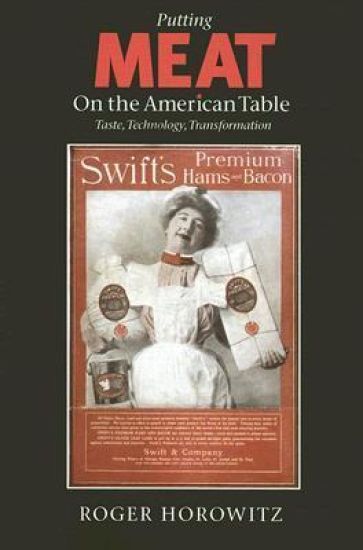
Putting Meat on the American Table

Putting Meat on the American Table

Roger Horowitz

Johns Hopkins University Press
2006
pokkari
Engagingly written and richly illustrated, Putting Meat on the American Table explains how America became a meat-eating nation-from the colonial period to the present. It examines the relationships between consumer preference and meat processing-looking closely at the production of beef, pork, chicken, and hot dogs. Roger Horowitz argues that a series of new technologies have transformed American meat. He draws on detailed consumption surveys that shed new light on America's eating preferences-especially differences associated with income, rural versus urban areas, and race and ethnicity. Putting Meat on the American Table will captivate general readers and interest all students of the history of food, technology, business, and American culture.