Kirjojen hintavertailu. Mukana 12 016 292 kirjaa ja 12 kauppaa.

Kirjahaku

Etsi kirjoja tekijän nimen, kirjan nimen tai ISBN:n perusteella.

16 kirjaa tekijältä Roger L. Geiger

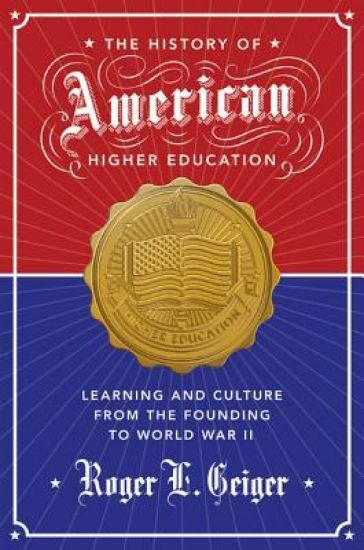
The History of American Higher Education

The History of American Higher Education

Roger L. Geiger

Princeton University Press
2016
pokkari
This book tells the compelling saga of American higher education from the founding of Harvard College in 1636 to the outbreak of World War II. The most in-depth and authoritative history of the subject available, The History of American Higher Education traces how colleges and universities were shaped by the shifting influences of culture, the emergence of new career opportunities, and the unrelenting advancement of knowledge. Roger Geiger, arguably today's leading historian of American higher education, vividly describes how colonial colleges developed a unified yet diverse educational tradition capable of weathering the social upheaval of the Revolution as well as the evangelical fervor of the Second Great Awakening. He shows how the character of college education in different regions diverged significantly in the years leading up to the Civil War--for example, the state universities of the antebellum South were dominated by the sons of planters and their culture--and how higher education was later revolutionized by the land-grant movement, the growth of academic professionalism, and the transformation of campus life by students. By the beginning of the Second World War, the standard American university had taken shape, setting the stage for the postwar education boom. Breathtaking in scope and rich in narrative detail, The History of American Higher Education is the most comprehensive single-volume history of the origins and development of of higher education in the United States.
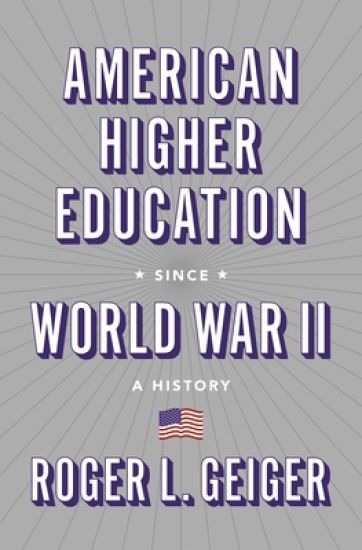
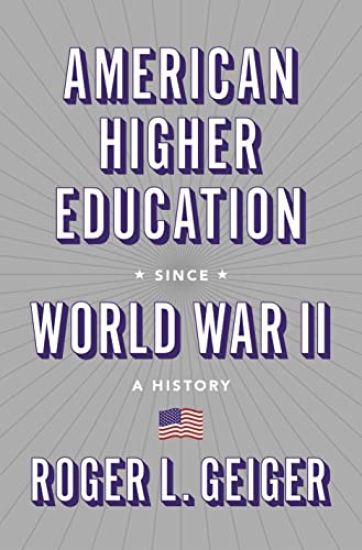
American Higher Education since World War II

American Higher Education since World War II

Roger L. Geiger

PRINCETON UNIVERSITY PRESS
2019
sidottu
A masterful history of the postwar transformation of American higher educationAmerican higher education is nearly four centuries old. But in the decades after World War II, as government and social support surged and enrollments exploded, the role of colleges and universities in American society changed dramatically. Roger Geiger provides the most complete and in-depth history of this remarkable transformation, taking readers from the GI Bill and the postwar expansion of higher education to the social upheaval of the 1960s and 1970s, desegregation and coeducation, and the challenges confronting American colleges today.Shedding critical light on the tensions and triumphs of an era of rapid change, Geiger shows how American universities emerged after the war as the world’s most successful system for the advancement of knowledge, how the pioneering of mass higher education led to the goal of higher education for all, and how the “selectivity sweepstakes” for admission to the most elite schools has resulted in increased stratification today. He identifies 1980 as a turning point when the link between research and economic development stimulated a revival in academic research—and the ascendancy of the modern research university—that continues to the present.Sweeping in scope and richly insightful, this groundbreaking book demonstrates how growth has been the defining feature of modern higher education, but how each generation since the war has pursued it for different reasons. It provides the context we need to understand the complex issues facing our colleges and universities today, from rising inequality and skyrocketing costs to deficiencies in student preparedness and lax educational standards.
American Higher Education since World War II

American Higher Education since World War II

Roger L. Geiger

Princeton University Press
2021
pokkari
A masterful history of the postwar transformation of American higher educationIn the decades after World War II, as government and social support surged and enrollments exploded, the role of colleges and universities in American society changed dramatically. Roger Geiger provides an in-depth history of this remarkable transformation, taking readers from the GI Bill and the postwar expansion of higher education to the social upheaval of the 1960s and 1970s, desegregation and coeducation, and the ascendancy of the modern research university. He demonstrates how growth has been the defining feature of modern higher education, but how each generation since the war has pursued it for different reasons. Sweeping in scope and richly insightful, this groundbreaking book provides the context we need to understand the complex issues facing our colleges and universities today, from rising inequality and skyrocketing costs to deficiencies in student preparedness and lax educational standards.
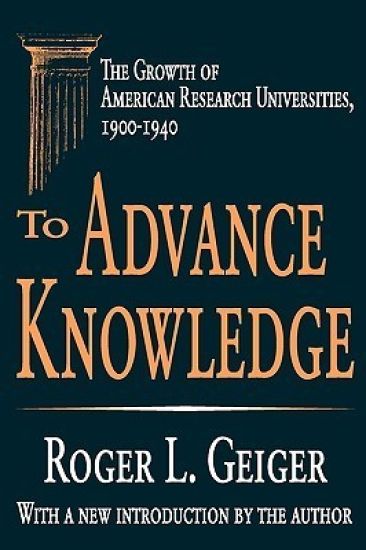
To Advance Knowledge

To Advance Knowledge

Roger L. Geiger

Transaction Publishers
2004
nidottu
American research universities are part of the foundation for the supremacy of American science. Although they emerged as universities in the late nineteenth century, the incorporation of research as a distinct part of their mission largely occurred after 1900. To Advance Knowledge relates how these institutions, by 1940, advanced from provincial outposts in the world of knowledge to leaders in critical areas of science. This study is the first to systematically examine the preconditions for the development of a university research role. These include the formation of academic disciplines--communities that sponsored associations and journals, which defined and advanced fields of knowledge. Only a few universities were able to engage in these activities. Indeed, universities before World War I struggled to find the means to support their own research through endowments, research funds, and faculty time. To Advance Knowledge shows how these institutions developed the size and wealth to harbor a learned faculty. The book illustrates how arrangements for research changed markedly in the 1920s when the great foundations established from the Rockefeller and Carnegie fortunes embraced the advancement of knowledge as a goal. Universities emerged in this decade as the best-suited vessels to carry this mission. Foundation resources made possible the development of an American social science. In the natural sciences, this patronage allowed the United States to gain parity with Europe on scientific frontiers, of which the most important was undoubtedly nuclear physics. The research role of universities cannot be isolated from the institutions themselves. To Advance Knowledge focuses on sixteen universities that were significantly engaged with research during this era. It analyzes all facets of these institutions--collegiate life, sources of funding, treatment of faculty--since all were relevant to shaping the research role.
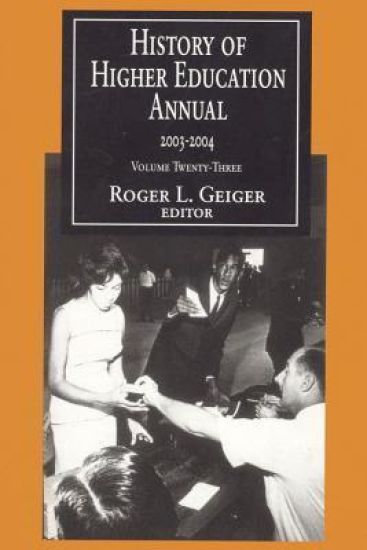
History of Higher Education Annual: 2003-2004

History of Higher Education Annual: 2003-2004

Roger L. Geiger

Transaction Publishers
2004
nidottu
History of Higher Education Annual, Volume 23 provides insight into the struggle for civil rights and desegregation of Southern higher education, illuminating how this conflict affected private, historically black colleges and white denominational colleges, while interpreting the dynamics of segregation and desegregation in South Carolina. Other contributions examine town-gown relations for Harvard students in the eighteenth century and the challenge of creating an urban public university in Chicago. Review essays examine the demographic and cultural transformation of British higher education and the curious phenomenon of historical encyclopedias of individual colleges and universities. History of Higher Education Annual will be of interest to historians, sociologists, educational policymakers as well as those concerned with the future of higher education in the United States and throughout the world. Roger L. Geiger is Distinguished Professor of Higher Education at the Pennsylvania State University. He has edited the History of Higher Education Annual since 1993. His two volumes Research and Relevant Knowledge and To Advance Knowledge (both published by Transaction) cover the history of universities in the United States during the twentieth century.
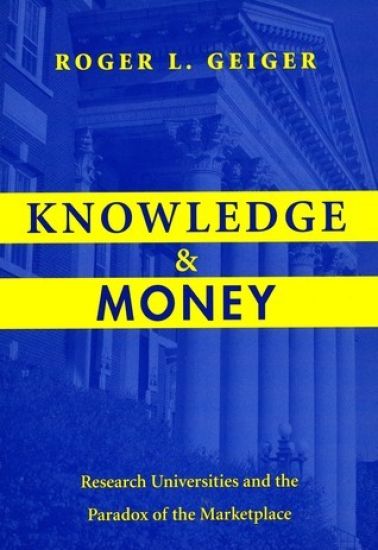
Knowledge and Money

Knowledge and Money

Roger L. Geiger

Stanford University Press
2004
sidottu
Market forces have profoundly affected the contemporary research university's fundamental tasks of creating and disseminating knowledge. They arguably have provided American universities access to greater wealth, better students, and stronger links with the economy. Yet they also have exaggerated inequalities, diminished the university's control over its own activities, and weakened the university's mission of serving the public. Incorporating twenty years of research and new data covering 99 research universities, Knowledge and Money explains this paradox by assessing how market forces have affected universities in four key spheres of activity: finance, undergraduate education, primary research, and participation in regional and national economic development. The book begins by chronicling how universities have enlarged revenues by optimizing tuitions, and how they have managed these funds. It reveals why competition for the best students through selective undergraduate admissions has led to increased student consumerism and weakened university control over learning. The book also explains why research has become an increasingly autonomous activity within the university, expanding faster than class instruction or faculty resources. Finally, it shows how the linkage of research to economic development has engendered closer ties with industry and encouraged the commercialization of knowledge.
Knowledge and Money

Knowledge and Money

Roger L. Geiger

Stanford University Press
2004
pokkari
Market forces have profoundly affected the contemporary research university's fundamental tasks of creating and disseminating knowledge. They arguably have provided American universities access to greater wealth, better students, and stronger links with the economy. Yet they also have exaggerated inequalities, diminished the university's control over its own activities, and weakened the university's mission of serving the public. Incorporating twenty years of research and new data covering 99 research universities, Knowledge and Money explains this paradox by assessing how market forces have affected universities in four key spheres of activity: finance, undergraduate education, primary research, and participation in regional and national economic development. The book begins by chronicling how universities have enlarged revenues by optimizing tuitions, and how they have managed these funds. It reveals why competition for the best students through selective undergraduate admissions has led to increased student consumerism and weakened university control over learning. The book also explains why research has become an increasingly autonomous activity within the university, expanding faster than class instruction or faculty resources. Finally, it shows how the linkage of research to economic development has engendered closer ties with industry and encouraged the commercialization of knowledge.
History of Higher Education Annual: 2003-2004
History of Higher Education Annual, Volume 23 provides insight into the struggle for civil rights and desegregation of Southern higher education, illuminating how this conflict affected private, historically black colleges and white denominational colleges, while interpreting the dynamics of segregation and desegregation in South Carolina. Other contributions examine town-gown relations for Harvard students in the eighteenth century and the challenge of creating an urban public university in Chicago. Review essays examine the demographic and cultural transformation of British higher education and the curious phenomenon of historical encyclopedias of individual colleges and universities. History of Higher Education Annual will be of interest to historians, sociologists, educational policymakers as well as those concerned with the future of higher education in the United States and throughout the world. Roger L. Geiger is Distinguished Professor of Higher Education at the Pennsylvania State University. He has edited the History of Higher Education Annual since 1993. His two volumes Research and Relevant Knowledge and To Advance Knowledge (both published by Transaction) cover the history of universities in the United States during the twentieth century.
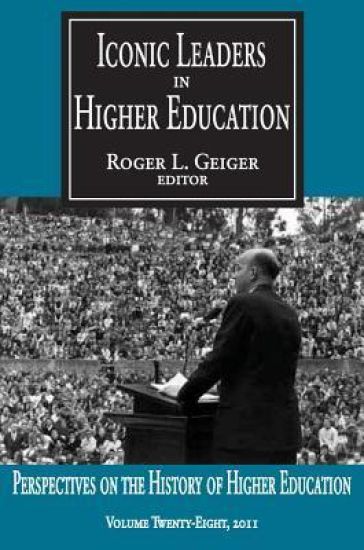
Iconic Leaders in Higher Education

Iconic Leaders in Higher Education

Roger L. Geiger

Routledge
2017
sidottu
Iconic leaders are those who have become symbols of their institutions. This volume of historical studies portrays a collection of college and university presidents who acquired iconic qualities that transcend mere identification with their institution.The volume begins with Roger L. Geiger's observation that creating and controlling one's image requires managing publicity. Andrea Turpin describes how Mount Holyoke Seminar's evolution into a modern women's college required reshaping the image of Mary Lyon, its founder. Roger L. Geiger and Nathan M. Sorber show how College of Philadelphia provost William Smith's partisan politics and patronage tainted the college he symbolized. Joby Topper reveals how presidents Seth Low of Columbia and Francis Patton of Princeton mastered the modern art of publicity.Katherine Chaddock explains how John Erskine the Columbia University English professor responsible for the first Great Books program and his unusual career inverted the normal route to iconic status. In contrast, Christian Anderson's analysis of John G. Bowman, chancellor of the University of Pittsburgh, shows how he substituted architectural vision for academic leadership. James Capshew explores the background that made Herman Wells a revered leader of Indiana University. Nancy Diamond details how building Brandeis University involved a challenging series of decisions successfully navigated by founding president Abram Sachar. Finally, Ethan Schrum depicts how Clark Kerr's controversial understanding of the role of contemporary universities was formed by his earlier career in industrial relations. This study of iconic leaders probes new dimensions of leadership and the construction of institutional images.
Perspectives on the History of Higher Education
Volume Twenty-Five of Perspectives on the History of Higher Education, the silver anniversary edition, offers three fresh contributions to the understanding of American higher education in the nineteenth century and three historical perspectives on topics of contemporary concern.The divergent paths of antebellum colleges in the North and South have long been recognized. Stephen Tomlinson and Kevin Windham discuss Alva Woods, who moved from Calvinist New England to preside over the new University of Alabama. Woods personified the commitment to evangelical Protestantism and rigid student discipline that prevailed in northern colleges of that era, but in Tuscaloosa confronted the sons of planters, raised to respect mainly independence, power, and the Southern code of honor. Adam Nelson considers geology, a crucially important science in early America that existed on the periphery of higher education but eventually exerted pressure for intellectual modernization. He portrays the small community of scientific pioneers who sought the latest scientific knowledge from Europe, surveyed the mineral wealth of American states, and advocated for science in the college curriculum.Beginning in the 1930s, the National Research Council waged an organized campaign to encourage academic patenting and centralize it within one organization. Jane Robbins explains the crosscurrents of interests that plagued and eventually scuttled that effort, but that set the stage for the contemporary practice of university patenting. Robert Hampel examines how, for more than four decades, students at Yale University took a major responsibility for learning into their own hands by publishing a Critique of courses. He analyzes these documents to determine if their aims were to identify easy or challenging offerings, and finds that this effort produced highly responsible articles. A review essay by Doris Malkmus sheds new light on the experience of co-eds in post-bellum universities and normal schools, while one by Nancy Diamond discusses the university presidency, and deftly shows that examining presidential lives can offer telling perspective on the evolution of the university.Roger L. Geiger is Distinguished Professor of Higher Education at the Pennsylvania State University. He has edited the Perspectives on the History of Higher Education Annual since 1993.
Perspectives on the History of Higher Education
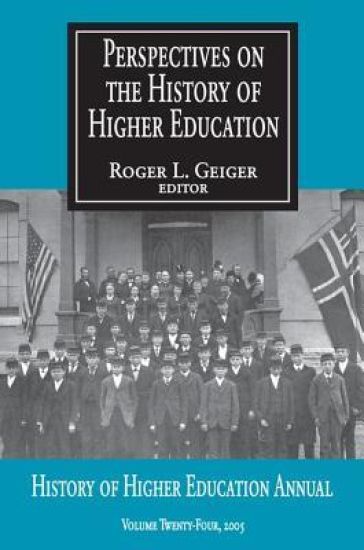
The early twentieth century witnessed the rise of middle-class mass periodicals that, while offering readers congenial material, also conveyed new depictions of manliness, liberal education, and the image of business leaders. "Should Your Boy Go to College?" asked one magazine story; and for over two decades these middle-class magazines answered, in numerous permutations, with a collective "yes!" In the course of interpreting these themes they reshaped the vision of a college education, and created the ideal of a college-educated businessman.Volume 24 of the Perspectives on the History of Higher Education: 2005 provides historical studies touching on contemporary concerns--gender, high-ability students, academic freedom, and, in the case of the Barnes Foundation, the authority of donor intent. Daniel Clark discusses the nuanced changes that occurred to the image of college at the turn of the century. Michael David Cohen offers an important corrective to stereotypes about gender relations in nineteenth-century coeducational colleges. Jane Robbins traces how the young National Research Council embraced the cause of how to identify and encourage superior students as a vehicle for incorporating wartime advances in psychological testing. Susan R. Richardson considers the long Texas tradition of political interference in university affairs. Finally, Edward Epstein and Marybeth Gasman shed historical light on the recent controversy surrounding the Barnes Foundation.The volume also contains brief descriptions of twenty recent doctoral dissertations in the history of higher education. This serial publication will be of interest to historians, sociologists, and of course, educational policymakers.
To Advance Knowledge

To Advance Knowledge

Roger L. Geiger

Routledge
2017
sidottu
American research universities are part of the foundation for the supremacy of American science. Although they emerged as universities in the late nineteenth century, the incorporation of research as a distinct part of their mission largely occurred after 1900. To Advance Knowledge relates how these institutions, by 1940, advanced from provincial outposts in the world of knowledge to leaders in critical areas of science. This study is the first to systematically examine the preconditions for the development of a university research role. These include the formation of academic disciplines--communities that sponsored associations and journals, which defined and advanced fields of knowledge. Only a few universities were able to engage in these activities. Indeed, universities before World War I struggled to find the means to support their own research through endowments, research funds, and faculty time. To Advance Knowledge shows how these institutions developed the size and wealth to harbor a learned faculty. The book illustrates how arrangements for research changed markedly in the 1920s when the great foundations established from the Rockefeller and Carnegie fortunes embraced the advancement of knowledge as a goal. Universities emerged in this decade as the best-suited vessels to carry this mission. Foundation resources made possible the development of an American social science. In the natural sciences, this patronage allowed the United States to gain parity with Europe on scientific frontiers, of which the most important was undoubtedly nuclear physics. The research role of universities cannot be isolated from the institutions themselves. To Advance Knowledge focuses on sixteen universities that were significantly engaged with research during this era. It analyzes all facets of these institutions--collegiate life, sources of funding, treatment of faculty--since all were relevant to shaping the research role.
Perspectives on the History of Higher Education

Perspectives on the History of Higher Education

Roger L. Geiger

AldineTransaction
2005
nidottu
The early twentieth century witnessed the rise of middle-class mass periodicals that, while offering readers congenial material, also conveyed new depictions of manliness, liberal education, and the image of business leaders. "Should Your Boy Go to College?" asked one magazine story; and for over two decades these middle-class magazines answered, in numerous permutations, with a collective "yes!" In the course of interpreting these themes they reshaped the vision of a college education, and created the ideal of a college-educated businessman.Volume 24 of the Perspectives on the History of Higher Education: 2005 provides historical studies touching on contemporary concerns--gender, high-ability students, academic freedom, and, in the case of the Barnes Foundation, the authority of donor intent. Daniel Clark discusses the nuanced changes that occurred to the image of college at the turn of the century. Michael David Cohen offers an important corrective to stereotypes about gender relations in nineteenth-century coeducational colleges. Jane Robbins traces how the young National Research Council embraced the cause of how to identify and encourage superior students as a vehicle for incorporating wartime advances in psychological testing. Susan R. Richardson considers the long Texas tradition of political interference in university affairs. Finally, Edward Epstein and Marybeth Gasman shed historical light on the recent controversy surrounding the Barnes Foundation.The volume also contains brief descriptions of twenty recent doctoral dissertations in the history of higher education. This serial publication will be of interest to historians, sociologists, and of course, educational policymakers.
Perspectives on the History of Higher Education

Perspectives on the History of Higher Education

Roger L. Geiger

AldineTransaction
2006
nidottu
Volume Twenty-Five of Perspectives on the History of Higher Education, the silver anniversary edition, offers three fresh contributions to the understanding of American higher education in the nineteenth century and three historical perspectives on topics of contemporary concern.The divergent paths of antebellum colleges in the North and South have long been recognized. Stephen Tomlinson and Kevin Windham discuss Alva Woods, who moved from Calvinist New England to preside over the new University of Alabama. Woods personified the commitment to evangelical Protestantism and rigid student discipline that prevailed in northern colleges of that era, but in Tuscaloosa confronted the sons of planters, raised to respect mainly independence, power, and the Southern code of honor. Adam Nelson considers geology, a crucially important science in early America that existed on the periphery of higher education but eventually exerted pressure for intellectual modernization. He portrays the small community of scientific pioneers who sought the latest scientific knowledge from Europe, surveyed the mineral wealth of American states, and advocated for science in the college curriculum.Beginning in the 1930s, the National Research Council waged an organized campaign to encourage academic patenting and centralize it within one organization. Jane Robbins explains the crosscurrents of interests that plagued and eventually scuttled that effort, but that set the stage for the contemporary practice of university patenting. Robert Hampel examines how, for more than four decades, students at Yale University took a major responsibility for learning into their own hands by publishing a Critique of courses. He analyzes these documents to determine if their aims were to identify easy or challenging offerings, and finds that this effort produced highly responsible articles. A review essay by Doris Malkmus sheds new light on the experience of co-eds in post-bellum universities and normal schools, while one by Nancy Diamond discusses the university presidency, and deftly shows that examining presidential lives can offer telling perspective on the evolution of the university.Roger L. Geiger is Distinguished Professor of Higher Education at the Pennsylvania State University. He has edited the Perspectives on the History of Higher Education Annual since 1993.
Iconic Leaders in Higher Education

Iconic Leaders in Higher Education

Roger L. Geiger

AldineTransaction
2011
nidottu
Iconic leaders are those who have become symbols of their institutions. This volume of historical studies portrays a collection of college and university presidents who acquired iconic qualities that transcend mere identification with their institution.The volume begins with Roger L. Geiger's observation that creating and controlling one's image requires managing publicity. Andrea Turpin describes how Mount Holyoke Seminar's evolution into a modern women's college required reshaping the image of Mary Lyon, its founder. Roger L. Geiger and Nathan M. Sorber show how College of Philadelphia provost William Smith's partisan politics and patronage tainted the college he symbolized. Joby Topper reveals how presidents Seth Low of Columbia and Francis Patton of Princeton mastered the modern art of publicity.Katherine Chaddock explains how John Erskine—the Columbia University English professor responsible for the first Great Books program—and his unusual career inverted the normal route to iconic status. In contrast, Christian Anderson's analysis of John G. Bowman, chancellor of the University of Pittsburgh, shows how he substituted architectural vision for academic leadership. James Capshew explores the background that made Herman Wells a revered leader of Indiana University. Nancy Diamond details how building Brandeis University involved a challenging series of decisions successfully navigated by founding president Abram Sachar. Finally, Ethan Schrum depicts how Clark Kerr's controversial understanding of the role of contemporary universities was formed by his earlier career in industrial relations. This study of iconic leaders probes new dimensions of leadership and the construction of institutional images.
Conocimiento y dinero

Conocimiento y dinero

Roger L. Geiger

UP
2024
nidottu
Este volumen trata sobre la historia siempre cambiante de las universidades norteamericanas durante los primeros a os del siglo XXI. La historia de estas instituciones como universidades de investigaci n comenz a fines del siglo XIX. El desaf o era elevar a los cient ficos y acad micos de los Estados Unidos al nivel m s alto, similar o superior al que estaba siendo establecido en Europa Occidental. Un nuevo desaf o surgi cuando la Segunda Guerra Mundial y los eventos siguientes demandaron que la pericia acad mica fuera canalizada hacia las necesidades de la Naci n. El Gobierno Federal se convirti en el principal consumidor. Esta relaci n fue modificada considerablemente alrededor de 1980 ya que se realiz un esfuerzo coordinado para relacionar m s estrechamente la investigaci n acad mica con la econom a civil. Las consecuencias de estos ltimos cambios proveen el enfoque de Conocimiento y Dinero. Debido a que el conocimiento universitario se torn m s valioso para la sociedad, las universidades ampliaron sus actividades y fueron recompensadas con mayores recursos.