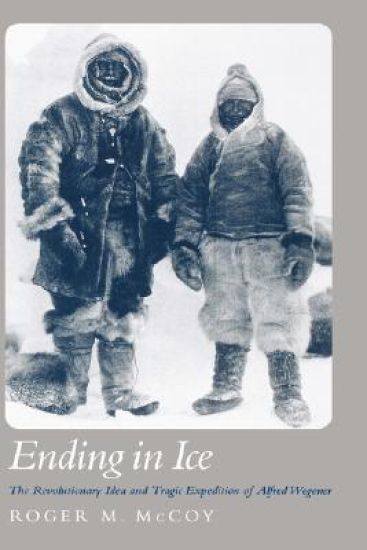
An old truism holds that a scientific discovery has three stages: first, people deny it is true; then they deny it is important; finally, they credit the wrong person. Alfred Wegener's "discovery" of continental drift went through each stage with unusual drama. In 1912, when he published his theory that the world's continents had once come together in a single landmass before splitting apart and floating to their current positions, the world's geologists denied and scorned it. The scientific establishment's rejection of continental drift and plate tectonic theory is a story told often and well. Yet, there is an untold side to Wegener's life: he and his famous father-in-law, Waldimir Koppen (climatologist whose classification of climates is still in use), became fascinated with ice ages and conducted four expeditions in the 1920s to the then--uncharted Greenland icecap to gather data about climate variations (Greenland ice-core sampling continues to this day). Ending in Ice is about Wegener's explorations of Greenland, blending the science of ice ages and Wegener's continental drift measurements with the story of Wegener's fatal final expedition trying to rescue starving workers at the central Greenland ice station of Esmitte in 1930. Arctic exploration books with tragic endings have become all too common, but this book combines the relevant science--now more important than ever as sudden temperature swings become movie-worthy ("The Day After Tomorrow")--with Wegener's fatal adventures in Greenland.