Kirjojen hintavertailu. Mukana 12 459 402 kirjaa ja 12 kauppaa.

Kirjahaku

Etsi kirjoja tekijän nimen, kirjan nimen tai ISBN:n perusteella.

4 kirjaa tekijältä Roger Sanjek

The Future of Us All

The Future of Us All

Roger Sanjek

Cornell University Press
1998
sidottu
Before the next century is out, Americans of African, Asian, and Latin American ancestry will outnumber those of European origin. In the Elmhurst-Corona neighborhood of Queens, New York City, the transition occurred during the 1970s, and the area's two-decade experience of multiracial diversity offers us an early look at the future of urban America. The result of more than a dozen years' work, this remarkable book immerses us in Elmhurst-Corona's social and political life from the 1960s through the 1990s. First settled in 1652, Elmhurst-Corona by 1960 housed a mix of Germans, Irish, Italians, and other "white ethnics." In 1990 this population made up less than a fifth of its residents; Latin American and Asian immigrants and African Americans comprised the majority. The Future of Us All focuses on the combined impact of racial change, immigrant settlement, governmental decentralization, and assaults on local quality of life which stemmed from the city's 1975 fiscal crisis and the policies of its last three mayors. The book examines the ways in which residents—in everyday interactions, block and tenant associations, houses of worship, small business coalitions, civic rituals, incidents of ethnic and racial hostility, and political struggles against overdevelopment, for more schools, and for youth programs—have forged and tested alliances across lines of race, ethnicity, and language. From the telling local details of daily life to the larger economic and regional frameworks, this account of a neighborhood's transformation illuminates the issues that American communities will be grappling with in the coming decades.
The Future of Us All

The Future of Us All

Roger Sanjek

Cornell University Press
2000
pokkari
Before the next century is out, Americans of African, Asian, and Latin American ancestry will outnumber those of European origin. In the Elmhurst-Corona neighborhood of Queens, New York City, the transition occurred during the 1970s, and the area's two-decade experience of multiracial diversity offers us an early look at the future of urban America. The result of more than a dozen years' work, this remarkable book immerses us in Elmhurst-Corona's social and political life from the 1960s through the 1990s. First settled in 1652, Elmhurst-Corona by 1960 housed a mix of Germans, Irish, Italians, and other "white ethnics." In 1990 this population made up less than a fifth of its residents; Latin American and Asian immigrants and African Americans comprised the majority. The Future of Us All focuses on the combined impact of racial change, immigrant settlement, governmental decentralization, and assaults on local quality of life which stemmed from the city's 1975 fiscal crisis and the policies of its last three mayors. The book examines the ways in which residents—in everyday interactions, block and tenant associations, houses of worship, small business coalitions, civic rituals, incidents of ethnic and racial hostility, and political struggles against overdevelopment, for more schools, and for youth programs—have forged and tested alliances across lines of race, ethnicity, and language. From the telling local details of daily life to the larger economic and regional frameworks, this account of a neighborhood's transformation illuminates the issues that American communities will be grappling with in the coming decades.
Gray Panthers

Gray Panthers

Roger Sanjek

University of Pennsylvania Press
2011
pokkari
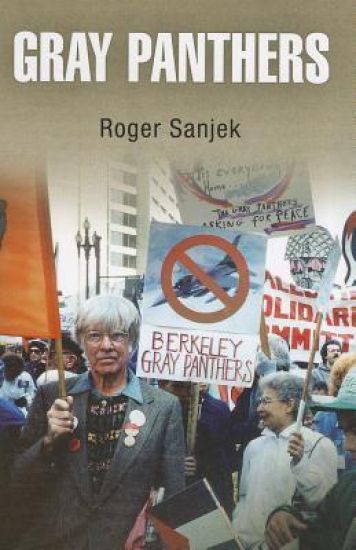
In 1970, a sixty-five-year-old Philadelphian named Maggie Kuhn began vocally opposing the notion of mandatory retirement. Taking inspiration from the civil rights and anti-Vietnam War movements, Kuhn and her cohorts created an activist organization that quickly gained momentum as the Gray Panthers. After receiving national publicity for her efforts-she even appeared on the Tonight Show with Johnny Carson-she gained thousands of supporters, young and old. Their cause expanded to include universal health care, nursing home reform, affordable and accessible housing, defense of Social Security, and elimination of nuclear weapons. Gray Panthers traces the roots of Maggie Kuhn's social justice agenda to her years as a YWCA and Presbyterian Church staff member. It tells the nearly forty-year story of the intergenerational grassroots movement that Kuhn founded and its scores of local groups. During the 1980s, more than one hundred chapters were tackling local and national issues. By the 1990s the ranks of older members were thinning and most young members had departed, many to pursue careers in public service. But despite its challenges, including Kuhn's death in 1995, the movement continues today. Roger Sanjek examines Gray Panther activism over four decades. Here the inner workings and dynamics of the movement emerge: the development of network leadership, local projects and tactics, conflict with the national office, and the intergenerational political ties that made the group unique among contemporary activist groups. Part ethnography, part history, part memoir, Gray Panthers draws on archives and interviews as well as the author's thirty years of personal involvement. With the impending retirement of the baby boomers, Sanjek's book will surely inform the debates and discussions to follow: on retirement, health care, and many other aspects of aging in a society that has long valued youth above all.
Ethnography in Today's World

Ethnography in Today's World

Roger Sanjek

University of Pennsylvania Press
2013
sidottu
In Ethnography in Today's World, Roger Sanjek examines the genre and practice of ethnography from a historical perspective, from its nineteenth-century beginnings and early twentieth-century consolidation, through political reorientations during the 1960s and the impact of feminism and postmodernism in later decades, to its current outlook in an increasingly urban world. Drawing on a career of ethnographic research across Brazil, Ghana, New York City, and with the Gray Panthers, Sanjek probes politics and rituals in multiethnic New York, the dynamics of activist meetings, human migration through the ages, and shifting conceptions of race in the United States. He interrogates well-known works from Boas, Whyte, Fabian, Geertz, Marcus, and Clifford, as well as less celebrated researchers, addressing methodological concerns from ethnographers' reliance on assistants in the formative days of the discipline to contemporary comparative issues and fieldwork and writing strategies. Ethnography in Today's World contributes to our understanding of culture and society in an age of globalization. These provocative examinations of the value of ethnographic research challenge conventional views as to how ethnographic fieldwork is and can be conceived, conducted, contextualized, and communicated to academic audiences and the twenty-first-century public.