Kirjojen hintavertailu. Mukana 12 265 838 kirjaa ja 12 kauppaa.

Kirjahaku

Etsi kirjoja tekijän nimen, kirjan nimen tai ISBN:n perusteella.

80 kirjaa tekijältä Roger Scruton

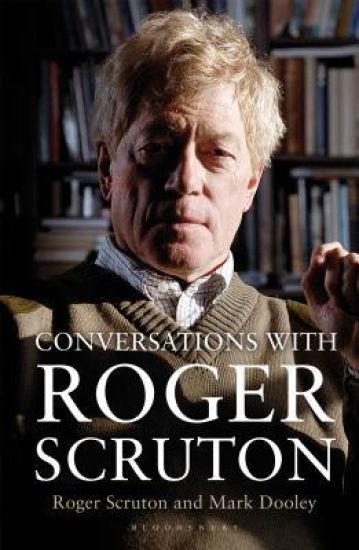
Conversations with Roger Scruton

Conversations with Roger Scruton

Mark Dooley; Roger Scruton

Bloomsbury Continuum
2016
sidottu
A candid and personal insight into the life and work of the philosopher and writer Roger Scruton, by his intellectual biographer Mark Dooley.This book reveals what life was like for Roger Scruton growing up in High Wycombe, how he survived Cambridge and how he came to hold his conservative outlook. It tells of Scruton’s rise to prominence while writing for The Times and sheds light on his campaign on behalf of underground dissidents in Eastern Europe.Ranging across topics as diverse as the current state of British philosophy, music, religion, and illuminating what lay behind Scruton’s abandonment of academia for his new life on a Wiltshire farm, Conversations with Roger Scruton is an intimate portrait of a writer who has felt philosophy as a vocation and whose defence of unfashionable causes has brought him a wide readership in Britain and around the world.
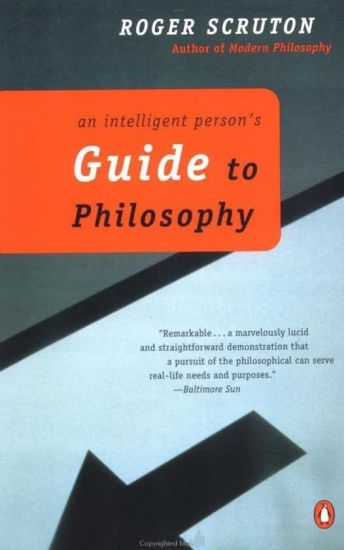
An Intelligent Person's Guide to Philosophy
"Philosophy's the 'love of wisdom', can be approached in two ways: by doing it, or by studying how it has been done," so writes the eminent philosopher Roger Scruton. In this user-friendly book, he chooses to introduce philosophy by doing it. Taking the discipline beyond theory and "intellectualism," he presents it in an empirical, accessible, and practical light. The result is not a history of the field but a vivid, energetic, and personal account to guide the reader making his or her own venture into philosophy. Addressing a range of subjects from freedom, God, reality, and morality, to sex, music, and history, Scruton argues philosophy's relevance not just to intellectual questions, but to contemporary life.
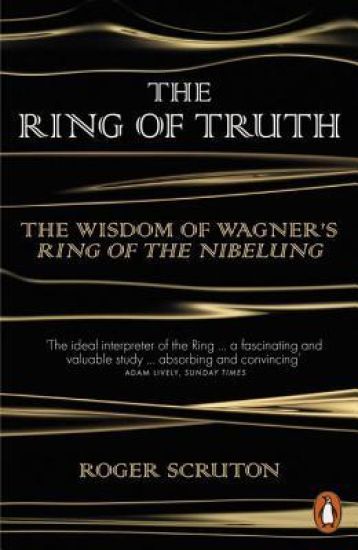
The Ring of Truth

The Ring of Truth

Roger Scruton

Penguin Books Ltd
2017
pokkari
'The ideal interpreter of the Ring ... a fascinating and valuable study ... absorbing and convincing' Sunday TimesThe Ring of the Nibelung is one of the greatest works of art created in modern times. Roger Scruton's brilliant and passionate exploration of the drama, music, symbolism and philosophy of Wagner's masterpiece - with its themes of love, death, sacrifice and freedom - shows how, ultimately, it expresses the truth about the human condition. 'Highly original and penetrating ... tremendous' Tim Blanning, Literary Review'A rich, historical account ... After reading this book, only the most unadventurous reader would turn down the chance to see Wagner's masterpiece' Economist'A brilliant gallop through the master's religious, musical and philosophical contexts' Sue Prideaux, Spectator'Scruton is one of the finest philosopher-musicians since Schopenhauer' Jonathan Gaisman, Standpoint
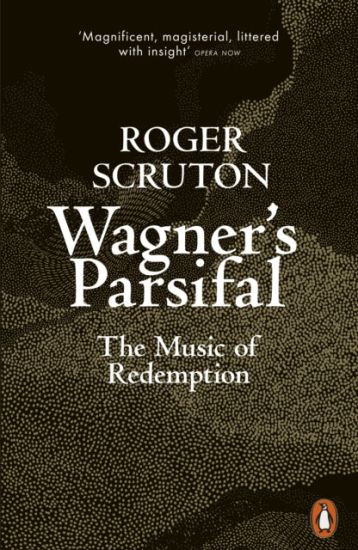
Wagner's Parsifal

Wagner's Parsifal

Roger Scruton

Penguin Books Ltd
2021
pokkari
A superbly insightful and moving exploration of Wagner's last opera, by one of Britain's leading intellectuals Wagner's last music-drama tells the story of Parsifal, the 'pure fool, knowing through compassion', who has been called to rescue the Kingdom of the Grail from the sins that have polluted it. The Grail is a symbol of purity in a world of lust and power, but although Parsifal is the culmination of Wagner's life-long obsession with the religious frame of mind, the redemption sought by his characters is far from the Christian archetype. For Wagner, redemption occurs inthis life, when compassion prevails over enslavement, and purity replaces spiritual pollution. His music here ties together suffering and contrition, sin and forgiveness, downfall and redemption in an inextricable knot, healing the fractures and uniting the warring elements in human life in a way that is clear, convincing and uncanny. More than any other of his works, Parsifal expresses in music a depth of feeling for which we do not have words.This short but penetrating book, by a writer who was uniquely both a leading philosopher and musicologist, shows us how Wagner achieves this profound work, explaining the story, its musical ideas, and their coming together into a sublime whole which gives us the musical equivalent of forgiveness and closure. There are few writers who can so enhance our understanding of one of the greatest works in western music.
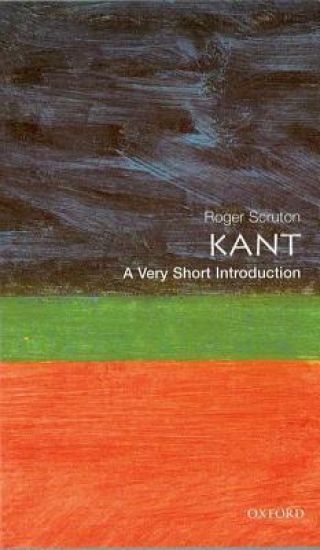
Kant

Kant

Roger Scruton

Oxford University Press
2001
nidottu
Kant is arguably the most influential modern philosopher, but also one of the most difficult. Roger Scruton tackles his exceptionally complex subject with a strong hand, exploring the background to Kant's work and showing why the Critique of Pure Reason has proved so enduring. ABOUT THE SERIES: The Very Short Introductions series from Oxford University Press contains hundreds of titles in almost every subject area. These pocket-sized books are the perfect way to get ahead in a new subject quickly. Our expert authors combine facts, analysis, perspective, new ideas, and enthusiasm to make interesting and challenging topics highly readable.
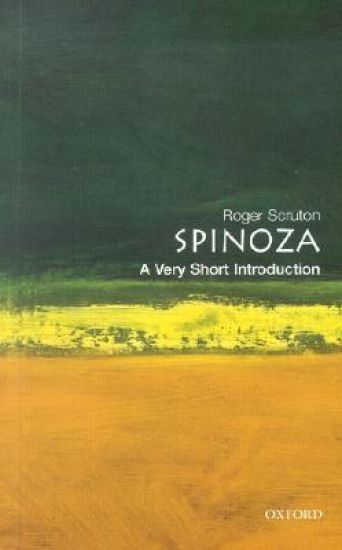
Spinoza

Spinoza

Roger Scruton

Oxford University Press
2002
nidottu
Benedict de Spinoza (1632-77) was at once the father of the Enlightenment and the last sad guardian of the medieval world. In his brilliant synthesis of geometrical method, religious sentiment, and secular science, he attempted to reconcile the conflicting moral and intellectual demands of his epoch, and to present a vision of humanity as simultaneously bound by necessity and eternally free. In this book Roger Scruton presents a clear and systematic analysis of Spinoza's thought, and shows its relevance to today's intellectual preoccupations. ABOUT THE SERIES: The Very Short Introductions series from Oxford University Press contains hundreds of titles in almost every subject area. These pocket-sized books are the perfect way to get ahead in a new subject quickly. Our expert authors combine facts, analysis, perspective, new ideas, and enthusiasm to make interesting and challenging topics highly readable.
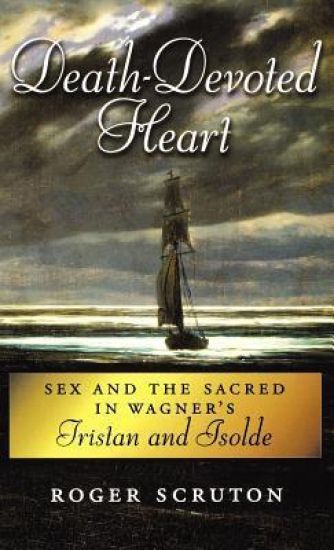
Death-Devoted Heart

Death-Devoted Heart

Roger Scruton

Oxford University Press Inc
2004
sidottu
A tale of forbidden love and inevitable death, the medieval legend of Tristan and Isolde recounts the story of two lovers unknowingly drinking a magic potion and ultimately dying in one another's arms. Critics have lauded Wagner's Tristan und Isolde for the originality and subtlety of the music, but have often viewed the drama as a "mere trifle," about Wagner's own forbidden affair with Matilde Wesendonk, the wife of a banker who supported him during his exile in Switzerland. In Death-Devoted Heart Scruton aims to vindicate the stature of the drama, presenting it as more than just a sublimation of the composer's love for Wesendonck or a wistful romantic dream. Scruton argues that Tristan und Isolde has profound religious meaning, as relevant today as it was to Wagner's contemporaries. Both philosophical and musicological, Scruton's analysis touches on the nature of tragedy, the significance of ritual sacrifice, and the meaning of redemption. Scruton provides a guide to the drama while offering insight into the nature of erotic love and the peculiar place of the erotic in our culture.
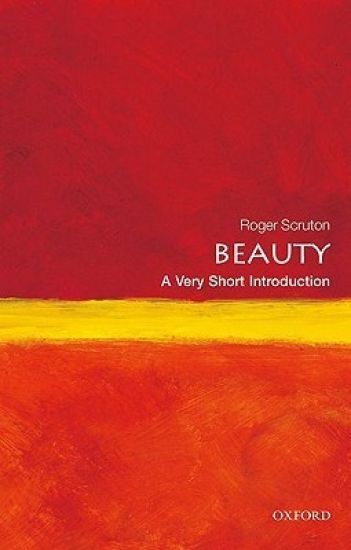
Beauty

Beauty

Roger Scruton

Oxford University Press
2011
nidottu
Beauty can be consoling, disturbing, sacred, profane; it can be exhilarating, appealing, inspiring, chilling. It can affect us in an unlimited variety of ways. Yet it is never viewed with indifference. In this Very Short Introduction the renowned philosopher Roger Scruton explores the concept of beauty, asking what makes an object - either in art, in nature, or the human form - beautiful, and examining how we can compare differing judgements of beauty when it is evident all around us that our tastes vary so widely. Is there a right judgement to be made about beauty? Is it right to say there is more beauty in a classical temple than a concrete office block, more in a Rembrandt than in last year's Turner Prize winner? Forthright and thought-provoking, and as accessible as it is intellectually rigorous, this introduction to the philosophy of beauty draws conclusions that some may find controversial, but, as Scruton shows, help us to find greater sense of meaning in the beautiful objects that fill our lives. ABOUT THE SERIES: The Very Short Introductions series from Oxford University Press contains hundreds of titles in almost every subject area. These pocket-sized books are the perfect way to get ahead in a new subject quickly. Our expert authors combine facts, analysis, perspective, new ideas, and enthusiasm to make interesting and challenging topics highly readable.
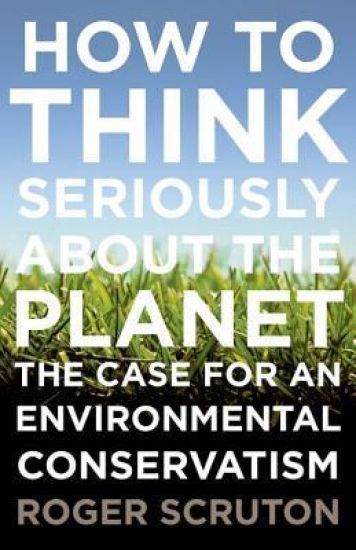
How to Think Seriously about the Planet: The Case for an Environmental Conservatism
The environment has long been the undisputed territory of the political Left, which casts international capitalism, consumerism, and the over-exploitation of natural resources as the principle threats to the planet, and sees top-down interventions as the most effective solution. In How to Think Seriously About the Planet, Roger Scruton rejects this view and offers a fresh approach to tackling the most important political problem of our time. The environmental movement, he contends, is philosophically confused and has unrealistic agendas. Its sights are directed at the largescale events and the confrontation between international politics and multinational business. But Scruton argues that no large-scale environmental project, however well-intentioned, will succeed if it is not rooted in small-scale practical reasoning. Seeing things on a large scale promotes top-down solutions, managed by unaccountable bureaucracies that fail to assess local conditions and are rife with unintended consequences. Scruton argues for the greater efficacy of local initiatives over global schemes, civil association over political activism, and small-scale institutions of friendship over regulatory hyper-vigilance. And he suggests that conservatism is far better suited to solving environmental problems than either liberalism or socialism. Rather than entrusting the environment to unwieldy NGOs and international committees, we must assume personal responsibility and foster local control. People must be empowered to take charge of their environment, to care for it as they would a home, and to involve themselves through the kind of local associations that have been the traditional goal of conservative politics. Our common future is by no means assured, but as Roger Scruton clearly demonstrates in this important book, there is a path that can ensure the future safety of our planet and our species.
How to Think Seriously about the Planet

How to Think Seriously about the Planet

Roger Scruton

Oxford University Press, USA
2012
sidottu
The environment has long been the undisputed territory of the political Left, which casts international capitalism, consumerism, and the over-exploitation of natural resources as the principle threats to the planet, and sees top-down interventions as the most effective solution. In How to Think Seriously About the Planet, Roger Scruton rejects this view and offers a fresh approach to tackling the most important political problem of our time. The environmental movement, he contends, is philosophically confused and has unrealistic agendas. Its sights are directed at the largescale events and the confrontation between international politics and multinational business. But Scruton argues that no large-scale environmental project, however well-intentioned, will succeed if it is not rooted in small-scale practical reasoning. Seeing things on a large scale promotes top-down solutions, managed by unaccountable bureaucracies that fail to assess local conditions and are rife with unintended consequences. Scruton argues for the greater efficacy of local initiatives over global schemes, civil association over political activism, and small-scale institutions of friendship over regulatory hyper-vigilance. And he suggests that conservatism is far better suited to solving environmental problems than either liberalism or socialism. Rather than entrusting the environment to unwieldy NGOs and international committees, we must assume personal responsibility and foster local control. People must be empowered to take charge of their environment, to care for it as they would a home, and to involve themselves through the kind of local associations that have been the traditional goal of conservative politics. Our common future is by no means assured, but as Roger Scruton clearly demonstrates in this important book, there is a path that can ensure the future safety of our planet and our species.
The Uses of Pessimism: And the Danger of False Hope

The Uses of Pessimism: And the Danger of False Hope

Roger Scruton

Oxford University Press
2013
nidottu
Optimism is fundamental to the human spirit and has sparked innovation across the centuries, but does it have a dark side? Renowned philosopher and author Roger Scruton argues that unchecked optimism can be dangerous--and that real happiness hinges on a healthy pessimism that recognizes the limitations of human beings. The Uses of Pessimism is a far-reaching yet concise assessment of how pessimism can compensate for the fallacies generic to the optimistic mind-set and enable us to live with our own imperfection. Spanning from ancient Greece to the current economic crisis, the book persuasively concludes that optimists and idealists have courted disaster by overlooking the hard truths of human nature and by adopting na ve expectations about what can be changed. Scruton demonstrates how many optimism-fueled advances, from the railway to the Internet, reflect a careless pursuit of mastery that is at odds with--and often undermines--the limited happiness that is the best we can obtain. He urges us to see pessimism not as dark and fatalistic, but as a hopeful point-of-view that favors a balanced appraisal of society and human nature as opposed to utopian wishful thinking. Ultimately, pessimism helps focus our energies on the one reform we can truly master: bettering ourselves. In the rigorous but lively style that is his trademark, Scruton throws down the gauntlet to readers, challenging everyone to reevaluate their assumptions about the meaning of pessimism. The Uses of Pessimism breaks down the fallacies surrounding the optimist's perpetually sunny worldview, offering a voice of wisdom with which to rein in hopes that might otherwise ruin us.
The Meaning of Conservatism

The Meaning of Conservatism

Roger Scruton

Palgrave Macmillan
2001
sidottu
First published in 1980, this contribution to political thought is a statement of the traditional conservative position. Roger Scruton challenges those who would regard themselves as conservatives, and also their opponents.
The Meaning of Conservatism

The Meaning of Conservatism

Roger Scruton

Palgrave Macmillan
2001
nidottu
First published in 1980, this contribution to political thought is a statement of the traditional conservative position. Roger Scruton challenges those who would regard themselves as conservatives, and also their opponents.
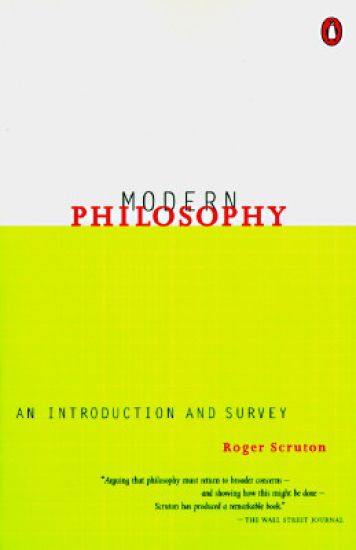
A Short History of Modern Philosophy
Discover for yourself the pleasures of philosophy! Written both for the seasoned student of philosophy as well as the general reader, the renowned writer Roger Scruton provides a survey of modern philosophy. Always engaging, Scruton takes us on a fascinating tour of the subject, from founding father Descartes to the most important and famous philosopher of the twentieth century, Ludwig Wittgenstein. He identifies all the principal figures as well as outlines of the main intellectual preoccupations that have informed western philosophy. Painting a portrait of modern philosophy that is vivid and animated, Scruton introduces us to some of the greatest philosophical problems invented in this period and pursued ever since. Including material on recent debates, A Short History of Modern Philosophy is already established as the classic introduction. Read it and find out why.
A Short History of Modern Philosophy
Discover for yourself the pleasures of philosophy! Written both for the seasoned student of philosophy as well as the general reader, the renowned writer Roger Scruton provides a survey of modern philosophy. Always engaging, Scruton takes us on a fascinating tour of the subject, from founding father Descartes to the most important and famous philosopher of the twentieth century, Ludwig Wittgenstein. He identifies all the principal figures as well as outlines of the main intellectual preoccupations that have informed western philosophy. Painting a portrait of modern philosophy that is vivid and animated, Scruton introduces us to some of the greatest philosophical problems invented in this period and pursued ever since. Including material on recent debates, A Short History of Modern Philosophy is already established as the classic introduction. Read it and find out why.
The Aesthetics of Architecture

The Aesthetics of Architecture

Roger Scruton

Princeton University Press
2013
pokkari
Architecture is distinguished from other art forms by its sense of function, its localized quality, its technique, its public and nonpersonal character, and its continuity with the decorative arts. In this important book, Roger Scruton calls for a return to first principles in contemporary architectural theory, contending that the aesthetic of architecture is, in its very essence, an aesthetic of everyday life. Aesthetic understanding is inseparable from a sense of detail and style, from which the appropriate, the expressive, the beautiful, and the proportionate take their meaning. Scruton provides incisive critiques of the romantic, functionalist, and rationalist theories of design, and of the Freudian, Marxist, and semiological approaches to aesthetic value. In a new introduction, Scruton discusses how his ideas have developed since the book's original publication thirty years ago, and he assesses the continuing relevance of his argument for the twenty-first century.
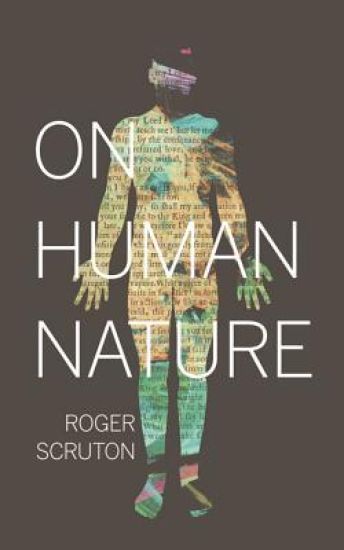
On Human Nature

On Human Nature

Roger Scruton

PRINCETON UNIVERSITY PRESS
2017
sidottu
A brief, radical defense of human uniqueness from acclaimed philosopher Roger Scruton In this short book, acclaimed writer and philosopher Roger Scruton presents an original and radical defense of human uniqueness. Confronting the views of evolutionary psychologists, utilitarian moralists, and philosophical materialists such as Richard Dawkins and Daniel Dennett, Scruton argues that human beings cannot be understood simply as biological objects. We are not only human animals; we are also persons, in essential relation with other persons, and bound to them by obligations and rights. Our world is a shared world, exhibiting freedom, value, and accountability, and to understand it we must address other people face to face and I to I. Scruton develops and defends his account of human nature by ranging widely across intellectual history, from Plato and Averroes to Darwin and Wittgenstein. The book begins with Kant's suggestion that we are distinguished by our ability to say "I"--by our sense of ourselves as the centers of self-conscious reflection. This fact is manifested in our emotions, interests, and relations. It is the foundation of the moral sense, as well as of the aesthetic and religious conceptions through which we shape the human world and endow it with meaning. And it lies outside the scope of modern materialist philosophy, even though it is a natural and not a supernatural fact. Ultimately, Scruton offers a new way of understanding how self-consciousness affects the question of how we should live. The result is a rich view of human nature that challenges some of today's most fashionable ideas about our species.
The Soul of the World

The Soul of the World

Roger Scruton

Princeton University Press
2016
pokkari
In The Soul of the World, renowned philosopher Roger Scruton defends the experience of the sacred against today's fashionable forms of atheism. He argues that our personal relationships, moral intuitions, and aesthetic judgments hint at a transcendent dimension that cannot be understood through the lens of science alone. To be fully alive--and to understand what we are--is to acknowledge the reality of sacred things. Rather than an argument for the existence of God, or a defense of the truth of religion, the book is an extended reflection on why a sense of the sacred is essential to human life--and what the final loss of the sacred would mean. In short, the book addresses the most important question of modernity: what is left of our aspirations after science has delivered its verdict about what we are? Drawing on art, architecture, music, and literature, Scruton suggests that the highest forms of human experience and expression tell the story of our religious need, and of our quest for the being who might answer it, and that this search for the sacred endows the world with a soul. Evolution cannot explain our conception of the sacred; neuroscience is irrelevant to our interpersonal relationships, which provide a model for our posture toward God; and scientific understanding has nothing to say about the experience of beauty, which provides a God's-eye perspective on reality. Ultimately, a world without the sacred would be a completely different world--one in which we humans are not truly at home. Yet despite the shrinking place for the sacred in today's world, Scruton says, the paths to transcendence remain open.
On Human Nature

On Human Nature

Roger Scruton

Princeton University Press
2018
pokkari
A brief, radical defense of human uniqueness from acclaimed philosopher Roger ScrutonIn this short book, acclaimed writer and philosopher Roger Scruton presents an original and radical defense of human uniqueness. Confronting the views of evolutionary psychologists, utilitarian moralists, and philosophical materialists such as Richard Dawkins and Daniel Dennett, Scruton argues that human beings cannot be understood simply as biological objects. We are not only human animals; we are also persons, in essential relation with other persons, and bound to them by obligations and rights. Scruton develops and defends his account of human nature by ranging widely across intellectual history, from Plato and Averroës to Darwin and Wittgenstein. The book begins with Kant’s suggestion that we are distinguished by our ability to say “I”—by our sense of ourselves as the centers of self-conscious reflection. This fact is manifested in our emotions, interests, and relations. It is the foundation of the moral sense, as well as of the aesthetic and religious conceptions through which we shape the human world and endow it with meaning. And it lies outside the scope of modern materialist philosophy, even though it is a natural and not a supernatural fact. Ultimately, Scruton offers a new way of understanding how self-consciousness affects the question of how we should live. The result is a rich view of human nature that challenges some of today’s most fashionable ideas about our species.