Kirjojen hintavertailu. Mukana 12 409 100 kirjaa ja 12 kauppaa.

Kirjahaku

Etsi kirjoja tekijän nimen, kirjan nimen tai ISBN:n perusteella.

12 kirjaa tekijältä Roger Southall

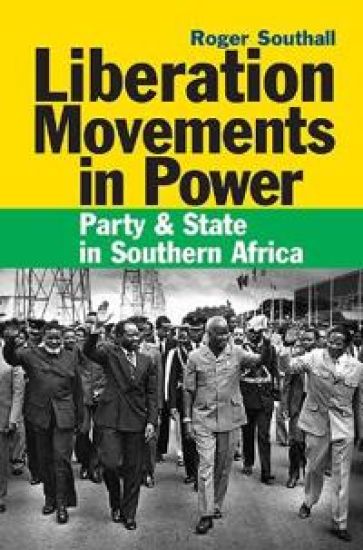
Liberation Movements in Power

Liberation Movements in Power

Roger Southall

James Currey
2013
sidottu
Analyses the ZANU-PF in Zimbabwe, SWAPO in Namibia and the ANC in South Africa and to what extent their promises of democracy have been effected in government. The liberation movements of Southern Africa arose to combat racism, colonialism and settler capitalism and engaged in armed struggle to establish democracy. After victory over colonial and white minority regimes, they moved into government embodying the hopes and aspirations of their mass of supporters and of widespread international solidarity movements. Even with the difficult legacies they inherited, their performance in power has been deeply disappointing. Roger Southall tracks the experiences in government of ZANU-PF, SWAPO and the ANC, arguing that such movements are characterised by paradoxical qualities, both emancipatory and authoritarian. Analysis is offered of their evolution into political machines through comparative review of their electoral performance, their relation to state and society, their policies regarding economic transformation, and their evolution as vehicles of class formation andpredatory behaviour. The author concludes that, while they will survive organizationally, their essence as progressive forces is dying, and that hopes of a genuine liberation throughout the region will depend upon political realignments alongside moral and intellectual regeneration. ANC South Africa SWAPO Namibia Zanu-PF Zimbabwe Roger Southall is Professor Emeritus in Sociology, University of the Witwatersrand and a Research Associate of the Society, Work and Development Institute.
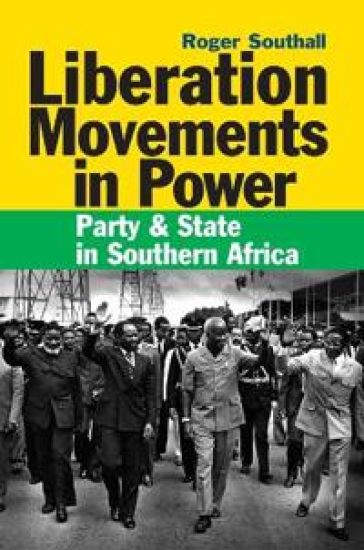
Liberation Movements in Power

Liberation Movements in Power

Roger Southall

James Currey
2016
pokkari
Analyses the ZANU-PF in Zimbabwe, SWAPO in Namibia and the ANC in South Africa and to what extent their promises of democracy have been effected in government. The liberation movements of Southern Africa arose to combat racism, colonialism and settler capitalism and engaged in armed struggle to establish democracy. After victory over colonial and white minority regimes, they moved into government embodying the hopes and aspirations of their mass of supporters and of widespread international solidarity movements. Even with the difficult legacies they inherited, their performance in power has been deeply disappointing. Roger Southall tracks the experiences in government of ZANU-PF, SWAPO and the ANC, arguing that such movements are characterised by paradoxical qualities, both emancipatory and authoritarian. Analysis is offered of their evolution into political machines through comparative review of their electoral performance, their relation to state and society, their policies regarding economic transformation, and their evolution as vehicles of class formation andpredatory behaviour. The author concludes that, while they will survive organizationally, their essence as progressive forces is dying, and that hopes of a genuine liberation throughout the region will depend upon political realignments alongside moral and intellectual regeneration. ANC South Africa SWAPO Namibia Zanu-PF Zimbabwe Roger Southall is Professor Emeritus in Sociology, University of the Witwatersrand and a Research Associate of the Society, Work and Development Institute.
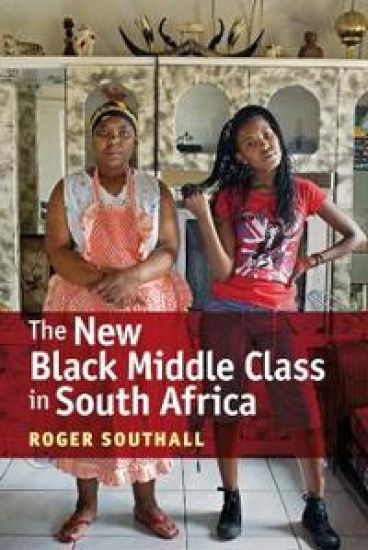
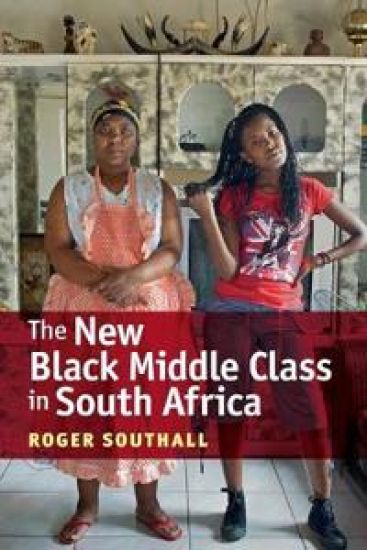
The New Black Middle Class in South Africa
Provides the most comprehensive account since the early 1960s of South Africa's "black middle class". 2016 CHOICE Outstanding Academic Title The "rise of the black middle class" is one of the most visible aspects of post-apartheid society in South Africa. Yet while it has been a major actor in the country's democratic reshaping, analysis of its role has been all but lacking. Rather, the image presented by the media has been of "black diamonds", consumers of the products of advanced industrial economies, and of corrupt "tenderpreneurs" who use their political connections to obtain contracts. This book seeks to complicate that picture with a much-needed analysis that recounts its historical development in colonial society prior to 1994, before examining the size, shape andstructure of the new black middle class in contemporary South Africa and its relation to its counterparts in the Global South. Roger Southall is Professor Emeritus in Sociology, University of the Witwatersrand. Southern Africa (South Africa, Namibia, Botswana, Lesotho, Zimbabwe and Swaziland): Jacana
The New Black Middle Class in South Africa
Provides the most comprehensive account since the early 1960s of South Africa's "black middle class". 2016 CHOICE Outstanding Academic Title The "rise of the black middle class" is one of the most visible aspects of post-apartheid society in South Africa. Yet while it has been a major actor in the country's democratic reshaping, analysis of its role has been all but lacking. Rather, the image presented by the media has been of "black diamonds", consumers of the products of advanced industrial economies, and of corrupt "tenderpreneurs" who use their political connections to obtain contracts. This book seeks to complicate that picture with a much-needed analysis that recounts its historical development in colonial society prior to 1994, before examining the size, shape andstructure of the new black middle class in contemporary South Africa and its relation to its counterparts in the Global South. Roger Southall is Professor Emeritus in Sociology, University of the Witwatersrand. Southern Africa (South Africa, Namibia, Botswana, Lesotho, Zimbabwe and Swaziland): Jacana
Whites and Democracy in South Africa

Whites and Democracy in South Africa

Roger Southall

James Currey
2022
sidottu
Key book in Whiteness Studies that engages with the different ways in which the last white minority in Africa to give way to majority rule has adjusted to the arrival of democracy and the different modes of transition from "settlers" to "citizens". How have whites adjusted to, contributed to and detracted from democracy in South Africa since 1994? Engaging with the literature on 'whiteness' and the current trope that the democratic settlement has failed, this book provides a study of how whites in the last bastion of 'white minority rule' in Africa have adapted to the sweeping political changes they have encountered. It examines the historical context of white supremacy and minority rule, in the past, and the white withdrawal from elsewhere on the African continent. Drawing on focus groups held across the country, Southall explores the difficult issue of 'memory', how whites seek to grapple with the history of apartheid, and how this shapes their reactions to political equality. He argues that whites cannot be regarded as a homogeneous political grouping concluding that while the overwhelming majority of white South Africans feared the coming of democracy during the years of late apartheid, they recognised its inevitability. Many of their fears were, in effect, to be recognised by the Constitution, which embedded individual rights, including those to property and private schooling, alongside the important principle of proportionality of political representation. While a small minority of whites chose to emigrate, the large majority had little choice but to adjust to the democratic settlement which, on the whole, they have done - and in different ways. It was only a small right wing which sought to actively resist; others have sought to withdraw from democracy into social enclaves; but others have embraced democracy actively, either enthusiastically welcoming its freedoms or engaging with its realities in defence of 'minority rights'. Whites may have been reluctant to accept democracy, but democrats - of a sort - they have become, and notwithstanding a significant racialisation of politics in post-apartheid South Africa, they remain an important segment of the "rainbow", although dangers lurk in the future unless present inequalities of both race and class are challenged head on. African Sun Media: South Africa
Whites and Democracy in South Africa

Whites and Democracy in South Africa

Roger Southall

James Currey
2024
pokkari
Key book in Whiteness Studies that engages with the different ways in which the last white minority in Africa to give way to majority rule has adjusted to the arrival of democracy and the different modes of transition from "settlers" to "citizens". How have whites adjusted to, contributed to and detracted from democracy in South Africa since 1994? Engaging with the literature on 'whiteness' and the current trope that the democratic settlement has failed, this book provides a study of how whites in the last bastion of 'white minority rule' in Africa have adapted to the sweeping political changes they have encountered. It examines the historical context of white supremacy and minority rule, in the past, and the white withdrawal from elsewhere on the African continent. Drawing on focus groups held across the country, Southall explores the difficult issue of 'memory', how whites seek to grapple with the history of apartheid, and how this shapes their reactions to political equality. He argues that whites cannot be regarded as a homogeneous political grouping concluding that while the overwhelming majority of white South Africans feared the coming of democracy during the years of late apartheid, they recognised its inevitability. Many of their fears were, in effect, to be recognised by the Constitution, which embedded individual rights, including those to property and private schooling, alongside the important principle of proportionality of political representation. While a small minority of whites chose to emigrate, the large majority had little choice but to adjust to the democratic settlement which, on the whole, they have done - and in different ways. It was only a small right wing which sought to actively resist; others have sought to withdraw from democracy into social enclaves; but others have embraced democracy actively, either enthusiastically welcoming its freedoms or engaging with its realities in defence of 'minority rights'. Whites may have been reluctant to accept democracy, but democrats - of a sort - they have become, and notwithstanding a significant racialisation of politics in post-apartheid South Africa, they remain an important segment of the "rainbow", although dangers lurk in the future unless present inequalities of both race and class are challenged head on. African Sun Media: South Africa
Voting for Democracy

Voting for Democracy

John Daniel; Roger Southall

Routledge
2019
sidottu
First published in 1999, the essays in this book examine the context and conduct of a series of watershed elections held in Anglophone Africa in the first half of the 1990s. These elections crystallized a wider process of democratization, underway in much of sub-Saharan Africa during the last decade, in which attempts were made to shift from various forms of authoritarian rule (colonial or racial oligarchies, military regimes, one-party states, or presidential rule) to pluralist parliamentary politics. This volume brings together for the first time, studies of these events in countries sharing a comparable legacy of British colonialism, an acquaintance with the Westminster constitutional tradition and related experiences of decolonization and democratic struggle. Written from a variety of perspectives by contributors with first-hand knowledge and long experience of research in Africa, the papers situate each election in its wider political context, examining the political forces at work and the events which gave rise to reform. All indicate that, despite Western pressure for reform and the influence of the collapse of the Soviet Bloc in Eastern Europe, internal African demands for democracy provided the primary driving force for change. Not all the elections fulfilled the hopes invested in them. In Nigeria, they were annulled before all the votes had been counted. In Kenya, the disarray of the opposition ensured the return to power of the old order. Even where they produced a successful regime transition, the democratic credentials of the new governments were sometimes seriously flawed. Yet for all these limitations, these watershed elections signalled important progress for African democracy. They brought a formal end to colonial rule in Namibia and to three centuries of racial discrimination in South Africa. They brought changes of government through the ballot box in Zambia and Malawi, among the first instances in Africa of such change being accomplished without the use of force. Above all, they provided African electorates with an opportunity to pass judgement on long-serving authoritarian regimes – with unequivocal results: in every case, when given the chance to vote, Africans voted for democracy.
Voting for Democracy

Voting for Democracy

John Daniel; Roger Southall

Routledge
2020
nidottu
First published in 1999, the essays in this book examine the context and conduct of a series of watershed elections held in Anglophone Africa in the first half of the 1990s. These elections crystallized a wider process of democratization, underway in much of sub-Saharan Africa during the last decade, in which attempts were made to shift from various forms of authoritarian rule (colonial or racial oligarchies, military regimes, one-party states, or presidential rule) to pluralist parliamentary politics. This volume brings together for the first time, studies of these events in countries sharing a comparable legacy of British colonialism, an acquaintance with the Westminster constitutional tradition and related experiences of decolonization and democratic struggle. Written from a variety of perspectives by contributors with first-hand knowledge and long experience of research in Africa, the papers situate each election in its wider political context, examining the political forces at work and the events which gave rise to reform. All indicate that, despite Western pressure for reform and the influence of the collapse of the Soviet Bloc in Eastern Europe, internal African demands for democracy provided the primary driving force for change. Not all the elections fulfilled the hopes invested in them. In Nigeria, they were annulled before all the votes had been counted. In Kenya, the disarray of the opposition ensured the return to power of the old order. Even where they produced a successful regime transition, the democratic credentials of the new governments were sometimes seriously flawed. Yet for all these limitations, these watershed elections signalled important progress for African democracy. They brought a formal end to colonial rule in Namibia and to three centuries of racial discrimination in South Africa. They brought changes of government through the ballot box in Zambia and Malawi, among the first instances in Africa of such change being accomplished without the use of force. Above all, they provided African electorates with an opportunity to pass judgement on long-serving authoritarian regimes – with unequivocal results: in every case, when given the chance to vote, Africans voted for democracy.
Walter Sisulu

Walter Sisulu

Tom Lodge; Roger Southall

OHIO UNIVERSITY PRESS
2026
pokkari
Although hailed, alongside Nelson Mandela and Oliver Tambo, as one of the African National Congress’s holy trinity, Walter Sisulu has remained a relatively neglected figure in the historiography of the struggle for liberation in South Africa. Modest and unassuming, Sisulu was always content to stay in the background in a way that has long belied his importance. This nuanced and highly original biography, drafted by political historian Tom Lodge before his untimely death, provides a powerful corrective. Lodge describes Sisulu as an exceptional organizer, the most influential planner of the ANC’s mass campaigning during the 1950s, a principled but undoctrinaire communist, and like Mandela, an advocate of the necessity of armed struggle. He also served as the careful navigator of the ambiguous relationship between the ANC and Umkhonto we Sizwe, and Lodge details how Sisulu, with his exceptional grasp of the subtleties of fact and law, confounded the prosecution as he sat in the dock in the Rivonia trial. Sentenced to life imprisonment with his fellow defendants, Sisulu became a calming influence amid the divisive ideological debates that took place on Robben Island, as well as a constant source of strength and support to Mandela. After his 1989 release from jail-ahead of Mandela-he again demonstrated his prowess as the chief organizer of the ANC as it reestablished itself ahead of the 1994 elections. Sociologist Roger Southall stepped in to complete Lodge’s detailed analysis of Sisulu’s commitment and contribution to South African freedom, an encomium that Walter Sisulu richly deserves.
Walter Sisulu

Walter Sisulu

Tom Lodge; Roger Southall

OHIO UNIVERSITY PRESS
2026
sidottu
Although hailed, alongside Nelson Mandela and Oliver Tambo, as one of the African National Congress’s holy trinity, Walter Sisulu has remained a relatively neglected figure in the historiography of the struggle for liberation in South Africa. Modest and unassuming, Sisulu was always content to stay in the background in a way that has long belied his importance. This nuanced and highly original biography, drafted by political historian Tom Lodge before his untimely death, provides a powerful corrective. Lodge describes Sisulu as an exceptional organizer, the most influential planner of the ANC’s mass campaigning during the 1950s, a principled but undoctrinaire communist, and like Mandela, an advocate of the necessity of armed struggle. He also served as the careful navigator of the ambiguous relationship between the ANC and Umkhonto we Sizwe, and Lodge details how Sisulu, with his exceptional grasp of the subtleties of fact and law, confounded the prosecution as he sat in the dock in the Rivonia trial. Sentenced to life imprisonment with his fellow defendants, Sisulu became a calming influence amid the divisive ideological debates that took place on Robben Island, as well as a constant source of strength and support to Mandela. After his 1989 release from jail-ahead of Mandela-he again demonstrated his prowess as the chief organizer of the ANC as it reestablished itself ahead of the 1994 elections. Sociologist Roger Southall stepped in to complete Lodge’s detailed analysis of Sisulu’s commitment and contribution to South African freedom, an encomium that Walter Sisulu richly deserves.
Election 2019

Election 2019

Kealeboga J. Maphunye; Roger Southall

Jacana Media
2019
pokkari
The sixth general election since the arrival of democracy occurs at a critical moment in South Africa’s history. The immediate question this book poses is will the ANC manage to manufacture a sixth electoral victory despite its disastrous record in government since 2014? It finds the answer in the personal popularity of Ramaphosa, the ANC’s capacity to forge political unity when confronted by the risk of losing power, established voting trends amongst older voters, a sharp decline in participation among the youth which might otherwise have produced electoral shifts, and the failure of opposition parties to present themselves as viable alternatives. The subsequent question is what the consequences of a sixth successive election victory for the ANC will be for South African democracy. Will the ANC’s triumph provide a sufficiently strong mandate for Ramaphosa to turn South Africa around, or will he fail to overcome Zuma’s allies within the party? Whether he succeeds or fails, will the ANC manage to hold itself together? Is the future and quality of South African democracy dictated by whether the ANC stays together or splits into rival parts? Election 2019 covers the context of the election, analyses changing voter participation and attitudes, outlines party campaigns, and explores the role of gender and the media before evaluating the result. At its heart is the issue of whether South African democracy will survive.