Kirjojen hintavertailu. Mukana 12 390 323 kirjaa ja 12 kauppaa.

Kirjahaku

Etsi kirjoja tekijän nimen, kirjan nimen tai ISBN:n perusteella.

5 kirjaa tekijältä Roger Straughan

Can We Teach Children to be Good? (RLE Edu K)
The apparently straightforward question 'Can we teach children to be good?' cannot be properly understood without a great deal of careful thinking about the philosophical issues involved. Teachers and parents often assume that what the question means and how it should be answered are self-evidently matters of plain 'commonsense', but the dangers of such assumptions are laid bare by the probing approach of this book. After reflecting on the terms 'goodness' and 'teaching' it proceeds to describe and critically examine a number of attempts to define the nature of morality in terms of its form or its content, thereby teasing out the many conflicting views of moral education which follow from these theories. No one account of morality or 'moral education' is found to be wholly satisfactory and a synthesis is offered in the final chapter, which suggests a variety of practical teaching strategies.
Can We Teach Children to be Good? (RLE Edu K)
The apparently straightforward question 'Can we teach children to be good?' cannot be properly understood without a great deal of careful thinking about the philosophical issues involved. Teachers and parents often assume that what the question means and how it should be answered are self-evidently matters of plain 'commonsense', but the dangers of such assumptions are laid bare by the probing approach of this book. After reflecting on the terms 'goodness' and 'teaching' it proceeds to describe and critically examine a number of attempts to define the nature of morality in terms of its form or its content, thereby teasing out the many conflicting views of moral education which follow from these theories. No one account of morality or 'moral education' is found to be wholly satisfactory and a synthesis is offered in the final chapter, which suggests a variety of practical teaching strategies.
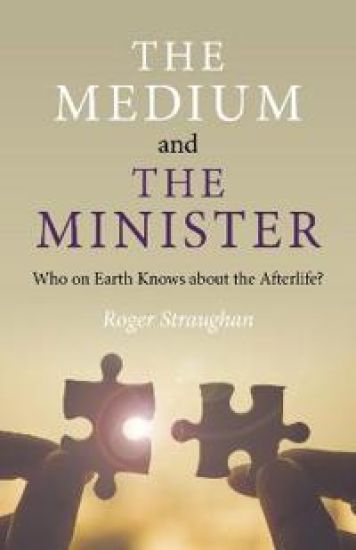
Medium and the Minister, The

Medium and the Minister, The

Roger Straughan

John Hunt Publishing
2022
nidottu
You don't have to 'be religious' to believe there may be a life after death! The Medium and the Minister explores psychical and religious approaches to the possibility of an afterlife. The tensions and conflicts between these two approaches and the heated controversies they have generated are illustrated by a number of case studies. These focus on the challenges posed by psychical research and spiritualism to orthodox religion as the ultimate authority for information and teaching about the afterlife. Prominence is given initially to the campaigns of Sir Arthur Conan Doyle and Sir Oliver Lodge which aimed to publicise the psychical evidence and to the Church’s reaction to them. Later developments and initiatives to try to reconcile the opposing positions are then examined in the light of further psychical research. The issues raised are shown to be still highly relevant to current beliefs and attitudes and to the question of what might constitute evidence for life after death.
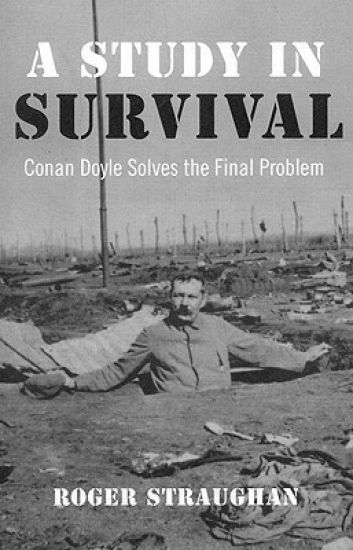
Study in Survival, A – Conan Doyle Solves the Final Problem
Here is dramatic new evidence for the survival of our individual personalities after death. It is provided by an astonishing series of recent communications from a man who died in 1930 and whose mission, when alive, was to bring just such evidence to the notice of the widest possible audience - Sir Arthur Conan Doyle. This 'study in survival' describes in vivid detail the intriguing twists and turns of an investigation worthy of the immortal Sherlock Holmes himself, whose legendary return from apparent death uncannily foreshadows that of his famous creator. The novel and ingenious method of communication used and the actual content of many of the messages are shown to be characteristic of Sir Arthur, reflecting many aspects of his colorful personality and action-packed life, as well as demonstrating paranormal knowledge of current affairs and major news events.
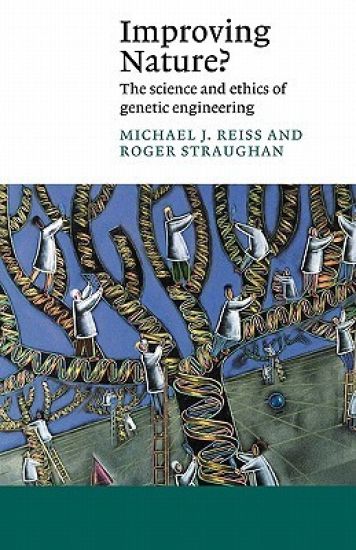
Improving Nature?

Improving Nature?

Michael J. Reiss; Roger Straughan

Cambridge University Press
2001
pokkari
Little more than a decade ago the term 'genetic engineering' was hardly known outside research laboratories. By now, though, its use is widespread. Those in favour of genetic engineering - and those against it - tell us that it has the potential to change our lives perhaps more than any other scientific or technological advance. But what are the likely consequences of genetic engineering? Is it ethically acceptable? Should we be trying to improve on nature? The authors, a biologist and a moral philosopher, examine the implications of genetic engineering in every aspect of our lives. The underlying science is explained in a way easily understood by a general reader, and the moral and ethical considerations that arise are fully discussed. Throughout, the authors clarify the issues involved so that readers can make up their own minds about these controversial issues.