
Kirjahaku
Etsi kirjoja tekijän nimen, kirjan nimen tai ISBN:n perusteella.
55 kirjaa tekijältä Roger Taylor



From the world's foremost authority on George Washington Wilson comes the definitive account of one of Scotland's leading innovators of the Victorian era. Complete with 3-D stereo images and a complimentary 3-D viewer, Roger Taylor presents a stunning view into the life and work of this singular artist. After beginning his career painting portrait miniatures, George Washington Wilson discovered the newly emerging art form of photography, and soon began making a name for himself with his photographic portraiture. Spurred on by a growing public interest in stereoscopy, Wilson created a thriving enterprise selling beautifully crafted stereo cards of Scottish landscapes to visiting tourists. As his reputation grew, he began to attract the attention of some high-profile patrons. Prince Albert commissioned him to photograph the construction of Balmoral Castle, and he also captured many historic portraits of Queen Victoria, who would later honor him with the title "Photographer to the Queen."

Arnold-Baker on Local Council Administration, often referred to as 'the bible', is a complete statement of the law relating to parish and community councils, in the form of an extensive though succinct narrative accompanied by comprehensive statutory materials.

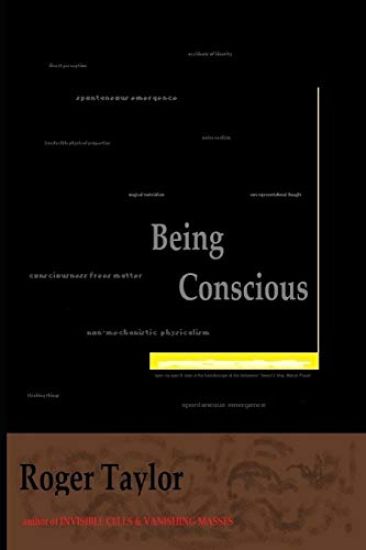
Being Conscious: A Book about Consciousness and Consciousness of Consciousness
Roger Taylor
Independently Published
2018
nidottu
A philosophical work on the theory of consciousness. This book gives a new dimension to 'the hard problem' confronting the myopia of smart, scientific and philosophical accounts of consciousness.The author Roger Taylor writes: "Well I am not saying to consciousness GBWY, it is just, as my years advance, I am closing in on not being conscious, ever again, and, in Cartesian spirit, it is tempting to say, if I am not conscious ever again then I am not (not now but when I am never conscious again). This though just like the Cogito is not conclusive. We say 'she is not conscious she is asleep'. But if she is dreaming to an extent she is conscious. If asleep and not dreaming, a loud noise or a shaking will awaken her and how is this possible unless to an extent she is conscious, or is this like there being an on and off switch. What though if she is in a coma? We do not know but she may well not be capable of dreaming at all, and a loud noise will not restore her to consciousness, yet it is not that she is not. And what if from being in a coma she goes on to die? We cannot say that while in the coma she was not. 'If I am dead I am not' is the stronger candidate. But if I am not conscious, ever again, this surely is tantamount to not being. Perhaps my point is that saying 'hello' to consciousness and saying 'goodbye' to consciousness depends on consciousness: without consciousness neither is possible. And of course, as previous remarks imply, the existence of consciousness does not depend upon such higher-order abilities as being able to say 'hello' or 'goodbye'. But for physical things of a certain kind, having consciousness is a discovery within consciousness and this allows a consciousness of the end of consciousness, and so to an inclination to understand what it is one has but will sometime lose, not in the sense of being intact but missing a limb but in the sense of a complete self-erasure, erasure of the self. But this language of the self is dangerous although convenient, like Allen Ginsberg talking of the soul but going on to say 'I mean that which differs man from thing, i.e. person -not mere mental consciousness- but feeling bodily consciousness.' Ginsberg, TLS, August 6, 1964."