
Kirjahaku
Etsi kirjoja tekijän nimen, kirjan nimen tai ISBN:n perusteella.
12 kirjaa tekijältä Ron Cody
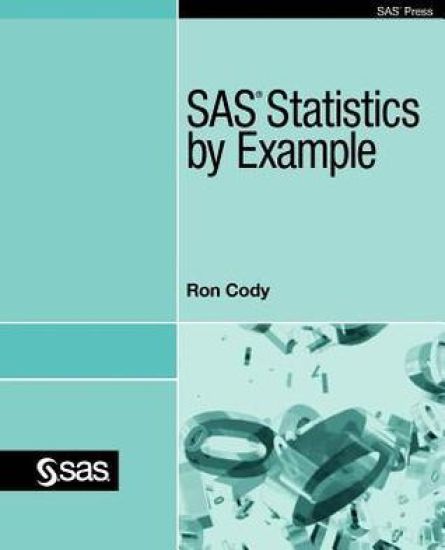
In SAS Statistics by Example, Ron Cody offers up a cookbook approach for doing statistics with SAS. Structured specifically around the most commonly used statistical tasks or techniques--for example, comparing two means, ANOVA, and regression--this book provides an easy-to-follow, how-to approach to statistical analysis not found in other books. For each statistical task, Cody includes heavily annotated examples using ODS Statistical Graphics procedures such as SGPLOT, SGSCATTER, and SGPANEL that show how SAS can produce the required statistics. Also, you will learn how to test the assumptions for all relevant statistical tests. Major topics featured include descriptive statistics, one- and two-sample tests, ANOVA, correlation, linear and multiple regression, analysis of categorical data, logistic regression, nonparametric techniques, and power and sample size. This is not a book that teaches statistics. Rather, SAS Statistics by Example is perfect for intermediate to advanced statistical programmers who know their statistics and want to use SAS to do their analyses.
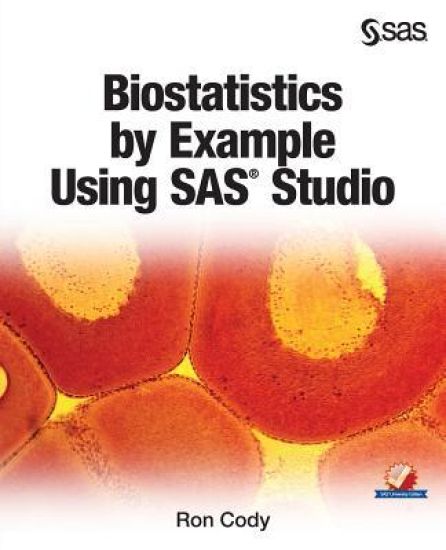
Aimed specifically at the health sciences, Biostatistics by Example Using SAS Studio, provides an introduction on how to use the point-and-click SAS Studio tasks to solve basic statistical problems. The book will include many biological and health related problem sets and will be fully compatible with SAS University Edition

Learn to program SAS by example Learning SAS by Example, A Programmer's Guide, Second Edition, teaches SAS programming from very basic concepts to more advanced topics. Because most programmers prefer examples rather than reference-type syntax, this book uses short examples to explain each topic. The second edition has brought this classic book on SAS programming up to the latest SAS version, with new chapters that cover topics such as PROC SGPLOT and Perl regular expressions. This book belongs on the shelf (or e-book reader) of anyone who programs in SAS, from those with little programming experience who want to learn SAS to intermediate and even advanced SAS programmers who want to learn new techniques or identify new ways to accomplish existing tasks. In an instructive and conversational tone, author Ron Cody clearly explains each programming technique and then illustrates it with one or more real-life examples, followed by a detailed description of how the program works. The text is divided into four major sections: Getting Started, DATA Step Processing, Presenting and Summarizing Your Data, and Advanced Topics. Subjects addressed include Reading data from external sources Learning details of DATA step programming Subsetting and combining SAS data sets Understanding SAS functions and working with arrays Creating reports with PROC REPORT and PROC TABULATE Getting started with the SAS macro language Leveraging PROC SQL Generating high-quality graphics Using advanced features of user-defined formats and informats Restructuring SAS data sets Working with multiple observations per subject Getting started with Perl regular expressions You can test your knowledge and hone your skills by solving the problems at the end of each chapter.
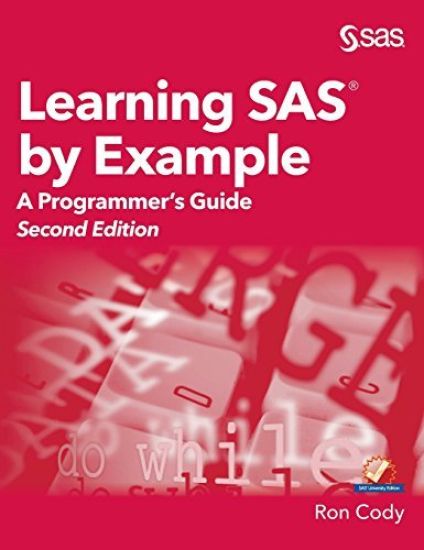
Learning SAS by Example, A Programmer's Guide, Second Edition, teaches SAS programming from very basic concepts to more advanced topics. Because most programmers prefer examples rather than reference-type syntax, this book uses short examples to explain each topic. The second edition has brought this classic book on SAS programming up to the latest SAS version, with new chapters that cover topics such as PROC SGPLOT and Perl regular expressions. This book belongs on the shelf (or e-book reader) of anyone who programs in SAS, from those with little programming experience who want to learn SAS to intermediate and even advanced SAS programmers who want to learn new techniques or identify new ways to accomplish existing tasks. In an instructive and conversational tone, author Ron Cody clearly explains each programming technique and then illustrates it with one or more real-life examples, followed by a detailed description of how the program works. The text is divided into four major sections: Getting Started, DATA Step Processing, Presenting and Summarizing Your Data, and Advanced Topics. Subjects addressed include Reading data from external sources Learning details of DATA step programming Subsetting and combining SAS data sets Understanding SAS functions and working with arrays Creating reports with PROC REPORT and PROC TABULATE Getting started with the SAS macro language Leveraging PROC SQL Generating high-quality graphics Using advanced features of user-defined formats and informats Restructuring SAS data sets Working with multiple observations per subject Getting started with Perl regular expressions You can test your knowledge and hone your skills by solving the problems at the end of each chapter.
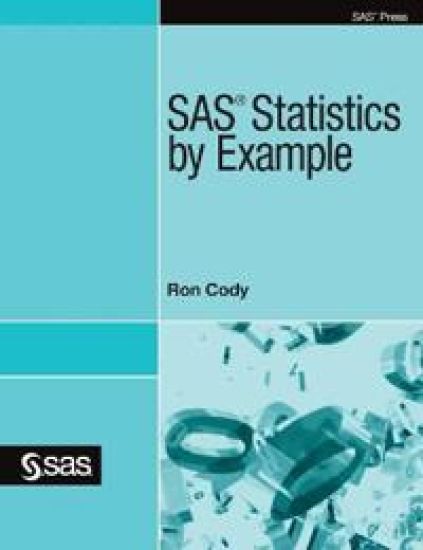
In SAS Statistics by Example, Ron Cody offers up a cookbook approach for doing statistics with SAS. Structured specifically around the most commonly used statistical tasks or techniques--for example, comparing two means, ANOVA, and regression--this book provides an easy-to-follow, how-to approach to statistical analysis not found in other books. For each statistical task, Cody includes heavily annotated examples using ODS Statistical Graphics procedures such as SGPLOT, SGSCATTER, and SGPANEL that show how SAS can produce the required statistics. Also, you will learn how to test the assumptions for all relevant statistical tests. Major topics featured include descriptive statistics, one- and two-sample tests, ANOVA, correlation, linear and multiple regression, analysis of categorical data, logistic regression, nonparametric techniques, and power and sample size. This is not a book that teaches statistics. Rather, SAS Statistics by Example is perfect for intermediate to advanced statistical programmers who know their statistics and want to use SAS to do their analyses. This book is part of the SAS Press program.
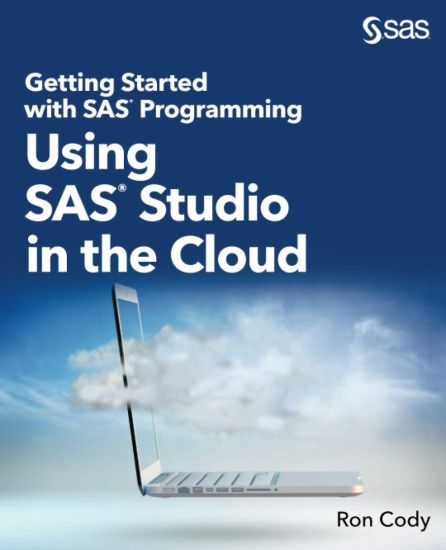
Get up and running with SAS using Ron Cody's easy-to-follow, step-by-step guide. Aimed at beginners, Getting Started with SAS Programming: Using SAS Studio in the Cloud uses short examples to teach SAS programming from the basics to more advanced topics in the point-and-click interactive environment of SAS Studio. To begin, you will learn how to register for SAS OnDemand for Academics, an online delivery platform for teaching and learning statistical analysis that provides free access to SAS software via the cloud. The first part of the book shows you how to use SAS Studio built-in tasks to produce a report, summarize data, and create charts and graphs. It also describes how you can perform basic statistical tests using the interactive point-and-click environment. The second part of the book uses easy-to-follow examples to show you how to write your own SAS programs and how to use SAS procedures to perform a variety of tasks. This part of the book also explains how to read data from a variety of sources: text files, Excel workbooks, and CSV files. In order to get familiar with the SAS Studio environment, this book also shows you how to access dozens of interesting data sets that are included with the SAS OnDemand for Academics platform.
A Gentle Introduction to Statistics Using SAS Studio in the Cloud
Ron Cody
SAS Institute
2021
pokkari
Point and click your way to performing statistics Many people are intimidated by learning statistics, but A Gentle Introduction to Statistics Using SAS Studio in the Cloud is here to help. Whether you need to perform statistical analysis for a project or, perhaps, for a course in education, psychology, sociology, economics, or any other field that requires basic statistical skills, this book teaches the fundamentals of statistics, from designing your experiment through calculating logistic regressions. Serving as an introduction to many common statistical tests and principles, it explains concepts in an intuitive way with little math and very few formulas. The book is full of examples demonstrating the use of SAS Studio's easy point-and-click interface accessed with SAS OnDemand for Academics, an online delivery platform for teaching and learning statistical analysis that provides free access to SAS software via the cloud. Topics included in this book are: How to access SAS OnDemand for Academics Descriptive statistics One-sample tests T tests (for independent or paired samples) One-way analysis of variance (ANOVA) N-way ANOVA Correlation analysis Simple and multiple linear regression Binary logistic regression Categorical data, including two-way tables and chi-square Power and sample size calculations Questions are provided to test your knowledge and practice your skills

A Gentle Introduction to Statistics Using SAS Studio in the Cloud
Ron Cody
SAS Institute
2021
sidottu
.Point and click your way to performing statistics Many people are intimidated by learning statistics, but A Gentle Introduction to Statistics Using SAS Studio in the Cloud is here to help. Whether you need to perform statistical analysis for a project or, perhaps, for a course in education, psychology, sociology, economics, or any other field that requires basic statistical skills, this book teaches the fundamentals of statistics, from designing your experiment through calculating logistic regressions. Serving as an introduction to many common statistical tests and principles, it explains concepts in an intuitive way with little math and very few formulas. The book is full of examples demonstrating the use of SAS Studio's easy point-and-click interface accessed with SAS OnDemand for Academics, an online delivery platform for teaching and learning statistical analysis that provides free access to SAS software via the cloud. Topics included in this book are: How to access SAS OnDemand for Academics Descriptive statistics One-sample tests T tests (for independent or paired samples) One-way analysis of variance (ANOVA) N-way ANOVA Correlation analysis Simple and multiple linear regression Binary logistic regression Categorical data, including two-way tables and chi-square Power and sample size calculations Questions are provided to test your knowledge and practice your skills