Kirjojen hintavertailu. Mukana 11 699 587 kirjaa ja 12 kauppaa.

Kirjahaku

Etsi kirjoja tekijän nimen, kirjan nimen tai ISBN:n perusteella.

10 kirjaa tekijältä Ron Eyerman

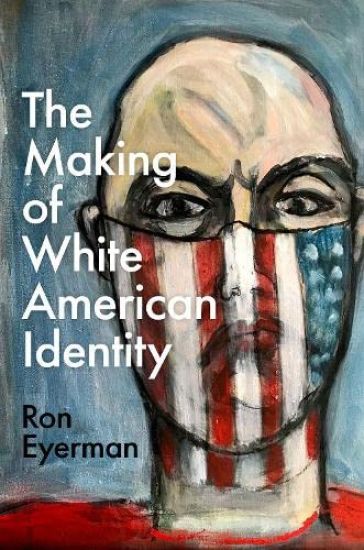
The Making of White American Identity

The Making of White American Identity

Ron Eyerman

OXFORD UNIVERSITY PRESS INC
2023
sidottu
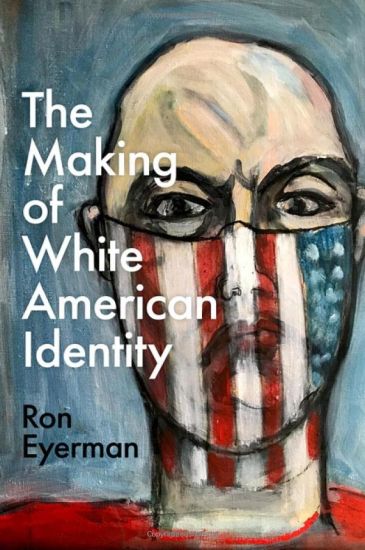
An account of the emergence and development of white consciousness throughout American history. In The Making of White American Identity, Ron Eyerman provides an explanation for how whiteness has become a basis for collective identification and collective action in the United States. Drawing upon his previous work on the formation of African American identity, as well as cultural trauma theory, collective memory, and social movements, he reveals how and under what conditions such a collective identification emerges, as well as how the mobilization of collective action around an ideology of whiteness and white superiority. Eyerman explores how the American identity was, and is still being established, through both historical and more recent events, including the Civil War, the Civil Rights movement, the election of a Black president, the Charlottesville confrontation, and the violent conflict at the Capitol on January 6, 2021. He further shows how each event revitalized the trauma narratives stemming from the nation's founding tensions, mobilizing social forces around the idea of white superiority and white consciousness. Tracing the historical contexts and social conditions under which individuals and groups move through this process, the author also looks forward at the prospects of the ideology of white supremacy as a political force in the United States.
The Making of White American Identity

The Making of White American Identity

Ron Eyerman

OXFORD UNIVERSITY PRESS INC
2022
nidottu
An account of the emergence and development of white consciousness throughout American history. In The Making of White American Identity, Ron Eyerman provides an explanation for how whiteness has become a basis for collective identification and collective action in the United States. Drawing upon his previous work on the formation of African American identity, as well as cultural trauma theory, collective memory, and social movements, he reveals how and under what conditions such a collective identification emerges, as well as how the mobilization of collective action around an ideology of whiteness and white superiority. Eyerman explores how the American identity was, and is still being established, through both historical and more recent events, including the Civil War, the Civil Rights movement, the election of a Black president, the Charlottesville confrontation, and the violent conflict at the Capitol on January 6, 2021. He further shows how each event revitalized the trauma narratives stemming from the nation's founding tensions, mobilizing social forces around the idea of white superiority and white consciousness. Tracing the historical contexts and social conditions under which individuals and groups move through this process, the author also looks forward at the prospects of the ideology of white supremacy as a political force in the United States.
Cultural Trauma

Cultural Trauma

Ron Eyerman

Cambridge University Press
2001
pokkari
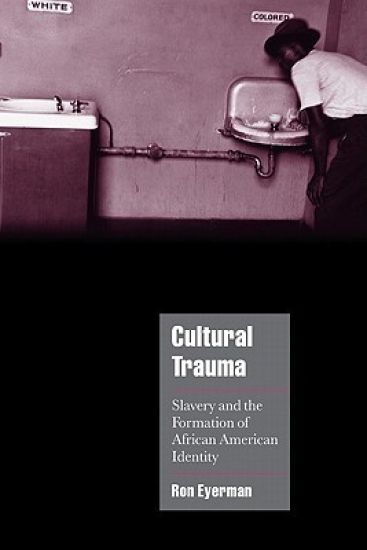
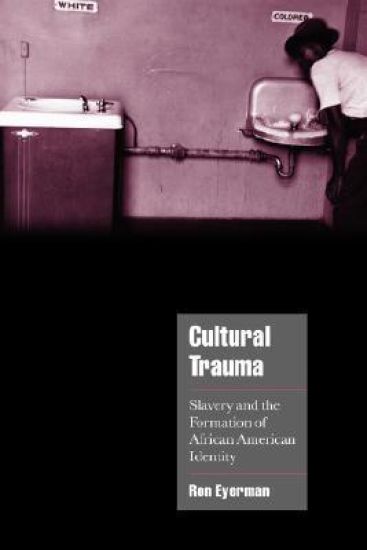
In this book, Ron Eyerman explores the formation of the African-American identity through the theory of cultural trauma. The trauma in question is slavery, not as an institution or as personal experience, but as collective memory: a pervasive remembrance that grounded a people’s sense of itself. Combining a broad narrative sweep with more detailed studies of important events and individuals, Eyerman reaches from Emancipation through the Harlem Renaissance, the Depression, the New Deal and the Second World War to the Civil Rights movement and beyond. He offers insights into the intellectual and generational conflicts of identity-formation which have a truly universal significance, as well as providing a new and compelling account of the birth of African-American identity. Anyone interested in questions of assimilation, multiculturalism and postcolonialism will find this book indispensable.
Cultural Trauma

Cultural Trauma

Ron Eyerman

Cambridge University Press
2001
sidottu
In this book, Ron Eyerman explores the formation of the African-American identity through the theory of cultural trauma. The trauma in question is slavery, not as an institution or as personal experience, but as collective memory: a pervasive remembrance that grounded a people's sense of itself. Combining a broad narrative sweep with more detailed studies of important events and individuals, Eyerman reaches from Emancipation through the Harlem Renaissance, the Depression, the New Deal and the Second World War to the Civil Rights movement and beyond. He offers insights into the intellectual and generational conflicts of identity-formation which have a truly universal significance, as well as providing a compelling account of the birth of African-American identity. Anyone interested in questions of assimilation, multiculturalism and postcolonialism will find this book indispensable.
The Assassination of Theo Van Gogh

The Assassination of Theo Van Gogh

Ron Eyerman

Duke University Press
2008
sidottu
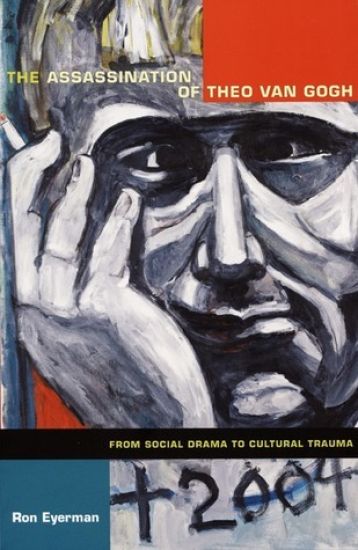
In November 2004, the controversial Dutch filmmaker Theo van Gogh was killed on a busy street in Amsterdam. A twenty-six-year-old Dutch citizen of Moroccan descent shot van Gogh, slit his throat, and pinned a five-page indictment of Western society to his body. The murder set off a series of reactions, including arson against Muslim schools and mosques. In The Assassination of Theo van Gogh, Ron Eyerman explores the multiple meanings of the murder and the different reactions it elicited: among the Amsterdam-based artistic and intellectual subculture, the wider Dutch public, the local and international Muslim communities, the radical Islamic movement, and the broader international community. After meticulously analyzing the actions and reputations of van Gogh and others in his milieu, the motives of the murderer, and the details of the assassination itself, Eyerman considers the various narrative frames the mass media used to characterize the killing.Eyerman utilizes theories of social drama and cultural trauma to evaluate the reactions to and effects of the murder. A social drama is triggered by a public transgression of taken-for-granted norms; one that threatens the collective identity of a society may develop into a cultural trauma. Eyerman contends that the assassination of Theo van Gogh quickly became a cultural trauma because it resonated powerfully with the postwar psyche of the Netherlands. As part of his analysis of the murder and reactions to it, he discusses significant aspects of twentieth-century Dutch history, including the country’s treatment of Jews during the German occupation, the loss of its colonies in the wake of World War II, its recruitment of immigrant workers, and the failure of Dutch troops to protect Muslims in Srebrenica in 1995.
The Assassination of Theo Van Gogh

The Assassination of Theo Van Gogh

Ron Eyerman

Duke University Press
2008
pokkari
In November 2004, the controversial Dutch filmmaker Theo van Gogh was killed on a busy street in Amsterdam. A twenty-six-year-old Dutch citizen of Moroccan descent shot van Gogh, slit his throat, and pinned a five-page indictment of Western society to his body. The murder set off a series of reactions, including arson against Muslim schools and mosques. In The Assassination of Theo van Gogh, Ron Eyerman explores the multiple meanings of the murder and the different reactions it elicited: among the Amsterdam-based artistic and intellectual subculture, the wider Dutch public, the local and international Muslim communities, the radical Islamic movement, and the broader international community. After meticulously analyzing the actions and reputations of van Gogh and others in his milieu, the motives of the murderer, and the details of the assassination itself, Eyerman considers the various narrative frames the mass media used to characterize the killing.Eyerman utilizes theories of social drama and cultural trauma to evaluate the reactions to and effects of the murder. A social drama is triggered by a public transgression of taken-for-granted norms; one that threatens the collective identity of a society may develop into a cultural trauma. Eyerman contends that the assassination of Theo van Gogh quickly became a cultural trauma because it resonated powerfully with the postwar psyche of the Netherlands. As part of his analysis of the murder and reactions to it, he discusses significant aspects of twentieth-century Dutch history, including the country’s treatment of Jews during the German occupation, the loss of its colonies in the wake of World War II, its recruitment of immigrant workers, and the failure of Dutch troops to protect Muslims in Srebrenica in 1995.
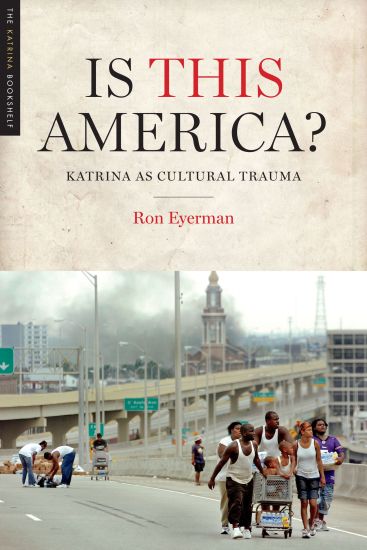
Is This America?

Is This America?

Ron Eyerman

University of Texas Press
2015
nidottu
From police on the street, to the mayor of New Orleans and FEMA administrators, government officials monumentally failed to protect the most vulnerable residents of New Orleans and the Gulf Coast during the Katrina disaster. This violation of the social contract undermined the foundational narratives and myths of the American nation and spawned a profound, often contentious public debate over the meaning of Katrina’s devastation. A wide range of voices and images attempted to clarify what happened, name those responsible, identify the victims, and decide what should be done. This debate took place in forums ranging from mass media and the political arena to the arts and popular culture, as various narratives emerged and competed to tell the story of Katrina.Is This America? explores how Katrina has been constructed as a cultural trauma in print media, the arts and popular culture, and television coverage. Using stories told by the New York Times, New Orleans Times-Picayune, Time, Newsweek, NBC, and CNN, as well as the works of artists, writers, musicians, filmmakers, and graphic designers, Ron Eyerman analyzes how these narratives publicly articulated collective pain and loss. He demonstrates that, by exposing a foundational racial cleavage in American society, these expressions of cultural trauma turned individual experiences of suffering during Katrina into a national debate about the failure of the white majority in the United States to care about the black minority.
Memory, Trauma, and Identity

Memory, Trauma, and Identity

Ron Eyerman

Springer Nature Switzerland AG
2019
sidottu
This volume brings together Ron Eyerman’s most important interventions in the field of cultural trauma and offers an accessible entry point into the origins and development of this theory and a framework of an analysis that has now achieved the status of a research paradigm. This collection of disparate essays, published between 2004 and 2018, coheres around an original introduction that not only provides a historical overview of cultural trauma, but is also an important theoretical contribution to cultural trauma and collective identity in its own right. The Afterword from esteemed sociologist Eric Woods connects the essays and explores their significance for the broader fields of sociology, behavioral science, and trauma studies..
Memory, Trauma, and Identity

Memory, Trauma, and Identity

Ron Eyerman

Springer Nature Switzerland AG
2020
nidottu
This volume brings together Ron Eyerman’s most important interventions in the field of cultural trauma and offers an accessible entry point into the origins and development of this theory and a framework of an analysis that has now achieved the status of a research paradigm. This collection of disparate essays, published between 2004 and 2018, coheres around an original introduction that not only provides a historical overview of cultural trauma, but is also an important theoretical contribution to cultural trauma and collective identity in its own right. The Afterword from esteemed sociologist Eric Woods connects the essays and explores their significance for the broader fields of sociology, behavioral science, and trauma studies..