Kirjojen hintavertailu. Mukana 11 342 296 kirjaa ja 12 kauppaa.

Kirjahaku

Etsi kirjoja tekijän nimen, kirjan nimen tai ISBN:n perusteella.

4 kirjaa tekijältä Ron Hayduk

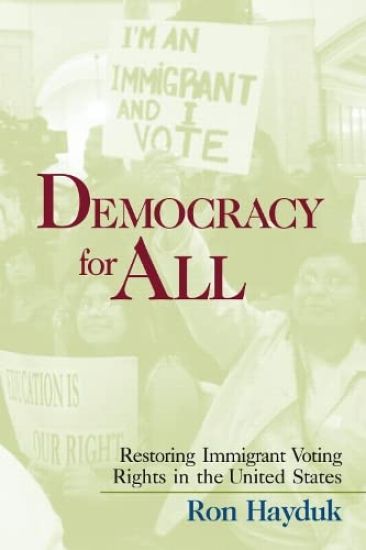
Democracy for All

Democracy for All

Ron Hayduk

Routledge
2006
sidottu
First published in 2006. Voting is for citizens only, right? Not exactly. It is not widely known that immigrants, or noncitizens, currently vote in local elections in over a half dozen cities and towns in the U.S.; nor that campaigns to expand the franchise to noncitizens have been launched in at least a dozen other jurisdictions from coast to coast over the past decade. These practices have their roots in another little-known fact: for most of the country's history - from the founding until the 1920s - noncitizens voted in forty states and federal territories in local, state, and even federal elections, and also held.
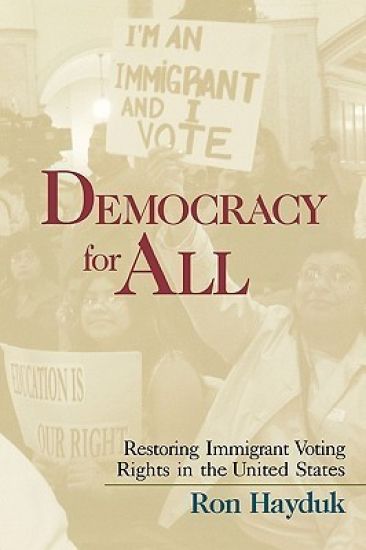
Democracy for All

Democracy for All

Ron Hayduk

Routledge
2006
nidottu
Voting is for citizens only, right? Not exactly. It is not widely known that immigrants, or noncitizens, currently vote in local elections in over a half dozen cities and towns in the U.S.; nor that campaigns to expand the franchise to noncitizens have been launched in at least a dozen other jurisdictions from coast to coast over the past decade. These practices have their roots in another little-known fact: for most of the country's history - from the founding until the 1920s - noncitizens voted in forty states and federal territories in local, state, and even federal elections, and also held public office such as alderman, coroner, and school board member. Globally, over forty countries on nearly every continent permit voting by noncitizens. Legal immigrants, or resident aliens, pay taxes, own businesses and homes, send their children to public schools, and can be drafted or serve in the military, yet proposals to grant them voting rights are often met with great resistance. But, in a country where no taxation without representation was once a rallying cry for revolution, such a proposition may not, after all, be so outlandish.Democracyfor All examines the politics and practices of noncitizen voting in the United States, chronicling the rise and fall - and re-emergence - of immigrant voting in the U.S. In addition to making the case for noncitizen voting, this book takes a close look at the politics of and actors in recent campaigns that successfully reestablished noncitizen voting, others that failed, and ones that are currently underway. Democracy for All explores the prospects for a truly universal suffrage in America.
Untangling the Political Roots of Immigration and Inequality in the United States
We live in a period when more people are migrating from the countryside to the city, from city to city, and from country to country than at nearly anytime in human history. At the same time, we see sharp increases in wealth and income inequality. These two trends fuel populist movements on both the left and right, topping political agendas across the world. Untangling the Political Roots of Immigration and Inequality in the United States examines the causes, consequences, and politics of mass migration and growing inequality by investigating the case of the United States – the quintessential immigrant nation. While scholars, policy makers, and advocates have put forth a variety of explanations, many misdiagnose the causes and put forward remedies that treat symptoms. This book looks to the root causes of mass migration and intensifying inequality, arguing that they are two sides of the same coin resulting from rapacious forms of capitalist accumulation and imperialist interventionism. Developing a broadly left analytic framework grounded in elements of Marxist theory and political science, two periods are examined – 1870–1925 and 1970–2025 – when the proportion of immigrants in the US peaked at 15% of the total population, the US experienced steep inequality and political polarization, immigration and inequality became contentious political issues that generated sharp conflict, and immigrants and workers organized mass movements that advanced radical politics and transformative change. This book contains a wealth of information and elevates valuable lessons for scholars, policy makers, and organizers interested in understanding these trends and forging equitable and just solutions today.
Untangling the Political Roots of Immigration and Inequality in the United States
We live in a period when more people are migrating from the countryside to the city, from city to city, and from country to country than at nearly anytime in human history. At the same time, we see sharp increases in wealth and income inequality. These two trends fuel populist movements on both the left and right, topping political agendas across the world. Untangling the Political Roots of Immigration and Inequality in the United States examines the causes, consequences, and politics of mass migration and growing inequality by investigating the case of the United States – the quintessential immigrant nation. While scholars, policy makers, and advocates have put forth a variety of explanations, many misdiagnose the causes and put forward remedies that treat symptoms. This book looks to the root causes of mass migration and intensifying inequality, arguing that they are two sides of the same coin resulting from rapacious forms of capitalist accumulation and imperialist interventionism. Developing a broadly left analytic framework grounded in elements of Marxist theory and political science, two periods are examined – 1870–1925 and 1970–2025 – when the proportion of immigrants in the US peaked at 15% of the total population, the US experienced steep inequality and political polarization, immigration and inequality became contentious political issues that generated sharp conflict, and immigrants and workers organized mass movements that advanced radical politics and transformative change. This book contains a wealth of information and elevates valuable lessons for scholars, policy makers, and organizers interested in understanding these trends and forging equitable and just solutions today.