Kirjojen hintavertailu. Mukana 12 363 183 kirjaa ja 12 kauppaa.

Kirjahaku

Etsi kirjoja tekijän nimen, kirjan nimen tai ISBN:n perusteella.

2 kirjaa tekijältä Ron Wakkary

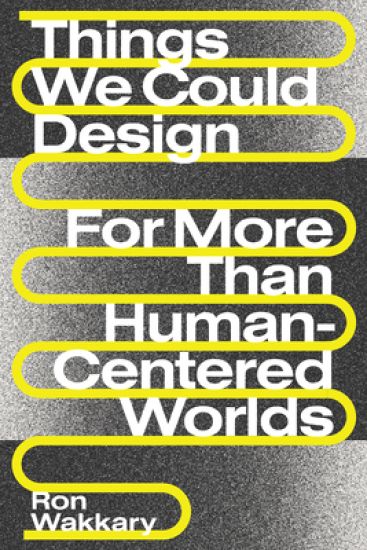
Things We Could Design

Things We Could Design

Ron Wakkary

MIT Press
2021
nidottu
How posthumanist design enables a world in which humans share center stage with nonhumans, with whom we are entangled. Over the past forty years, designers have privileged human values such that human-centered design is seen as progressive. Yet because all that is not human has been depleted, made extinct, or put to human use, today's design contributes to the existential threat of climate change and the ongoing extinctions of other species. In Things We Could Design, Ron Wakkary argues that human-centered design is not the answer to our problems but is itself part of the problem. Drawing on philosophy, design theory, and numerous design works, he shows the way to a relational and expansive design based on humility and cohabitation. Wakkary says that design can no longer ignore its exploitation of nonhuman species and the materials we mine for and reduce to human use. Posthumanism, he argues, enables a rethinking of design that displaces the human at the center of thought and action. Weaving together posthumanist philosophies with design, he describes what he calls things--nonhumans made by designers--and calls for a commitment to design with more than human participation. Wakkary also focuses on design as nomadic practices--a multiplicity of intentionalities and situated knowledges that shows design to be expansive and pluralistic. He calls his overall approach designing-with: the practice of design in a world in which humans share center stage with nonhumans, and in which we are bound together materially, ethically, and existentially.
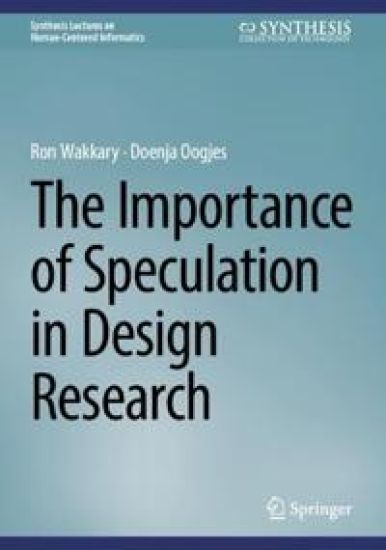
The Importance of Speculation in Design Research

The Importance of Speculation in Design Research

Ron Wakkary; Doenja Oogjes

Springer International Publishing AG
2024
sidottu
This book explores speculation in design research in the field of human-computer interaction (HCI). The authors reveal how speculative reasoning in design research increases the capacity of HCI to address a wider array of social and research challenges. Speculation in design research employs (1) leaps of imagination, (2) diverse ways of knowing or epistemologies, (3) ethical reflexivity, (4) and makes alternate possibilities experiential. This book shows how each can be productively and critically applied together through existing, emerging, and new research approaches in HCI. The aim of this book is to generously see speculation as more than a form of critique or genre of design research, to instead be seen as broadly central to the material investigations that govern much of the field. In doing so, the book aims to expand the potential role of speculation in HCI and shows how speculation is applicable to a wide range of research goals, which, in turn, creates research approaches in new directions. In expanding the approach and methodology of speculation in HCI, the books draw inspiration from other disciplines and intersectional perspectives. By examining current, emerging, and possible new forms of speculation methods, this book will be of interest to undergraduate and graduate students in HCI as well as seasoned researchers and practitioners.