Kirjojen hintavertailu. Mukana 12 402 232 kirjaa ja 12 kauppaa.

Kirjahaku

Etsi kirjoja tekijän nimen, kirjan nimen tai ISBN:n perusteella.

23 kirjaa tekijältä Ronald Barnett

Beyond All Reason

Beyond All Reason

Ronald Barnett

Open University Press
2003
nidottu
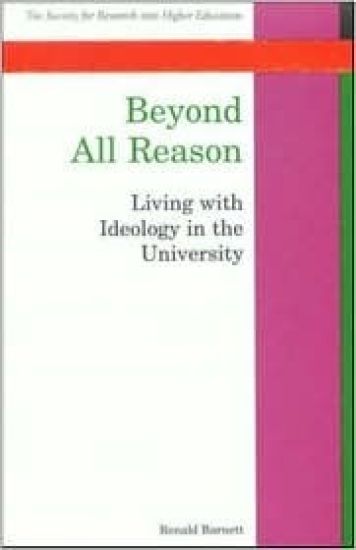
"stimulating and full of insight" British Journal of Educational Studies"a major work ... provocative, unsettling and profoundly challenging. I think it should be prescribed reading for all vice-chancellors." (Professor Colin Bundy, Director of the School of Oriental and African Studies, University of London)"Ron Barnett's latest book lives up to, and possibly exceeds, the high standards he has set himself in his previous books - which are now established as the premier series of reflective books on higher education." (Professor Peter Scott, Vice-Chancellor, Kingston University)"Ron Barnett has produced a thought provoking volume that raises fundamental issues about higher education. It is essential reading for all who work in universities." (Professor Robert Burgess, Vice-Chancellor, University of Leicester)"a lively and engaging book which addresses the problems of the modern university from the perspective of modern social theory." Higher Education Review"The issues taken up in this book are significant to everyone in the academy, particularly those in leadership positions." Studies in Higher Education"This is a knowing, stimulating treatise that confronts some of the most difficult and complicated problems that universities face."Journal of Higher EducationUniversities are increasingly ideological. Many of the ideologies that are to be found on campus, such as entrepreneurialism, competition, quality and managerialism, express interests of the wider society but the university's own activities, such as research and even learning and teaching, are also becoming ideologies. Since ideologies are dogmatic in character, universities are being undermined and are being placed beyond all reason.How, then, might universities live effectively, beset as they are with ideologies in their midst? Indeed, is it still sensible to conceive of universities as places of reason? In Beyond All Reason, Ronald Barnett argues that ideology is now a fact of life in universities but that a positive way forward is within reach.Ideologies have been understood, rightly, as pernicious in nature, thwarting reason and the expression of human being. However, by returning to the ideals of reasonableness and generosity within the idea of the university, and by developing creative practices that build on those ideals, it is possible to construct virtuous idealogies that do justice to universities as universities in the twenty-first century.Beyond All Reason continues Ronald Barnett's attempts to show that it is still possible to hold to and to live out an idea of the university. It is a bold and optimistic statement and is required reading for anyone concerned about the current state of university life.
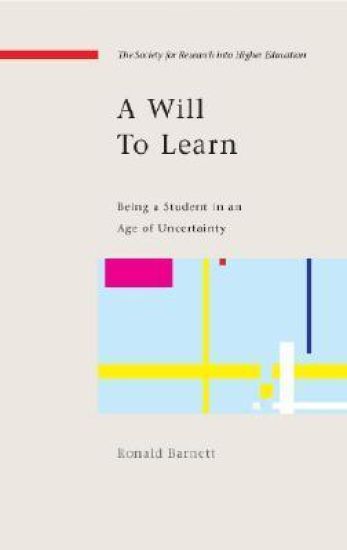
A Will to Learn: Being a Student in an age of Uncertainty
There is an extraordinary but largely unnoticed phenomenon in higher education: by and large, students persevere and complete their studies. How should we interpret this tendency? Students are living in uncertain times and often experience anxiety, and yet they continue to press forward with their studies. The argument here is that we should understand this propensity on the part of students to persist through a will to learn.This book examines the structure of what it is to have a will to learn. Here, a language of being, becoming, authenticity, dispositions, voice, air, spirit, inspiration and care is drawn on. As such, this book offers an idea of student development that challenges the dominant views of our age, of curricula understood largely in terms of skill or even of knowledge, and pedagogy understood as bringing off pre-specified ‘outcomes’. The will to learn, though, can be fragile. This is of crucial importance, for if the will to learn dissolves, the student's commitment may falter. Accordingly, more than encouraging an interest in the student's subject or in the acquiring of skills, the primary responsibility of teachers in higher education is to sustain and develop the student's will to learn. This is a radical thesis, for it implies a transformation in how we understand the nature of teaching in higher education.
The Philosophy of Higher Education

The Philosophy of Higher Education

Ronald Barnett

Routledge
2021
sidottu
Providing a comprehensive introduction to the philosophy of higher education this book steps nimbly through the field, leading it into new areas and advancing an imaginative ecological realism. Each chapter takes the form of a short essay, tackling a particular topic such as values, knowledge, teaching, critical thinking and social justice. It also examines key issues including academic freedom, the digital university and the Anthropocene, and draws on classic as well as contemporary texts in the field.Composed of five parts, the book travels on a compelling journey: Part one identifies foundations of the field, distinguishing between the ideas of university and higher education, Part two examines key concepts, including research, culture, academic freedom and reason, Part three focuses on higher education as a set of educational practices and being a student, Part four is concerned with the university as an institution and includes the matters of leadership and the spirit of the university, Part five turns to the university in the world, and argues for an ecological perspective.Written in a lively and accessible style, and ideal for anyone coming to the field for the first time but also of interest to experienced scholars, this book offers sightings of new possibilities for higher education and the university.
The Philosophy of Higher Education

The Philosophy of Higher Education

Ronald Barnett

Routledge
2021
nidottu
Providing a comprehensive introduction to the philosophy of higher education this book steps nimbly through the field, leading it into new areas and advancing an imaginative ecological realism. Each chapter takes the form of a short essay, tackling a particular topic such as values, knowledge, teaching, critical thinking and social justice. It also examines key issues including academic freedom, the digital university and the Anthropocene, and draws on classic as well as contemporary texts in the field.Composed of five parts, the book travels on a compelling journey: Part one identifies foundations of the field, distinguishing between the ideas of university and higher education, Part two examines key concepts, including research, culture, academic freedom and reason, Part three focuses on higher education as a set of educational practices and being a student, Part four is concerned with the university as an institution and includes the matters of leadership and the spirit of the university, Part five turns to the university in the world, and argues for an ecological perspective.Written in a lively and accessible style, and ideal for anyone coming to the field for the first time but also of interest to experienced scholars, this book offers sightings of new possibilities for higher education and the university.
Being a University

Being a University

Ronald Barnett

Routledge
2010
sidottu
There is no single idea of the university. Ever since its medieval origin, the concept of the university has continued to change. The metaphysical university gave way successively to the scientific university, and then to the corporate and the entrepreneurial university. But what, then, might lie ahead?Being a University both charts this conceptual development and examines the future possibilities for the idea of the university. Ronald Barnett pursues this quest through an exploration of pairs of contending concepts that speak to the idea of the university – such as space and time; being and becoming; and culture and anarchy. On this foundation is developed an imaginative exposition of possible ideas of the university, including the liquid university and the authentic university.In the course of this inquiry, it is argued that:Any thought that the idea of the entrepreneurial university represents the end-point of the evolution of the idea of the university has to be abandoned. The entrepreneurial university is excessively parochial and ill-matched to the challenges facing the universityA responsibility of the university is precisely that of working out an imaginative conception of its future possibilities. The boldest and largest thinking is urgently requiredThe fullest expression of the university’s possibilities lies in a reclamation of the universal aspirations that lay in earlier ideas of the university. The ecological university represents just such a universal aspiration, suited to the unfolding demands of the future.Being a University will be of wide interest, to institutional leaders and managers, higher education planners, academics in all disciplines and students of higher education, in educational policy and politics, and the philosophy, sociology and theory of education, and indeed, anyone who believes in the future of the university.
Being a University

Being a University

Ronald Barnett

Routledge
2010
nidottu
There is no single idea of the university. Ever since its medieval origin, the concept of the university has continued to change. The metaphysical university gave way successively to the scientific university, and then to the corporate and the entrepreneurial university. But what, then, might lie ahead?Being a University both charts this conceptual development and examines the future possibilities for the idea of the university. Ronald Barnett pursues this quest through an exploration of pairs of contending concepts that speak to the idea of the university – such as space and time; being and becoming; and culture and anarchy. On this foundation is developed an imaginative exposition of possible ideas of the university, including the liquid university and the authentic university.In the course of this inquiry, it is argued that:Any thought that the idea of the entrepreneurial university represents the end-point of the evolution of the idea of the university has to be abandoned. The entrepreneurial university is excessively parochial and ill-matched to the challenges facing the universityA responsibility of the university is precisely that of working out an imaginative conception of its future possibilities. The boldest and largest thinking is urgently requiredThe fullest expression of the university’s possibilities lies in a reclamation of the universal aspirations that lay in earlier ideas of the university. The ecological university represents just such a universal aspiration, suited to the unfolding demands of the future.Being a University will be of wide interest, to institutional leaders and managers, higher education planners, academics in all disciplines and students of higher education, in educational policy and politics, and the philosophy, sociology and theory of education, and indeed, anyone who believes in the future of the university.
Imagining the University

Imagining the University

Ronald Barnett

Routledge
2012
sidottu
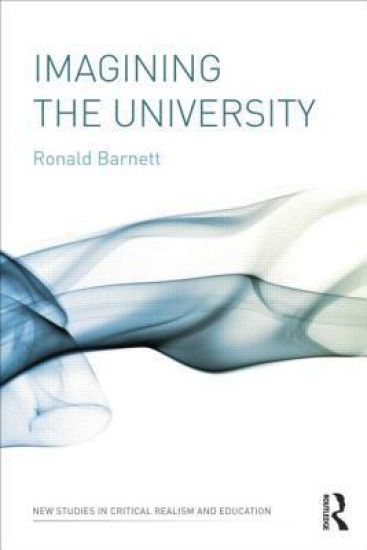
Around the world, what it is to be a university is a matter of much debate. The range of ideas of the university in public circulation is, however, exceedingly narrow and is dominated by the idea of the entrepreneurial university. As a consequence, the debate is hopelessly impoverished. Lurking in the literature, there is a broad and even imaginative array of ideas of the university, but those ideas are seldom heard. We need, consequently, not just more ideas of the university but better ideas. Imagining the University forensically examines this situation, critically interrogating many of the current ideas of the university. Imagining the University argues for imaginative ideas that are critical, sensitive to the deep structures underlying universities and are yet optimistic, in short feasible utopias of the university. The case is pressed for one such idea, that of the ecological university. The book concludes by offering a vision of the imagining university, a university that has the capacity continually to re-imagine itself.
Imagining the University

Imagining the University

Ronald Barnett

Routledge
2012
nidottu
Around the world, what it is to be a university is a matter of much debate. The range of ideas of the university in public circulation is, however, exceedingly narrow and is dominated by the idea of the entrepreneurial university. As a consequence, the debate is hopelessly impoverished. Lurking in the literature, there is a broad and even imaginative array of ideas of the university, but those ideas are seldom heard. We need, consequently, not just more ideas of the university but better ideas. Imagining the University forensically examines this situation, critically interrogating many of the current ideas of the university. Imagining the University argues for imaginative ideas that are critical, sensitive to the deep structures underlying universities and are yet optimistic, in short feasible utopias of the university. The case is pressed for one such idea, that of the ecological university. The book concludes by offering a vision of the imagining university, a university that has the capacity continually to re-imagine itself.
The Ecological University

The Ecological University

Ronald Barnett

Routledge
2017
sidottu
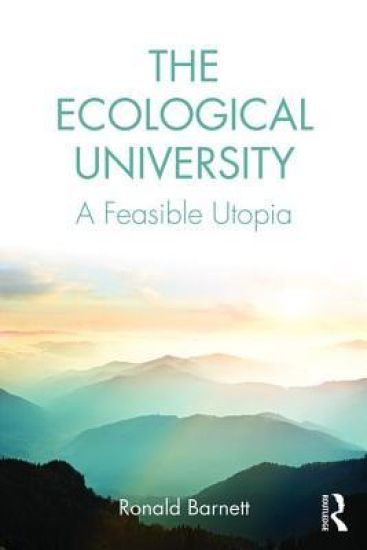
Universities continue to expand, bringing considerable debate about their purposes and relationship to the world. In The Ecological University, Ronald Barnett argues that universities are short of their potential and responsibilities in an ever-changing and challenging environment. This book centres on the idea that the expansion of higher education has opened new spaces and possibilities. The university is interconnected with a number of ecosystems: knowledge, social institutions, persons, the economy, learning, culture and the natural environment. These seven ecosystems of the university are all fragile and in order to advance and develop them universities need to engage with each one.By looking at matters such as the challenges of learning, professional life and research and inquiry, this book outlines just what it could mean for higher education institutions to understand and realize themselves as exemplars of the ecological university. With bold and original insights and practical principles for development, this radical and transformative book is essential reading for university leaders and administrators, academics, students, and all interested in the future of the university.
The Ecological University

The Ecological University

Ronald Barnett

Routledge
2017
nidottu
Universities continue to expand, bringing considerable debate about their purposes and relationship to the world. In The Ecological University, Ronald Barnett argues that universities are short of their potential and responsibilities in an ever-changing and challenging environment. This book centres on the idea that the expansion of higher education has opened new spaces and possibilities. The university is interconnected with a number of ecosystems: knowledge, social institutions, persons, the economy, learning, culture and the natural environment. These seven ecosystems of the university are all fragile and in order to advance and develop them universities need to engage with each one.By looking at matters such as the challenges of learning, professional life and research and inquiry, this book outlines just what it could mean for higher education institutions to understand and realize themselves as exemplars of the ecological university. With bold and original insights and practical principles for development, this radical and transformative book is essential reading for university leaders and administrators, academics, students, and all interested in the future of the university.
Thinking and Rethinking the University
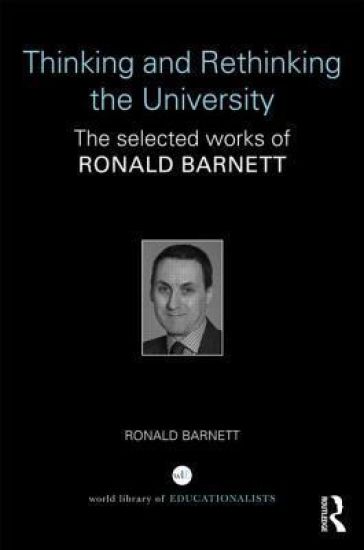
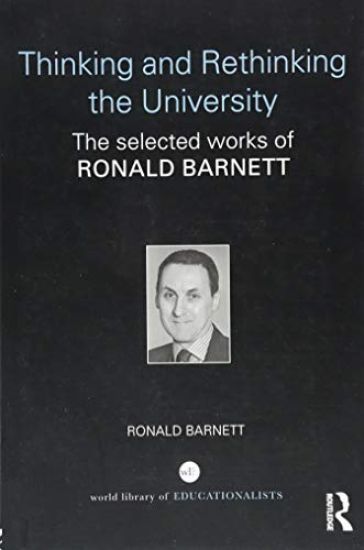
In the World Library of Educationalists series, international scholars compile career-long selections of what they judge to be among their finest pieces so the world has access to them in a single manageable volume. Readers are able to follow the themes and strands and see how their work contributes to the development of the field.Over more than three decades, Professor Ronald Barnett has acquired a distinctive position as a leading philosopher of the university and higher education, and this volume brings together 15 of his key writings, particularly papers from leading journals. This volume also includes, as his introductory chapter, an intellectual autobiography, in which Professor Barnett recounts the history of his scholarship and writing, traces its development across five stages, and identifies the themes and sources of inspiration that lie within his corpus of work.Ronald Barnett has described his corpus of work as a social philosophy of the university that is at once conceptual, critical, practical and imaginative. His concepts of criticality, critical interdisciplinarity, supercomplexity and the ecological university have been taken up in the literature across the world. Through telling examples, and with an incisive clarity of writing, Ronald Barnett’s scholarship has helped to illuminate in fresh ways and reorient practices in the university and in higher education. The chapters in this volume reveal all of these qualities so making this volume a compelling overview of a passionate and yet constructive critic of the university.
Thinking and Rethinking the University
In the World Library of Educationalists series, international scholars compile career-long selections of what they judge to be among their finest pieces so the world has access to them in a single manageable volume. Readers are able to follow the themes and strands and see how their work contributes to the development of the field.Over more than three decades, Professor Ronald Barnett has acquired a distinctive position as a leading philosopher of the university and higher education, and this volume brings together 15 of his key writings, particularly papers from leading journals. This volume also includes, as his introductory chapter, an intellectual autobiography, in which Professor Barnett recounts the history of his scholarship and writing, traces its development across five stages, and identifies the themes and sources of inspiration that lie within his corpus of work.Ronald Barnett has described his corpus of work as a social philosophy of the university that is at once conceptual, critical, practical and imaginative. His concepts of criticality, critical interdisciplinarity, supercomplexity and the ecological university have been taken up in the literature across the world. Through telling examples, and with an incisive clarity of writing, Ronald Barnett’s scholarship has helped to illuminate in fresh ways and reorient practices in the university and in higher education. The chapters in this volume reveal all of these qualities so making this volume a compelling overview of a passionate and yet constructive critic of the university.
Understanding the University

Understanding the University

Ronald Barnett

Routledge
2015
sidottu
Understanding the University constitutes the final volume in a trilogy – the first two books having been Being a University (2010) and Imagining the University (2012) – and represents the trilogy’s ultimate aims and endeavours. The three volumes together offer a unique attempt at a fairly systematic and exhaustive level to map out just what it might be seriously to understand the extraordinarily complex entity that is known across the world as ‘the university’.Through examination of the conditions and possibilities underlying and affecting universities, this work offers an understanding of specific ideas of the university which can inform policies, strategies and practices in relation to the university. This book is a must read for leaders and senior managers in universities , as well as those undertaking postgraduate studies in the policy and practice of higher education.
Understanding the University

Understanding the University

Ronald Barnett

Routledge
2015
nidottu
Understanding the University constitutes the final volume in a trilogy – the first two books having been Being a University (2010) and Imagining the University (2012) – and represents the trilogy’s ultimate aims and endeavours. The three volumes together offer a unique attempt at a fairly systematic and exhaustive level to map out just what it might be seriously to understand the extraordinarily complex entity that is known across the world as ‘the university’.Through examination of the conditions and possibilities underlying and affecting universities, this work offers an understanding of specific ideas of the university which can inform policies, strategies and practices in relation to the university. This book is a must read for leaders and senior managers in universities , as well as those undertaking postgraduate studies in the policy and practice of higher education.
Realizing the Ecological University

Realizing the Ecological University

Ronald Barnett

BLOOMSBURY PUBLISHING PLC
2024
sidottu
The ecological university takes its interconnectedness with the world seriously. This is challenging, for the world is in difficulty and is shot through with antagonism. The university is partly culpable for those difficulties and so has responsibilities towards the world. Realizing the Ecological University spells out this thesis by charting the university’s entanglements with eight ecosystems – knowledge, learning, persons, social institutions, culture, the economy, the polity and nature. The book identifies ways in which each of the eight ecosystems is impaired and points to possibilities through which universities can help in repairing those ecosystems. This book also sets out broad principles in helping to realize the ecological university in each of the eight ecosystems. Wearing his scholarship lightly, Ronald Barnett draws widely from philosophy, social theory, comparative higher education and ethics, and advances a particular form of the philosophy of higher education, at once realist, societal, critical, worldly and Earthly. Written with wit and lots of examples – actual and fictional – the text has a compelling vibrancy, made manifest in its concluding Manifesto.
Engaging the Curriculum

Engaging the Curriculum

Ronald Barnett; Kelly Coate

Open University Press
2004
nidottu
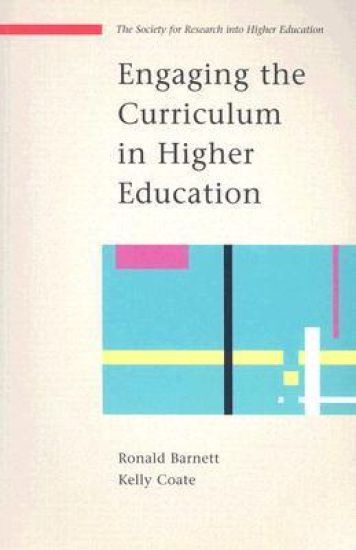
There is greater interest than ever before in higher education: more money is being spent on it, more students are registered and more courses are being taught. And yet the matter that is arguably at the heart of higher education, the curriculum, is noticeable for its absence in public debate and in the literature on higher education. This book begins to redress the balance. Even though the term ‘curriculum’ may be missing from debates on higher education, curricula are changing rapidly and in significant ways. What we are seeing, therefore, is curriculum change by stealth, in which curricula are being reframed to enable students to acquire skills that have market value. In turn, curricula are running the risk of fragmenting as knowledge and skills exert their separate claims. Such a fragmented curriculum is falling well short of the challenges of the twenty-first century. A complex and uncertain world requires curricula in which students as human beings are placed at their centre: what is called for are curricula that offer no less than the prospect of encouraging the formation of human being and becoming. A curriculum of this kind has to be understood as the imaginative design of spaces where creative things can happen as students become engaged.Based upon a study of curricula in UK universities, Engaging the Curriculum in Higher Education offers an uncompromising thesis about the development of higher education and is essential reading for those who care about its future.
Knowledge and the University

Knowledge and the University

Ronald Barnett; Søren Bengtsen

Routledge
2019
sidottu
For hundreds of years, knowledge has been central in understanding the university. Over recent decades, however, it is the economic value of knowledge that has come to the fore. Now, in a post-truth world, knowledge is also treated with suspicion and has become a vehicle for ideologies. Knowledge and the University combats all these ways of thinking. Its central claim is that knowledge is of value because of its connection with life. Knowledge is of life, from life, in life and for life. With an engaging philosophical discussion, and with a consideration of the evolution of higher education institutions, this book: Examines ways in which research, teaching and learning are bound up with life; Looks to breathe new life into the university itself; Widens the idea of the knowledge ecology to embrace the whole world; Suggests new roles for the university towards culture and the public sphere.Knowledge and the University is a radical text that looks to engender nothing less than a new spirit of the university. It offers a fascinating read for policy makers, institutional leaders, academics and all interested in the future of universities.
Knowledge and the University

Knowledge and the University

Ronald Barnett; Søren Bengtsen

Routledge
2019
nidottu
For hundreds of years, knowledge has been central in understanding the university. Over recent decades, however, it is the economic value of knowledge that has come to the fore. Now, in a post-truth world, knowledge is also treated with suspicion and has become a vehicle for ideologies. Knowledge and the University combats all these ways of thinking. Its central claim is that knowledge is of value because of its connection with life. Knowledge is of life, from life, in life and for life. With an engaging philosophical discussion, and with a consideration of the evolution of higher education institutions, this book: Examines ways in which research, teaching and learning are bound up with life; Looks to breathe new life into the university itself; Widens the idea of the knowledge ecology to embrace the whole world; Suggests new roles for the university towards culture and the public sphere.Knowledge and the University is a radical text that looks to engender nothing less than a new spirit of the university. It offers a fascinating read for policy makers, institutional leaders, academics and all interested in the future of universities.