Kirjojen hintavertailu. Mukana 11 244 527 kirjaa ja 12 kauppaa.

Kirjahaku

Etsi kirjoja tekijän nimen, kirjan nimen tai ISBN:n perusteella.

3 kirjaa tekijältä Ronald C. Finucane

Miracles and Pilgrims

Miracles and Pilgrims

Ronald C. Finucane

Palgrave Macmillan
1995
nidottu
The records of 'miracles' in the Middle Ages are among the most valuable and unexploited documents of medieval popular Christianity. Now available for the first time in paperback, Ronald Finucane's highly praised historical detective-work, based on over 3000 posthumous miracles (the wonders attributed to saints after their deaths), pieces together a fascinating account of the extent to which the world of pilgrims, miracles and faith-healing exerted its hold over the medieval imagination. Miracle-working at saints' shrines usually concerned curative healing. The book is rich in stories of crippled limbs crackling as they straightened during a miracle, 'possessed' people on the rampage, the screams and groans preceding the moment when blind people could see again. Above all, Ronald Finucane makes important new connections between the medical knowledge of the Middle Ages and the incidence of miracles; for the conditions of medieval life unquestionably reinforced the popular beliefs in wonder-working saints. The events at the curative shrines provide a rare glimpse of the behavior of medieval people at centres of popular religion and an indication of what sorts of people were involved, and why and how they made their journeys.
Miracles and Pilgrims

Miracles and Pilgrims

Ronald C. Finucane

Palgrave Macmillan
1995
nidottu
The records of 'miracles' in the Middle Ages are among the most valuable and unexploited documents of medieval popular Christianity. Now available for the first time in paperback, Ronald Finucane's highly praised historical detective-work, based on over 3000 posthumous miracles (the wonders attributed to saints after their deaths), pieces together a fascinating account of the extent to which the world of pilgrims, miracles and faith-healing exerted its hold over the medieval imagination. Miracle-working at saints' shrines usually concerned curative healing. The book is rich in stories of crippled limbs crackling as they straightened during a miracle, 'possessed' people on the rampage, the screams and groans preceding the moment when blind people could see again. Above all, Ronald Finucane makes important new connections between the medical knowledge of the Middle Ages and the incidence of miracles; for the conditions of medieval life unquestionably reinforced the popular beliefs in wonder-working saints. The events at the curative shrines provide a rare glimpse of the behavior of medieval people at centres of popular religion and an indication of what sorts of people were involved, and why and how they made their journeys.
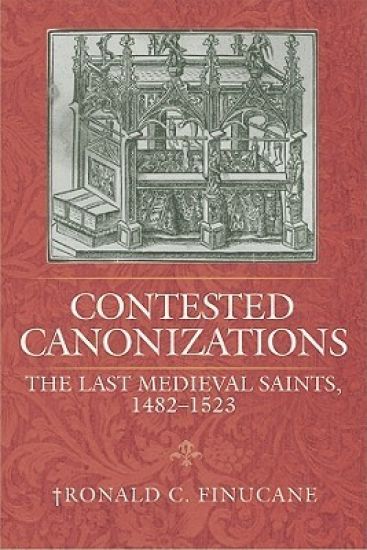
Contested Canonizations

Contested Canonizations

Ronald C. Finucane

The Catholic University of America Press
2011
sidottu
Pope John Paul II famously canonised more saints than all his predecessors combined. Several of these candidates were controversial. To this day there remain holy men and women “on the books” of the Vatican’s Congregation for the Causes of Saints whose canonisation would provoke considerable debate. This was no less true during the period covered in this pioneering study by renowned medieval historian Ronald C. Finucane.This work, which forms an important bridge between medieval and Counter-Reformation sanctity and canonisation, provides a richly contextualised analysis of the ways in which the last five candidates for sainthood before the Reformation came to be canonised. Finucane uncovers the complex interplay of factors that lay behind the success of such campaigns; success that could never be taken for granted, even when the candidate’s holy credentials appeared uncontroversial and his backers politically powerful.Written by a master of the historical craft whose studies on miracles and popular religion for the high Middle Ages have long been an important point of reference for students, this work presents brilliantly reconstructed case studies of the last five successful canonisation petitions of the Middle Ages: Bonaventure, Leopold of Austria, Francis of Paola, Antoninus of Florence, and Benno of Meissen.