Kirjojen hintavertailu. Mukana 11 699 587 kirjaa ja 12 kauppaa.

Kirjahaku

Etsi kirjoja tekijän nimen, kirjan nimen tai ISBN:n perusteella.

5 kirjaa tekijältä Ronald Kramer

Culture, Crime and Punishment

Culture, Crime and Punishment

Ronald Kramer

Red Globe Press
2020
nidottu
This innovative introductory textbook to the growing field of cultural criminology examines the importance of understanding the cultural contexts in which crime and crime control take place. It describes and discusses the field’s theoretical and methodological foundations, its links to other theoretical traditions, and its limits and criticisms. By exploring substantive areas such as crime in popular culture, deviance and social control, criminal justice and punishment, it demonstrates the utility of sometimes complex theory to core issues in criminology.Written in accessible language, this is the first text written specifically for a student audience, making it essential reading for undergraduate and postgraduate modules on cultural criminology. Moreover, as it evaluates the connections of cultural criminology with wider theoretical developments, it will be ideal for broader courses on criminology, criminological theory and critical criminology. Finally, it will be of interest to anyone analysing contemporary issues and debates through a cultural lens.
Culture, Crime and Punishment

Culture, Crime and Punishment

Ronald Kramer

Red Globe Press
2020
sidottu
This innovative introductory textbook to the growing field of cultural criminology examines the importance of understanding the cultural contexts in which crime and crime control take place. It describes and discusses the field’s theoretical and methodological foundations, its links to other theoretical traditions, and its limits and criticisms. By exploring substantive areas such as crime in popular culture, deviance and social control, criminal justice and punishment, it demonstrates the utility of sometimes complex theory to core issues in criminology.Written in accessible language, this is the first text written specifically for a student audience, making it essential reading for undergraduate and postgraduate modules on cultural criminology. Moreover, as it evaluates the connections of cultural criminology with wider theoretical developments, it will be ideal for broader courses on criminology, criminological theory and critical criminology. Finally, it will be of interest to anyone analysing contemporary issues and debates through a cultural lens.
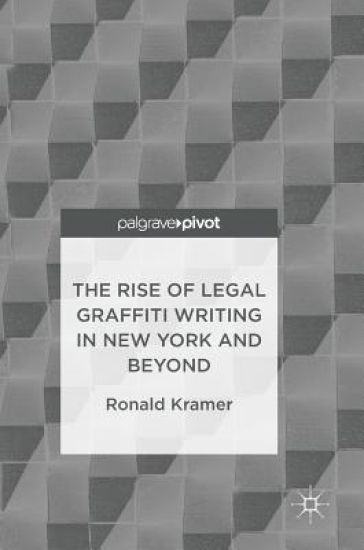
The Rise of Legal Graffiti Writing in New York and Beyond

The Rise of Legal Graffiti Writing in New York and Beyond

Ronald Kramer

Springer Verlag, Singapore
2016
sidottu
This pivot analyzes the historical emergence of legal graffiti and how it has led to a new ethos among writers. Examining how contemporary graffiti writing has been brought into new relationships with major social institutions, it explores the contemporary dynamics between graffiti, society, the art world and social media, paying particular attention to how New York City’s political elite has reacted to graffiti. Despite its major structural transformation, officials in New York continue to construe graffiti writing culture as a monolithic, criminal enterprise, a harbinger of economic and civic collapse. This basic paradox – persistent state opposition to legal forms of graffiti that continue to gain social acceptance – is found in many other major cities throughout the globe, especially those that have embraced neoliberal forms of governance. The author accounts for the cultural conflicts that graffiti consistently engenders by theorizing the political and economic advantages that elites secure by endorsing strong 'anti-graffiti' positions.
The Rise of Legal Graffiti Writing in New York and Beyond

The Rise of Legal Graffiti Writing in New York and Beyond

Ronald Kramer

Springer Verlag, Singapore
2018
nidottu
This pivot analyzes the historical emergence of legal graffiti and how it has led to a new ethos among writers. Examining how contemporary graffiti writing has been brought into new relationships with major social institutions, it explores the contemporary dynamics between graffiti, society, the art world and social media, paying particular attention to how New York City’s political elite has reacted to graffiti. Despite its major structural transformation, officials in New York continue to construe graffiti writing culture as a monolithic, criminal enterprise, a harbinger of economic and civic collapse. This basic paradox – persistent state opposition to legal forms of graffiti that continue to gain social acceptance – is found in many other major cities throughout the globe, especially those that have embraced neoliberal forms of governance. The author accounts for the cultural conflicts that graffiti consistently engenders by theorizing the political and economic advantages that elites secure by endorsing strong 'anti-graffiti' positions.