Kirjojen hintavertailu. Mukana 11 717 486 kirjaa ja 12 kauppaa.

Kirjahaku

Etsi kirjoja tekijän nimen, kirjan nimen tai ISBN:n perusteella.

26 kirjaa tekijältä Ronald R. Sims

Ethics and Corporate Social Responsibility

Ethics and Corporate Social Responsibility

Ronald R. Sims

Praeger Publishers Inc
2003
sidottu
Ethical failures are rooted in leadership failure, the lack of a corporate culture in which ethical concerns have been integrated, and unresponsiveness to key organizational stakeholders. This book seeks to enhance our understanding of the causes of ethical debacles in an era when ethical missteps can often lead to corporate bankruptcies or worse. Sims offers practical solutions for mitigating damage and preventing such problems from happening in the first place. He also explains how to institutionalize ethics throughout an organization.Sims asserts that organizations wishing to behave ethically must do more than harbor good intentions. Such companies must implement policies that inculcate the corporate culture with ethical values. They must also commit to ethical behavior in all interactions with internal and external stakeholders, including investors, customers, employees, and the community.
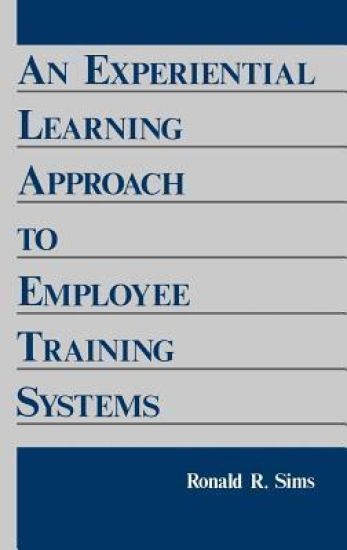
An Experiential Learning Approach to Employee Training Systems
A pioneering contribution to the professional training literature, this book is designed to help trainers and human resource managers to more effectively manage training programs. The author develops a unified framework for the training function that combines a systems perspective with the experiential learning approach to training efforts. The result is a step-by-step guide to conducting key phases of any training program: pre-assessment, needs analysis, design, implementation, and evaluation. Sims focuses throughout on the principles of good training program design as well as on training for the development of certain pivotal skills, competency levels, and individual differences. No prior knowledge of training procedures and techniques is required to successfully use the concepts introduced.The author begins by addressing training systems in general and the increasing need for training within the context of global markets and competition. He then discusses how to determine training needs within the individual organization. Subsequent chapters address each phase of the training process in turn. Sims reveals the importance of completing a thorough job analysis before embarking on a training program, shows how to design training programs to fill specific skill and competency needs, and demonstrates how to establish training objectives and determine program content. The experiential learning model is introduced as a viable system for managing the learning process in training in three major areas: the selection of training methods, trainees, and trainers; the development of certain training environments which are more responsive to trainee and trainer learning styles; and the provision of several psychological contracting activities which can facilitate various phases of a training program. Finally, Sims offers a systems analysis approach to the planning, design, and conduct of training program evaluations that includes a thorough discussion of the training audit and cost-benefit techniques. Both the novice and experienced trainer will find this book a comprehensive yet practical guide to the employee training process.
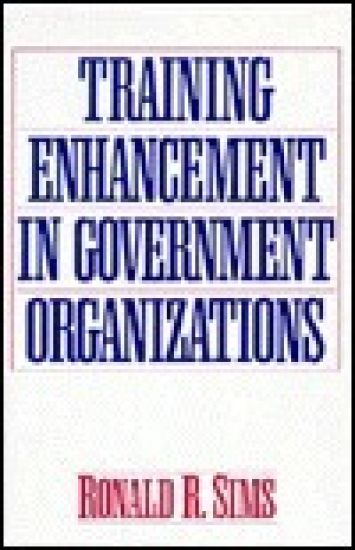
Training Enhancement in Government Organizations

Training Enhancement in Government Organizations

Ronald R. Sims

Praeger Publishers Inc
1993
sidottu
Training in government is not a primary mission for a variety of reasons, and this book attempts to increase the importance of training in government organizations by showing how training can increase individual performance and overall productivity. Sims challenges recent commission findings that excellence in training government workers is not a priority and offers a framework to better centrally manage governing training efforts.Sims has designed the book to help government organizations (federal, state, county and local) demonstrate the value added of efficient and effective training programs. In addition, the book offers a helpful discussion on the differences between private and public sector organizations and the training issues germane to each sector (for example, the availability of financial resources alloted for training in the private sector far outweigh those in the public arena). He concludes is that if training is functioning in government, then it is contributing to the activities of the organization in a number of different ways (for example, improving performance through the application of what has been learned).
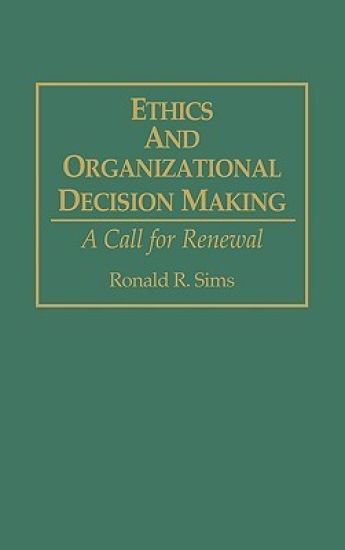
Ethics and Organizational Decision Making

Ethics and Organizational Decision Making

Ronald R. Sims

Praeger Publishers Inc
1994
sidottu
Decision making is the critical key to survival in the future. It is the contention of this book that we must increase our understanding of organizational decision making in general and ethical decision making in particular. Ethics underlies much of what happens in modern organizations. Organizations, which institutionalize ethics, develop a culture based on ethical values and consistently display them in all their activities. They derive a number of positive benefits: improved top management control, increased productivity, avoidance of litigation and an enhanced image that attracts talent and the public's good will. The major aim of this book is to provide a better understanding and integration of the variables that are important to institutionalizing ethics within any organization. It pays particular attention to decision making, organizational culture, the role of management, and groupthink. Clear lessons from real firms' experiences are drawn: firms can counteract and turnaround unethical behavior by learning to cope with inevitable conflicts, by introducing disagreement as part of the decision making process, by installing an effective training program and by changing employee-employer contracts. The author takes corporate CEOs, human resource managers and scholars from understanding the problem, to what it takes to establish, institutionalize and maintain ethics in organizations.
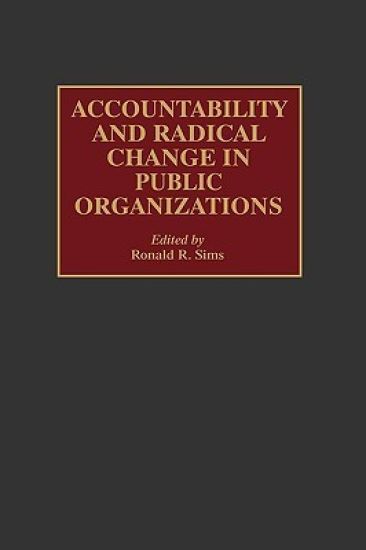
Accountability and Radical Change in Public Organizations
Sims and the contributors to this challenging new volume maintain that public sector organizations must radically reinvent themselves, if they are to survive and succeed in their missions: to provide quality service to their clients at a cost taxpayers can afford (or are willing to pay). They offer a firsthand look at how change occurs at all levels of government, and from this and other experiences they lay out strategies and tools that others in government can use quickly and with good results in their own public organizations. However, Sims and his panel of experts also note that not everything in organizational change will produce positive benefits; some results will be negative, and these too must be understood and dealt with. By compiling the viewpoints, advice, experiences, recommendations of public managers themselves, plus consultants, academics, and citizens who benefit from government (and are often its harshest critics), Sims gives readers a solid, realistic insight into the problems of today's public agencies, and workable advice on how to solve them.Accountability and Radical Change in Public Organizations examines the current government and reinvention initiative occurring in public organizations at the local, county, state, federal and international levels. The book highlights the importance of understanding that change in government will continue to be a way of life for public managers, thus requiring an ongoing analysis of those forces driving change and the need to increase our understanding of why certain change efforts work and others fail miserably in government. The contributors to this volume emphasize that while reinvention, accountability, and change are serious initiatives that public managers must confront they must take caution and learn from each others' experiences.
Reinventing Training and Development

Reinventing Training and Development

Ronald R. Sims

Praeger Publishers Inc
1998
sidottu
The training and development function has made important contributions to the success of American corporations, but is it time now for an overhaul? Sims thinks it is. Not only does his book delineate the ways in which T&D has lost touch with the times, but it also identifies the ways in which it can—and must—be restructured and, indeed, reinvented. It must be more responsive to customer demands and interests, it must participate in and contribute directly to competitive corporate strategies. And it must find ways to measure concretely its performance and its contribution to the corporate bottom line. Sims' book is thus the first to take a corporate strategy approach to understanding and developing the T&D function. In doing so, it dissects T&D, chapter-by-chapter, and in each chapter provides practical guidance on how trainers can improve their performance and thus contribute clearly to the success of their organizations. Not only training and development people, but management in other areas will find this book thoughtful, provocative, and challenging. To accomplish this task of becoming a more active strategic partner, this book calls for the reinvention of training. Reinvention means that training professionals and their training functions must take a strategic, customer, performance improvement and accountability orientation to add more value to their organizations. After discussing the importance of reinventing training, the book turns to a discussion of the importance of ensuring that, given the organization's strategic agenda, a needs analysis of training goals and employee development needs are derived from a comprehensive analysis of the organization's T&D needs. The book stresses the importance of aligning the organization's strategic agenda and the T&D programs developed by the training function to support the organization's objectives. The book next turns to a discussion on the developing and designing of training programs that will result in employee and organization learning necessary for achieving key business results. Sims offers a detailed discussion of training's need to improve its measurement of the contribution of training. The book concludes with a discussion of issues driving the need for training to continuously learn and work to improve its partnering with customers, delivery of just-in-time customized training, and take on a more proactive role in consulting with the organization on both training and nontraining interventions intended to help the organization meet its intended objective and sustain their competitive advantage.
Changing the Way We Manage Change

Changing the Way We Manage Change

Ronald R. Sims

Praeger Publishers Inc
2002
sidottu
To cope with the chaotic new business environment, organizations must find ways to manage the problems of change—but also the process of change itself. Yesterday's solutions are obsolete. Innovative solutions are rare, yet even the best require not only the efforts of individuals but other agents as well. Sims sees change agents throughout any organization and at all levels—line and staff people, human resource specialists, and those who have hitherto had little reason to tackle such tasks and have not been accountable for their outcomes. Unique models are presented for change interventions, along with techniques and tools that executives need to accomplish them. The result is a book that experienced executives will understand and utilize, but also one that will bring novices up to speed, providing new ways to use their own instincts and capabilities for innovation. Sims and his contributors challenge the traditional prescription for creating change, providing a compelling critique of accepted approaches to change management, highlighting the strengths of these approaches and emphasizing what can be extracted to foster change. Each author provides insights into the competencies, skills, and values required for the rapid and successful creation of lasting change. In doing so, they also reemphasize that there is no universal approach to change management, and that the need for innovation, flexibility, and adaptability remains dominant.
Organizational Success through Effective Human Resources Management
Not only are performance and human resources management (HRM) bound tightly together, but Sims even goes so far as to say that the way people are managed in coming decades will be the most important determinant of organizational success. He shows how success is determined by a firm's skill in attracting, developing, and retaining its human capital; how a firm's people are what give it a measurable advantage over the competition; and how an organization's commitment to developing its people's abilities and skills is an obligation at all levels. Sims focuses on practical, real-world human resources problems and activities emphasize the need for managers to prove themselves excellent people managers as well, and covers the traditional HRM tasks and responsibilities in ways that will give them new meaning and urgency. By focusing on current challenges, emerging issues, and HRM innovations now on the horizon, Sims' book is essential for managers and executives throughout the organization, and indeed throughout all sectors of the economy.Sims provides a firsthand understanding of the importance of HRM and lays out the tools to help managers do it well. He emphasizes repeatedly how important it is for organizations to understand that their success depends on their ability to attract and keep talented employees. With its persuasive discussion of the trends and emerging issues in the development of proactive human resources policies and practices, the book shows how to anticipate and work towards the development and retention of the right people. It emphasizes the importance of taking a strategic approach to all of the various human resources activities, and proves throughout that for an organization to prosper and earn a profit, goals must be set and initiatives taken in all areas of HRM and by all people, whatever their levels of responsibility may be.
Teaching Business Ethics for Effective Learning

Teaching Business Ethics for Effective Learning

Ronald R. Sims

Praeger Publishers Inc
2002
sidottu
The key to teaching business ethics successfully, says Sims, is to start with clear goals and a sensible expectation of outcomes, and with a true knowledge and appreciation of how people actually learn. Seems obvious enough, he says, but the surprise is that so few understand this. Thus, the teaching of business ethics is often an unproductive, frustrating exercise in futility. Sims hopes to change that. Proceeding with the conviction that open communications between teacher and student before, during, and after the teaching experience is vital, Sims identifies key teaching processes, gives practical advice on designing and planning the curriculum, and offers guidance on how to develop a climate conducive to effective learning. He highlights the importance of creating a classroom climate that encourages open dialogue, good moral conversation, and conversational learning. And throughout he emphasizes that learning styles and experiential learning theory are cornerstones of teaching business ethics, thus taking an approach unlike any in the literature. An important guide for those who are new to teaching this essential subject, Sims' book will also be helpful for more experienced teachers who are wondering why their own methods do not always work, or do not work as well as they believe they should. Sims identifies important processes that must be managed if business ethics is to be taught and learned successfully—processes such as creating stakeholder commitment to the goals, purposes, and outcomes of the teaching effort, and curriculum design and planning that are attuned to individual differences in learning styles, motivation, and values. Also included in Sims' processes are the development of individual school outcomes, and expectations, and the assessment procedures that can measure them. He discusses the importance of incorporating debriefing into an experiential learning exercise or discussion, and goes on to give an in-depth discussion of the pedagogical approaches that allow teachers to teach the practical and theoretical components of the subject simultaneously. Well illustrated with examples, such as an interdisciplinary approach to teaching and a way to institutionalize outcomes assessment by means of total quality management, Sims' book returns constantly to his major theme: that to teach business ethics effectively the teacher must first create a climate of trust and sharing within and between students, and between students and teacher, and that the teacher must have a concrete way to measure the impact of the teaching effort's results.
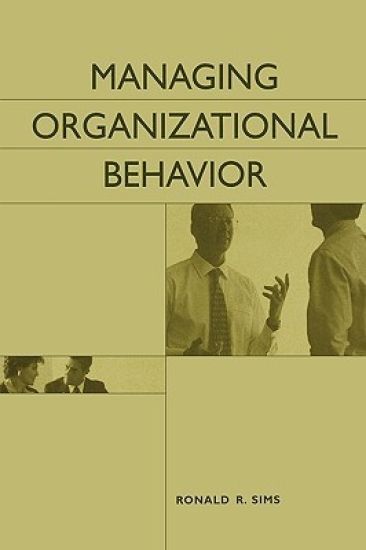
Managing Organizational Behavior

Managing Organizational Behavior

Ronald R. Sims

Praeger Publishers Inc
2002
sidottu
Change is relentless, disruptive, and unavoidable. To manage organizations today, executives need new ways to look at the world, their companies, their jobs and, most importantly, the people who report to them. Sims sees these as the prime requisites for success in management today: an ability to feel comfortable with ambiguity, with constant and increasingly demanding change, with a new, unique commitment to teams and teamwork, and with a willingness to stay customer-oriented. Marshalling his evidence from academic research and practical experience, Sims shows how researchers are continuing to redefine the roles and responsbilities of executives and their reports. One crucial finding: the emphasis is now and must remain on people. The executive today has to be a facilitator, team member, teacher, advocate, sponsor, and coach—and it is all of these tasks, requirements, outlooks, responsibilities, and accountabilities that Sims explores here. Offering a new way to look at work, at organizations, and at oneself, Sims provides not only the reasons why the new organization is what it is, but how to cope with it and to succeed in it. A must-read for supervisors, managers, executives, and recent graduates who are ready to take their own places in the new world of business. Sims sees people as the key to the successful performance of any organization. He provides a balance between theory and practice, nuts-and-bolts prescriptives, and interesting anecdotes. Detailed, wide-ranging, and readable, his book offers up-to-date, relevant, and engaging discussions of the individual foundations of behavior—perception, attitudes, personality—plus various theories of motivation and the most useful tools derived from them to use in managing people. He also covers such issues as communication, groups, and teams, and the decision-making challenges that leaders, managers, and employees must actively address. Sims highlights the increasing importance of conflict and negotiation within and between individuals, groups, and organizations, as well as the special personal demands placed upon people as they strive to acquire flexibility, to become adaptive and more responsive to new organizational designs and structures. With its coverage of traditional topics as well, Sims' book offers a balanced, rounded, forward-looking view of what it means to work in today's changing organizations, and how to help one's own organization not just to survive but to prosper.
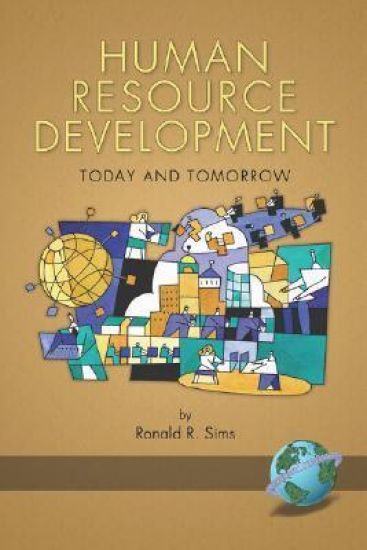
Human Resource Development

Human Resource Development

Ronald R. Sims

Information Age Publishing
2006
nidottu
This book is written with the belief that HRD professionals will continue to learn, change and find ways to reinvent themselves and the profession individually and collectively as we move further into the 21st century. A major point of this book is that HRD will continue to become more and more important to organizational success. And, that in as calls for accountability and bottom line impact continue to rise, HRD professionals will be proactive in demonstrating their value to the organization.The primary audience for this book is practicing HRM and HRD professionals, and other organizational leaders. The book provides tested and proven ideas important to demonstrating the value of HRD. From a practical viewpoint, it is based on actual experience, a strong research base, and accepted practices presented in an easy to read form.A second target audience is students of HRD and HRM who are preparing for careers in this important field. This book will help them develop a solid foundation to the study of HRD practices that are key to HRD success regardless of the type of organization.A third target audience is managers or leaders at all levels of an organization who are increasingly expected to take on HRD responsibilities while also partnering with HRD professionals. It offers these individuals a firsthand look at what they should expect of their HRD functions or areas and how they can encourage HRD professionals in their organizations to be accountable’ strategic partners in helping the organization achieve its success by getting the most out of its human capital.
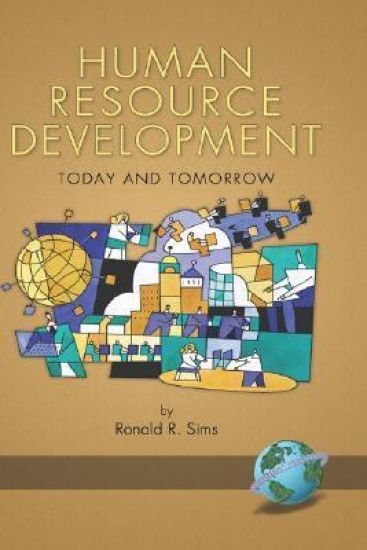
Human Resource Development

Human Resource Development

Ronald R. Sims

Information Age Publishing
2006
sidottu
This book is written with the belief that HRD professionals will continue to learn, change and find ways to reinvent themselves and the profession individually and collectively as we move further into the 21st century. A major point of this book is that HRD will continue to become more and more important to organizational success. And, that in as calls for accountability and bottom line impact continue to rise, HRD professionals will be proactive in demonstrating their value to the organization.The primary audience for this book is practicing HRM and HRD professionals, and other organizational leaders. The book provides tested and proven ideas important to demonstrating the value of HRD. From a practical viewpoint, it is based on actual experience, a strong research base, and accepted practices presented in an easy to read form.A second target audience is students of HRD and HRM who are preparing for careers in this important field. This book will help them develop a solid foundation to the study of HRD practices that are key to HRD success regardless of the type of organization.A third target audience is managers or leaders at all levels of an organization who are increasingly expected to take on HRD responsibilities while also partnering with HRD professionals. It offers these individuals a firsthand look at what they should expect of their HRD functions or areas and how they can encourage HRD professionals in their organizations to be accountable’ strategic partners in helping the organization achieve its success by getting the most out of its human capital.
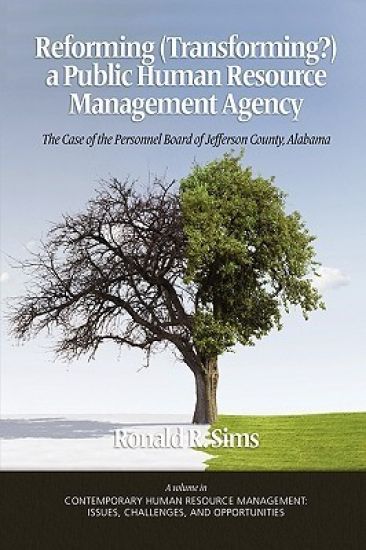
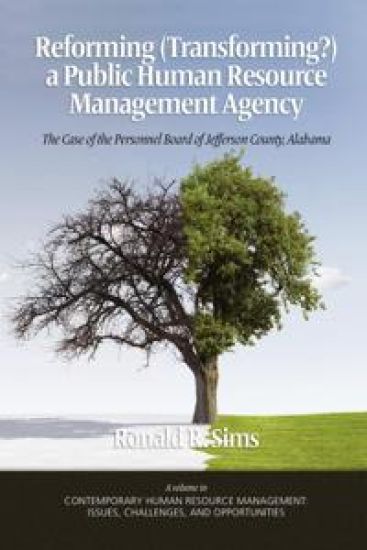
Reforming (Transforming?) a Public Human Resource Management Agency
This book offers a first-hand look at the importance of human resource management (HRM) processes to not just one public agency but a large group of public administration entities that rely on a public HRM agency (the Personnel Board of Jefferson County) for its HRM processes. More specifically, the book describes a more than three-year effort undertaken by the author as a federally-appointed court receiver to reform (or what some have referred to as “transform”) a public HRM agency from a model of inefficiency to one now considered “best in the business”.The book provides the details of the reform or transformation effort in addition to offering suggestions on how to bring about similar civil services and HRM reform in particular and government agencies in general. The book is intended to fill a gap in the current literature while serving as a key work that highlights the importance of bringing about change in a public HRM entity. Timely and topical, the book will be of great interest both to public administration personnel in general, and others in the fields of HRM and public sector management, and to management practitioners and others keen to inform their ability to bring about successful change.
Reforming (Transforming?) a Public Human Resource Management Agency
This book offers a first-hand look at the importance of human resource management (HRM) processes to not just one public agency but a large group of public administration entities that rely on a public HRM agency (the Personnel Board of Jefferson County) for its HRM processes. More specifically, the book describes a more than three-year effort undertaken by the author as a federally-appointed court receiver to reform (or what some have referred to as “transform”) a public HRM agency from a model of inefficiency to one now considered “best in the business”.The book provides the details of the reform or transformation effort in addition to offering suggestions on how to bring about similar civil services and HRM reform in particular and government agencies in general. The book is intended to fill a gap in the current literature while serving as a key work that highlights the importance of bringing about change in a public HRM entity. Timely and topical, the book will be of great interest both to public administration personnel in general, and others in the fields of HRM and public sector management, and to management practitioners and others keen to inform their ability to bring about successful change.
Change (Transformation) in Public Sector Organizations

Change (Transformation) in Public Sector Organizations

Ronald R. Sims

Information Age Publishing
2010
nidottu
'Change (Transformation) in Government Organizations' discusses recent efforts to bring about change in government organizations. The book brings together contributions by a number of managers, practitioners, academics and consultants in the study of international, federal, state, and local government efforts to respond to increased calls for change (transformation) in public sector organizations. Each contributor describes their work in this area using as a backdrop the fact that public sector organizations continue to be under new and substantial pressures to change and transform themselves. Hence a collection of current contributions such as those in this book are intended to add to the ongoing debates and rewriting of the success and failures of change in public sector organizations./p>The ultimate purpose of this book is to further our knowledge about the related issues and current efforts to bring about change or transformation in public sector organizations. The contributors, all experts with extensive experience as change agents in both public and private sector organizations not only support their analyses and discussions of specific cases and change (transformation) management issues but also provide practical tools, ideas and lessons learned, intended to be generalizable to other public sector agencies and helpful to those responsible for developing, implementing and evaluating similar efforts in the years to come. The audience for the book will be government managers, scholars and others interested in undertaking or learning about such efforts.
Change (Transformation) in Public Sector Organizations

Change (Transformation) in Public Sector Organizations

Ronald R. Sims

Information Age Publishing
2010
sidottu
'Change (Transformation) in Government Organizations' discusses recent efforts to bring about change in government organizations. The book brings together contributions by a number of managers, practitioners, academics and consultants in the study of international, federal, state, and local government efforts to respond to increased calls for change (transformation) in public sector organizations. Each contributor describes their work in this area using as a backdrop the fact that public sector organizations continue to be under new and substantial pressures to change and transform themselves. Hence a collection of current contributions such as those in this book are intended to add to the ongoing debates and rewriting of the success and failures of change in public sector organizations./p>The ultimate purpose of this book is to further our knowledge about the related issues and current efforts to bring about change or transformation in public sector organizations. The contributors, all experts with extensive experience as change agents in both public and private sector organizations not only support their analyses and discussions of specific cases and change (transformation) management issues but also provide practical tools, ideas and lessons learned, intended to be generalizable to other public sector agencies and helpful to those responsible for developing, implementing and evaluating similar efforts in the years to come. The audience for the book will be government managers, scholars and others interested in undertaking or learning about such efforts.
Human Resources Management Issues, Challenges and Trends

Human Resources Management Issues, Challenges and Trends

Ronald R. Sims

Information Age Publishing
2019
nidottu
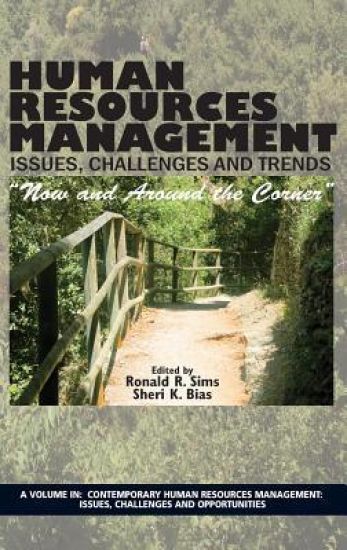
Human Resources Management Issues, Challenges and Trends: 'Now and Around the Corner' explores and provides an updated look at some of the challenges, trends and issues HRM professionals will need to focus on now and around the corner. Like other departments in the broader organization HRM professionals will need to increasingly demonstrate how they add value and contribute to the organization’s success. While the trends, challenges and issues impacting organizations and HRM professionals will continue to change over the years, the bottom-line of organization success is the clear reality that employees are their best assets and the need for effective HRM.The book is intended to help to better understand the ongoing transformation of HRM given the issues, challenges and opportunities offered by the contributors to this book. This means the book discusses the ever evolving role of HRM professionals to include discussion of how the profession must continue to become more adaptive, resilient, quick to change direction and customer-centered in its efforts to help meet the human resource needs of contemporary organizations and their employees. The book contributes to the ongoing dialogue and insights offered by HRM experts on what HRM professionals and their organizations can do in the face of such challenges, trends and issues in their efforts to win the talent wars.
Human Resources Management Issues, Challenges and Trends

Human Resources Management Issues, Challenges and Trends

Ronald R. Sims

Information Age Publishing
2019
sidottu
Human Resources Management Issues, Challenges and Trends: 'Now and Around the Corner' explores and provides an updated look at some of the challenges, trends and issues HRM professionals will need to focus on now and around the corner. Like other departments in the broader organization HRM professionals will need to increasingly demonstrate how they add value and contribute to the organization’s success. While the trends, challenges and issues impacting organizations and HRM professionals will continue to change over the years, the bottom-line of organization success is the clear reality that employees are their best assets and the need for effective HRM.The book is intended to help to better understand the ongoing transformation of HRM given the issues, challenges and opportunities offered by the contributors to this book. This means the book discusses the ever evolving role of HRM professionals to include discussion of how the profession must continue to become more adaptive, resilient, quick to change direction and customer-centered in its efforts to help meet the human resource needs of contemporary organizations and their employees. The book contributes to the ongoing dialogue and insights offered by HRM experts on what HRM professionals and their organizations can do in the face of such challenges, trends and issues in their efforts to win the talent wars.
Leadership, Leaders and Leading

Leadership, Leaders and Leading

Ronald R. Sims

Information Age Publishing
2020
nidottu
Why with hundreds and hundreds of books on leadership to choose from, why another one?” The answer is simple. Given the importance of leadership and leaders in organizations there will always be efforts to try to improve our understanding on how we can improve the leadership process. Leadership, Leaders and Leading focuses on the age old reality that successful organizations will continue to need effective leaders at all levels. The book is based on the premise that effective leaders need to be able to establish a shared vision and accompanying strategy that other members of the organization strongly believe in and are willing to help execute. The book argues that we can continue to learn from traditional and contemporary theories and myths about effective leadership & leaders and how they can successfully lead an increasingly diverse and demanding workforce, consumers and the broader society.The book discusses foundational leadership skills like motivation, communication, building leader-follower relationships, groups and teams, developing others, conflict, negotiation and organizational politics along with highlighting the important role leaders should play in the areas of human resource management, ethics, crisis and reputation management, sustainability/sustainable development, and cybersecurity. Each chapter offers the opportunity for the reader to increase their understanding of leadership, leaders and leading in an increasingly dynamic world of work. This book is written for those who are interested in the continued effort and dialogue on what effective leadership, leaders and leading should entail in the coming years.
Leadership, Leaders and Leading

Leadership, Leaders and Leading

Ronald R. Sims

Information Age Publishing
2020
sidottu
Why with hundreds and hundreds of books on leadership to choose from, why another one?” The answer is simple. Given the importance of leadership and leaders in organizations there will always be efforts to try to improve our understanding on how we can improve the leadership process. Leadership, Leaders and Leading focuses on the age old reality that successful organizations will continue to need effective leaders at all levels. The book is based on the premise that effective leaders need to be able to establish a shared vision and accompanying strategy that other members of the organization strongly believe in and are willing to help execute. The book argues that we can continue to learn from traditional and contemporary theories and myths about effective leadership & leaders and how they can successfully lead an increasingly diverse and demanding workforce, consumers and the broader society.The book discusses foundational leadership skills like motivation, communication, building leader-follower relationships, groups and teams, developing others, conflict, negotiation and organizational politics along with highlighting the important role leaders should play in the areas of human resource management, ethics, crisis and reputation management, sustainability/sustainable development, and cybersecurity. Each chapter offers the opportunity for the reader to increase their understanding of leadership, leaders and leading in an increasingly dynamic world of work. This book is written for those who are interested in the continued effort and dialogue on what effective leadership, leaders and leading should entail in the coming years.