Kirjojen hintavertailu. Mukana 11 678 731 kirjaa ja 12 kauppaa.

Kirjahaku

Etsi kirjoja tekijän nimen, kirjan nimen tai ISBN:n perusteella.

4 kirjaa tekijältä Rong Chen

Chinese Politeness

Chinese Politeness

Rong Chen

Cambridge University Press
2023
sidottu
Politeness in Chinese is a well-researched concept in pragmatics; however, this pioneering book sheds an original new light on the subject. It provides a thorough diachronic investigation of Chinese politeness, and argues for universality in politeness theorizing. The author takes us on a journey through changes in Chinese politeness from Confucius to the present day, showing how these processes are reactions to the changing world, rather than to changes in the principles of politeness itself. He splits Chinese face into Face1 and Face2 – the former referring to the person and the latter to the persona of the speaker - and presents a model of Chinese politeness (MCP). He then proposes B&L-E (Brown and Levinson Extended) by incorporating the theoretical constructs of self-politeness and impoliteness. This title is part of the Flip it Open Programme and may also be available Open Access. Check our website Cambridge Core for details.
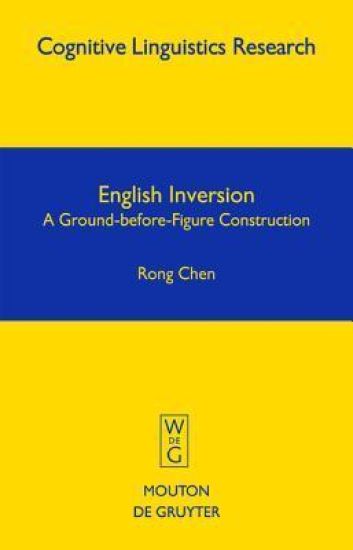
English Inversion

English Inversion

Rong Chen

De Gruyter Mouton
2003
sidottu
The book provides an account of English inversion, a construction that displays perplexing idiosyncrasies at the level of semantics, phonology, syntax, and pragmatics. Basing his central argument on the claim that inversion is a linguistic representation of a Ground-before-Figure model, the author develops an elegant solution to a hitherto unsolved multidimensional linguistic puzzle and, in the process, supports the theoretical position that a cognitive approach best suits the multidimensionality of language itself. Engagingly written, the book will appeal to linguists of all persuasions and to any reader curious about the relationship between language and cognition.
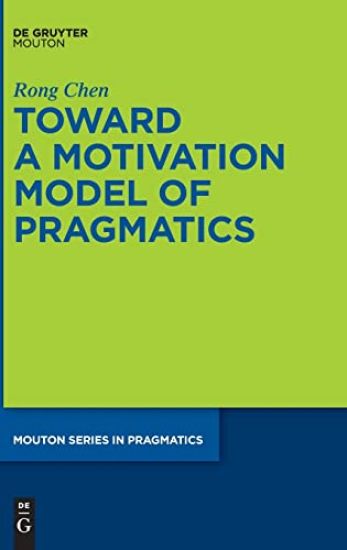
Toward a Motivation Model of Pragmatics
With the “discursive turn” has come a distrust – a complete rejection by some – of theories that seek deeper reasons for surface phenomena. Rong Chen argues that this distrust, with its accompanying overemphasis on specificity and fluidity of linguistic meaning and social values, is unwarranted and unhelpful. Drawing on insights from social theories and various strands of pragmatics, he proposes a motivation model of pragmatics (MMP), contending that language use can be adequately, coherently, and elegantly studied via the motivation behind it in its varied and dynamic contexts. The model, with its well-laid out components, is then applied to (im)politeness research, cross-cultural pragmatics, diachronic pragmatics, discourse and genre analysis, conversation analysis, identity construction, and the study of metaphor, sarcasm, parody, and lying. MMP is thus a framework aimed at accounting for fluidity with stable notions, specificity with general principles, and differences with similar underlying factors. As such, the book should appeal to students of pragmatics, (im)politeness, conversation analysis, sociolinguistics, applied linguistics, communication, sociology, and psychology.
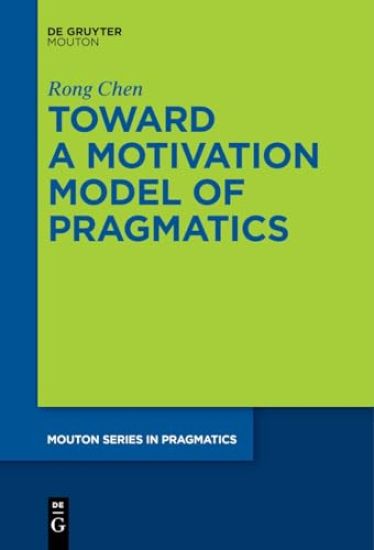
Toward a Motivation Model of Pragmatics

Toward a Motivation Model of Pragmatics

Rong Chen

De Gruyter
2024
isokokoinen pokkari
With the “discursive turn” has come a distrust – a complete rejection by some – of theories that seek deeper reasons for surface phenomena. Rong Chen argues that this distrust, with its accompanying overemphasis on specificity and fluidity of linguistic meaning and social values, is unwarranted and unhelpful. Drawing on insights from social theories and various strands of pragmatics, he proposes a motivation model of pragmatics (MMP), contending that language use can be adequately, coherently, and elegantly studied via the motivation behind it in its varied and dynamic contexts. The model, with its well-laid out components, is then applied to (im)politeness research, cross-cultural pragmatics, diachronic pragmatics, discourse and genre analysis, conversation analysis, identity construction, and the study of metaphor, sarcasm, parody, and lying. MMP is thus a framework aimed at accounting for fluidity with stable notions, specificity with general principles, and differences with similar underlying factors. As such, the book should appeal to students of pragmatics, (im)politeness, conversation analysis, sociolinguistics, applied linguistics, communication, sociology, and psychology.