Kirjojen hintavertailu. Mukana 11 699 587 kirjaa ja 12 kauppaa.

Kirjahaku

Etsi kirjoja tekijän nimen, kirjan nimen tai ISBN:n perusteella.

10 kirjaa tekijältä Ross Anderson

Understanding the Book of Mormon

Understanding the Book of Mormon

Ross Anderson

Zondervan
2009
nidottu
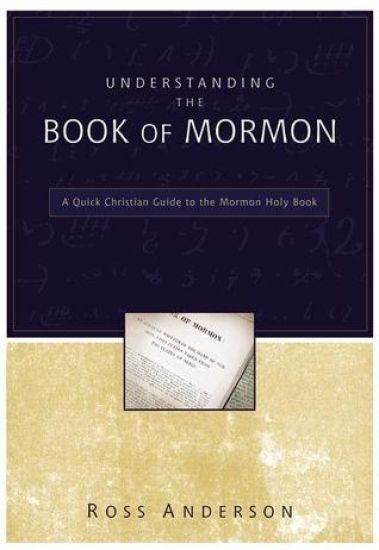
Mormons, or members of the Church of Jesus Christ of Latter-day Saints, form a growing population in both numbers and influence. Yet few people have more than a passing knowledge of the document that defines and drives this important movement—the Book of Mormon. A former Mormon and an adult convert to Christianity, author Ross Anderson provides a clear summary of the Book of Mormon including its history, teachings, and unique features. Stories from the author and other ex-Mormons illustrate the use of Mormon scripture in the Latter-day Saint church. Anderson gives special attention to how the Book of Mormon relates to Christian beliefs about God, Jesus, and the Bible. With discussion questions to facilitate group use and a focus on providing an accurate portrayal of Mormons beliefs, Understanding the Book of Mormon is an indispensable guide for anyone wishing to become more familiar with the Church of Jesus Christ of Latter-day Saints and its most formative scripture.
Understanding Your Mormon Neighbor

Understanding Your Mormon Neighbor

Ross Anderson

Zondervan
2011
nidottu
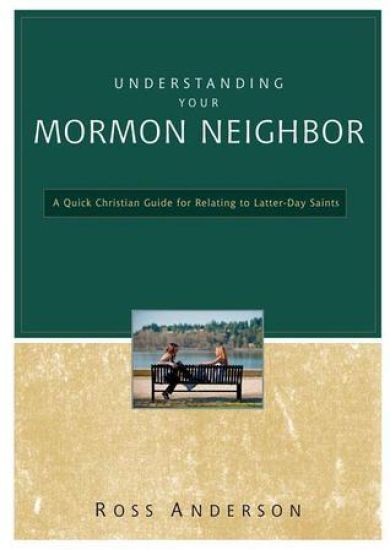
In Understanding Your Mormon Neighbor, Ross Anderson seeks to help Christians relate to Latter-day Saints by giving insights into Mormon life and culture.Anderson’s work is supported both by his lifetime of experiences growing up Mormon and by current research that utilizes many Latter-day Saints’ own sources. This book explains the core stories that form the Mormon worldview, shares the experiences that shape the community identity of Mormonism, and shows how Mormons understand truth. Anderson shares how most Mormons see themselves and others around them, illuminating why people join the LDS Church and why many eventually leave. Latter-day Saints will find the descriptions of their values, practices, and experiences both credible and familiar.Understanding Your Mormon Neighbor suggests how Christians can befriend Latter-day Saints with confidence and sensitivity and share the grace of God wisely within their relationships.Anderson includes discussion questions for individuals and small groups, black and white photographs and charts, and an appendix that includes “Are Mormons Christians?” and “Should I Vote for a Mormon?”
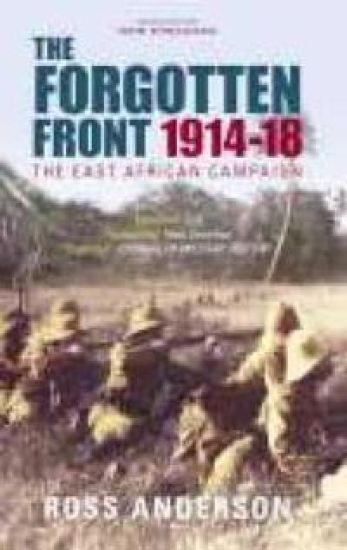
The Forgotten Front

The Forgotten Front

Ross Anderson

The History Press Ltd
2014
nidottu
The First World War began in East Africa in August 1914 and did not end until 13 November 1918. In its scale and impact, it was the largest conflict yet to take place on African soil. Four empires and their subject peoples were engaged in a conflict that ranged from modern Kenya in the north to Mozambique in the south. The campaign combined heroic human endeavour and terrible suffering, set in some of the most difficult terrain in the world. The troops had to cope with extremes that ranged from arid deserts to tropical jungles and formidable mountains, and almost always on inadequate rations. Yet the East African campaign has languished in undeserved obscurity over the years, with many people only vaguely aware of its course of events. Indeed, Humphrey Bogart’s famous film, The African Queen, inspired by an episode of the campaign, often provides its only lasting image. The Forgotten Front is the first full-scale history of this neglected campaign. Ross Anderson details the fighting and the strategic and political background to the war and the differing viewpoints of the principal protagonists.
The Forgotten Front

The Forgotten Front

Ross Anderson

The History Press Ltd
2007
nidottu
The WWI began in East Africa in August 1914 and did not end until 13 November 1918. In its scale and impact, it was the largest conflict yet to take place on African soil. This book describes the history of this campaign. It details both the fighting and the strategic and political background to the war, and the differing viewpoints.
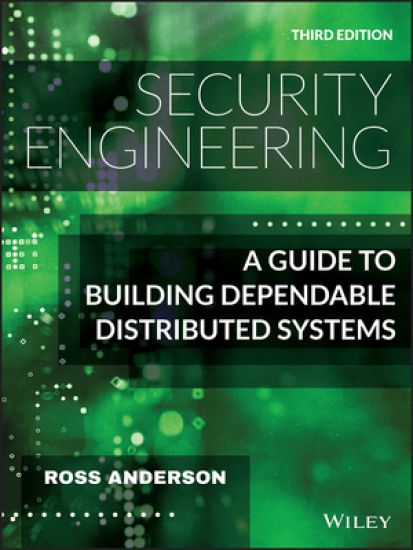
Security Engineering

Security Engineering

Ross Anderson

John Wiley Sons Inc
2021
sidottu
Now that there's software in everything, how can you make anything secure? Understand how to engineer dependable systems with this newly updated classic In Security Engineering: A Guide to Building Dependable Distributed Systems, Third Edition Cambridge University professor Ross Anderson updates his classic textbook and teaches readers how to design, implement, and test systems to withstand both error and attack. This book became a best-seller in 2001 and helped establish the discipline of security engineering. By the second edition in 2008, underground dark markets had let the bad guys specialize and scale up; attacks were increasingly on users rather than on technology. The book repeated its success by showing how security engineers can focus on usability. Now the third edition brings it up to date for 2020. As people now go online from phones more than laptops, most servers are in the cloud, online advertising drives the Internet and social networks have taken over much human interaction, many patterns of crime and abuse are the same, but the methods have evolved. Ross Anderson explores what security engineering means in 2020, including: How the basic elements of cryptography, protocols, and access control translate to the new world of phones, cloud services, social media and the Internet of ThingsWho the attackers are – from nation states and business competitors through criminal gangs to stalkers and playground bulliesWhat they do – from phishing and carding through SIM swapping and software exploits to DDoS and fake newsSecurity psychology, from privacy through ease-of-use to deceptionThe economics of security and dependability – why companies build vulnerable systems and governments look the other wayHow dozens of industries went online – well or badlyHow to manage security and safety engineering in a world of agile development – from reliability engineering to DevSecOps The third edition of Security Engineering ends with a grand challenge: sustainable security. As we build ever more software and connectivity into safety-critical durable goods like cars and medical devices, how do we design systems we can maintain and defend for decades? Or will everything in the world need monthly software upgrades, and become unsafe once they stop?
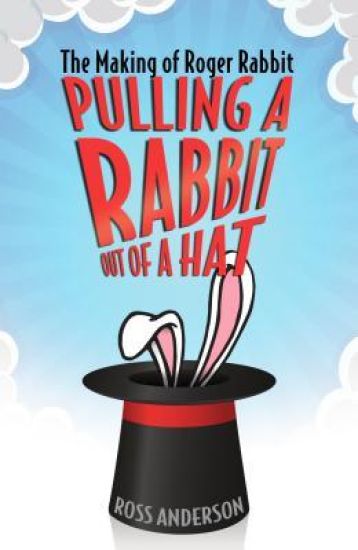
Pulling a Rabbit Out of a Hat

Pulling a Rabbit Out of a Hat

Ross Anderson

University Press of Mississippi
2019
sidottu
Who Framed Roger Rabbit emerged at a nexus of people, technology, and circumstances that is historically, culturally, and aesthetically momentous. By the 1980s, animation seemed a dying art. Not even the Walt Disney Company, which had already won over thirty Academy Awards, could stop what appeared to be the end of an animation era. To revitalize popular interest in animation, Disney needed to reach outside its own studio and create the distinctive film that helped usher in a Disney Renaissance. That film, Who Framed Roger Rabbit, though expensive and controversial, debuted in theaters to huge success at the box office in 1988. Unique in its conceit of cartoons living in the real world, Who Framed Roger Rabbit magically blended live action and animation, carrying with it a humor that still resonates with audiences. Upon the film's release, Disney's marketing program led the audience to believe that Who Framed Roger Rabbit was made solely by director Bob Zemeckis, director of animation Dick Williams, and the visual effects company Industrial Light & Magic, though many Disney animators contributed to the project. Author Ross Anderson interviewed over 140 artists to tell the story of how they created something truly magical. Anderson describes the ways in which the Roger Rabbit characters have been used in film shorts, commercials, and merchandising, and how they have remained a cultural touchstone today.
Pulling a Rabbit Out of a Hat

Pulling a Rabbit Out of a Hat

Ross Anderson

University Press of Mississippi
2019
nidottu
Who Framed Roger Rabbit emerged at a nexus of people, technology, and circumstances that is historically, culturally, and aesthetically momentous. By the 1980s, animation seemed a dying art. Not even the Walt Disney Company, which had already won over thirty Academy Awards, could stop what appeared to be the end of an animation era. To revitalize popular interest in animation, Disney needed to reach outside its own studio and create the distinctive film that helped usher in a Disney Renaissance. That film, Who Framed Roger Rabbit, though expensive and controversial, debuted in theaters to huge success at the box office in 1988. Unique in its conceit of cartoons living in the real world, Who Framed Roger Rabbit magically blended live action and animation, carrying with it a humor that still resonates with audiences. Upon the film's release, Disney's marketing program led the audience to believe that Who Framed Roger Rabbit was made solely by director Bob Zemeckis, director of animation Dick Williams, and the visual effects company Industrial Light & Magic, though many Disney animators contributed to the project. Author Ross Anderson interviewed over 140 artists to tell the story of how they created something truly magical. Anderson describes the ways in which the Roger Rabbit characters have been used in film shorts, commercials, and merchandising, and how they have remained a cultural touchstone today.
The Appian Way

The Appian Way

Ross Anderson

Park Books
2025
sidottu
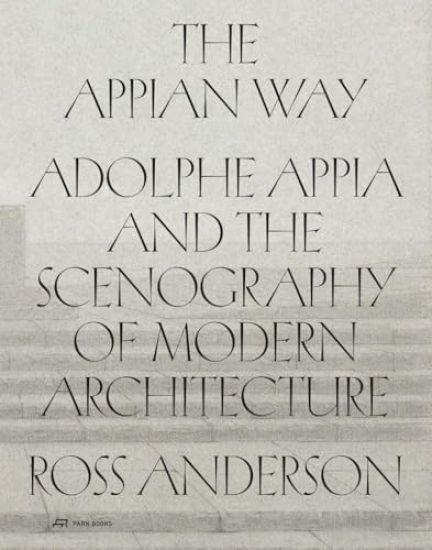
Adolphe Appia (1862–1928) is an eminent figure in the history of the modern theatre, best-known for his writings on the mise-en-scène and stage design for the operas of Richard Wagner. Far lesser known is the Swiss scenographer’s importance in 20th-century architecture and aesthetics. The Appian Way is the definitive account of Appia’s significance also in this field. It is centred on his remarkable drawings that are at once austere and mysteriously atmospheric. Framing a series of monumental yet minimal scenes taking in runs of stairs, landings, platforms and terraces, all staged before a distant horizon under a luminous sky, the drawings are generally described as monochrome, but the subtle hues of the paper imbue each one with a distinctive ambient undertone. Appia himself might be thought about the same way. He was always distant yet also always enigmatically present in the ensuing drama of modern architecture and avant garde stage design. Comprising four main chapters and a coda, this engaging and accessible book is structured as a dramatic story that traces the contours of Appia’s life — his personal circumstances, convictions, aesthetic preferences, desires and motivations — all aimed at constructing a comprehensive portrayal of his life and his work, within the horizons of his time. All of Appia’s drawings are reproduced here in full colour, accompanied by a vast range of archival material, much of which has never been published before.