Kirjojen hintavertailu. Mukana 11 342 296 kirjaa ja 12 kauppaa.

Kirjahaku

Etsi kirjoja tekijän nimen, kirjan nimen tai ISBN:n perusteella.

3 kirjaa tekijältä Ross D. Parke

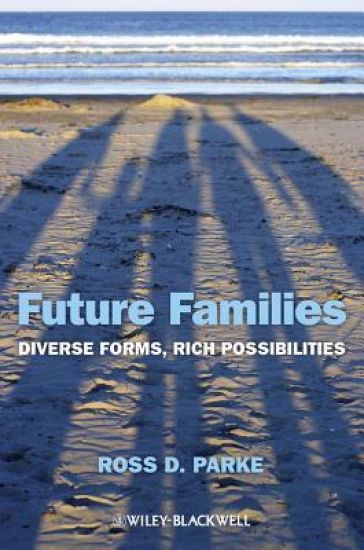
Future Families

Future Families

Ross D. Parke

John Wiley Sons Inc
2013
sidottu
Future Families explores the variety of family forms which characterize our contemporary culture, while addressing the implications of these increasingly diverse family units on child development. Reveals the diversity of new family forms based on the most current research on fathers, same-gender parents, new reproductive technologies, and immigrant familiesIllustrates that children and adults can thrive in a variety of non-traditional family formsShows the interrelatedness of new trends in family organization through the common themes of embedded families and caregiving in community and cultural contextsFeatures an interdisciplinary approach, drawing from works in areas that include child development, family studies, sociology, cross-cultural scholarship, ethnic studies, biology, neuroscience, anthropology and even architectureSets an agenda for future research in the area of families by identifying important gaps in our knowledge about families and parenting
Future Families

Future Families

Ross D. Parke

John Wiley Sons Inc
2013
nidottu
Future Families explores the variety of family forms which characterize our contemporary culture, while addressing the implications of these increasingly diverse family units on child development. Reveals the diversity of new family forms based on the most current research on fathers, same-gender parents, new reproductive technologies, and immigrant familiesIllustrates that children and adults can thrive in a variety of non-traditional family formsShows the interrelatedness of new trends in family organization through the common themes of embedded families and caregiving in community and cultural contextsFeatures an interdisciplinary approach, drawing from works in areas that include child development, family studies, sociology, cross-cultural scholarship, ethnic studies, biology, neuroscience, anthropology and even architectureSets an agenda for future research in the area of families by identifying important gaps in our knowledge about families and parenting
Fatherhood

Fatherhood

Ross D. Parke

Harvard University Press
1996
nidottu
It has been said that fathers are a biological necessity but a social accident. When Ross Parke first wrote about fathers for the Developing Child series, American culture seemed to adhere strongly to the stereotype of Dad the breadwinner, pacing outside the delivery room and peeking through the nursery window, and Mom the homemaker, warming bottles and changing diapers. Simple—in fact, a bit too simple. In the intervening years the conventional image of the uninvolved father has given way to a new stereotype: the father who takes an active part in rearing his children.The dramatic technological, economic, and ideological changes in society over the past several decades have reconfigured the nuclear family and redefined the role of fathers. More women now work outside the home; fewer families can depend on an extended network of relatives for help with childcare; more divorced fathers assume or share custody of their children. Fathers have become partners in parenthood, wielding a more direct influence on their children’s development. But, Parke asks, is the new ideal of fathers—participating in childbirth and sharing in the care and feeding of their children—any more accurate than the earlier uninvolved father stereotype?Social scientists have long ignored fathers, focusing on mothers as the significant figure in infant development. But research is showing that maternal caretaking is not biologically fixed, nor are fathers necessarily restricted to a secondary role in childcare. Turning away from well-worn theories in favor of direct observation, modern studies have revealed a substantial amount about how fathers behave with their children, how this behavior differs from maternal behavior, and how it affects children.In this new book, Parke considers the father–child relationship within the “family system” and the wider society. Using the “life course” view of fathers that has emerged in recent years, he demonstrates that men enact their fatherhood in a variety of ways in response to their particular social and cultural circumstances. And while it is becoming clear that fathers play an important role in their children’s lives, it is also becoming clear that fathering is good for men.