Kirjojen hintavertailu. Mukana 11 717 486 kirjaa ja 12 kauppaa.

Kirjahaku

Etsi kirjoja tekijän nimen, kirjan nimen tai ISBN:n perusteella.

4 kirjaa tekijältä Ross Posnock

Color and Culture

Color and Culture

Ross Posnock

Harvard University Press
2000
nidottu
The coining of the term “intellectuals” in 1898 coincided with W. E. B. Du Bois’s effort to disseminate values and ideals unbounded by the color line. Du Bois’s ideal of a “higher and broader and more varied human culture” is at the heart of a cosmopolitan tradition that Color and Culture identifies as a missing chapter in American literary and cultural history. The book offers a much needed and startlingly new historical perspective on “black intellectuals” as a social category, ranging over a century—from Frederick Douglass to Patricia Williams, from Du Bois, Pauline Hopkins, and Charles Chesnutt to Nella Larsen, Zora Neale Hurston, and Alain Locke, from Ralph Ellison and James Baldwin to Samuel Delany and Adrienne Kennedy. These writers challenge two durable assumptions: that high culture is “white culture” and that racial uplift is the sole concern of the black intellectual.The remarkable tradition that this book recaptures, culminating in a cosmopolitan disregard for demands for racial “authenticity” and group solidarity, is strikingly at odds with the identity politics and multicultural movements of our day. In the Du Boisian tradition Ross Posnock identifies a universalism inseparable from the particular and open to ethnicity—an approach with the power to take us beyond the provincialism of postmodern tribalism.
Renunciation

Renunciation

Ross Posnock

Harvard University Press
2021
sidottu
Renunciation as a creative force in the careers of writers, philosophers, and artists is the animating idea behind Ross Posnock’s new book. Taking up acts of abandonment, rejection, and refusal that have long baffled critics, he shows how renunciation has reframed the relationship of artists and intellectuals to society in productive and unpredictable ways.In a work of remarkable synthesis that includes traditions and genres from antiquity to postmodernity, Posnock discovers connections among disparate figures ranging from Lao Tzu to Dave Chappelle and Bob Dylan. The thread running through these acts of renunciation, he argues, is an aesthetic and ethical resistance to the demand that one’s words and actions be straightforward and immediately comprehensible. Modern art in particular valorizes the nonconceptual and the intuitive, seeking to make silence articulate and incompletion fertile.Renouncers reject not only artistic and scholarly conventions but also the public roles that attend them. Wittgenstein, Rimbaud, and Glenn Gould brazenly flouted professional and popular expectations, demanding that philosophy, poetry, music play by new rules. Emerson and Nietzsche severed all institutional ties, while William James waged a guerrilla campaign from his post at Harvard against what all three considered to be the enemy: the pernicious philosophical insistence on rationality. Posnock also examines renunciations in light of World War II—the veterans J. D. Salinger and George Oppen, and the Holocaust survivor Paul Celan—while a fourth cluster includes the mystic Thomas Merton and the abstract painters Ad Reinhardt and Agnes Martin.
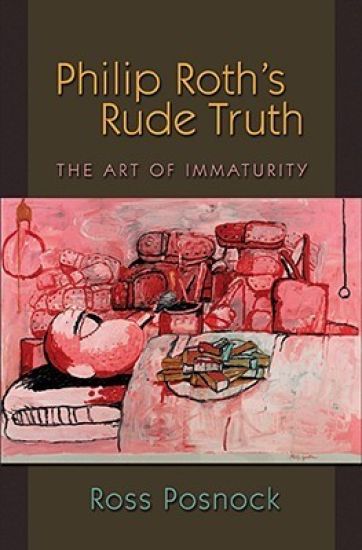
Philip Roth's Rude Truth

Philip Roth's Rude Truth

Ross Posnock

Princeton University Press
2008
pokkari
Has anyone ever worked harder and longer at being immature than Philip Roth? The novelist himself pointed out the paradox, saying that after establishing a reputation for maturity with two earnest novels, he "worked hard and long and diligently" to be frivolous--an effort that resulted in the notoriously immature Portnoy's Complaint (1969). Three-and-a-half decades and more than twenty books later, Roth is still at his serious "pursuit of the unserious." But his art of immaturity has itself matured, developing surprising links with two traditions of immaturity--an American one that includes Emerson, Melville, and Henry James, and a late twentieth-century Eastern European one that developed in reaction to totalitarianism. In Philip Roth's Rude Truth--one of the first major studies of Roth's career as a whole--Ross Posnock examines Roth's "mature immaturity" in all its depth and richness. Philip Roth's Rude Truth will force readers to reconsider the narrow categories into which Roth has often been slotted--laureate of Newark, New Jersey; junior partner in the firm Salinger, Bellow, Mailer, and Malamud; Jewish-American regionalist. In dramatic contrast to these caricatures, the Roth who emerges from Posnock's readable and intellectually vibrant study is a great cosmopolitan in the tradition of Henry James and Milan Kundera.
American Sophistication

American Sophistication

Ross Posnock

PRINCETON UNIVERSITY PRESS
2026
sidottu
The fascinating story of sophistication in the United States, from the founding to the present Is there such a thing as “American sophistication”—or is it a contradiction in terms? Those questions have been up for grabs since America’s founding. The idea of sophistication has always left Americans uneasy. Devoted to a self-image of sincerity and plain-dealing, Americans are suspicious of sophistication’s playfulness and ease, which look like symptoms of European elitism, snobbery, and decadence. In this entertaining and enlightening account of American sophistication from the eighteenth century to today, Ross Posnock tells the story of how Americans’ anxiety about style and elegance led them to develop their own casual and cool style of sophistication. From the start, American sophistication has been distinctive because it is mixed, improvised, and shape-shifting: guilty and smooth, game and nervous, vulgar and poised. Each chapter of this sparkling, wide-ranging narrative examines the evolution of American sophistication by exploring key figures in the story, including Ben Franklin and Thomas Jefferson, Walt Whitman, Duke Ellington, Dorothy Parker, Mary McCarthy, the Kennedys, Mike Nichols and Elaine May, Eartha Kitt, Susan Sontag, Frank O’Hara, Jasper Johns, Lorraine Hansberry, James Baldwin, and Leonard Bernstein. The book ends by sketching the changing fortunes of American sophistication since John F. Kennedy by looking at some of his key presidential successors—Reagan, Obama, and Trump. The first account of a compelling and timely subject, American Sophistication brings together film, fashion, literature, design, art, and musical theater to present a fresh synthesis of cultural history.