Kirjojen hintavertailu. Mukana 11 342 296 kirjaa ja 12 kauppaa.

Kirjahaku

Etsi kirjoja tekijän nimen, kirjan nimen tai ISBN:n perusteella.

4 kirjaa tekijältä Ross W. Bellaby

The Ethics of Intelligence

The Ethics of Intelligence

Ross W. Bellaby

Routledge
2014
sidottu
This book starts from the proposition that the field of intelligence lacks any systematic ethical review, and then develops a framework based on the notion of harm and the establishment of Just Intelligence Principles. As the professional practice of intelligence collection adapts to the changing environment of the twenty-first century, many academic experts and intelligence professionals have called for a coherent ethical framework that outlines exactly when, by what means and to what ends intelligence is justified. Recent controversies, including reports of abuse at Guantanamo Bay and Abu Ghraib, allegations of extraordinary rendition programmes and the ever-increasing pervasiveness of the ‘surveillance state’, have all raised concerns regarding the role of intelligence in society. As a result, there is increased debate regarding the question of whether or not intelligence collection can be carried out ethically.The Ethics of Intelligence tackles this question by creating an ethical framework specifically designed for intelligence that is capable of outlining under what circumstances, if any, different intelligence collection activities are ethically permissible. The book examines three of the main collection disciplines in the field of intelligence studies: imagery intelligence, signals intelligence and human intelligence. By applying the ethical framework established at the beginning of the book to these three important intelligence collection disciplines, it is possible to better understand the ethical framework while also demonstrating its real-life applicability. This book will be of much interest to students of intelligence studies, ethics, war and conflict studies, security studies and IR.

The Ethics of Intelligence

The Ethics of Intelligence

Ross W. Bellaby

Routledge
2016
nidottu
This book starts from the proposition that the field of intelligence lacks any systematic ethical review, and then develops a framework based on the notion of harm and the establishment of Just Intelligence Principles. As the professional practice of intelligence collection adapts to the changing environment of the twenty-first century, many academic experts and intelligence professionals have called for a coherent ethical framework that outlines exactly when, by what means and to what ends intelligence is justified. Recent controversies, including reports of abuse at Guantanamo Bay and Abu Ghraib, allegations of extraordinary rendition programmes and the ever-increasing pervasiveness of the ‘surveillance state’, have all raised concerns regarding the role of intelligence in society. As a result, there is increased debate regarding the question of whether or not intelligence collection can be carried out ethically.The Ethics of Intelligence tackles this question by creating an ethical framework specifically designed for intelligence that is capable of outlining under what circumstances, if any, different intelligence collection activities are ethically permissible. The book examines three of the main collection disciplines in the field of intelligence studies: imagery intelligence, signals intelligence and human intelligence. By applying the ethical framework established at the beginning of the book to these three important intelligence collection disciplines, it is possible to better understand the ethical framework while also demonstrating its real-life applicability. This book will be of much interest to students of intelligence studies, ethics, war and conflict studies, security studies and IR.
The Ethics of Hacking

The Ethics of Hacking

Ross W. Bellaby

Bristol University Press
2023
sidottu
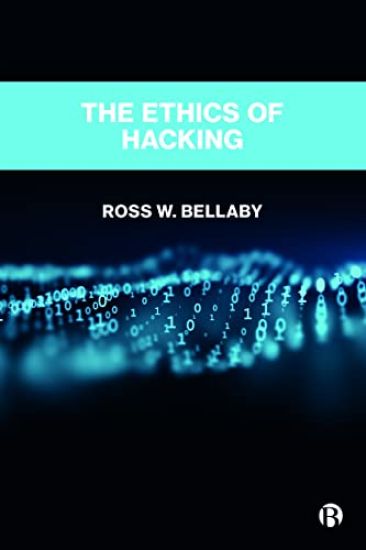
Political hackers, like the infamous Anonymous collective, have demonstrated their willingness to use political violence to further their agendas. However, many of their causes – targeting terrorist groups, fighting for LGBTQ+ rights, and protecting people’s freedom of expression, autonomy and privacy – are intuitively good things to fight for. This book will create a new framework that argues that when the state fails to protect people, hackers can intervene and evaluates the hacking based on the political or social circumstances. It highlights the space for hackers to operate as legitimate actors; guides hacker activity by detailing what actions are justified toward what end; outlines mechanisms to aid hackers in reaching ethically justified decisions; and directs the political community on how to react to these political hackers. Applying this framework to the most pivotal hacking operations within the last two decades, including the Arab Spring, police brutality in the USA and the Nigerian and Ugandan governments’ announcements of homophobic legislation, it offers a unique contribution to conceptualising hacking as a contemporary political activity.
The Ethics of Hacking

The Ethics of Hacking

Ross W. Bellaby

Bristol University Press
2023
nidottu
Political hackers, like the infamous Anonymous collective, have demonstrated their willingness to use political violence to further their agendas. However, many of their causes – targeting terrorist groups, fighting for LGBTQ+ rights, and protecting people’s freedom of expression, autonomy and privacy – are intuitively good things to fight for. This book will create a new framework that argues that when the state fails to protect people, hackers can intervene and evaluates the hacking based on the political or social circumstances. It highlights the space for hackers to operate as legitimate actors; guides hacker activity by detailing what actions are justified toward what end; outlines mechanisms to aid hackers in reaching ethically justified decisions; and directs the political community on how to react to these political hackers. Applying this framework to the most pivotal hacking operations within the last two decades, including the Arab Spring, police brutality in the USA and the Nigerian and Ugandan governments’ announcements of homophobic legislation, it offers a unique contribution to conceptualising hacking as a contemporary political activity.