Kirjojen hintavertailu. Mukana 11 699 587 kirjaa ja 12 kauppaa.

Kirjahaku

Etsi kirjoja tekijän nimen, kirjan nimen tai ISBN:n perusteella.

10 kirjaa tekijältä Roy F. Baumeister

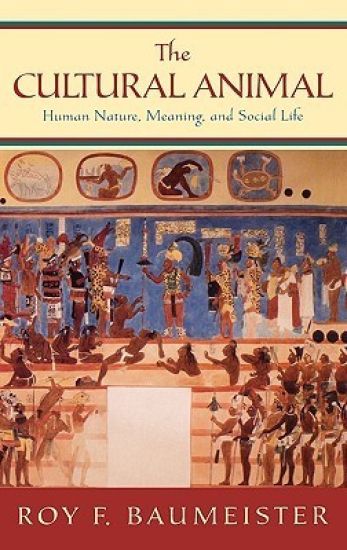
The Cultural Animal

The Cultural Animal

Roy F. Baumeister

Oxford University Press Inc
2005
sidottu
What makes us human? Why do people think, feel, and act as they do? What is the essence of human nature? What is the basic relationship between the individual and society? These questions have fascinated both great thinkers and ordinary humans for centuries. Now, at last, there is a solid basis for answering them, in the form of the accumulated efforts and studies by thousands of psychology researchers. We no longer have to rely on navel-gazing and speculation to understand why people are the way they are - we can instead turn to solid, objective findings. This book, by an eminent social psychologist at the peak of his career, not only summarizes what we know about people - it also offers a coherent, easy-to-understand, through radical, explanation. Turning conventional wisdom on its head, the author argues that culture shaped human evolution. Contrary to theories that depict the individual's relation to society as one of victimization, endless malleability, or just a square peg in a round hole, he proposes that the individual human being is designed by nature to be part of society. Moreover, he argues that we need to briefly set aside the endless study of cultural differences to look at what most cultures have in common - because that holds the key to human nature. Culture is in our genes, although cultural differences may not be. This core theme is further developed by a powerful tour through the main dimensions of human psychology. What do people want? How do people think? How do emotions operate? How do people behave? And how do they interact with each other? The answers are often surprising, and along the way the author explains how human desire, thought, feeling, and action are connected.

Is There Anything Good About Men?

Is There Anything Good About Men?

Roy F. Baumeister

Oxford University Press Inc
2010
sidottu
Have men really been engaged in a centuries-old conspiracy to exploit and oppress women? Have the essential differences between men and women really been erased? Have men now become unnecessary? Are they good for anything at all? In Is There Anything Good About Men?, Roy Baumeister offers provocative answers to these and many other questions about the current state of manhood in America. Baumeister argues that relations between men and women are now and have always been more cooperative than antagonistic, that men and women are different in basic ways, and that successful cultures capitalize on these differences to outperform rival cultures. Amongst our ancestors---as with many other species--only the alpha males were able to reproduce, leading them to take more risks and to exhibit more aggressive and protective behaviors than women, whose evolutionary strategies required a different set of behaviors. Whereas women favor and excel at one-to-one intimate relationships, men compete with one another and build larger organizations and social networks from which culture grows. But cultures in turn exploit men by insisting that their role is to achieve and produce, to provide for others, and if necessary to sacrifice themselves. Baumeister shows that while men have greatly benefited from the culture they have created, they have also suffered because of it. Men may dominate the upper echelons of business and politics, but far more men than women die in work-related accidents, are incarcerated, or are killed in battle--facts nearly always left out of current gender debates. Engagingly written, brilliantly argued, and based on evidence from a wide range of disciplines, Is There Anything Good About Men? offers a new and far more balanced view of gender relations.
The Science of Free Will

The Science of Free Will

Roy F. Baumeister

OXFORD UNIVERSITY PRESS INC
2024
sidottu
This groundbreaking book sheds new scientific light on the age-old question of free will. Humankind evolved to flourish by creating a new kind of society, which required an advanced mind capable of recognizing possibilities and making good choices. No other animal operates amid economic marketplaces, shared moral principles, legal systems, religious and political institutions, and the like. Rather than getting bogged down in philosophical debates, The Science of Free Will surges ahead to explain how this marvelous, newly evolved mental system works. Some actions are freer than others, so how does one recognize and take advantage of this freedom? Key features involve grounding actions in time and pondering multiple possible futures--indeed understanding one's life as a story, in which one's actions link past, present, and future-and conscious thoughts, including logical reasoning, planning, and overriding one's first impulse. Understanding free will in this fashion reveals both the powers and the limits of the human mind.
Masochism and the Self

Masochism and the Self

Roy F. Baumeister

Psychology Press
1989
sidottu
This volume provides an integrative theory firmly grounded in current psychology of the self, and offers a fresh, compelling account of one of psychology's most enigmatic behavior patterns. Professor Baumeister provides comprehensive coverage of historical and cross-cultural theories and empirical data on masochism and presents recent, original data drawn from a large data set of anonymous masochistic scripts of fantasies and favorite experiences. Drawn from the latest social psychological research and theories, Professor Baumeister returns the emphasis to the original and proto-typical form of masochism -- sexual masochism - - and explains these phenomena as a means of releasing the individual from the burden of self-awareness. It is the first volume to present a psychological theory compatible with the mounting evidence that most masochists are not mentally ill nor does masochism derives from sadism. Instead, Professor Baumeister finds that masochism emerges as an escapist response to the problematic nature of selfhood and he attempts to foster an understanding of sexual masochism that emphasizes both "escape from self" and "construction of meaning" hypotheses. The book is directed at all those interested in the self and identity in paradoxical behavior patterns and in the construction of meaning, presenting specific clinical recommendations.
Meanings of Life

Meanings of Life

Roy F. Baumeister

Guilford Publications
1992
nidottu
Who among us has not at some point asked, ``what is the meaning of life?'' In this extraordinary book, an eminent social scientist looks at the big picture and explores what empirical studies from diverse fields tell us about the human condition. MEANINGS OF LIFE draws together evidence from psychology, history, anthropology, and sociology, integrating copious research findings into a clear and conclusive discussion of how people attempt to make sense of their lives. In a lively and accessible style, emphasizing facts over theories, Baumeister explores why people desire meaning in their lives, how these meanings function, what forms they take, and what happens when life loses meaning. It is the most comprehensive examination of the topic to date.
Concise Introduction to Social Psychology

Concise Introduction to Social Psychology

Roy F. Baumeister

EDWARD ELGAR PUBLISHING LTD
2026
sidottu
Our Elgar Concise Introductions are inspiring and considered. They explain the key principles in business and social science and are expertly written by some of the world’s leading scholars. The aims of the series are two-fold: to pinpoint essential concepts and to offer insights that stimulate critical thinking. This compelling Concise Introduction establishes social psychology as a key influential approach to understanding thoughts, feelings and behaviors, surveying crucial articles and landmark research projects. Leading scholar Roy F. Baumeister draws on four decades of experience in social psychology to present an overview of the field, from its nascent phase in the 1950-60s to contemporary research. Key Features: Concise and accessible chapters provide insights into social psychology: the study of how individuals think, feel and act Traces theoretical and methodological developments in social psychology since the mid-20th century and calls for greater inclusion of non-Western perspectives Explores key topics including the human self, prosocial and antisocial behavior, thought processes concerning social situations, prejudice, emotion and close relationships The Concise Introduction to Social Psychology is a fundamental resource for students and researchers in social psychology, personality psychology and the wider social and behavioural sciences. Its erudite insights will also benefit practitioners, educators and other professionals looking for an introduction to the field.
Concise Introduction to Social Psychology

Concise Introduction to Social Psychology

Roy F. Baumeister

EDWARD ELGAR PUBLISHING LTD
2026
nidottu
Our Elgar Concise Introductions are inspiring and considered. They explain the key principles in business and social science and are expertly written by some of the world’s leading scholars. The aims of the series are two-fold: to pinpoint essential concepts and to offer insights that stimulate critical thinking. This compelling Concise Introduction establishes social psychology as a key influential approach to understanding thoughts, feelings and behaviors, surveying crucial articles and landmark research projects. Leading scholar Roy F. Baumeister draws on four decades of experience in social psychology to present an overview of the field, from its nascent phase in the 1950-60s to contemporary research. Key Features: Concise and accessible chapters provide insights into social psychology: the study of how individuals think, feel and act Traces theoretical and methodological developments in social psychology since the mid-20th century and calls for greater inclusion of non-Western perspectives Explores key topics including the human self, prosocial and antisocial behavior, thought processes concerning social situations, prejudice, emotion and close relationships The Concise Introduction to Social Psychology is a fundamental resource for students and researchers in social psychology, personality psychology and the wider social and behavioural sciences. Its erudite insights will also benefit practitioners, educators and other professionals looking for an introduction to the field.
Masochism and the Self

Masochism and the Self

Roy F. Baumeister

Psychology Press Ltd
2015
nidottu
This volume provides an integrative theory firmly grounded in current psychology of the self, and offers a fresh, compelling account of one of psychology's most enigmatic behavior patterns. Professor Baumeister provides comprehensive coverage of historical and cross-cultural theories and empirical data on masochism and presents recent, original data drawn from a large data set of anonymous masochistic scripts of fantasies and favorite experiences. Drawn from the latest social psychological research and theories, Professor Baumeister returns the emphasis to the original and proto-typical form of masochism -- sexual masochism - - and explains these phenomena as a means of releasing the individual from the burden of self-awareness. It is the first volume to present a psychological theory compatible with the mounting evidence that most masochists are not mentally ill nor does masochism derives from sadism. Instead, Professor Baumeister finds that masochism emerges as an escapist response to the problematic nature of selfhood and he attempts to foster an understanding of sexual masochism that emphasizes both "escape from self" and "construction of meaning" hypotheses. The book is directed at all those interested in the self and identity in paradoxical behavior patterns and in the construction of meaning, presenting specific clinical recommendations.
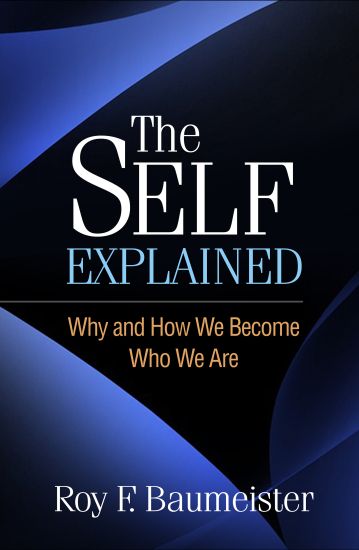
The Self Explained

The Self Explained

Roy F. Baumeister

Guilford Publications
2022
sidottu
The idea of the self is immediately familiar to everyone, yet elusive to define and understand. From pioneering researcher Roy F. Baumeister, this volume synthesizes a vast body of knowledge to provide a panoramic view of the human self--how it develops and functions, why it exists, and what problems it encounters on the journey through life. What are the benefits of self-knowledge, and how attainable is it? Do we have one self, or many? What is the relationship of self and society? In 28 concise chapters, Baumeister explains complex concepts with clarity and insight. He reveals the central role played by the self in enabling both individuals and cultures to thrive.
The Self Explained

The Self Explained

Roy F. Baumeister

Guilford Publications
2023
nidottu
The idea of the self is immediately familiar to everyone, yet elusive to define and understand. From pioneering researcher Roy F. Baumeister, this volume synthesizes a vast body of knowledge to provide a panoramic view of the human self--how it develops and functions, why it exists, and what problems it encounters on the journey through life. What are the benefits of self-knowledge, and how attainable is it? Do we have one self, or many? What is the relationship of self and society? In 28 concise chapters, Baumeister explains complex concepts with clarity and insight. He reveals the central role played by the self in enabling both individuals and cultures to thrive.