Kirjojen hintavertailu. Mukana 11 717 486 kirjaa ja 12 kauppaa.

Kirjahaku

Etsi kirjoja tekijän nimen, kirjan nimen tai ISBN:n perusteella.

32 kirjaa tekijältä Roy Harris

Signs of Writing

Signs of Writing

Roy Harris

Routledge
1995
sidottu
In Signs of Writing Roy Harris re-examines basic questions about writing that have long been obscured by the traditional assumption that writing is merely a visual substitute for speech.By treating writing as an independent mode of communication, based on the use of spatial relations to connect events separated in time, the author shows how musical, mathematical and other forms of writing obey the same principles as verbal writing. These principles, he argues, apply to texts of all kinds: a sonnet, a symphonic score, a signature on a cheque and a supermarket label. Moreover, they apply throughout the history of writing, from hieroglyphics to hypertext.This is the first book to provide a new general theory of writing in over forty years. Signs of Writing will be essential reading for anyone interested in language and communication.
Signs, Language and Communication
In Signs, Language and Communication readers familiar with the arguments of Professor Harris' previous work, including Signs of Writing, will find those ideas developed here to cover not just writing, but aspects of art, design and manufacture. Roy Harris proposes a new theory of communication. He begins with the premise that the mental life of an individual should be conceived as a continuous attempt to integrate the present with the past and future. He concludes by arguing that communication should be viewed as both a product and a resource of this constant act of integration.
Signs, Language and Communication
In Signs, Language and Communication readers familiar with the arguments of Professor Harris' previous work, including Signs of Writing, will find those ideas developed here to cover not just writing, but aspects of art, design and manufacture. Roy Harris proposes a new theory of communication. He begins with the premise that the mental life of an individual should be conceived as a continuous attempt to integrate the present with the past and future. He concludes by arguing that communication should be viewed as both a product and a resource of this constant act of integration.
Signs of Writing

Signs of Writing

Roy Harris

Routledge
2014
nidottu
In Signs of Writing Roy Harris re-examines basic questions about writing that have long been obscured by the traditional assumption that writing is merely a visual substitute for speech.By treating writing as an independent mode of communication, based on the use of spatial relations to connect events separated in time, the author shows how musical, mathematical and other forms of writing obey the same principles as verbal writing. These principles, he argues, apply to texts of all kinds: a sonnet, a symphonic score, a signature on a cheque and a supermarket label. Moreover, they apply throughout the history of writing, from hieroglyphics to hypertext.This is the first book to provide a new general theory of writing in over forty years. Signs of Writing will be essential reading for anyone interested in language and communication.
Rationality and the Literate Mind
This book re-examines the old debate about the relationship between rationality and literacy. Does writing "restructure consciousness?" Do preliterate societies have a different "mind-set" from literate societies? Is reason "built in" to the way we think? How is literacy related to numeracy? Is the "logical form" that Western philosophers recognize anything more than an extrapolation from the structure of the written sentence? Is logic, as developed formally in Western education, intrinsically beyond the reach of the preliterate mind? What light, if any, do the findings of contemporary neuroscience throw on such issues? Roy Harris challenges the received mainstream opinion that reason is an intrinsic property of the human mind, and argues that the whole Western conception of rational thought, from Classical Greece down to modern symbolic logic, is a by-product of the way literacy developed in European cultures.
Rationality and the Literate Mind
This book re-examines the old debate about the relationship between rationality and literacy. Does writing "restructure consciousness?" Do preliterate societies have a different "mind-set" from literate societies? Is reason "built in" to the way we think? How is literacy related to numeracy? Is the "logical form" that Western philosophers recognize anything more than an extrapolation from the structure of the written sentence? Is logic, as developed formally in Western education, intrinsically beyond the reach of the preliterate mind? What light, if any, do the findings of contemporary neuroscience throw on such issues? Roy Harris challenges the received mainstream opinion that reason is an intrinsic property of the human mind, and argues that the whole Western conception of rational thought, from Classical Greece down to modern symbolic logic, is a by-product of the way literacy developed in European cultures.
Saussure and his Interpreters

Saussure and his Interpreters

Roy Harris

Edinburgh University Press
2003
nidottu
Reviews of the First Edition 'In a very readable study, Roy Harris examines the mis/representation of Saussurean ideas by certain linguists and by French thinkers of a Structuralist and post-structuralist persuasion. This is therefore essentially a study in intellectual history dealing with the thorny question of "influence" of one thinker's ideas on another ! Harris has done us a favour by bringing his critical eye to bear on a range of (mis)interpreters of the Cours who had hitherto largely been considered in isolation.' - Modern Language Review This book is the first major reassessment of the reception of Saussure's ideas in the academic world of the twentieth century. It is well known that Saussure's work profoundly influenced developments in such diverse fields as linguistics, anthropology, psychology and literary studies. But what exactly were Saussure's views taken to be by his interpreters? How well were Saussure's ideas understood by those who took them up? Or how badly misunderstood? And why? The answers to these questions address central issues in the history of Western culture. Each chapter focuses on one particular interpreter of Saussure's work, but many others are mentioned in context for purposes of comparison, and attention is drawn to connections and disparities between their interpretations. Those whose interpretations are examined in detail include Bloomfield, Hjelmslev, Jakobson, Levi-Strauss, Chomsky, Barthes and Derrida. In an important supplement to the new edition, account is taken of recently found notes in Saussure's hand. The discovery re-opens the whole question of the extent to which the Cours de linguistique generale, posthumously published in 1916, accurately reflects the stage that Saussure's thinking about language and communication had reached by the time of his death. It suggests a new interpretation of Saussure that differs significantly from any of those previously advanced. Features: *The only comprehensive survey of this field *Up-to-date coverage of recent developments in Saussurean studies *Analysis by one of today's leading authorities on Saussure.
The Linguistics of History

The Linguistics of History

Roy Harris

Edinburgh University Press
2004
sidottu
The task of the historian would be impossible without verbal resources for dating and describing past events. Historians from Herodotus onwards traditionally relied uncritically on their own native languages (including Greek, Latin and English) to provide all they needed. In so doing, they also took over a traditional Western view of the relationship between language, the world and the passage of time. This determined for them the rational limits of historical knowledge. Their 'histories' could not go beyond these limits without straying into the realms of myth or imagination. Their philosophy of history was circumscribed by their (often unstated) philosophy of language. This book is the first comprehensive attempt to trace the relationship between Western philosophy of history and Western philosophy of language. It spans the whole development of education from the ancient Greeks down to the present day. It examines the impact on history of modern movements, including structuralist and postmodern approaches, as well as the recent advent of television history. Features: *The first comprehensive attempt to relate Western philosophy of history to Western philosophy of language *The author is a leading authority on linguistics and the philosophy of language *The book is written in an accessible style for all levels of reader.
Integrationist Notes and Papers 2006 - 2008

Integrationist Notes and Papers 2006 - 2008

Roy Harris

New Generation Publishing
2009
pokkari
The International Association for the Integrational Study of Language and Communication was founded in 1998. Integrationist Notes and Papers began in 2003 as an occasional series of leaflets circulated to IAISLC members. Its purpose was to give a brief position statement or comment, from an integrational perspective, on a variety of controversial issues, in order to provoke further discussion and to show that integrationism is not restricted to topics of interest solely to linguists. Integrationist Notes and Papers 2003-2005 containing numbers 1 to 15 of these texts was published in 2006 (ISBN 0-9546099- 4-8). The present volume continues the series.
After Epistemology

After Epistemology

Roy Harris

New Generation Publishing
2009
pokkari
After Epistemology analyses the assumptions about language and communication underlying the theory of knowledge developed over three and a half millennia in the Western tradition. In this tradition, knowledge stands opposed on the one hand to ignorance and on the other hand to scepticism. The analysis opens up new perspectives on ways of thinking about everything we know or think we know, and examines critically the views of a wide range of eminent epistemologists from Plato to Popper.
Integrationist Notes and Papers 2009 -2011

Integrationist Notes and Papers 2009 -2011

Roy Harris

New Generation Publishing
2011
pokkari
The International Association for the Integrational Study of Language and Communication was founded in 1998. Integrationist Notes and Papers began in 2003 as an occasional series of leaflets circulated to IAISLC members. Its purpose was to give a brief position statement or comment, from an integrational perspective, on a variety of controversial issues, in order to provoke further discussion and to show that integrationism is not restricted to topics of interest solely to linguists. The present volume continues the series.
Integrationist Notes and Papers 2012

Integrationist Notes and Papers 2012

Roy Harris

New Generation Publishing
2012
pokkari
The International Association for the Integrational Study of Language and Communication was founded in 1998. Integrationist Notes and Papers began in 2003 as an occasional series of leaflets circulated to IAISLC members. Its purpose is to give a brief position statement or comment, from an integrationist perspective, on a variety of controversial issues.
Integrating Reality

Integrating Reality

Roy Harris

New Generation Publishing
2012
pokkari
Integrating Reality discusses the ontological assumptions behind integrational linguistics. They start from the assumption that 'What is reality?' is a question that only human beings are capable of asking. Being able to ask it already presupposes a mastery of language, and in turn tacitly assumes recognition of selfhood in the questioner. 'Who am I?' is ultimately the same question in disguise.Roy Harris's recent books include Rationality and the Literate Mind and Mindboggling.
Integrationist Notes and Papers 2013

Integrationist Notes and Papers 2013

Roy Harris

New Generation Publishing
2013
pokkari
The International Association for the Integrational Study of Language and Communication was founded in 1998. Integrationist Notes and Papers began in 2003 as an occasional series of leaflets circulated to IAISLC members. Its purpose is to give a brief position statement or comment, from an integrationist perspective,on a variety of controversial issues.For further integrationist publications visit www.royharrisonline.com
Integrationist Notes and Papers 2014

Integrationist Notes and Papers 2014

Roy Harris

New Generation Publishing
2014
pokkari
The International Association for the Integrational Study of Language and Communication was founded in 1998. Integrationist Notes and Papers began in 2003 as an occasional series of leaflets circulated to IAISLC members. Its purpose is to give a brief position statement or comment, from an integrationist perspective, on a variety of controversial issues. For further integrationist publications visit www.royharrisonline.com
Saussure and His Interpreters

Saussure and His Interpreters

Roy Harris

New York University Press
2001
sidottu
Saussure and his Interpreters is the first major reassessment of the reception of Saussure's ideas throughout the twentieth century. That Saussure's work profoundly influenced developments in such diverse fields as linguistics, anthropology, psychology and literary studies is denied by no one. But what exactly Saussure's views were taken to be by his interpreters has not hitherto been subject to any comprehensive critical survey. How well were Saussure's ideas understood by those who took them up? Or how badly misunderstood? And why? The answers to these questions address central issues in the history of Western culture. Each chapter focuses on one particular interpreter of Saussure's work, but many others are mentioned in context for purposes of comparison, and attention is drawn to connections and disparities between their interpretations. Those whose interpretations are examined in detail include Bloomfield, Hjelmslev, Jakobson, Levi-Strauss, Chomsky, Barthes and Derrida.
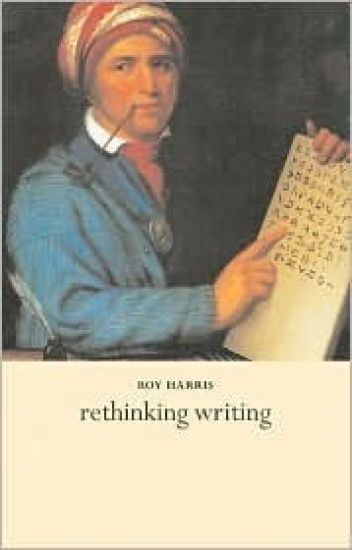
Rethinking Writing

Rethinking Writing

Roy Harris

Continuum International Publishing Group Ltd.
2002
nidottu
The traditional Western view of writing, from Aristotle down to the present day, has treated the written word as a visual substitute for the spoken word. The eminent Swiss linguist Ferdinand de Saussure (1857-1913) was the first to provide this traditional assumption with a reasoned basis by incorporating it into a more general theory of signs. In the wake of Saussure's work, modern linguistics has ignored or marginalized writing in favour of the study of speech. In all literate societies, however, speech in turn is interpreted by reference to the culturally dominant writing system. This puts in place a system of educational values which ensures that the more literate members of society maintain superiority over the less literate, and at the same time establishes a hierarchy among literate societies which favours the local product (alphabetic scripts in the Western Case). Roy Harris shows that the theory of writing adopted in modern linguistics is deeply flawed. Reversing the orthodox priorities, the author argues that writing is a far more powerful mode of linguistic communication than speech could ever be. His book is a major contribution to current debates about human communication written and spoken.