Kirjojen hintavertailu. Mukana 11 699 587 kirjaa ja 12 kauppaa.

Kirjahaku

Etsi kirjoja tekijän nimen, kirjan nimen tai ISBN:n perusteella.

10 kirjaa tekijältä Roy J. Shephard

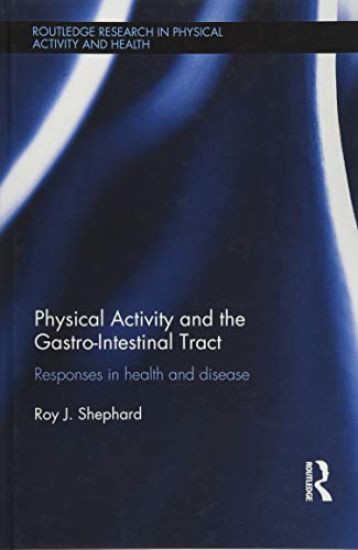
Physical Activity and the Gastro-Intestinal Tract
The organs of the gastro-intestinal tract play an essential role in sustained physical activity, but their consideration in exercise-related literature has, to this point, been limited. Physical Activity and the Gastro-Intestinal Tract is the first book to explain the function and response to exercise of the gastro-intestinal system, in cases of both health and disease, and helps to shed light on the role they play in acute and chronic exercise.Professor Roy Shephard synthesises previously disparate research to explain the physiology, function, pathology of disease and role of exercise in both health and chronic disease, covering topics including: physical activity and the oesophagus gastro-duodenal function and physical activity physical activity and peptic ulcers physical activity and gastro-oesophageal cancers physical activity and the function of the large bowel physical activity and chronic intestinal inflammation.With each chapter including a thorough bibliography and signposts to further reading, Physical Activity and the Gastro-Intestinal Tract provides a complete reference for understanding how exercise affects the function of the digestive organs. It is an important text for academics and upper-level students in sports medicine and exercise physiology, and for health professionals in preventative medicine.
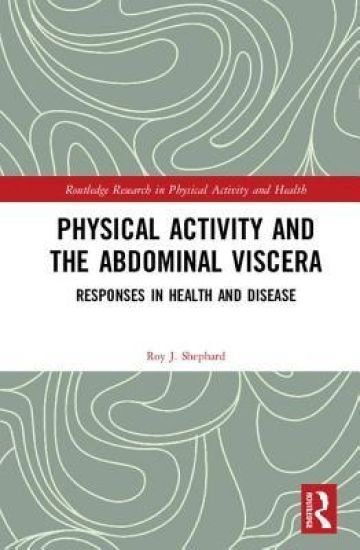
Physical Activity and the Abdominal Viscera
Physical Activity and the Abdominal Viscera is the first book to examine the response of the visceral organs to acute and chronic physical activity, in cases of both health and disease. Bringing together a previously disparate body of research, Professor Roy Shephard sets out the physiology, function during exercise, pathology of disease, and role of physical activity in preventing and managing disease in the visceral organs.Working systematically through the viscera, the book first identifies the response to exercise and pathologies of the liver, gall bladder and biliary tract, then goes on to examine the function of the kidneys and bladder, and finally covers issues including the spleen, sickle cell disease and prostate cancer.Providing a clear and well-structured guide to the relationship between the visceral organs and physical activity, Physical Activity and the Abdominal Viscera is a vital reference text for academics and upper-level students in sports medicine and clinical exercise physiology, and for health professionals in preventive medicine.
Body Composition in Biological Anthropology

Body Composition in Biological Anthropology

Roy J. Shephard

Cambridge University Press
2005
pokkari
This volume provides a thought-provoking perspective on the empirical and analytic study of body form and composition. The techniques used for measuring body components such as fat, water, lean tissue, bone mass and bone density are evaluated against potential 'gold standards'. The nature of regional differences, developmental changes, pathological abnormalities, and the impact of heredity and environment in shaping body composition are discussed in the context of human evolution. All those concerned with biological anthropology, both clinicians and researchers, will find this book of great interest.
Body Composition in Biological Anthropology

Body Composition in Biological Anthropology

Roy J. Shephard

Cambridge University Press
1991
sidottu
This volume provides a thought-provoking perspective on the empirical and analytic study of body form and composition. The techniques used for measuring body components such as fat, water, lean tissue, bone mass and bone density are evaluated against potential ‘gold standards’. The nature of regional differences, developmental changes, pathological abnormalities, and the impact of heredity and environment in shaping body composition are discussed in the context of human evolution. All those concerned with biological anthropology, both clinicians and researchers, will find this book of great interest.
Physical Activity and the Gastro-Intestinal Tract
The organs of the gastro-intestinal tract play an essential role in sustained physical activity, but their consideration in exercise-related literature has, to this point, been limited. Physical Activity and the Gastro-Intestinal Tract is the first book to explain the function and response to exercise of the gastro-intestinal system, in cases of both health and disease, and helps to shed light on the role they play in acute and chronic exercise.Professor Roy Shephard synthesises previously disparate research to explain the physiology, function, pathology of disease and role of exercise in both health and chronic disease, covering topics including: physical activity and the oesophagus gastro-duodenal function and physical activity physical activity and peptic ulcers physical activity and gastro-oesophageal cancers physical activity and the function of the large bowel physical activity and chronic intestinal inflammation.With each chapter including a thorough bibliography and signposts to further reading, Physical Activity and the Gastro-Intestinal Tract provides a complete reference for understanding how exercise affects the function of the digestive organs. It is an important text for academics and upper-level students in sports medicine and exercise physiology, and for health professionals in preventative medicine.

Physical Activity and the Abdominal Viscera
Physical Activity and the Abdominal Viscera is the first book to examine the response of the visceral organs to acute and chronic physical activity, in cases of both health and disease. Bringing together a previously disparate body of research, Professor Roy Shephard sets out the physiology, function during exercise, pathology of disease, and role of physical activity in preventing and managing disease in the visceral organs.Working systematically through the viscera, the book first identifies the response to exercise and pathologies of the liver, gall bladder and biliary tract, then goes on to examine the function of the kidneys and bladder, and finally covers issues including the spleen, sickle cell disease and prostate cancer.Providing a clear and well-structured guide to the relationship between the visceral organs and physical activity, Physical Activity and the Abdominal Viscera is a vital reference text for academics and upper-level students in sports medicine and clinical exercise physiology, and for health professionals in preventive medicine.
An Illustrated History of Health and Fitness, from Pre-History to our Post-Modern World
This book examines the health/fitness interaction in an historical context. Beginning in primitive hunter-gatherer communities, where survival required adequate physical activity, it goes on to consider changes in health and physical activity at subsequent stages in the evolution of “civilization.” It focuses on the health impacts of a growing understanding of medicine and physiology, and the emergence of a middle-class with the time and money to choose between active and passive leisure pursuits. The book reflects on urbanization and industrialization in relation to the need for public health measures, and the ever-diminishing physical demands of the work-place. It then evaluates the attitudes of prelates, politicians, philosophers and teachers at each stage of the process. Finally, the book explores professional and governmental initiatives to increase public involvement in active leisure through various school, worksite, recreational and sports programmes.
An Illustrated History of Health and Fitness, from Pre-History to our Post-Modern World
This book examines the health/fitness interaction in an historical context. Beginning in primitive hunter-gatherer communities, where survival required adequate physical activity, it goes on to consider changes in health and physical activity at subsequent stages in the evolution of “civilization.” It focuses on the health impacts of a growing understanding of medicine and physiology, and the emergence of a middle-class with the time and money to choose between active and passive leisure pursuits. The book reflects on urbanization and industrialization in relation to the need for public health measures, and the ever-diminishing physical demands of the work-place. It then evaluates the attitudes of prelates, politicians, philosophers and teachers at each stage of the process. Finally, the book explores professional and governmental initiatives to increase public involvement in active leisure through various school, worksite, recreational and sports programmes.
A History of Health & Fitness: Implications for Policy Today

A History of Health & Fitness: Implications for Policy Today

Roy J. Shephard

Springer International Publishing AG
2017
sidottu
This book provides a unique and succinct account of the history of health and fitness, responding to the growing recognition of physicians, policy makers and the general public that exercise is the most potent form of medicine available to humankind. Individual chapters present information extending from the earliest reaches of human history to the present day, arranged in the form of 30 thematic essays covering topics from the supposed idyll of the hunter-gatherer lifestyle and its posited health benefits to the evolution of health professionals and the possible contribution of the Olympic movement to health and fitness in our current society. Learning objectives are set for each topic, and although technical language is avoided as far as possible, a thorough glossary explains any specialized terms that are introduced in each chapter. The critical thinking of the reader is stimulated by a range of questions arising from the text context, and each chapter concludes with a brief discussion of some of the more important implications for public policies on health and fitness today and into the future. The material will be of particular interest to graduate and undergraduate students in public health, health promotion, health policy, kinesiology, physical education, but will be of interest also to many studying medicine, history and sociology.
A History of Health & Fitness: Implications for Policy Today

A History of Health & Fitness: Implications for Policy Today

Roy J. Shephard

Springer International Publishing AG
2018
nidottu
This book provides a unique and succinct account of the history of health and fitness, responding to the growing recognition of physicians, policy makers and the general public that exercise is the most potent form of medicine available to humankind. Individual chapters present information extending from the earliest reaches of human history to the present day, arranged in the form of 30 thematic essays covering topics from the supposed idyll of the hunter-gatherer lifestyle and its posited health benefits to the evolution of health professionals and the possible contribution of the Olympic movement to health and fitness in our current society. Learning objectives are set for each topic, and although technical language is avoided as far as possible, a thorough glossary explains any specialized terms that are introduced in each chapter. The critical thinking of the reader is stimulated by a range of questions arising from the text context, and each chapter concludes with a brief discussion of some of the more important implications for public policies on health and fitness today and into the future. The material will be of particular interest to graduate and undergraduate students in public health, health promotion, health policy, kinesiology, physical education, but will be of interest also to many studying medicine, history and sociology.