Kirjojen hintavertailu. Mukana 11 699 587 kirjaa ja 12 kauppaa.

Kirjahaku

Etsi kirjoja tekijän nimen, kirjan nimen tai ISBN:n perusteella.

7 kirjaa tekijältä Roy L. Brooks

Rethinking the American Race Problem

Rethinking the American Race Problem

Roy L. Brooks

University of California Press
1990
pokkari
If the conservative view of the American race problem is frightening, the traditional liberal view seems impotent. Analyzing the race problem from neither right nor left, Brooks sheds a new and clarifying light on America's longest running social and moral dilemma. This incisive book provides a bold new examination of the seemingly intractable racial problems confronting Americans at the end of the twentieth century. In a wide-ranging and probing study, Brooks calls into question the prevailing wisdom about racism, civil rights legislation, and the composition of the Black community, going on to offer a dramatic new approach to the race problem. In Brooks' mind, civil rights laws - laws targeted at racial discrimination - have not only failed to engender racial equality, but have in fact had a negative effect on the standard of living of many Blacks. Brooks defines the American race problem so as to carefully separate racial oppression from (economic) class oppression and explains how civil rights legislation since the 1960s has hurt Black Americans of every class. He offers a strategy for resolving the country's racial inequities, unique in its attentiveness to class division in Black society, that combines governmental remedies and an unprecedented program of Black self-help. While Brooks argues that the government has the means to resolve the race dilemma, he suggests that it lacks the spirit to do so. Thus, it may be time for Black Americans to come to grips with an unpleasant reality - namely, that they can count on the government only for minimal alleviation, and must take on the larger portion of responsibility for resolving the American race problem themselves. Certain to arouse controversy, "Rethinking the American Race Problem" offers new understandings of issues often clouded by misconceptions and backward notions. It is an important book for anyone concerned about the current state of race relations in America.
Atonement and Forgiveness

Atonement and Forgiveness

Roy L. Brooks

University of California Press
2019
pokkari
Roy L. Brooks reframes one of the most important, controversial, and misunderstood issues of our time in this far-reaching reassessment of the growing debate on black reparation. Atonement and Forgiveness shifts the focus of the issue from the backward-looking question of compensation for victims to a more forward-looking racial reconciliation. Offering a comprehensive discussion of the history of the black redress movement, this book puts forward a powerful new plan for repairing the damaged relationship between the federal government and black Americans in the aftermath of 240 years of slavery and another 100 years of government-sanctioned racial segregation. Key to Brooks's vision is the government's clear signal that it understands the magnitude of the atrocity it committed against an innocent people, that it takes full responsibility, and that it publicly requests forgiveness—in other words, that it apologizes. The government must make that apology believable, Brooks explains, by a tangible act that turns the rhetoric of apology into a meaningful, material reality, that is, by reparation. Apology and reparation together constitute atonement. Atonement, in turn, imposes a reciprocal civic obligation on black Americans to forgive, which allows black Americans to start relinquishing racial resentment and to begin trusting the government's commitment to racial equality. Brooks's bold proposal situates the argument for reparations within a larger, international framework—namely, a post-Holocaust vision of government responsibility for genocide, slavery, apartheid, and similar acts of injustice. Atonement and Forgiveness makes a passionate, convincing case that only with this spirit of heightened morality, identity, egalitarianism, and restorative justice can genuine racial reconciliation take place in America.
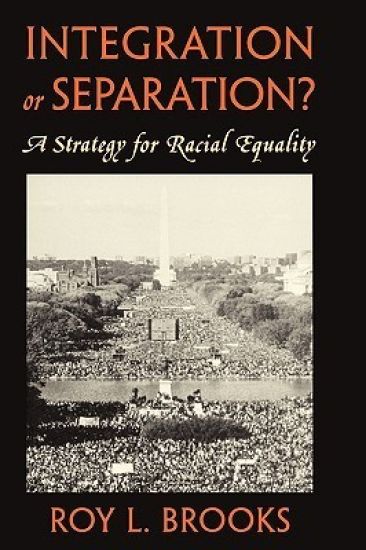
Integration or Separation?

Integration or Separation?

Roy L. Brooks

Harvard University Press
1999
nidottu
Integrated in principle, segregated in fact: is this the legacy of fifty years of "progress" in American racial policy? Is there hope for much better? Roy L. Brooks, a distinguished professor of law and a writer on matters of race and civil rights, says with frank clarity what few will admit--integration hasn't worked and possibly never will. Equally, he casts doubt on the solution that many African-Americans and mainstream whites have advocated: total separation of the races. This book presents Brooks's strategy for a middle way between the increasingly unworkable extremes of integration and separation.Limited separation, the approach Brooks proposes, shifts the focus of civil rights policy from the group to the individual. Defined as cultural and economic integration within African-American society, this policy would promote separate schooling, housing, and business enterprises where needed to bolster the self-sufficiency of the community, without trammeling the racial interests of individuals inside or outside of the group, and without endangering the idea of a shared Americanness. But all the while Brooks envisions African-American public schools, businesses, and communities redesigned to serve the enlightened self-interest of the individual. Unwilling to give up entirely on racial integration, he argues that limited separation may indeed lead to improved race relations and, ultimately, to healthy integration.This book appears at a crucial time, as Republicans dismantle past civil rights policies and Democrats search for new ones. With its alternative strategy and useful policy ideas for bringing individual African-Americans into mainstream society as first-class citizens, Integration or Separation? should influence debate and policymaking across the spectra of race, class, and political persuasion.
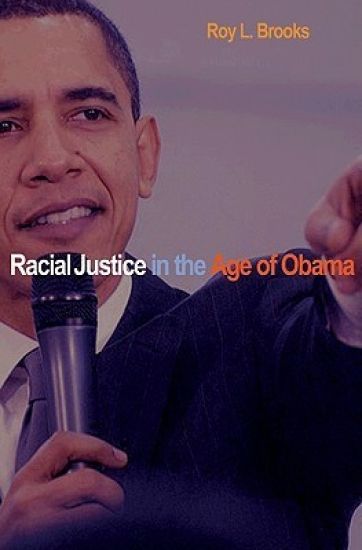
Racial Justice in the Age of Obama

Racial Justice in the Age of Obama

Roy L. Brooks

Princeton University Press
2009
sidottu
With the election of Barack Obama as the first black president of the United States, the issue of racial justice in America occupies center stage. Have black Americans finally achieved racial justice? Is government intervention no longer required? Racial Justice in the Age of Obama considers contemporary civil rights questions and theories, and offers fresh insights and effective remedies for race issues in America today. While there are now unprecedented opportunities for talented African Americans, Roy Brooks shows that lingering deficiencies remain within the black community. Exploring solutions to these social ills, Brooks identifies competing civil rights theories and perspectives, organizing them into four distinct categories--traditionalism, reformism, limited separation, and critical race theory. After examining each approach, Brooks constructs the best civil rights theory for the Obama phase of the post-civil rights era. Brooks supports his theoretical model with strong statistics that break down the major racial groups along such demographics as income and education. He factors in the cultural and structural explanations for the nation's racial divisions, and he addresses affirmative action, the failures of integration, the negative aspects of black urban culture, and the black community's limited access to resources. The book focuses on African Americans, but its lessons are relevant for other groups, including Latinos, Asians, women, and gays and lesbians. Racial Justice in the Age of Obama maps out today's civil rights questions so that all groups can achieve equality at a time of unprecedented historical change.
Diversity Judgments

Diversity Judgments

Roy L. Brooks

Cambridge University Press
2022
sidottu
The US Supreme Court's legitimacy-its diminishing integrity and contribution to the good of society-is being questioned today like no other time in recent memory. Criticisms reflect the perspectives of both 'insiders' (straight white males) and 'outsiders' (mainly people of color, women, and the LGBTQ community). Neither perspective digs deep enough to get at the root of the Court's legitimacy problem, which is one of process. The Court's process of decision-making is antiquated and out of sync with a society that looks and thinks nothing like the America of the eighteenth century, when the process was first implemented. The current process marginalizes many Americans who have a right to feel disenfranchised. Leading scholar of jurisprudence Roy L. Brooks demonstrates how the Court can modernize and democratize its deliberative process, to be more inclusive of the values and life experiences of Americans who are not straight white males.
Diversity Judgments

Diversity Judgments

Roy L. Brooks

Cambridge University Press
2022
pokkari
The US Supreme Court's legitimacy-its diminishing integrity and contribution to the good of society-is being questioned today like no other time in recent memory. Criticisms reflect the perspectives of both 'insiders' (straight white males) and 'outsiders' (mainly people of color, women, and the LGBTQ community). Neither perspective digs deep enough to get at the root of the Court's legitimacy problem, which is one of process. The Court's process of decision-making is antiquated and out of sync with a society that looks and thinks nothing like the America of the eighteenth century, when the process was first implemented. The current process marginalizes many Americans who have a right to feel disenfranchised. Leading scholar of jurisprudence Roy L. Brooks demonstrates how the Court can modernize and democratize its deliberative process, to be more inclusive of the values and life experiences of Americans who are not straight white males.
The Racial Glass Ceiling

The Racial Glass Ceiling

Roy L. Brooks

Yale University Press
2017
sidottu
A compelling study of a subtle and insidious form of racial inequality in American law and culture. Why does racial equality continue to elude African Americans even after the election of a black president? Liberals blame white racism while conservatives blame black behavior. Both define the race problem in socioeconomic terms, mainly citing jobs, education, and policing. Roy Brooks, a distinguished legal scholar, argues that the reality is more complex. He defines the race problem African Americans face today as a three-headed hydra involving socioeconomic, judicial, and cultural conditions. Focusing on law and culture, Brooks defines the problem largely as racial subordination—“the act of impeding racial progress in pursuit of nonracist interests.” Racial subordination is little understood and underacknowledged, yet it produces devastating and even deadly racial consequences that affect both poor and socioeconomically successful African Americans. Brooks addresses a serious problem, in many ways more dangerous than overt racism, and offers a well-reasoned solution that draws upon the strongest virtues America has exhibited to the world.