Kirjojen hintavertailu. Mukana 11 342 296 kirjaa ja 12 kauppaa.

Kirjahaku

Etsi kirjoja tekijän nimen, kirjan nimen tai ISBN:n perusteella.

8 kirjaa tekijältä Roy Morris

Ambrose Bierce

Ambrose Bierce

Roy Morris

Oxford University Press Inc
1999
nidottu
A lively and compelling portrait of one of the most acerbic and distinctive voices in American literature, Ambrose Bierce: Alone in Bad Company is a clear-eyed but sympathetic account of a complex individual at odds with his country, his family, his times, and himself. The only American writer of any stature to fight in and survive the Civil War, Bierce discovered in the conflict a bitter confirmation of his darkest assumptions about man and his nature. Profoundly disillusioned, Bierce spent the next fifty years struggling to disabuse his fellow Americans of their own cherished ideals -- be they romantic, religious, or political. His groundbreaking short stories of the war, including his most famous work, "An Occurrence at Owl Creek Bridge," have had a lasting influence on every subsequent American author dealing with war. And the heartless, hilarious aphorisms in his caustic lexicon The Devil's Dictionary have entered, often uncredited, our national consciousness. In this insightful, critically acclaimed biography, the first comprehensive study for almost fifty years, Roy Morris, Jr., accounts for both the influential art that Ambrose Bierce made from a harsh and unforgiving vision -- and the high price he had to pay for it in loneliness, rancour, and spiritual isolation.
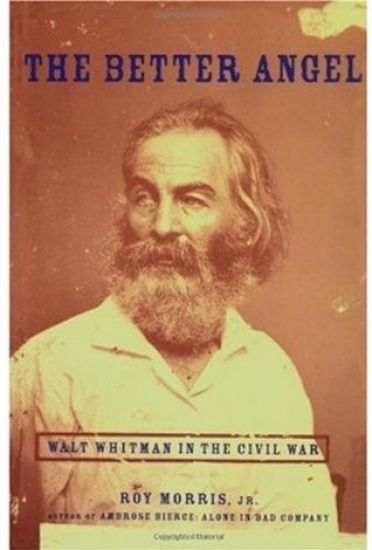
The Better Angel

The Better Angel

Roy Morris

Oxford University Press Inc
2001
nidottu
On May 26, 1863, Walt Whitman wrote to his mother: "O the sad, sad things I see--the noble young men with legs and arms taken off--the deaths--the sick weakness, sicker than death, that some endure, after amputations...just flickering alive, and O so deathly weak and sick." For nearly three years, Whitman immersed himself in the devastation of the Civil War, tending to thousands of wounded soldiers and recording his experience with an immediacy and compassion unequaled in wartime literature anywhere in the world. In The Better Angel, acclaimed biographer Roy Morris, Jr. gives us the fullest accounting of Whitman's profoundly transformative Civil War Years and an historically invaluable examination of the Union's treatment of its sick and wounded. Whitman was mired in depression as the war began, subsisting on journalistic hackwork, wasting his nights in New York's seedy bohemian underground, his "great career" as a poet apparently stalled. But when news came that his brother George had been wounded at Fredericksburg, Whitman rushed south to find him. Though his brother's injury was slight, Whitman was deeply affected by his first view of the war's casualties. He began visiting the camp's wounded and, almost by accident, found his calling for the duration of the war. Three years later, he emerged as the war's "most unlikely hero," a living symbol of American democratic ideals of sharing and brotherhood. Instead of returning to Brooklyn as planned, Whitman continued to visit the wounded soldiers in the hospitals in and around the capital. He brought them ice cream, tobacco, brandy, books, magazines, pens and paper, wrote letters for those who were not able and offered to all the enormous healing influence of his sympathy and affection. Indeed, several soldiers claimed that Whitman had saved their lives. One noted that Whitman "seemed to have what everybody wanted" and added "When this old heathen came and gave me a pipe and tobacco, it was about the most joyful moment of my life." Another wrote that "There is many a soldier that never thinks of you but with emotions of the greatest gratitude." But if Whitman gave much to the soldiers, they in turn gave much to him. In witnessing their stoic suffering, in listening to their understated speech, and in being always in the presence of death, Whitman evolved the new and more direct poetic style that was to culminate in his masterpiece, "When Lilacs Last in the Dooryard Bloom'd." Brilliantly researched and beautifully written, The Better Angel explores a side of Whitman not fully examined before, one that greatly enriches our understanding of his later poetry. More than that, it gives us a vivid and unforgettable portrait of the "other army"--the legions of sick and wounded soldiers who are usually left in the shadowy background of Civil War history--seen here through the unflinching eyes of America's greatest poet.
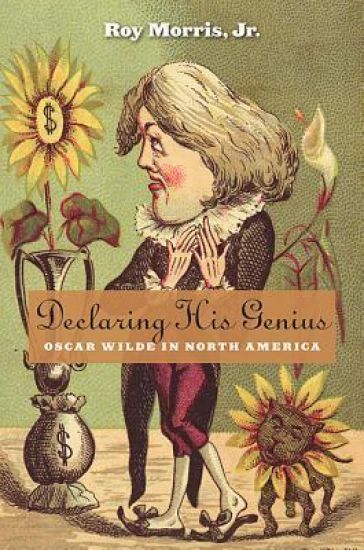
Declaring His Genius

Declaring His Genius

Roy Morris

The Belknap Press
2013
sidottu
Arriving at the port of New York in 1882, a 27-year-old Oscar Wilde quipped he had “nothing to declare but my genius.” But as Roy Morris, Jr., reveals in this sparkling narrative, Wilde was, for the first time in his life, underselling himself. A chronicle of the sensation that was Wilde’s eleven-month speaking tour of America, Declaring His Genius offers an indelible portrait of both Oscar Wilde and the Gilded Age.Wilde covered 15,000 miles, delivered 140 lectures, and met everyone who was anyone. Dressed in satin knee britches and black silk stockings, the long-haired apostle of the British Aesthetic Movement alternately shocked, entertained, and enlightened a spellbound nation. Harvard students attending one of his lectures sported Wildean costume, clutching sunflowers and affecting world-weary poses. Denver prostitutes enticed customers by crying: “We know what makes a cat wild, but what makes Oscar Wilde?” Whitman hoisted a glass to his health, while Ambrose Bierce denounced him as a fraud.Wilde helped alter the way post–Civil War Americans—still reeling from the most destructive conflict in their history—understood themselves. In an era that saw rapid technological changes, social upheaval, and an ever-widening gap between rich and poor, he delivered a powerful anti-materialistic message about art and the need for beauty. Yet Wilde too was changed by his tour. Having conquered America, a savvier, more mature writer was ready to take on the rest of the world. Neither Wilde nor America would ever be the same.
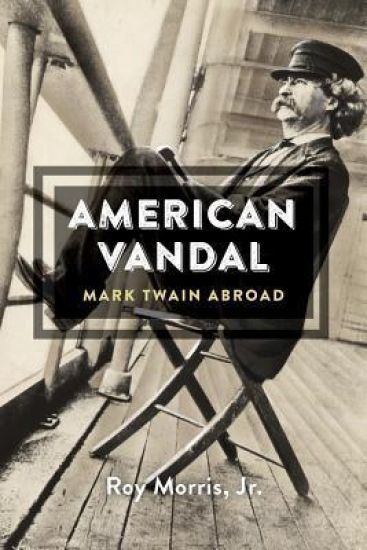
American Vandal

American Vandal

Roy Morris

The Belknap Press
2015
sidottu
For a man who liked being called the American, Mark Twain spent a surprising amount of time outside the continental United States. Biographer Roy Morris, Jr., focuses on the dozen years Twain spent overseas and on the popular travel books—The Innocents Abroad, A Tramp Abroad, and Following the Equator—he wrote about his adventures. Unintimidated by Old World sophistication and unafraid to travel to less developed parts of the globe, Twain encouraged American readers to follow him around the world at the dawn of mass tourism, when advances in transportation made leisure travel possible for an emerging middle class. In so doing, he helped lead Americans into the twentieth century and guided them toward more cosmopolitan views.In his first book, The Innocents Abroad (1869), Twain introduced readers to the “American Vandal,” a brash, unapologetic visitor to foreign lands, unimpressed with the local ambiance but eager to appropriate any souvenir that could be carried off. He adopted this persona throughout his career, even after he grew into an international celebrity who dined with the German Kaiser, traded quips with the king of England, gossiped with the Austrian emperor, and negotiated with the president of Transvaal for the release of war prisoners. American Vandal presents an unfamiliar Twain: not the bred-in-the-bone Midwesterner we associate with Huck Finn and Tom Sawyer but a global citizen whose exposure to other peoples and places influenced his evolving positions on race, war, and imperialism, as both he and America emerged on the world stage.
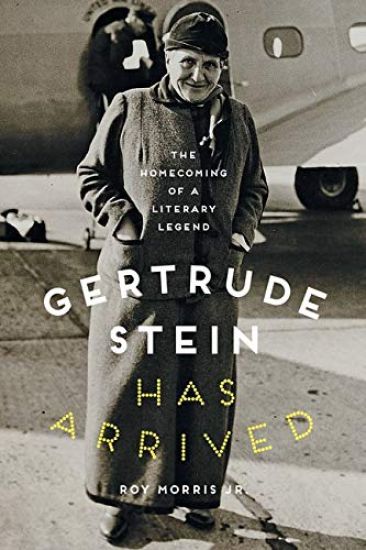
Gertrude Stein Has Arrived

Gertrude Stein Has Arrived

Roy Morris

Johns Hopkins University Press
2019
sidottu
The American book tour that catapulted Gertrude Stein from quirky artist to a household name.In 1933, experimental writer and longtime expatriate Gertrude Stein skyrocketed to overnight fame with the publication of an unlikely best seller, The Autobiography of Alice B. Toklas. Pantomiming the voice of her partner Alice, The Autobiography was actually Gertrude's work. But whoever the real author was, the uncharacteristically lucid and readable book won over the hearts of thousands of Americans, whose clamor to meet Gertrude and Alice in person convinced them to return to America for the first time in thirty years from their self-imposed exile in France. For more than six months, Gertrude and Alice crisscrossed America, from New England to California, from Minnesota to Texas, stopping at thirty-seven different cities along the way. They had tea with First Lady Eleanor Roosevelt, attended a star-studded dinner party at Charlie Chaplin's home in Beverly Hills, enjoyed fifty-yard-line seats at the annual Yale-Dartmouth football game, and rode along with a homicide detective through the streets of Chicago. They met with the Raven Society in Edgar Allan Poe's old room at the University of Virginia, toured notable Civil War battlefields, and ate Oysters Rockefeller for the first time at Antoine's Restaurant in New Orleans. Everywhere they went, they were treated like everyone's favorite maiden aunts—colorful, eccentric, and eminently quotable.In Gertrude Stein Has Arrived, noted literary biographer Roy Morris Jr. recounts with characteristic energy and wit the couple's rollicking tour, revealing how—much to their surprise—they rediscovered their American roots after three decades of living abroad. Entertaining and sympathetic, this clear-eyed account captures Gertrude Stein for the larger-than-life legend she was and shows the unique relationship she had with her indefatigable companion, Alice B. Toklas—the true power behind the throne.