Kirjojen hintavertailu. Mukana 11 342 296 kirjaa ja 12 kauppaa.

Kirjahaku

Etsi kirjoja tekijän nimen, kirjan nimen tai ISBN:n perusteella.

22 kirjaa tekijältä Roy Porter

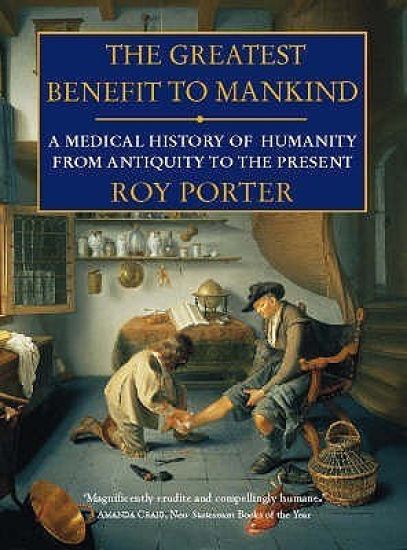
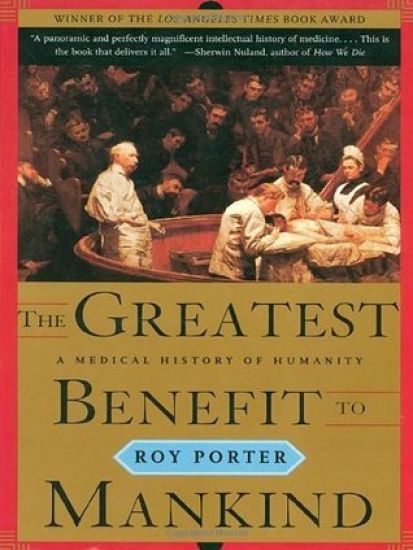
The Greatest Benefit to Mankind

The Greatest Benefit to Mankind

Roy Porter

HARPERCOLLINS PUBLISHERS
1999
nidottu
Medicine advances ever faster, and with it not just a capacity to overcome sickness, but to transform the very nature of life. Starting in ancient times, this text charts how this health revolution came about and how life for human beings in the West has ceased to be "nasty, brutish and short".
London

London

Roy Porter

Penguin Books Ltd
2000
pokkari
'Roy Porter, a historian of formidable range, turns to urban history in this marvellously lucid, informative and passionate book... Porter's facts are always at the service of the narrative, which has a finely maintained momentum, balancing statistics with the words of historians, diarists and novelists, poets and churchmen: Pepys, Boswell, Fielding, Walpole, Blake, Mayhew, Wells, Woolf, Spark, ... a timely and brilliant book.' CLAIRE TOMALIN, EVENING STANDARD 'A vivid celebration of the city, but also an elegy for its decline, bubbling with statistics and anecdote, from Boadicea to Betjeman.' RICHARD HOLMES, DAILY TELEGRAPH BOOKS OF THE YEAR
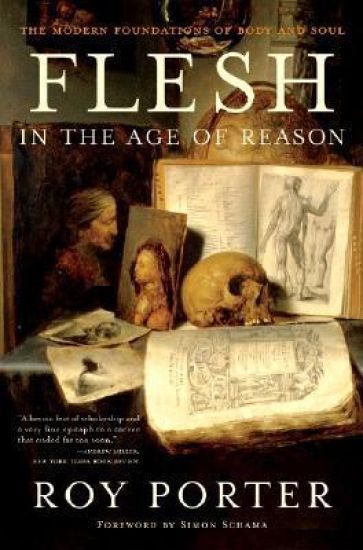
Flesh in the Age of Reason

Flesh in the Age of Reason

Roy Porter

Penguin Books Ltd
2005
pokkari
'As an introduction to early modern thinking and the impact of past ideas on present lives, this book can find few equals and no superiors. Porter is a witty, humane writer with an extraordinary vocabulary and a sparkling sense of fun. Whether he is quoting from obscure medical texts or analysing scabrous diaries, dishing the dirt on long-dead bigwigs or evoking sympathy for human suffering, his grasp is masterly and his erudition appealing. I wish I could read it again for the first time: you can.' Times Educational Supplement, Book of the Week In this startlingly brilliant sequel to the prize-winning ENLIGHTENMENT Roy Porter completes his lifetime's work, offering a magical, enthusiastic and charming account of the writings of some of the most attractive figures ever to write English.
Enlightenment

Enlightenment

Roy Porter

Penguin Books Ltd
2001
pokkari
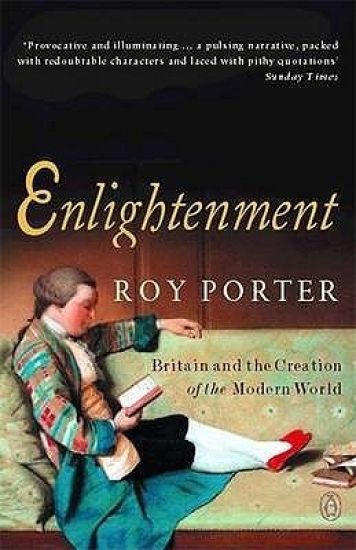
For generations the traditional focus for those wishing to understand the roots of the modern world has been France on the eve of the Revolution. Porter certainly acknowledges France's importance, but here makes an overwhelming case for consideringBritain the true home of modernity - a country driven by an exuberance, diversity and power of invention comparable only to twentieth-century America. Porter immerses the reader in a society which, recovering from the horrors of the Civil War and decisively reinvigorated by the revolution of 1688, had emerged as something new and extraordinary - a society unlike any other in the world.
Blood and Guts

Blood and Guts

Roy Porter

Penguin Books Ltd
2003
pokkari
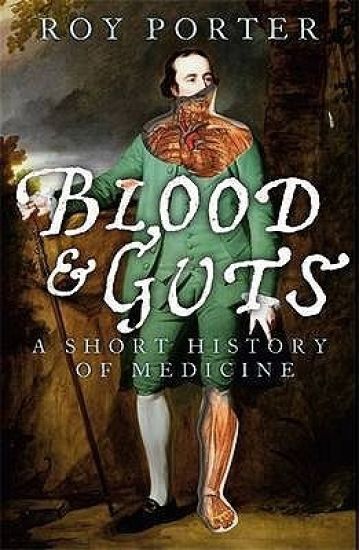
Mankind's battle to stay alive is the greatest of all subjects. This brief, witty and unusual book by Britain's greatest medical historian compresses into a tiny span a lifetime spent thinking about millennia of human ingenuity in the quest to cheat death. Each chapter sums up one of these battlefields (surgery, doctors, disease, hospitals, laboratories and the human body) in a way that is both frightening and elating. Startlingly illustrated, A SHORT HISTORY OF MEDICINE is the ideal presentfor anyone who is keenly aware of their own mortality and wants to do something about it. It is also a wonderful memorial to one of Penguin's greatest historians.
Madness

Madness

Roy Porter

Oxford University Press
2003
nidottu
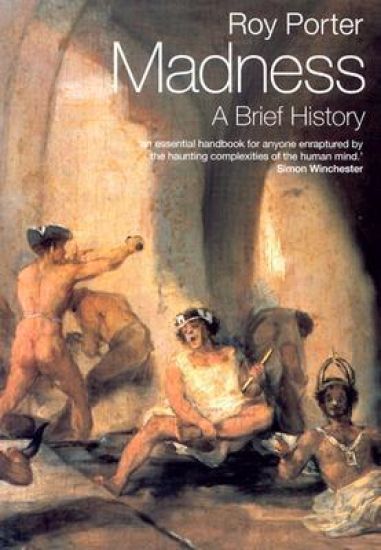
This work explores what we really mean by "madness", covering an enormous range of topics from witches to creative geniuses, electric shock therapy to sexual deviancy, psychoanalysis to prozac.
The Enlightenment

The Enlightenment

Roy Porter

Red Globe Press
2001
nidottu
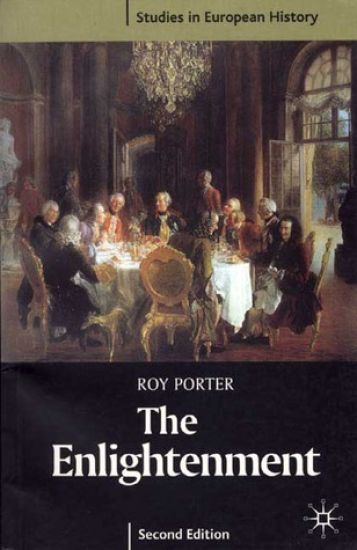
The eighteenth-century Enlightenment was one of the most exciting and significant currents of European culture. Battling against tyranny, ignorance and superstition, it formulated the ideals which still inform our society today: a belief in reason, criticism, freedom of thought, religion and expression, the value of science, the pursuit of progress. Enlightenment thinkers undermined the ancien regime and provided the ideas for the French Revolution. Modern scholarship, however, has shown it was a more complex and ambiguous movement than commonly recognized. This book, now in a fully updated second edition, sympathetically explores the complexities of the Enlightenment. Synthesizing and evaluating the latest scholarship, it offers a new and comprehensive vision of this many-faceted movement.
The Greatest Benefit to Mankind: A Medical History of Humanity
Hailed as "a remarkable achievement" (Boston Globe) and as "a triumph: simultaneously entertaining and instructive, witty and thought-provoking...a splendid and thoroughly engrossing book" (Los Angeles Times), Roy Porter's charting of the history of medicine affords us an opportunity as never before to assess its culture and science and its costs and benefits to mankind. Porter explores medicine's evolution against the backdrop of the wider religious, scientific, philosophical, and political beliefs of the culture in which it develops, covering ground from the diseases of the hunter-gatherers to the more recent threats of AIDS and Ebola, from the clearly defined conviction of the Hippocratic oath to the muddy ethical dilemmas of modern-day medicine. Offering up a treasure trove of historical surprises along the way, this book "has instantly become the standard single-volume work in its field" (The Lancet).
Flesh In The Age Of Reason

Flesh In The Age Of Reason

Roy Porter

WW Norton Co
2018
pokkari
A professor of social history shares a lifetime of insights into the metaphysics of the body by retracing the emergence of a renaissance understanding of the body and the fading notion of a soul contained within it. Reprint. 15,000 first printing.
The Making of Geology

The Making of Geology

Roy Porter

Cambridge University Press
2008
pokkari
Between the mid-seventeenth century and the early nineteenth century there developed in Britain a range of empirical and increasingly secular sciences concerned with the earth. This book presents a detailed account of how this development led to the creation of a complex socio-intellectual fabric of methods, ambitions, facts and ideas which took on the nature of a distinctive, self-sustaining discipline: 'geology'. During this period the criteria for a proper science of the earth were continually reassessed and the earth as an object of science was radically reinterpreted. In his account of this transformation, Dr Porter treats science as an integral but distinct part of the spectrum of man's intellectual and social activities. His account thus illuminates the nature of science and scientific knowledge as a dynamic intellectual, social and cultural enterprise. The book will be of interest not only to historians and philosophers of science but also to social historians and geologists.
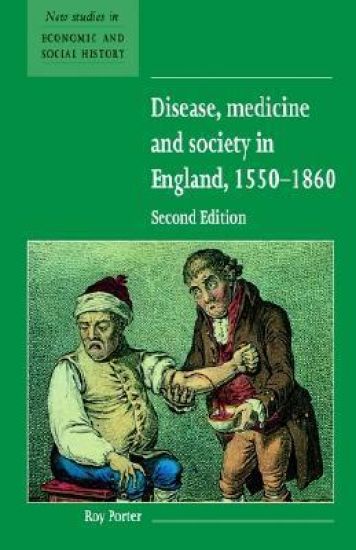
Disease, Medicine and Society in England, 1550–1860

Disease, Medicine and Society in England, 1550–1860

Roy Porter

Cambridge University Press
1995
pokkari
In his short but authoritative study, Roy Porter examines the impact of disease upon the English and their responses to it before the widespread availability and public provision of medical care. Professor Porter incorporates into the revised second edition new perspectives offered by recent research into provincial medical history, the history of childbirth, and women’s studies in the social history of medicine. He begins by sketching a picture of the threats posed by disease to population levels and social continuity from Tudor times to the Industrial Revolution, going on to consider the nature and development of the medical profession, attitudes to doctors and disease, and the growing commitment of the state to public health. Drawing together a wide range of often fragmentary material, and providing a detailed annotated bibliography, this book is an important guide to the history of medicine and to English social history.
Madmen

Madmen

Roy Porter

The History Press Ltd
2004
sidottu
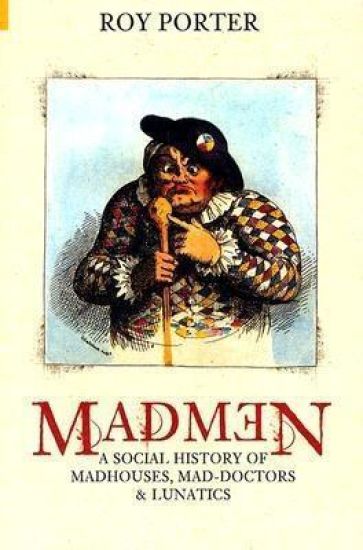
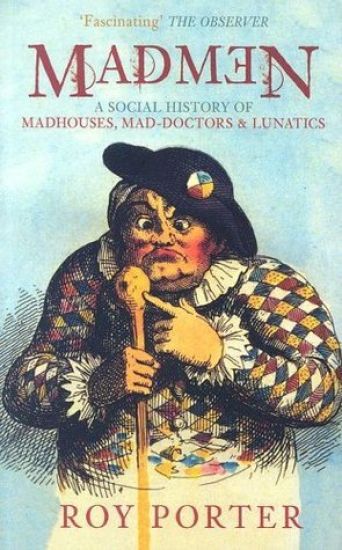
What was it like to be insane in the Georgian England of Mary Wollstonecraft and Coleridge (himself afflicted with madness?) How were our eighteenth-century ancestors confined and how were they treated by the fledgling psychiatric 'profession'? Indeed, how was the most famous mad person of the century - Shelley's 'old, mad, blind, despised king' George III - treated before his final descent into senility in 1808? Best-selling popular historian Roy Porter looks at the bizarre and savage practices of mad-doctors treating those afflicted by 'manias', ranging from huge doses of opium, blood-letting and cold-water immersion to beatings, confinement in cages and blistering.The author reveals how Bethlem - the London asylum created to care for the capital's mentally sick - was riddled with sadism and embezzlement, and if that wasn't dehumanising enough, jeering, ogling sightseers were permitted entry - for a fee of course.
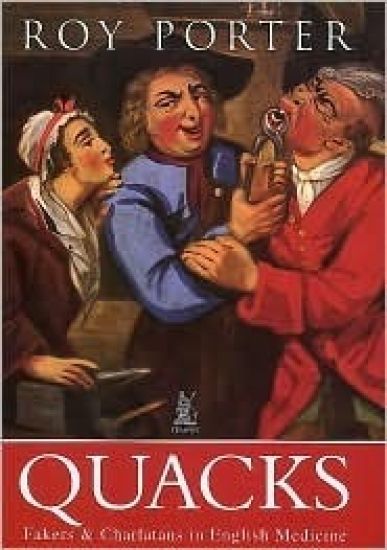
Quacks

Quacks

Roy Porter

NPI Media Group
2003
nidottu
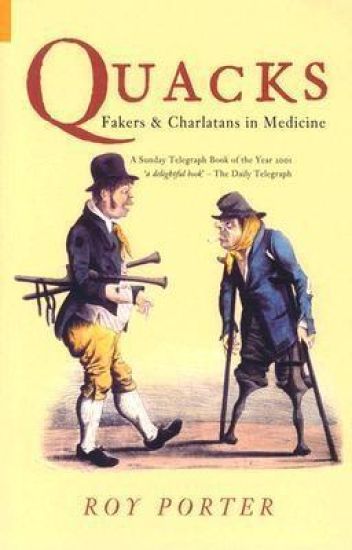
If the thought of visiting the doctor or having a spell in the hospital gives most people pause to contemplate their mortality, then such thoughts must pale when compared to the experiences of our ancestors. They were largely at the mercy of a medical fraternity renowned more for the eccentricity of their cures than their efficacy. From the pisse prophets who would gaze upon a patient s urine to establish the most accurate diagnosis, to the pushers of such remedies as Walkers Jesuit Drops to cure venereal disease, "Quacks" is a thrilling history of opportunists, charlatans, conmen, some deludedly sincere doctors, andultimatelyof our own enduring credulity."
Madmen

Madmen

Roy Porter

The History Press Ltd
2006
nidottu
What was it like to be insane in the Georgian England of Mary Wollstonecraft and Coleridge (himself afflicted with madness?) How were our eighteenth-century ancestors confined and how were they treated by the fledgling psychiatric 'profession'? Indeed, how was the most famous mad person of the century - Shelley's 'old, mad, blind, despised king' George III - treated before his final descent into senility in 1808?Best-selling popular historian Roy Porter looks at the bizarre and savage practices of mad-doctors treating those afflicted by 'manias', ranging from huge doses of opium, blood-letting and cold-water immersion to beatings, confinement in cages and blistering. The author reveals how Bethlem - the London asylum created to care for the capital's mentally sick - was riddled with sadism and embezzlement, and if that wasn't dehumanising enough, jeering, ogling sightseers were permitted entry - for a fee of course.
Doctor of Society

Doctor of Society

Roy Porter

Routledge
2016
sidottu
First published in 1992, this book explores how we come to hold our present attitudes towards health, sickness and the medical profession. Roy Porter argues that the outlook of the age of Enlightenment was crucially important in the creation of modern thinking about disease, doctors and society. To illustrate this viewpoint, he focuses on Thomas Beddoes, a prominent doctor of the eighteenth century and examines his challenging, pugnacious, radical and often amusing views on a wide range of issues concerning the place of illness and medicine in society. Many modern debates in medicine continue to echo the topics which Beddoes himself discussed in his ever-trenchant and provocative manner. This book will be of interest to those studying the history of medicine, social history and the Enlightenment.
Doctor of Society

Doctor of Society

Roy Porter

Routledge
2018
nidottu
First published in 1992, this book explores how we come to hold our present attitudes towards health, sickness and the medical profession. Roy Porter argues that the outlook of the age of Enlightenment was crucially important in the creation of modern thinking about disease, doctors and society. To illustrate this viewpoint, he focuses on Thomas Beddoes, a prominent doctor of the eighteenth century and examines his challenging, pugnacious, radical and often amusing views on a wide range of issues concerning the place of illness and medicine in society. Many modern debates in medicine continue to echo the topics which Beddoes himself discussed in his ever-trenchant and provocative manner. This book will be of interest to those studying the history of medicine, social history and the Enlightenment.
Bodies Politic

Bodies Politic

Roy Porter

Reaktion Books
2021
nidottu
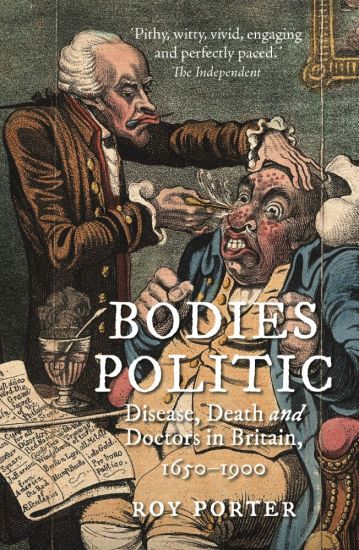
In this historical tour de force, now available in B-format paperback, Roy Porter takes a critical look at representations of the body in health, disease and death in Britain from the mid-seventeenth to the twentieth century. Porter argues that great symbolic weight was attached to contrasting conceptions of the healthy and diseased body, and that such ideas were mapped onto antithetical notions of the good and the bad, the beautiful and the ugly. With these images in mind, he explores aspects of being ill alongside the practice of medicine, paying special attention to self-presentations by physicians, surgeons and quacks, and to changes in practitioners’ public identities over time. Porter also examines the wider symbolic meanings of disease and doctoring and the ‘body politic’. Porter’s book is packed with outrageous and amusing anecdotes portraying diseased bodies and medical practitioners alike.