Kirjojen hintavertailu. Mukana 11 244 527 kirjaa ja 12 kauppaa.

Kirjahaku

Etsi kirjoja tekijän nimen, kirjan nimen tai ISBN:n perusteella.

3 kirjaa tekijältä Rumee Ahmed

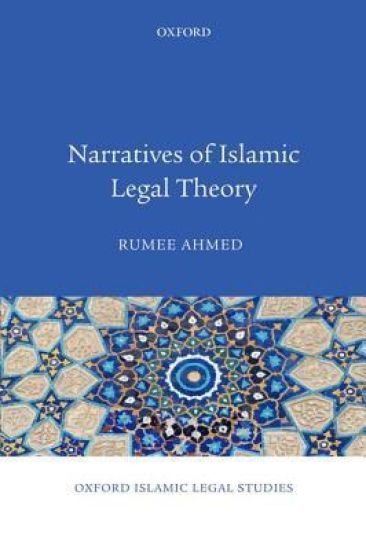
Narratives of Islamic Legal Theory

Narratives of Islamic Legal Theory

Rumee Ahmed

Oxford University Press
2012
sidottu
In the critical period when Islamic law first developed, a new breed of jurists developed a genre of legal theory treatises to explore how the fundamental moral teachings of Islam might operate as a legal system. Seemingly rhetorical and formulaic, these manuals have long been overlooked for the insight they offer into the early formation of Islamic conceptions of law and its role in social life. In this book, Rumee Ahmed shatters the prevailing misconceptions of the purpose and form of the Islamic legal treatise. Ahmed describes how Muslim jurists used the genre of legal theory to argue for individualized, highly creative narratives about the application of Islamic law while demonstrating loyalty to inherited principles and general prohibitions. These narratives are revealed through careful attention to the nuanced way in which legal theorists defined terms and concepts particular to the legal theory genre, and developed pictures of multiple worlds in which Islamic law should ideally function. Ahmed takes the reader into the logic of Islamic legal theory to uncover diverse conceptions of law and legal application in the Islamic tradition, clarifying and making accessible the sometimes obscure legal theories of central figures in the history of Islamic law. The book offers important insights about the ways in which legal philosophy and theology mutually influenced premodern jurists as they formulated their respective visions of law, ethics, and theology. The volume is the first in the Oxford Islamic Legal Studies series. Satisfying the growing interest in Islam and Islamic law, the series speaks to both specialists and those interested in the study of a legal tradition that shapes lives and societies across the globe. The series features innovative and interdisciplinary studies that explore Islamic law as it operates in shaping private decision making, binding communities, and as domestic positive law. The series also sheds new light on the history and jurisprudence of Islamic law and provides for a richer understanding of the state of Islamic law in the contemporary Muslim world, including parts of the world where Muslims are minorities.
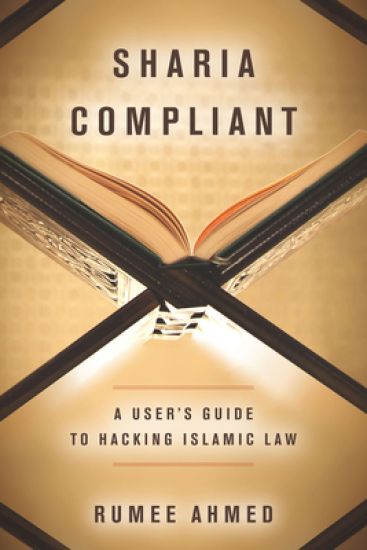
Sharia Compliant

Sharia Compliant

Rumee Ahmed

STANFORD UNIVERSITY PRESS
2018
sidottu
For over a thousand years, Muslim scholars worked to ensure that Islamic law was always fresh and vibrant, that it responded to the needs of an evolving Muslim community and served as a moral and spiritual compass. They did this by "hacking" Islamic law in accordance with changing times and contexts, diving into the interconnected Islamic legal tradition to recalibrate what was outdated, making some laws work better and more efficiently while leaving others undisturbed. These hacking skills made Islamic law both flexible and relevant so that it could meet the needs of a community with changing values while remaining true to its ancient roots. Today, the hacking process has stalled in the face of unprecedented structural challenges, and Islamic law has stagnated. This book is designed to revitalize the hacking tradition by getting readers involved in the process. It walks them through the ins and outs of Islamic legal change, vividly describing how Muslim scholars have met new and evolving challenges on topics as diverse as abolition, democracy, finance, gender, human rights, sexuality, and more. And it provides step-by-step instructions for readers to hack laws for themselves, so that through their engagement and creativity, they can help Islamic law regain its intrinsic vitality and resume its role as a forward-looking source for good in the world.
Sharia Compliant

Sharia Compliant

Rumee Ahmed

Stanford University Press
2018
pokkari
For over a thousand years, Muslim scholars worked to ensure that Islamic law was always fresh and vibrant, that it responded to the needs of an evolving Muslim community and served as a moral and spiritual compass. They did this by "hacking" Islamic law in accordance with changing times and contexts, diving into the interconnected Islamic legal tradition to recalibrate what was outdated, making some laws work better and more efficiently while leaving others undisturbed. These hacking skills made Islamic law both flexible and relevant so that it could meet the needs of a community with changing values while remaining true to its ancient roots. Today, the hacking process has stalled in the face of unprecedented structural challenges, and Islamic law has stagnated. This book is designed to revitalize the hacking tradition by getting readers involved in the process. It walks them through the ins and outs of Islamic legal change, vividly describing how Muslim scholars have met new and evolving challenges on topics as diverse as abolition, democracy, finance, gender, human rights, sexuality, and more. And it provides step-by-step instructions for readers to hack laws for themselves, so that through their engagement and creativity, they can help Islamic law regain its intrinsic vitality and resume its role as a forward-looking source for good in the world.