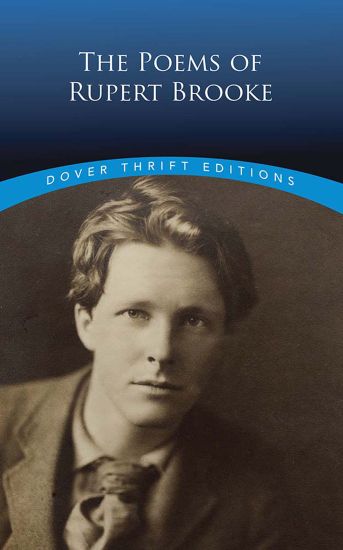
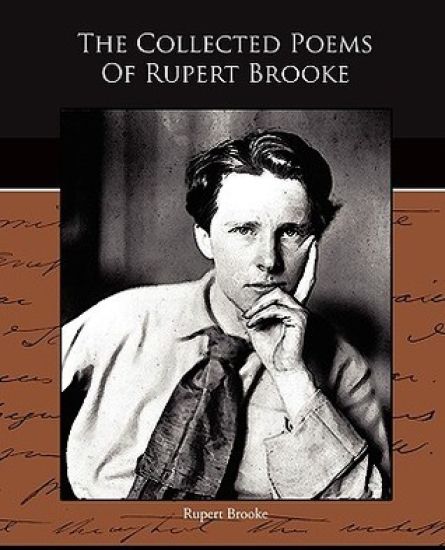
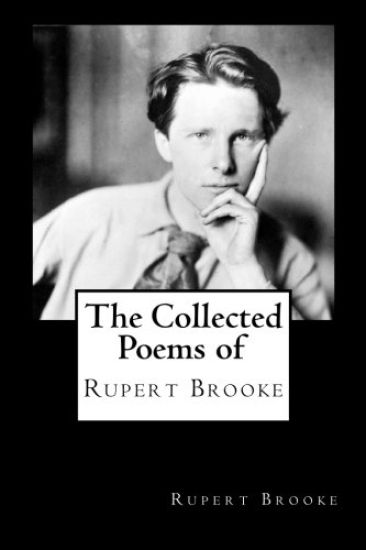
The poetry of Rupert Brooke remains memorable for its charming lyrical quality and the way in which his sonnets perfectly recapture the mood of England at the start of World War I. This volume reprints his complete oeuvre, from the early lyric poems to those written shortly before his death: "The Old Vicarage, Grantchester," "Tiare Tahiti," "The Great Lover," "The Dead," "The Soldier," and many others.
Contents Include 1905-1908 Second Best Day that I have Loved Sleeping Out-Full Moon In Examination Pine-Trees and the Sky: Evening Wagner The Vision of the Archangels Seaside On the Death of Smet-Smet The Song of the Pilgrims The Song of the Beasts Failure Ante Aram Dawn The Call The Wayfarers The Begginer EXPERIMENTS-Choriambics-I CHORIAMBICS-II Desertion 1908-1911 Sonnet: Oh Death will find me, etc GRANTCHESTER-The Old Vicarage, Grantchester OTHER POEMS Beauty and Beauty Song, etc THE SOUTH SEAS Mutability Clouds A Memory, etc 1914 The Treasure Peace Safety The Dead The Soldi
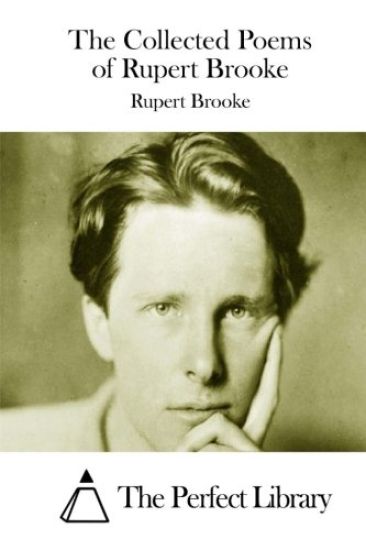
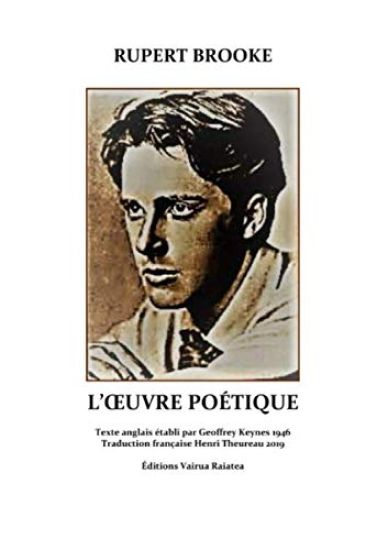
Rupert Chawner Brooke (3 August 1887 - 23 April 1915) was an English poet known for his idealistic war sonnets written during the First World War, especially "The Soldier". He was also known for his boyish good looks, which were said to have prompted the Irish poet W. B. Yeats to describe him as "the handsomest young man in England". He was commissioned into the Royal Naval Volunteer Reserve as a temporary Sub-Lieutenant shortly after his 27th birthday and took part in the Royal Naval Division's Antwerp expedition in October 1914. He sailed with the British Mediterranean Expeditionary Force on 28 February 1915 but developed sepsis from an infected mosquito bite. He died at 4:46 pm on 23 April 1915 in a French hospital ship moored in a bay off the island of Skyros in the Aegean on his way to the landing at Gallipoli. As the expeditionary force had orders to depart immediately, he was buried at 11 pm in an olive grove on Skyros, Greece.
The Collected Poems Of Rupert Brooke is a comprehensive anthology of the poetry written by the renowned English poet, Rupert Brooke. The book contains all of Brooke's published poems, including his most famous works such as ""The Soldier"" and ""The Great Lover"". The poems in this collection are arranged chronologically, allowing readers to trace the evolution of Brooke's writing style over the course of his life. The book also includes a biographical introduction that provides insight into Brooke's life and the historical context in which he lived. Brooke's poetry is known for its romanticism, patriotism, and idealism, making this collection a must-read for fans of early 20th-century English poetry. Overall, The Collected Poems Of Rupert Brooke is a timeless collection of poetry that captures the spirit of a generation and offers a glimpse into the mind of one of England's most celebrated poets.This Is A New Release Of The Original 1915 Edition.This scarce antiquarian book is a facsimile reprint of the old original and may contain some imperfections such as library marks and notations. Because we believe this work is culturally important, we have made it available as part of our commitment for protecting, preserving, and promoting the world's literature in affordable, high quality, modern editions, that are true to their original work.
Rupert Brooke was both fair to see and winning in his ways. There was at the first contact both bloom and charm; and most of all there was life. To use the word his friends describe him by, he was "vivid". This vitality, though manifold in expression, is felt primarily in his sensations - surprise mingled with delight - "One after one, like tasting a sweet food." This is life's "first fine rapture". It makes him patient to name over those myriad things (each of which seems like a fresh discovery) curious but potent, and above all common, that he "loved", - he the "Great Lover". Lover of what, then? Why, of "White plates and cups clean-gleaming, Ringed with blue lines," - and the like, through thirty lines of exquisite words; and he is captivated by the multiple brevity of these vignettes of sense, keen, momentary, ecstatic with the morning dip of youth in the wonderful stream. The poem is a catalogue of vital sensations and "dear names" as well. "All these have been my loves."