Kirjojen hintavertailu. Mukana 11 342 296 kirjaa ja 12 kauppaa.

Kirjahaku

Etsi kirjoja tekijän nimen, kirjan nimen tai ISBN:n perusteella.

10 kirjaa tekijältä Rupert Christiansen

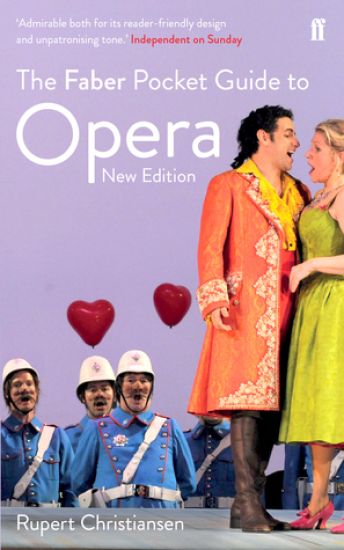
The Faber Pocket Guide to Opera

The Faber Pocket Guide to Opera

Rupert Christiansen

Faber Faber
2014
pokkari
This new edition of leading opera critic Rupert Christiansen's perennially popular Pocket Guide has between extensively revised, and incorporates many more operas from all periods, including recent works by Philip Glass, Mark Anthony Turnage, Thomas Adès and George Benjamin. Whether you are a first-timer at La Boheme or a seasoned Wagnerian, every opera-goer can benefit from a little background information, and this book aims to provide just that. Accessible and easy-to-use, it contains entries for over a hundred works, both familiar and unfamiliar.
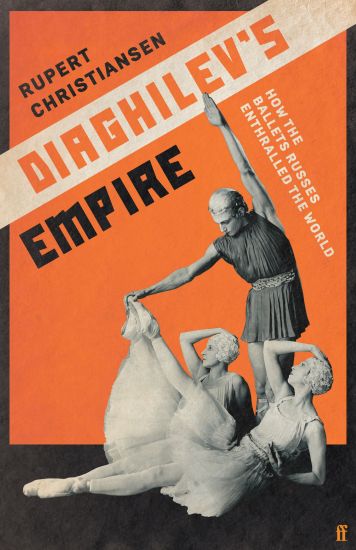
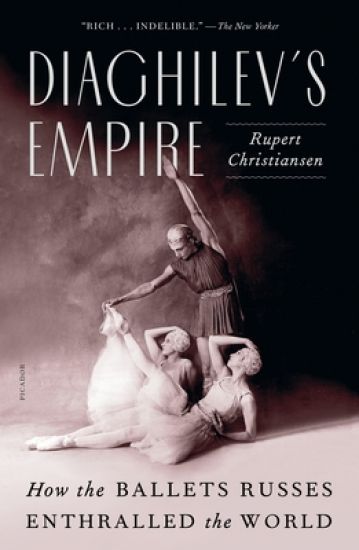
Diaghilev's Empire

Diaghilev's Empire

Rupert Christiansen

FABER FABER
2022
sidottu
Serge Diaghilev was the Russian impresario who is often said to have invented the modern art form of ballet. Commissioning such legendary names as Nijinsky, Fokine, Stravinsky, and Picasso, this intriguingly complex genius produced a series of radically original art works that had a revolutionary impact throughout the western world.Off stage and in its wake came scandal and sensation, as the great artists and mercurial performers involved variously collaborated, clashed, competed while falling in and out of love with each other on a wild carousel of sexual intrigue and temperamental mayhem. The Ballets Russes not only left a matchless artistic legacy - they changed style and glamour, they changed taste, and they changed social behaviour.The Ballets Russes came to an official end after many vicissitudes with Diaghilev's abrupt death in 1929. But the achievements of its heroic prime had established a paradigm that would continue to define the terms and set the standards for the next. Published to mark the hundred and fiftieth anniversary of Diaghilev's birth, Rupert Christiansen - leading critic and self-confessed 'incurable balletomane' - presents this freshly researched and challenging reassessment of a unique phenomenon, exploring passionate conflicts and outsize personalities in a story embracing triumph and disaster.
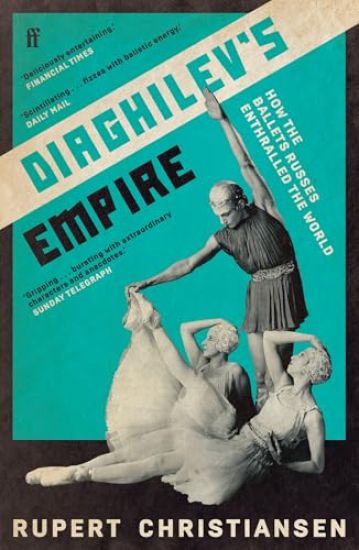
Diaghilev's Empire

Diaghilev's Empire

Rupert Christiansen

FABER FABER
2024
nidottu
'Deliciously entertaining.' Financial Times'Scintillating . . . fizzes with balletic energy.' Daily Mail'Gripping . . . bursting with extraordinary characters and anecdotes.' Sunday Telegraph'An extraordinary tale, enthrallingly told.' GramophoneSuch was the credo of the ruthlessly manipulative and resourceful Serge Diaghilev - the Russian impresario who created the modern art form of ballet. Commissioning such legendary names as Nijinsky, Fokine, Stravinsky and Picasso, he produced a series of radically original works that had a revolutionary impact throughout the Western world. Off stage there was scandal and sensation, collaboration and competition, tempestuous affairs and a wild carousel of mayhem.The Ballet Russes left a matchless artistic legacy, ending with the abrupt death of Diaghilev in 1929. But the achievements of its heroic prime would continue to set the standards for the next era.
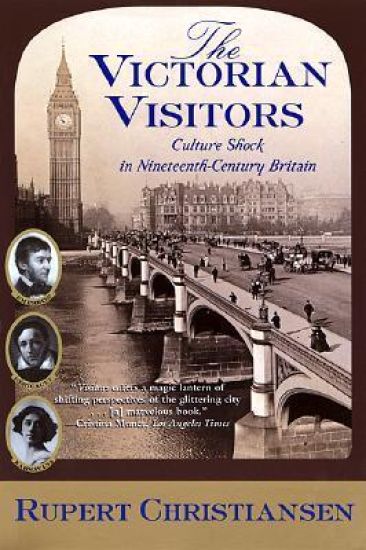
The Victorian Visitors

The Victorian Visitors

Rupert Christiansen

Grove Press / Atlantic Monthly Press
2002
pokkari
A lively account of London's most colorful visitors during the Victorian era sheds light on the English periods of Theodore Gericault, Richard Wagner, Ralph Waldo Emerson, and other foreigners living in the great city during this seminal period in world history. Reprint.
Diaghilev's Empire: How the Ballets Russes Enthralled the World
A Best Book of the Year at The New Yorker and The Telegraph "Amusing and assertive . . . Christiansen's] delight is infectious." --Alexandra Jacobs, The New York Times Book Review Rupert Christiansen, a renowned dance critic and arts correspondent, presents a sweeping history of the Ballets Russes and of Serge Diaghilev's dream of bringing Russian art and culture to the West. Serge Diaghilev, the Russian impresario and founder of the Ballets Russes, is often said to have invented modern ballet. An art critic and connoisseur, Diaghilev had no training in dance or choreography, but he had a dream of bringing Russian art, music, design, and expression to the West and a mission to drive a cultural and artistic revolution. Bringing together such legendary talents as Vaslav Nijinsky, Anna Pavlova, Igor Stravinsky, Pablo Picasso, and Henri Matisse, this complex and visionary genius created a new form of ballet defined by artistic integrity, creative freedom, and an all-encompassing experience of art, movement, and music. The explosive color combinations, sensual and androgynous choreography, and experimental sounds of the Ballets Russes were called "barbaric" by the Parisian press, but its radical style usurped the entrenched mores of traditional ballet and transformed the European cultural sphere at large. Diaghilev's Empire, the publication of which marks the one hundred fiftieth anniversary of Diaghilev's birth, is a daring, impeccably researched reassessment of the phenomenon of the Ballets Russes and the Russian Revolution in twentieth-century art and culture. Rupert Christiansen, a leading dance critic, explores the fiery conflicts, outsize personalities, and extraordinary artistic innovations that make up this enduring story of triumph and disaster.
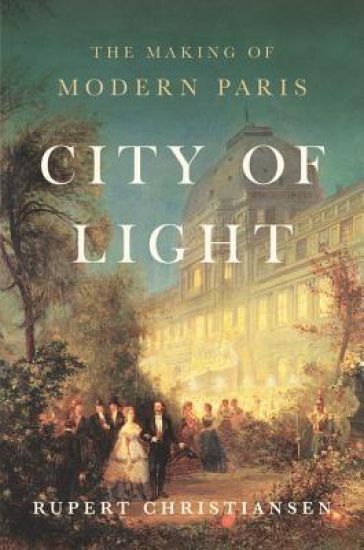
City of Light: The Making of Modern Paris

City of Light: The Making of Modern Paris

Rupert Christiansen

BASIC BOOKS
2018
sidottu
A sparkling account of the nineteenth-century reinvention of Paris as the most beautiful, exciting city in the world In 1853, French emperor Louis Napoleon inaugurated a vast and ambitious program of public works in Paris, directed by Georges-Eug Haussmann, the prefect of the Seine. Haussmann transformed the old medieval city of squalid slums and disease-ridden alleyways into a "City of Light" characterized by wide boulevards, apartment blocks, parks, squares and public monuments, new rail stations and department stores, and a new system of public sanitation. City of Light charts this fifteen-year project of urban renewal which -- despite the interruptions of war, revolution, corruption, and bankruptcy -- set a template for nineteenth and early twentieth-century urban planning and created the enduring landscape of modern Paris now so famous around the globe. Lively and engaging, City of Light is a book for anyone who wants to know how Paris became Paris.
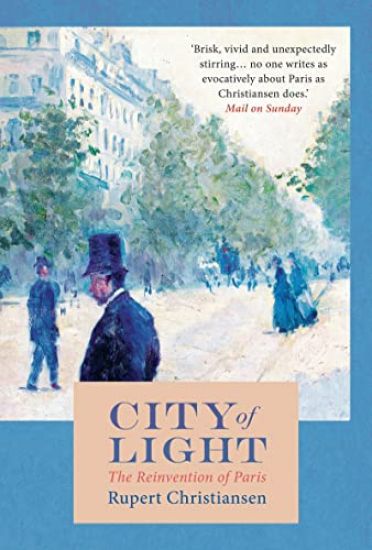
City of Light

City of Light

Rupert Christiansen

Apollo
2021
nidottu
A sparkling account of the nineteenth-century rebuilding of Paris as the most beautiful city in the world, as part of the stunning Landmark Library series. 'This really is an impressive book' Sebastian Faulks. 'Brisk, vivid and unexpectedly stirring... No one writes as evocatively and entertainingly about Paris as Christiansen does' Mail on Sunday. 'Every page is a pleasure, every building, every gas lamp brought shimmering to life... Don't board the Eurostar without a copy' The Times. 'A wonderful book, amazingly vivid... But also a truly original work of scholarship' Theodore Zeldin. In 1853 the French emperor Louis Napoleon inaugurated a vast and ambitious programme of public works, directed by Georges-Eugène Haussmann, the prefect of the Seine. Haussmann's renovation of Paris would transform the old medieval city of squalid slums and disease-ridden alleyways into a 'City of Light' – characterised by wide boulevards, apartment blocks, parks, squares and public monuments, new railway stations and department stores and a new system of public sanitation. City of Light charts a fifteen-year project of urban renewal which – despite the interruptions of war, revolution, corruption and bankruptcy – would set a template for nineteenth and early twentieth-century urban planning and create the enduring and globally familiar layout of modern Paris.
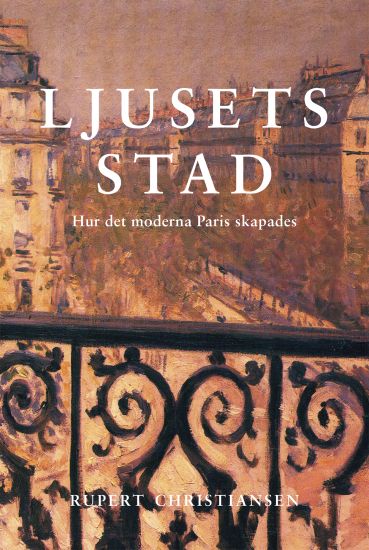
Ljusets stad : hur det moderna Paris skapades

Ljusets stad : hur det moderna Paris skapades

Rupert Christiansen

Bokförlaget Daidalos
2019
sidottu
»Elegant, lärd och informativ [...] Christiansens bok kommer få dig att vilja upptäcka Paris» /»New York Times Book Review» »Om du är på väg till Paris, se till att packa ner Ljusets stad.» /»Sunday Times» Under artonhundratalets senare hälft var Paris i färd med att bli en storstädernas storstad och en symbol för modernitet och konsumtion, överflöd och utsatthet. Själva det fysiska stadsrummet förvandlades påtagligt på bara några decennier när det medeltida gyttret av byggnader successivt ersattes med stora huskroppar längs med breda och raka gator, boulevarder. Denna förvandling brukar förknippas med Georges-Eugène Haussmann (ofta kallad Baron Haussmann), som formellt var prefekt för Seine men fick extraordinära befogenheter av kejsar Napoleon III. Mycket av det som vi idag uppfattar som typiskt parisiskt var ett resultat av Haussmanns på sin tid ofta omstridda förändringsiver. Kulturskribenten och Pariskännaren Rupert Christiansen låter oss följa den här förvandlingen på nära håll och visar hur en rad konkreta faktorer, inklusive Napoleon III:s excentricitet och Haussmanns renlighetsiver, kom att påverka slut­resultatet. Men han lyfter också fram de politiska, demografiska och ekonomiska processer som hade betydelse i sammanhanget, Paris var inte minst en stad med starka sociala spänningar. Historiska förlopp rymmer ofta motsägelser – och det gör omvandlingen av städer också.. Rupert Christiansen är kritiker och författare. Sedan 1997 är han medlem av Royal Society of Literature.