Kirjojen hintavertailu. Mukana 11 244 527 kirjaa ja 12 kauppaa.

Kirjahaku

Etsi kirjoja tekijän nimen, kirjan nimen tai ISBN:n perusteella.

2 kirjaa tekijältä Rupert Lewis

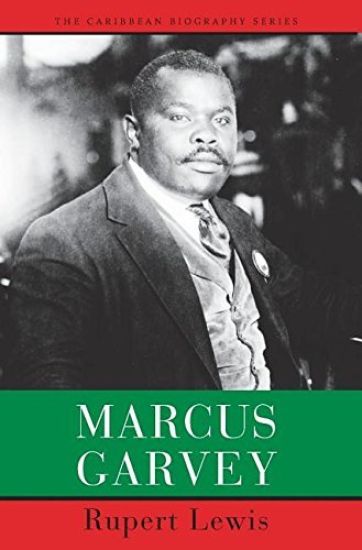
Marcus Garvey

Marcus Garvey

Rupert Lewis

University of the West Indies Press
2018
sidottu
This biography of Marcus Garvey documents the forging of his remarkable vision of pan-Africanism and highlights his organizational skills in framing a response to the radical global popular upsurge following the First World War (1914–1918).Central to Garvey’s response was the development of organizations under the umbrella of the Universal Negro Improvement Association and African Communities League, which garnered the transnational support of several million members and sympathizers and challenged white supremacist practices and ideas.Garvey established the ideological pillars of twentieth-century pan-Africanism in promoting self-determination and self-reliance for Africa’s independence. Although Garvey travelled widely and lived abroad in New York and London, hespent his early years in Jamaica. Rupert Lewis traces how Garvey’s Jamaican formation shaped his life and thought and how he combated the British colonial authorities as well as fought deep-rooted self-doubt and self-rejection among Jamaican black people. Garvey’s much neglected political and cultural work at the local level is discussed as part of his project to stimulate self-determination in Africa and its diaspora.
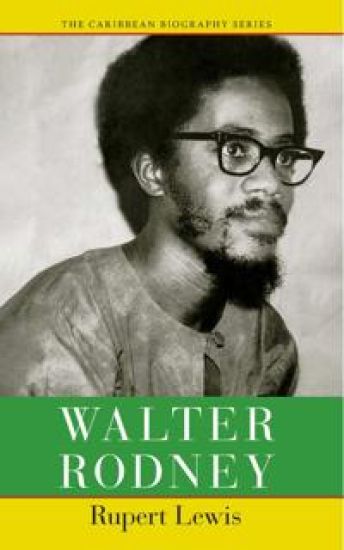
Walter Rodney

Walter Rodney

Rupert Lewis

University of the West Indies Press
2024
nidottu
Among the critical questions that Rodney dealt with whether he was in Tanzania, Jamaica or his native Guyana (formerly British Guiana) was the character of the postcolonial state and its relationship with the working people. It is his engagement with politics that guided his research into African and Caribbean history. In the post-World War II era the colonial powers had regrouped and were rebuilding Europe with the strong financial and political support of the capitalist United States. The Soviet Union, one of the victors over German fascism, was the other power on the world scene. It was communist, and engaged in a Cold War with the United States, the dominant global power. China under Mao Tse Tung was the other communist state that had emerged after the 1949 revolution with a huge rural population, much poverty and a low level of industrialization. Capitalist and socialist powers vied for the hearts and minds of the peoples of Asia, Africa and the Caribbean that were shaking off the shackles of colonialism. Latin American countries which had achieved their political independence in the nineteenth century were caught up in this nationalist surge as they battled with neo-colonialism. They battled with Spain their colonial overlord, but also with the United States which regarded Latin America and the Caribbean as its backyard and intervened as it saw fit to pursue its strategic military, political and economic goals. The Garvey and labor movements of the 1920s and 1930s in the Caribbean as well as communist and national liberation movements in the twentieth century helped to shape Walter Rodney’s political awareness. His parents’ generation was actively involved in the anti-colonial movement in British Guiana in the 1940s and 1950s, and in the 1960s and 1970s Rodney himself helped to shape the ideas around African and Caribbean decolonization, Pan-Africanism, and Marxism.