
Kirjahaku
Etsi kirjoja tekijän nimen, kirjan nimen tai ISBN:n perusteella.
13 kirjaa tekijältä Rupert Taylor
Consociational power sharing is increasingly gaining ground, right around the world, as a means for resolving political conflict in divided societies. In this volume, edited by Rupert Taylor, nineteen internationally-respected scholars engage in a lively debate about the merits of the theory underlying this approach.The volume focuses specifically on one of the leading cases under the global spotlight, the Northern Ireland conflict, and brings together the most prominent proponents and opponents of consociationalism. Northern Ireland’s transition from war to peace is seen by consociationalists as flowing from the historic Belfast Agreement of 1998, and specifically from the Agreement’s consociational framework. The Northern Ireland case is marketed by consociationalists as representing best practice, and as providing a template for ending conflicts in other parts of the world. However, as this volume interrogates, on what grounds, and to what extent, can such a positive reading be upheld?Taken as a whole, this volume, structured as a symposium around the highly-influential argument of John McGarry and Brendan O’Leary, offers comparative, engaging, and critical insight into how political theory can contribute to the creation of a better world.Consociational Theory is an important text for anyone with an interest in political theory, conflict resolution in divided societies, or Irish politics.
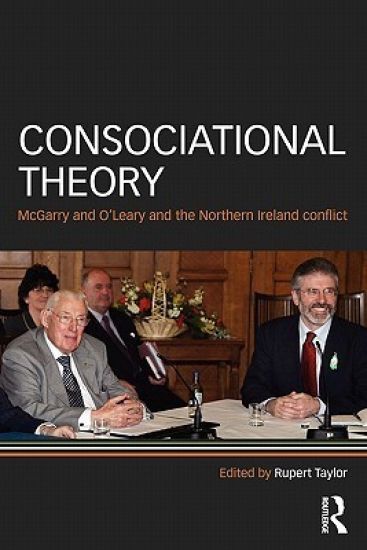
Consociational power sharing is increasingly gaining ground, right around the world, as a means for resolving political conflict in divided societies. In this volume, edited by Rupert Taylor, nineteen internationally-respected scholars engage in a lively debate about the merits of the theory underlying this approach.The volume focuses specifically on one of the leading cases under the global spotlight, the Northern Ireland conflict, and brings together the most prominent proponents and opponents of consociationalism. Northern Ireland’s transition from war to peace is seen by consociationalists as flowing from the historic Belfast Agreement of 1998, and specifically from the Agreement’s consociational framework. The Northern Ireland case is marketed by consociationalists as representing best practice, and as providing a template for ending conflicts in other parts of the world. However, as this volume interrogates, on what grounds, and to what extent, can such a positive reading be upheld?Taken as a whole, this volume, structured as a symposium around the highly-influential argument of John McGarry and Brendan O’Leary, offers comparative, engaging, and critical insight into how political theory can contribute to the creation of a better world.Consociational Theory is an important text for anyone with an interest in political theory, conflict resolution in divided societies, or Irish politics.
Copywriting: The Beginners Guide to Writing Sales Copy that Sells
Rupert Taylor
Createspace Independent Publishing Platform
2016
nidottu
Copywriting: 10 Things To Make You An Epic Copywriter
Rupert Taylor
Createspace Independent Publishing Platform
2016
nidottu
Copywriting: Why Copywriting Pays 6 Figures
Rupert Taylor
Createspace Independent Publishing Platform
2016
nidottu
Copywriting: The Copywriting Masterclass: 3 in 1 set
Rupert Taylor
Createspace Independent Publishing Platform
2017
nidottu
Copywriting: Copywriting Like The Pros: 2 for 1 Learnings
Rupert Taylor
Createspace Independent Publishing Platform
2017
nidottu
While trying to heist a casino in the Cambodian Jungle, Apollo Jones has a crippling panic attach, but he's no seasoned criminal, he's a filmmaker, and he's heisting the casino so he can turn the story into the first season of a preposterously ambitious TV show he hopes to sell to HBO or Netflix or some other global streaming powerhouse. Spoiler Alert: his panic attach stuffs up the heist. As punishment, his partners slice off his right pinky. But the TV show is all he has, so Apollo bandages his stump and heads off in search of stories that take him to the steaming streets of Saigon, the glittering hills above Hollywood, and all the way back to the dark damp Cambodian jungle, where he may or may not be forced to dig his own grave.
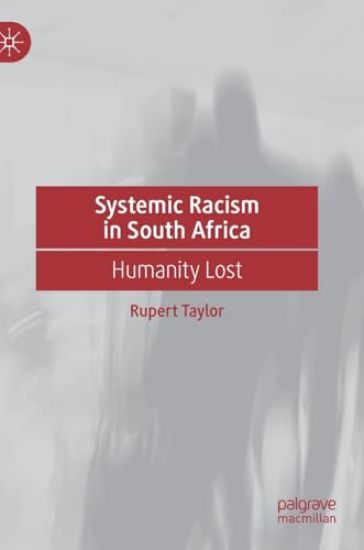
This book takes a critical macro-level political sociological perspective to understanding South African politics and society. Applying systemic racism theory to South Africa, the author argues that South African society through its exclusionary social mechanisms has assumed a systemically racist form that deeply compromises questions of truth and justice. Constitutive of, and embedded in, the structure of South African society, racism has a reach and a durability that runs deep through the successive stages of segregationism, apartheid, and liberal democracy. Showing the limits of the rule of law in a racist society, the author offers a theoretically-informed interpretation as to why the national liberation struggle has fallen short of its promise to deliver a “better life for all,” and as to why truth and justice remain so deeply compromised in South Africa today. The arguments advanced are supported by over thirty semi-structured interviews conducted by the author with high-profile South African politicians, jurists, and intellectuals; as well as by using Truth and Reconciliation Commission hearing transcripts – both public and “top-secret.” This thought-provoking book is driven by the imperative to offer a compelling and sustained argument for taking a systemic racism approach to interpreting South Africa for scholars and students of sociology, political science, race and ethnic studies, law, and South African history.